Last updated: April 19, 2026
In the past, becoming a sushi chef required a long period of apprenticeship and strict guidance from a master.
However, times have changed, and the options for becoming a sushi chef have increased. In particular, sushi schools where you can learn about sushi efficiently are an attractive option for those who have no experience now but dream of becoming a sushi chef in the future!
So this time, in order to answer the questions that many people who want to walk the path of a sushi chef have—such as "I want to become a sushi chef, but how do I do it?" and "If I were to attend a sushi school, which one would be best?"—we have thoroughly compared the sushi schools where you can become a sushi chef, and clearly summarized their tuition, course content, schedules, and more in an easy-to-read list format!
In addition, as basic knowledge to help you choose the right sushi school, we also explain topics such as "The flow of a sushi chef's work," "How to become a sushi chef," and "Points for choosing a sushi school." This feature is divided into the following four pages, so please check out whatever information interests you.
1. A Thorough Comparison of Sushi Schools! Explained Along with the Basic Knowledge of Becoming a Sushi Chef
A comprehensive listing of sushi schools from all over the world, explaining the overview and distinctive features of each school's educational program.
2. List of Sushi School Tuition Fees
A list of each school's tuition, which is information that many users are curious about.
3. Sushi Schools You Can Attend Short-Term
For busy people, a pick of only sushi schools where you can learn in a short period (within 3 months).
4. Sushi Chef Feature
Features on how to become a sushi chef, the situation of sushi chefs overseas, how to open a sushi restaurant, and more.
Basic Knowledge for Becoming a Sushi Chef
The Flow of a Sushi Chef's Work
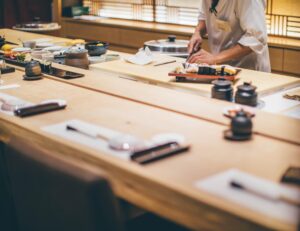
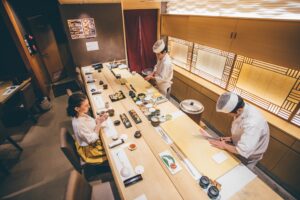
A sushi chef is a person who, at a sushi restaurant or eatery, performs the work of making and serving sushi and other dishes using fish, seafood, and other ingredients. Sushi restaurants come in various types such as popular-priced establishments, high-end establishments, and conveyor-belt sushi, and the skills required differ for each. Here, we explain the general flow of a sushi chef's work at popular-priced and high-end establishments.
A sushi chef's work begins with purchasing fish and seafood at the fish market, but at chain stores where sushi ingredients prepared by headquarters are delivered, there are cases where no purchasing is done at the fish market. Also, at restaurants with multiple sushi chefs, it is often only the person in charge of purchasing who goes. If you want to open your own restaurant in the future, going to the market to make purchases and developing an eye for quality is a good experience, so if you have the chance to accompany them, you should do so proactively.
Once the morning purchasing is finished, the chef cooks the rice to prepare the shari (vinegared rice), preps the sushi ingredients, and gets ready for opening.
At restaurants with a lunchtime service, after opening, the chef serves customers while providing sushi made from the prepped ingredients. When lunch ends, the chef takes a break, and once the break is over, begins prepping for the evening.
In the evening session as well, the chef serves sushi in the same manner while attending to customers, but prices in the evening are often higher than at lunch, and there are many cases where sushi is served one piece at a time according to customer requests such as "okonomi" (by preference). As a result, there tends to be a demand for higher quality in both cooking and customer service than at lunch.
When there is free time during business hours, the chef preps for the following days, orders necessary ingredients, and cleans. Then, starting about an hour before closing, the chef prepares to tidy up out of customers' sight, and at closing time tidies and cleans, bringing the day to an end. The time of leaving the restaurant varies by establishment, but since restaurants are often open at least until 9 p.m., it is fair to say that it often ends up being around 9:30 to 11 p.m.
How to Become a Sushi Chef 1 - Working at a Sushi Restaurant
There are three ways to become a sushi chef: "working at a sushi restaurant," "attending a sushi school or sushi class," and "learning sushi on your own."
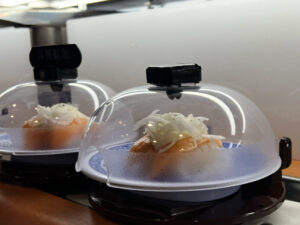
Working as an apprentice at a sushi restaurant is the orthodox path to becoming a sushi chef, but you need to choose the restaurant you join carefully. For example, at conveyor-belt sushi restaurants where robots make the shari, you cannot learn a sushi chef's skills, and at chain stores that use sushi ingredients supplied by headquarters, you cannot learn prepping skills. Also, at popular-priced establishments that do not offer "omakase," it is difficult to learn about "omakase," which is a staple of high-end establishments.
It is said that the sushi restaurant you join should be a top-class, famous establishment. This is because you can naturally acquire knowledge and advanced skills unique to high-end establishments, and there are also benefits such as the name of the restaurant you came from being useful when you open your own business.
In this way, working at a sushi restaurant has many advantages, such as being able to acquire professional knowledge and skills while earning a salary, and learning the realities of customer service and operations firsthand.
On the other hand, since it is customary to first work as an apprentice doing cleaning, washing dishes, and odd jobs before learning the chef's skills, there is also the disadvantage of having to spend a lot of time and effort on things other than the direct skills of a sushi chef. This may not be suited to those who want to open their own business as soon as possible or who want to change careers from another field. In addition, since quite a few sushi restaurants have a strict, athletic-club-like culture, it is often unsuitable for those who are not good at being scolded.
You should clarify what kind of sushi chef you want to become, and before joining, it is a good idea to check on social media what kind of work is actually done, or to confirm with the restaurant at the time of your interview. Note that another approach is to work at a popular-priced establishment while supplementing missing knowledge such as "omakase" through a school or self-study, so you do not necessarily have to meet every condition.
How to Become a Sushi Chef 2 - Attending a Sushi School or Sushi Class
If you want to efficiently acquire only the necessary skills in a short period, attending a sushi school or sushi class is a recommended approach. Sushi schools and sushi classes are suited to people who want to be able to make sushi as soon as possible and open their own restaurant, or who want to work overseas. But even if you plan to work at a sushi restaurant, acquiring a certain level of basic skills beforehand makes it easier to be hired at your desired restaurant and can reduce the time spent on odd jobs after joining. So even if you intend to work at a restaurant, attending a sushi school or sushi class can be said to be an effective approach.
Unlike in the past, the number of sushi schools and sushi classes has increased, and it has become possible to learn advanced, practical skills efficiently in a short period. Since schools have fellow classmates, it is easy to motivate one another, and you are scolded less often than when working, so it can be said to be quite a lot easier mentally. There are also schools that provide job placement support after graduation.
The idea that rather than entering a sushi restaurant as an apprentice and doing odd jobs for several years, it is more time-efficient to learn the basic skills at a sushi school and then go to a sushi restaurant to learn practical work, can be said to be a reasonable way of thinking.
As for the disadvantages of attending a sushi school or sushi class, tuition and a block of time are required, of course, but the number of times you practice each task tends to be fewer than when working at a restaurant, making it difficult to ingrain the skills into your body. This is not limited to sushi chefs, but in order to grow into a true sushi chef, individual effort is necessary, such as buying fish and practicing on your own at home.
How to Become a Sushi Chef 3 - Learning Sushi on Your Own
If you want to become a sushi chef but cannot work at a sushi restaurant and have no money, there is also the option of "learning sushi on your own." You may find it strange to learn sushi on your own, but in fact this is quite common overseas.In the past, it was difficult to obtain information for becoming a sushi chef, but now you can learn how to form sushi and how to fillet fish through videos on the internet, making this a major option for foreigners who cannot come to Japan.
Compared to other countries, Japan has many books on sushi techniques, and it is easy to go around tasting to confirm flavors, so for Japanese people who can read Japanese, the hurdle for self-study is lower than for foreigners.
Self-study can be said to be one of the options for those who can carve out their own path.
We have introduced the above three methods, but in reality many people use them in combination. For example, you might first try learning on your own, and once you understand a little, attend a school to acquire the basic skills, and once you have the basic skills, join a restaurant to learn on the job.
Seven Points for Choosing a Sushi School
① Clarify Your Own Goals and Career Plan
A sushi school or sushi class is, after all, just one means of achieving your goal. First, clarify what kind of sushi life you want to lead, and working backward from there, create a roadmap that can achieve your goal. Then it is best to choose the school most suited to achieving that goal.
For example, if your goal is "I want to open a sushi restaurant in New York in the future," then a school that provides job placement support for sushi restaurants in the United States would be good. Also, if you want to acquire solid skills, you might add a plan of not just attending a sushi school but, after graduating, working at a famous restaurant for two years before going overseas.
② Understand the Items to Check and the Types of Schools
The main items to check when choosing a school are "tuition," "duration," "location," "curriculum," "whether job placement support is available," and "the type of school."
Sushi schools can be broadly divided into "accredited vocational schools" and "schools/classes," and all of them are called "sushi schools" or "sushi classes." An "accredited vocational school" is a school that has received accreditation as a vocational school from a public body such as a prefectural governor, and in many cases it has a name like "○○ Vocational School." Among vocational schools, if certain requirements are met, such as a study period of two years or more, the title of "Diploma (Senmonshi)" is granted and can be used as an academic credential. Also, in the case of culinary vocational schools, in most cases you can obtain a "cooking license (chef's license)" upon graduation.
"Schools/classes" are so-called private schools, run by private educational institutions. They are not accredited by the government, but their distinctive feature is that they specialize in sushi techniques, and recently there have been an increasing number of cases where a sushi restaurant operates a school or class alongside its business. The content and duration of the curriculum offered by "schools/classes" vary greatly depending on the operator, but cases requiring two years are rare; in most cases it is around several months, making them suitable for those who want to learn only sushi techniques in a short period and who do not need a cooking license or academic credentials.
③ Are the Tuition, Study Period, and Curriculum Appropriate?
For many people, tuition and study period are major selection points. Being cheap while also having substantial content is best, but even at a low cost, there are cases where the period is short and the curriculum is simple, so a school with cheap tuition is not necessarily good, and caution is needed.
Be sure to check not only the price but also the specific curriculum content.
Also, since there are cases where materials fees and other costs are charged separately in addition to tuition, it is important to understand the total tuition and total class hours required until completion and to consider cost-effectiveness.
④ What Kind of Job Placement Support Is There?
For those who want to work at a sushi restaurant after graduation or completion, job placement support and how much of a network the school has in the sushi industry are also important points. Depending on the school, there are cases where they provide job placement support for sushi restaurants overseas.
Since getting a job as a sushi chef overseas requires clearing various conditions, this can be said to be a major benefit for those who are thinking of working as a sushi chef overseas in the future.
⑤ Are the Location and Schedule Suitable?
As a basic rule, you should choose a school close to where you live, but if there is none nearby, whether the school supports housing such as dormitories, condominiums, or apartments is also a selection point. If there is no support, you will need to find a rental property directly, but for a period of around several months, using a long-term stay at an Airbnb or other vacation rental is also one option.
As for learning styles, in addition to full-time courses, some schools offer evening courses and weekend courses. For those who already have another job, places with evening courses or weekend courses will be the candidates. Also, for those who already have cooking experience at a restaurant outside the sushi industry, short courses that teach a specific specialized skill, such as a course focused only on forming sushi, are recommended.
⑥ Check the Specific Curriculum and Environment
The curriculum varies from one sushi school to another. Check the website, request materials, and carefully confirm whether the class content is what you want to learn.
The points to check vary from person to person, but the main ones are: whether they teach not only forming sushi but also how to fillet fish and à la carte dishes, what kinds of fish you fillet, how much repetitive practice you can do, and what kind of environment and what kind of facilities there are.
Besides these, there are also schools that teach purchasing knowledge, customer service, and management knowledge such as cost calculation, so try to sort out what knowledge and skills you want.
⑦ Check Students' Reviews About the School and Instructors
Since it is a school, naturally the instructors' technical ability and knowledge are important. Also, even if someone has skills, they are not necessarily good at teaching, and if the school's environment is poor, education may not be sufficiently provided. Check the instructors' backgrounds and qualifications in advance on the school's website or social media, and confirm whether they are the right teacher for you.
Also, the reviews of students who actually attended are important. Search for the school's name on X, Facebook, Instagram, Google Maps, and so on, and check what kinds of students attend and what kinds of posts and reviews there are. Checking posts and reviews makes it easier to imagine what attending would be like.
Once you have a sense of what kind of school it is from the materials and reviews, we recommend actually visiting the school at least once.
List of Sushi Schools
Sushi University (Online)
| Sushi University |
| Type |
Online school |
| Year established |
2026 |
| Campus |
Online |
| Courses & Hours |
Available 24 hours
(Estimated: 2 weeks to 3 months) |
| Tuition |
■ Enrollment fee: ¥0
■ Tuition: ¥58,000 (tax included) *When the campaign applies |
| Curriculum |
■ Practical course (20 units, 53 lessons in total)
Preparation (tools and basics), how to make shari (sushi rice), prepping and forming nigiri (tuna, salmon, horse mackerel, sardine, gizzard shad, sea bream, vinegared mackerel, flounder, surf clam, ark shell, geoduck clam, prawn, red shrimp, spear squid, thick rolled omelet), preparing salmon roe and gunkan (battleship) nigiri, rolled sushi (thin rolls and sushi rolls), cleanup (storing ingredients and washing up)
■ Theory course
- Specialized knowledge of seafood (6 chapters, 30 lessons in total): how the market works and how to use it, the basics of selecting quality fish, basic knowledge of each type of seafood as it relates to sushi, and knowledge of selecting quality, regions of origin, branded fish, and more (red-flesh fish, silver-skinned fish, salmon/white-flesh fish, shellfish, etc.)
- Opening and managing a business (4 chapters, 28 lessons in total): business planning, income and expenditure planning, profit management and management metrics, store design and location, marketing strategy, hiring, troubleshooting
- Manners and customer service: manners and customer service, conversation skills, basic customer service for hall staff, serving foreign customers and conversation by situation, and more—a thorough explanation of the knowledge needed to open and run a sushi restaurant
■ Other
- Sample business plan and explanation usable in practice
- Sample income and expenditure planning sheet and explanation usable in practice |
| Qualifications/Skills |
■ Sushi Master® (obtainable upon completion)
A qualification certified by the All Japan Sushi Federation Association, which operates the Sushi Certification exam |
| Facilities |
Online (at home, etc. / using a PC, tablet, or smartphone) |
| How to apply |
Apply via the official website |
| Operator |
All Japan Sushi Federation Association (JSFA)
J.S.F.A Sushi Certification Operations Office |
*Prices and details are for reference. They may vary depending on the season, options, etc., so please contact the school directly for details.
"Sushi University" is an online sushi school opened by the All Japan Sushi Federation Association, which operates the "J.S.F.A Sushi Certification." Because it is online, you can systematically learn sushi knowledge and techniques through video lessons without commuting to a campus.
Its biggest features are its affordable price point of ¥58,000 in tuition and the fact that it can be taken anytime, anywhere. Commuting-based sushi schools incur costs such as buildings, facilities, and ingredients, so they can cost from several hundred thousand to several million yen, but by completing everything online, costs are kept significantly lower.
Another feature is that, in addition to sushi techniques, you can also learn knowledge about opening a business, management, seafood, and customer service.
Because you can learn at your own pace without quitting your job, it is suitable for working professionals considering a career change or those who want to deepen their knowledge of sushi. It can also be used alongside commuting-based schools to deepen a sushi chef's knowledge or as preliminary study before attending such a school.
Upon completion, you can obtain the "Sushi Master®" qualification, which is not available elsewhere, allowing you to prove your specialized knowledge of sushi.
Inshokujin University, Sushi Meister Course (Tokyo / Osaka / Hyogo / Taipei)
| Inshokujin University, Sushi Meister Course |
| Type |
School / classroom |
| Year established |
— |
| Campus |
Tokyo (Ebisu Station) / Osaka (Tsuruhashi Station) / Hyogo (Awaji Island) / Fukuoka (Nishijin Station) / Taiwan (Taipei) / Thailand (Bangkok) |
| Courses & Hours |
■ Sushi Meister Course, daytime program (3-month term): 420 hours
Mon–Sat 9:00–16:00
■ Sushi Meister Course, overseas employment program (2-year term):
- Sushi Meister Course + options (English conversation lessons, overseas job hunting)
- Sushi Meister Course daytime program (3 months) + English conversation lessons at Berlitz Japan Co., Ltd. (18–24 months) + overseas job hunting at Global Initiative Inc. (3–24 months) |
| Tuition |
■ Enrollment fee and tuition
Daytime program: ¥968,000 (tax included)
Overseas employment program: cost of the Sushi Meister Course + option fees
■ Materials and training fees, etc.: ¥64,240 (tax included) |
| Curriculum |
■ Month 1
Mindset, basic training exercises, fish anatomy and differences in flavor, about nori (gunkan rolls, types of gunkan rolls, gunkan roll skills and points for improvement), observing tuna butchering, fish knowledge, the basics of filleting, examining the difference between hamajime (bleeding fish at the shore) and nojime, examining the difference between wild and farmed, sashimi and sushi, examining the difference between frozen and fresh, eggs (handling methods, cutting tamago, nigiri patterns) and filleting seafood, nigiri patterns, pressed sushi and bo-zushi / battera, etc., knife techniques
■ Month 2
Repeated practice from selecting fish to cooking, fish market tours, judging fish quality, applied practical training, hands-on ara-jiru (fish bone soup), hands-on whole-fish sugata-zukuri sashimi, a full set of sashimi, small dishes, and signature dishes
■ Month 3
Fishing port and auction tours, fish purchasing, practical training, hands-on training from menu creation to forming nigiri, face-to-face classes, management and administration, hands-on experience training at high-end sushi restaurants (extracurricular classes), training at actual restaurants |
| Qualifications/Skills |
Sushi cooking techniques, etiquette, philosophy, and more |
| Post-graduation support |
■ Consultation available, as the operating body runs a food and beverage industry placement business |
| Facilities |
Cooking room |
| Scholarships |
- |
| Dormitory/Housing |
- Housing referrals available
- Dormitory available only at the Awaji Island campus (¥25,000/month × 3 months = ¥75,000) |
| How to apply |
Inquire by phone, the inquiry form on the website, LINE, etc. |
| Operator |
〒150-0021
Grace Daikanyama 202, 1-21-3 Ebisu-Nishi, Shibuya-ku, Tokyo cix Holdings Inc. |
*Prices and details are for reference. They may vary depending on the season, options, etc., so please contact the school directly for details.
Inshokujin University's "Sushi Meister Course" is a short, intensive sushi school that develops people who can become job-ready professionals in 3 months (daytime) or 2 months (evening). About 80% is made up of hands-on practice, and you thoroughly learn everything from filleting fish to forming nigiri and running a restaurant.
Its appeal lies in small-group instruction by chefs with Michelin experience, along with rich experiential learning at actual restaurants, markets, and fishing ports. It has locations in major cities nationwide and offers content suited to those who want to intensively master sushi techniques in a short period.
Tokyo Sushi and Japanese Cuisine Culinary College (Tokyo / London)
| Tokyo Sushi and Japanese Cuisine Culinary College |
| Type |
Vocational college |
| Year established |
— |
| Campus |
Tokyo (Ikejiri-Ohashi Station) / London |
| Courses & Hours |
■ Japanese Cuisine Culinary Department (2-year term) approx. 2,400 hours
■ Japanese Cuisine Research Department (3-year term) approx. 3,600 hours
Mon–Fri 9:00–18:00 *Estimated |
| Tuition |
■ Enrollment fee and tuition
- 2-year total: ¥3,100,000 (Year 1: ¥1,600,000; Year 2: ¥1,500,000)
- 3-year total: ¥4,600,000 (Year 3: ¥1,500,000)
■ Materials and training fees, etc.:
- Year 1: approx. ¥470,300
- Year 2: approx. ¥334,000 to approx. ¥368,000
- Year 3: approx. ¥462,000 |
| Curriculum |
■ Year 1
- Cooking basics (Japanese knife basics / taste study / making dashi)
- Kaiseki basics practicum (preparing ichiju-sansai (one soup, three sides) / mini kaiseki)
- Ingredient study (knowledge and use of seasonal ingredients / market tours / vegetable harvesting)
- Making shari (sushi rice)
- Sushi technique basics (thin rolls / thick rolls / chirashizushi / pressed sushi / nigiri)
- Topping prep basics (back-opening horse mackerel / tamagoyaki / filleting and simmering conger eel / kenzasa garnish)
- Japanese cuisine culture study (Japanese dining etiquette / knowledge of Japanese cuisine / national dishes / bento practicum)
- Lectures (cooking theory / nutritional properties / safety and hygiene)
■ Year 2
- Kaiseki specialized practicum (menu planning / kaiseki course cooking / restaurant-format practicum / customer service)
- Sushi specialized practicum (Edomae nigiri sushi / advanced topping prep / sushi research (creative sushi, regional sushi, decorative rolls, vegetable sushi)
- Elective specialization (specialty ingredients / sake & fermentation study / Japanese sweets)
- Management (practicum such as events and food-truck sales / cost accounting and income-expenditure forecasting)
- Lectures (nutritional properties / safety and hygiene / diet and health / restaurant English conversation)
■ Year 3
- Cooking tailored to ingredients (practical examples: charcoal-grilling practicum / pufferfish (fugu) cooking / luxury ingredients)
- Management (internships / overseas Japanese restaurant internships *for applicants / restaurant operations / food and beverage industry research)
- Coordination (customer service manners / interior decoration / table coordination)
- Overseas Japanese cuisine research
- Developing new Japanese cuisine from foreign dishes |
| Qualifications/Skills |
■ Sushi knowledge and techniques / kaiseki cuisine knowledge and techniques / Japanese cuisine knowledge and techniques
■ Cook's license / Specialist in Food Technology Management / culinary training facility assistant / specialized cook / certified cooking technician / Japanese Cuisine Certification / Sake Navigator / pufferfish (fugu) handling supervisor / certificate of completion |
| Post-graduation support |
■ Career support program
■ Internships
■ Job openings from nationwide sushi restaurants, Japanese restaurants, hotels, and more
(Sushi Yoshitake, Otaru Masazushi Ginza, Ginza Kojyu, Sushi Harumi, Ginza Kyubey, Grand Hyatt Tokyo, Sushi Kanesaka, etc.) |
| Facilities |
- Cooking room
- Counter for customer service practice
- Japanese cuisine cooking room |
| Scholarships |
■ Mizuno Gakuen Scholarship Student System
S Scholarship Student: full Year 1 tuition waiver
A Scholarship Student: half Year 1 tuition waiver
B Scholarship Student: half Year 1 first-semester tuition waiver
■ Mizuno Gakuen Scholarship System
New Student Scholarship System: grant of ¥300,000
Re-enrollment Incentive System: ¥300,000
Education Loan Subsidy System: loan interest amount (for the period of enrollment)
Relative Scholarship System: ¥100,000
■ International Student Scholarship System
■ Japan Student Services Organization tuition reduction and grant-type scholarships
(For households exempt from resident tax and those equivalent, who meet the Japan Student Services Organization's application requirements, with three or more dependent children)
■ Working Student System |
| Dormitory/Housing |
Affiliated student dormitories and student apartments available |
| How to apply |
Submit application documents such as the enrollment application during a designated period each year (enrollment screening fee: ¥15,000).
After document screening (an entrance exam such as an interview may be conducted), screening results are notified in writing within 10 days. |
| Operator |
〒150-0001 5-29-2 Jingumae, Shibuya-ku, Tokyo
Mizuno Gakuen Educational Foundation |
*Prices and details are for reference. They may vary depending on the season, options, etc., so please contact the school directly for details.
"Tokyo Sushi and Japanese Cuisine Culinary College" is Japan's first accredited vocational college where you can systematically learn sushi and Japanese cuisine, and it is the only vocational college specializing in sushi and Japanese cuisine.
Because it is a vocational college, the overall tuition and duration are greater compared to school/classroom-type schools, but you can broadly learn not only sushi techniques but also Japanese cuisine techniques in general, such as kaiseki, soba, and tempura.
In addition, the curriculum covers a full range of techniques, knowledge, and know-how needed up to opening a business—not only nigiri sushi but also regional sushi, Japanese cuisine designed with overseas markets in mind, hygiene knowledge, management knowledge, and customer service. Its appeal also lies in the abundant practical training hours that emphasize acquiring skills through repeated practice, as well as the well-equipped facilities, environment, and campus life unique to a vocational college.
In the 2-year Japanese Cuisine Culinary Department, you learn about Japanese food in general, such as sushi and kaiseki cuisine, aiming to become a well-rounded chef. In the 3-year Japanese Cuisine Research Department, you learn advanced knowledge, techniques, and restaurant creation that is more conscious of overseas markets than the Japanese Cuisine Culinary Department, aiming to become a professional chef who can thrive worldwide.
Upon graduation, you can not only obtain a cook's license but also various other cooking-related qualifications, and with substantial support such as domestic and overseas internships and job placement support at graduation, this is the ideal school for those who want to build a solid foundation as a sushi or Japanese cuisine chef in the future, as well as for those considering advancing to a food-related vocational college or university who can secure the time and tuition.
The fact that abundant grant-type scholarships are available to apply for when securing tuition is difficult can also be said to be an advantage unique to an accredited vocational college.
Kyoto Culinary Art College, Japanese & Japanese Cuisine Advanced Department, Sushi Major (Kyoto)
| Kyoto Culinary Art College, Japanese & Japanese Cuisine Advanced Department, Sushi Major |
| Type |
Vocational college |
| Year established |
— |
| Campus |
Kyoto (Randen Tenjingawa Station) |
| Courses & Hours |
Japanese & Japanese Cuisine Advanced Department, Sushi (SUSHI) Major (2-year term): 1,963 hours
Mon–Fri 9:00–18:20 |
| Tuition |
■ Enrollment fee and tuition
2-year total: ¥4,110,000 (Year 1: ¥1,770,000; Year 2: ¥2,340,000)
■ Materials and training fees, etc.
Approx. ¥425,080 |
| Curriculum |
■ Year 1
Food safety and hygiene, properties of food, Japanese cuisine theory, culinary science, food safety and hygiene, pre-guidance for off-campus training, Japanese cuisine basic techniques and cooking practicum I, Japanese cuisine basic techniques and cooking practicum II, nutritional properties, Western and Chinese cuisine basics practicum, pufferfish (fugu) handler exam preparation, diet and health, Kyoto study excursions, sushi specialized practicum
■ Year 2
Tea ceremony exercises, properties of food, Japanese cuisine operations practicum I & II, Japanese cuisine restaurant practicum I & II, flower arrangement exercises, Japanese cuisine beverages, diet and health, Japanese cuisine studies, food culture studies, career design, restaurant management practicum I & II, Japanese cuisine advanced cooking practicum I & II, English conversation practice exercises, food safety and hygiene, sushi practical practicum I & II |
| Qualifications/Skills |
Cook's license, Restaurant Service Skills Certification Level 3, pufferfish (fugu) cook's license, Specialist in Food Technology Management, specialist, culinary training facility assistant, specialized cook's license / certified cooking technician, Dietary Life Advisor Level 2 & 3, Food Education Instructor |
| Post-graduation support |
■ Support for re-employment and job-change activities
■ Independent business start-up support
■ Provision of job listings (nationwide) |
| Facilities |
- Food culture museum "Kyoto Uzumasa TaiwaMuseum"
- Japanese cuisine restaurant hall Kyomikaku Fuji
- Japanese-style room / tea room Seishinken
- Japanese cuisine practicum room
- General cooking practicum room
- Hospitality Hall |
| Scholarships |
■ Scholarship Student System
[Scholarship Student A]
Grant amount (first year only)
Japanese & Japanese Cuisine Advanced Department, Japanese & Japanese Cuisine Major: ¥800,000
Japanese & Japanese Cuisine Advanced Department, Sushi (SUSHI) Major: ¥850,000
[Scholarship Student B]
Grant amount (first year only)
Up to ¥300,000
[Scholarship Student C]
Grant amount (first year only)
Up to ¥200,000■ Scholarship System
- AO Admission Scholarship: up to ¥100,000
- Living-Alone Support Scholarship: up to ¥200,000
- Student Scholarship Dormitory Scholarship: up to approx. ¥490,000–690,000
- Kyoto Prefecture Skill Acquisition Fund: ¥24,000 (paid monthly)
- Kyoto Private School Promotion Association Scholarship: determined by a selection committee based on the scholarship student's annual tuition (no repayment required)
- Kyoto Private School Promotion Association Award: Private School Promotion Award, Culture/Sports Activity Award, etc., up to ¥300,000 |
| Dormitory/Housing |
Affiliated student dormitories, student apartments, and school-designated student housing available |
| How to apply |
AO admission, general admission, school recommendation admission, designated-school recommendation admission, international student entrance exam
→ Submit application documents such as the enrollment application during the designated period. |
| Operator |
〒604-8006 Kawaramachi Sanjo Agaru, Nakagyo-ku, Kyoto City
Taiwa Gakuen Educational Foundation |
*Prices and details are for reference. They may vary depending on the season, options, etc., so please contact the school directly for details.
"Kyoto Culinary Art College" is a traditional Kyoto vocational college where you can authentically learn both sushi and Japanese cuisine, and in the "Japanese & Japanese Cuisine Advanced Department, Sushi Major," you can thoroughly learn, over two years, knowledge of service and management as well as kaiseki cuisine and Japanese cuisine in general, while specializing in sushi.
You can obtain a variety of qualifications such as a cook's license, pufferfish (fugu) cook's license, and Restaurant Service Skills Certification, and there are abundant opportunities for practice, such as operating a student restaurant and interning at famous establishments.
Career support after graduation is also generous, with a long-term career support system in place including nationwide job placement referrals, re-employment and job-change support, and consultation on independent business start-up. For those who want to thrive at home and abroad as a sushi chef or Japanese cuisine chef in the future, this can be said to be a vocational college where you can build a solid foundation.
Kyoto Sushi Academy (Kyoto)
| Kyoto Sushi Academy |
| Type |
School / classroom |
| Year established |
- |
| Campus |
Kyoto (Shichijo Station) |
| Courses & Hours |
2-month training course (120 hours, 3–4 times a week): Part 1 11:00–15:00, Part 2 18:45–22:45
5-day nigiri intensive course (12.5 hours): Part 1 11:00–16:00, Part 2 18:30–23:00 |
| Tuition |
2-month training course: total ¥594,000 (enrollment fee ¥55,000, tuition ¥539,000) |
| Curriculum |
■ Mastering the basics: From knife sharpening, cutting shari (sushi rice), and cutting toppings to forming nigiri and making rolls, you repeatedly practice every step and master the overall picture of sushi making
■ Mastering techniques: Based on traditional Edomae sushi techniques, you carefully prepare toppings with salt and vinegar, complete each item with care, and master variations of rolls.
■ Skill-up: Centering on white-flesh fish, you hone your sushi and sashimi techniques and master world-class roll and decorative-roll techniques. You also master how to fillet difficult fish and beautiful artisan craftsmanship.■ Curriculum details
1. Making shari (sushi rice)
2. Preparing sushi toppings
3. Forming nigiri sushi
4. Making gunkan (battleship) sushi
5. Making tamagoyaki
6. Rolls
7. Tsumami (appetizers)
8. A single dish from a Japanese cuisine instructor
9. Planning a menu
10. How to store fish, etc.
11. How to make and arrange sashimi
12. About the tools needed for sushi / how to maintain them
13. How to make dashi
14. Simmering conger eel / making nikiri soy sauce
15. Soups
16. Making chawanmushi
17. Market tours |
| Qualifications/Skills |
■ You can master fundamental techniques that work in the field, such as sushi cooking techniques, etiquette, and philosophy |
| Post-graduation support |
- |
| Facilities |
Cooking room |
| Scholarships |
- |
| Dormitory/Housing |
- |
| How to apply |
Inquire via the inquiry form on the website or via LINE |
| Operator |
〒530-0001 Room 1-1-1, 29th Floor, Osaka Ekimae Dai-3 Building, 1-1-3 Umeda, Kita-ku, Osaka City, Osaka
overclocking Inc. |
*Prices and details are for reference. They may vary depending on the season, options, etc., so please contact the school directly for details.
"Kyoto Sushi Academy" is a small-group sushi chef training school within walking distance of Kyoto's Shichijo Station.
It covers everything from knife sharpening, making shari (sushi rice), and prepping toppings to prep and nigiri forming based on traditional Edomae sushi techniques, rolls, gunkan, and even Japanese single dishes such as chawanmushi, soups, and how to make dashi. You can also learn internationally recognized techniques such as roll sushi and decorative rolls, and the school offers substantial practical content such as menu planning, how to store fish, and market tours.
With a commuting style of 3–4 days a week and 4 hours a day, dedicated instructor Mr. Kenshiro Nagai provides careful guidance. The appeal lies in his practical advice based on many years of field experience.
Not only for those aiming to become sushi chefs, but also for those who want to authentically learn sushi culture and the basics of cooking in Kyoto, this can be said to be an excellent environment.
Tokyo Sushi Academy (Tokyo)
| Tokyo Sushi Academy |
| Type |
School / Classroom |
| Year established |
2002 |
| Campus |
Tokyo (Nishi-Shinjuku Station) / Tokyo (Tsukiji Station) |
| Courses & Hours |
■ Edomae Sushi Intensive Training Course (2-month program / Shinjuku campus)
Mon–Fri 9:30–15:30
■ Edomae Sushi Weekday Training Course (6-month program / Tsukiji campus)
Thu & Fri 9:30–15:30
■ Edomae Sushi Weekend Training Course (1-year program / varies by class)
Fixed Saturday or Sunday 9:30–15:30
■ Sushi Chef Training Course (6-month program / Tsukiji campus)
Mon–Wed 9:30–15:30 |
| Tuition |
■ Enrollment fee and tuition (includes ingredients, chef's coat, teaching materials)
- Edomae Sushi Intensive Training Course (2-month program)
Total: ¥880,000 (enrollment fee ¥165,000, course fee ¥715,000)
- Edomae Sushi Weekday Training Course (6-month program)
Total: ¥880,000 (enrollment fee ¥165,000, course fee ¥715,000)
- Edomae Sushi Weekend Training Course (1-year program)
Total: ¥880,000 (enrollment fee ¥165,000, course fee ¥715,000)
- Sushi Chef Training Course (6-month program)
Total: ¥1,485,000 (enrollment fee ¥165,000, course fee ¥1,320,000) |
| Curriculum |
■ Edomae Sushi Intensive Training Course (2-month program)
How to use knives, filleting and slicing seafood, nigiri practice, Tsukiji tour, inari, gunkan-maki, hand rolls, various thin rolls, hygiene management, fish preservation methods, yield, how to calculate cost ratios, course meals, whole-fish presentation, gari (pickled ginger) preparation, counter training, and more
■ Edomae Sushi Weekday Training Course (6-month program), Edomae Sushi Weekend Training Course (1-year program)
How to use knives, filleting and slicing seafood, nigiri practice, Tsukiji tour, inari, gunkan-maki, hand rolls, various thin rolls, hygiene management, fish preservation methods, yield, how to calculate cost ratios, course meals, whole-fish presentation, gari (pickled ginger) preparation, counter training, and more
■ Sushi Chef Training Course (6-month program)
First half ① → Fundamentals of cooking techniques
First half ② → Edomae preparation
Second half ① → Preparation of premium fish, course meal research
Second half ② → Counter training, Japanese cuisine cooking techniques |
| Qualifications/Skills |
■ Sushi cooking techniques, etiquette, philosophy, and more
■ Certificate of completion (obtainable after passing the exam) |
| Post-graduation support |
■ Training available at Tokyo Sushi Academy's directly operated restaurants
■ Introductions to job openings from sushi restaurants, Japanese restaurants, hotels, and more nationwide
(Nihonbashi Sugita, Sushi Saito, Namba, Sushi Sho, Shimbashi Shimizu, Hakkoku, Sushi Ryujiro, etc.) |
| Facilities |
Cooking room |
| Scholarships |
- |
| Dormitory/Housing |
- |
| How to apply |
After an individual enrollment consultation by phone or LINE, submit the application form via the dedicated form on the website |
| Operator |
〒160-0023 Shinjuku West Building 4F, 8-2-5 Nishi-Shinjuku, Shinjuku-ku, Tokyo
Tokyo Sushi Academy Co., Ltd. |
*Prices and details are for reference only. They may vary depending on the season, options, and other factors, so please contact the school directly for details.
Tokyo Sushi Academy is a sushi school offering multiple courses ranging from 2 months to 1 year, with the goal of acquiring the skills of a sushi chef in a short period. Its curriculum is notable for covering a wide range of topics, from knife techniques and nigiri to fish preparation, hygiene management, cost calculation, and in-store training.
There is also a 6-month chef training course that accommodates a work-and-study style. With an abundant track record of placing graduates at sushi restaurants nationwide, careful instruction through small class sizes, and practical education aimed at success both in Japan and abroad, it is a sushi school well suited for those who want to acquire the fundamentals of being a sushi chef in a short time.
Masazushi Dojo (Hokkaido / Tokyo)
| Masazushi Dojo |
| Type |
School / Classroom |
| Year established |
- |
| Campus |
Hokkaido (Otaru Station) |
| Courses & Hours |
Monday (one sushi item)
Tuesday (sushi basics)
Thursday (language study / pre-exam review only on the 4th Thursday) |
| Tuition |
■ Enrollment fee and tuition (includes ingredient costs, chef's coat, teaching materials)
Total: ¥1,080,000 (enrollment fee ¥100,000, course fee ¥980,000) |
| Curriculum |
■ Month 1
Make 1,000 shari (rice) balls, slicing toppings, filleting fish, tamagoyaki (rolled omelet), katsura-muki (rotary peeling)
Exam → nigiri / rolls / three-piece filleting
■ Month 2
Continue practicing Month 1 skills, advancing based on level of improvement
■ Month 3
Preparation of silver-skinned fish and shellfish, slicing toppings, practicing dishes such as simmered, grilled, and steamed items
Exam → a single portion of sushi (rolls and 7 pieces of nigiri)
■ Month 4
Hands-on training at a restaurant
Final exam → 3 kinds of sashimi / simmered dish / grilled dish / sushi-bar appetizer / nigiri
*Practice content may vary somewhat in order |
| Qualifications/Skills |
■ Sushi cooking techniques, etiquette, philosophy, and the fundamental skills usable in the field |
| Post-graduation support |
■ Career support program
■ Overseas employment support: able to introduce overseas sushi restaurants such as TOMO (Dubai), KAZAN- INKA (Australia), Takai by Kashiba (USA) |
| Facilities |
Cooking room |
| Scholarships |
- |
| Dormitory/Housing |
Dormitory available. Nearby apartments can be introduced. |
| How to apply |
Submit an application form after attending an individual information session |
| Operator |
Otaru Masazushi Co., Ltd.
Head office: 〒047-0024 1-1-1 Hanazono, Otaru, Hokkaido
Tokyo office: 〒104-0052 The City Tsukishima 3F, 3-7-12 Tsukishima, Chuo-ku, Tokyo
|
*Prices and details are for reference only. They may vary depending on the season, options, and other factors, so please contact the school directly for details.
"Masazushi Dojo" is a sushi chef training school operated by "Otaru Masazushi," a long-established sushi restaurant founded in 1935. It is characterized by a practice-focused curriculum in which chefs with real-world experience provide direct instruction, and its small class sizes allow students to learn everything from basics to advanced techniques.
In the intensive course, in addition to sushi techniques, students can also acquire knowledge of customer service and restaurant management, and in the final month, hands-on training at an actual restaurant and a comprehensive exam are conducted.
Overseas employment support is also extensive, including the acceptance of foreign trainees and support with visa and housing arrangements, reflecting a strong commitment to training international sushi chefs.
It is a school perfectly suited for those who want to learn traditional techniques from the basics and aim to succeed both in Japan and abroad.
Sushi Nihonbashi - Sushi Class (Tokyo)
| Sushi Nihonbashi - Sushi Class |
| Type |
School / Classroom |
| Year established |
2011 |
| Campus |
Tokyo (Tsukiji Station) |
| Courses & Hours |
One-day lesson (approx. 90 min): every day from 11:00 a.m.
Short Intensive 4-Session Course (120 min × 4): Tue, Thu, Sat, Sun 11:00–13:00
Comprehensive 8-Session Course (120 min × 8): Tue, Thu, Sat, Sun 11:00–13:00
In-Depth 20-Session Course (120 min × 20): Tue, Thu, Sat, Sun 11:00–13:00
Sushi Chef Training Course (3 months–6 months): 2 hours a day, 3 times a week
Inbound Course (90 min): 11:00–12:30, 17:30–19:00
Anniversary Surprise Course (2.5 hours): 11:00–13:30, 17:30–20:00
Be-a-Sushi-Chef Course (3 hours): starting 17:30–18:00 |
| Tuition |
■ Tuition (ingredients included)
One-day lesson:
Short Intensive 4-Session Course: ¥64,000
Comprehensive 8-Session Course: ¥112,000
In-Depth 20-Session Course: ¥260,000
Sushi Chef Training Course: total ¥715,200 (course fee ¥680,000, knife fee ¥35,200)
Inbound Course: ¥13,500 (venue fee required depending on the number of people)
Anniversary Surprise Course: from ¥20,000 (varies depending on the à la carte dish content)
Be-a-Sushi-Chef Course: from ¥19,000 (venue fee required depending on the number of people; prices vary depending on the toppings) |
| Curriculum |
■ Short Intensive 4-Session Course
■ Comprehensive 8-Session Course
■ In-Depth 20-Session Course
■ Sushi Chef Training Course
■ Inbound Course
■ Anniversary Surprise Course
■ Be-a-Sushi-Chef Course |
| Qualifications/Skills |
■ Sushi cooking techniques, etiquette, philosophy, and the fundamental skills usable in the field |
| Post-graduation support |
- |
| Facilities |
- |
| Scholarships |
- |
| Dormitory/Housing |
- |
| How to apply |
Inquire using the phone number listed on each course's website
*Note that phone numbers differ depending on the course |
| Operator |
〒104-0045 Regina Ginza Higashi 501, 7-15-11 Tsukiji, Chuo-ku, Tokyo
Sushi Nihonbashi Sushi Class |
*Prices and details are for reference only. They may vary depending on the season, options, and other factors, so please contact the school directly for details.
"Sushi Nihonbashi - Sushi Class" is a sushi specialty classroom located in Tsukiji, Chuo-ku, Tokyo, catering to a wide range of students from beginners to aspiring professionals. Founded in 2011 by Ryuji Asai, who has been active as a sushi chef, this classroom offers practical instruction grounded in experience.
A diverse range of courses is available, allowing students to choose according to their goals and skill level. In the lessons, students can carefully learn techniques usable in the field, such as how to fillet fish, how to make shari (sushi rice), and nigiri techniques. Another major appeal is the chance to experience authentic, hands-on practice using fresh ingredients.
For anyone—from those who want to learn sushi as a hobby to those aiming for professional-level skills—who wants to learn at their own pace and take their time, "Sushi Nihonbashi - Sushi Class" can be an ideal place to learn.
GINZA ONODERA Sushi Academy (Tokyo)
| GINZA ONODERA Sushi Academy |
| Type |
School / Classroom |
| Year established |
2023 |
| Campus |
Tokyo (Futako-Tamagawa Station) |
| Courses & Hours |
Reserve the number of class sessions you want to take and build your own original curriculum
e.g.) 1 session: 1 hour 10 min, 100 sessions: 6 months, 200 sessions: 1 year
Weekdays (Mon, Wed, Fri) 10:00–17:30
Weekends 10:00–17:30 |
| Tuition |
■ Enrollment fee and tuition
10 sessions (approx. 11.7 hours): ¥70,000
50 sessions (approx. 58.3 hours): ¥300,000
100 sessions (approx. 116.6 hours): ¥450,000 |
| Curriculum |
■ Basic: how to make shari, how to cut vegetables, knife practice, nigiri sushi, and more
■ Beginner: preparation of small fish, nigiri, Japanese cuisine, and more
■ Intermediate: preparation of medium fish and shellfish, nigiri, à la carte dishes, and more
■ Advanced: preparation of large fish, nigiri, special lessons, and more |
| Qualifications/Skills |
■ Sushi cooking techniques, etiquette, philosophy, and more
■ Certificate of completion (after taking 100 or more cumulative sessions and passing the test) |
| Post-graduation support |
■ Introductions to job openings at sushi restaurants nationwide (Sushi Ginza Onodera, plus many Michelin-listed and popular sushi restaurants in Japan and abroad) |
| Facilities |
Cooking room |
| Scholarships |
- |
| Dormitory/Housing |
- |
| How to apply |
After joining via the website, purchase the desired ticket package from the dedicated site |
| Operator |
〒100-0004 Otemachi Center Building 14F, 1-1-3 Otemachi, Chiyoda-ku, Tokyo
ONODERA Food Service Co., Ltd. |
*Prices and details are for reference only. They may vary depending on the season, options, and other factors, so please contact the school directly for details.
This is a sushi school operated by "Ginza Onodera," a sushi restaurant with global locations, featuring a free-reservation, ticket-based system. With courses ranging from 10 to 200 sessions of about 70 minutes each, you can build an original curriculum tailored to your skills and schedule.
Students can acquire techniques step by step from beginner to advanced level, and can also take part in hands-on instruction by active chefs, purchasing experiences at Toyosu Market, and lessons by sommeliers and sake tasting masters. A certificate of completion is issued after taking 100 or more sessions and passing the exam, and after graduation there is employment support both in Japan and abroad—starting with the "Sushi Ginza Onodera" group restaurants—as well as a system in which working at a group restaurant for 6 months or more earns a 50% cashback of the course fee. It is a sushi school well suited for those who want to connect learning with employment.
Sushi Juku (Tokyo / Osaka)
| Sushi Juku |
| Type |
School / Classroom |
| Year established |
- |
| Campus |
Tokyo (Ikebukuro Station) / Osaka (Higashi-Umeda Station, Nakazakicho Station) |
| Courses & Hours |
[Tokyo campus]
Sushi Chef Fastest Course (1 month): 5 days a week, 9:00–15:00
Weekday Evening Course: Tue, Wed, 18:00–22:00
Flexible Attendance Course: choose your own dates and times
Weekend Sushi Study Course (10 days): Saturday or Sunday 9:00–15:00 [Osaka campus]
Osaka Campus 3-Days-a-Week Fastest Course (3 weeks): Tue, Wed, Thu 9:00–15:00
Osaka Campus Saturday Course (12 days): Saturday 9:00–15:00 |
| Tuition |
[Tokyo campus]
- Sushi Chef Fastest Course: total ¥599,500 (enrollment fee ¥49,500, course fee ¥550,000)
- Weekday Evening Course: from ¥199,500 (enrollment fee ¥49,500, course fee ¥150,000)
- Flexible Attendance Course: total ¥649,500 (enrollment fee ¥49,500, course fee ¥600,000)
- Weekend Sushi Study Course: total ¥399,500 (enrollment fee ¥49,500, course fee ¥350,000) [Osaka campus]
Osaka Campus 3-Days-a-Week Fastest Course, Osaka Campus Saturday Course: total ¥319,500 (enrollment fee ¥49,500, course fee ¥270,000) |
| Curriculum |
■ Sushi Chef Fastest Course, Weekday Evening Course, Flexible Attendance Course
Fundamentals stage → how to use tools, how to wash rice, shari cutting, shari ball practice, how to proceed going forward, how to fillet fish, slicing toppings, nigiri practice (using same-day purchased items), review of the previous day, how to fillet fish, slicing toppings, nigiri practice (using same-day purchased items)
Fundamentals + α stage → review of the previous day, how to fillet fish, slicing toppings, nigiri practice (using same-day purchased items), how to prepare shellfish, slicing (scallop, ark shell, surf clam, abalone, turban shell) (*may vary depending on the day's purchase)
Repetitive practice stage → how to prepare shellfish, slicing (scallop, ark shell, surf clam, abalone, turban shell), how to make tamagoyaki, how to simmer kanpyo (dried gourd), rolls, inari, how to prepare crustaceans, filleting, nigiri review, roll review, how to prepare conger eel and reduce the sauce, review of roll-related items (*may vary depending on the day's purchase)
Application + completion stage → review of everything so far, filleting fish and slicing test, preparing and slicing shellfish, prepping and filleting crustaceans test, conger eel preparation test, performing roll-making preparations learned, from scratch. ■ Osaka Campus 3-Days-a-Week Fastest Course, Osaka Campus Saturday Course
Fundamentals stage → how to use tools, how to sharpen knives, how to prepare rice, shari cutting, shari balls, slicing toppings, three-piece filleting of horse mackerel, nigiri review
Repetition stage → review of the previous day, slicing toppings, three-piece filleting (same-day prepared items), nigiri practice, nigiri test, topping cutting (same-day prepared items)
Fundamentals & application stage → how to make rolls, how to make tamagoyaki, three-piece filleting (same-day prepared items), topping cutting (same-day prepared items), nigiri test, mastery test (*may vary depending on the day's purchase)
Completion stage → review of the fish species learned, review of weak areas, shellfish, comprehensive nigiri review, knife sharpening test, three-piece filleting test of horse mackerel |
| Qualifications/Skills |
■ Sushi cooking techniques, etiquette, philosophy, and the fundamental skills usable in the field
■ Certificate of completion issued (to all students) |
| Post-graduation support |
■ Job openings from sushi restaurants and other restaurants nationwide |
| Facilities |
- Cooking room
- Counter for customer service practice |
| Scholarships |
- |
| Dormitory/Housing |
- |
| How to apply |
Submit an enrollment application form after requesting materials |
| Operator |
〒171-0021 5-25-2 B1, Nishi-Ikebukuro, Toshima-ku, Tokyo
SUSHI Co., Ltd. |
*Prices and details are for reference only. They may vary depending on the season, options, and other factors, so please contact the school directly for details.
"Sushi Juku" is a practice-focused sushi specialty school where you can aim to become a sushi chef even with no prior experience. With campuses in Ikebukuro, Tokyo and Higashi-Umeda, Osaka, it offers a flexible curriculum that fits your lifestyle.
At the school, students can systematically learn techniques aimed at becoming immediately effective in the field. Within the practice-oriented curriculum, various tests to check mastery are also conducted in stages.
Each class has a small enrollment, and another appeal is the direct instruction provided by an experienced teaching staff. Graduates receive a certificate of completion in both Japanese and English, which is useful for employment in Japan and abroad.
For those who want to acquire professional-level skills in a short period, it can be one option to consider.
Visit the official website
Sushi Labo College
| Sushi Labo College |
| Course |
2-month intensive course |
| Tuition |
Admission fee: ¥120,000
(includes chef's coat, apron, and chef's hat)
Tuition: ¥715,000
(includes ingredients, materials, and facility usage fees) |
| Schedule |
Duration: approx. 2 months
Number of class days: 40 days
Total class hours: 240 hours
5 days a week (Mon, Tue, Wed, Thu, Fri)
9:00-15:00
Class capacity: 4 students |
| Campus |
Gifu Prefecture (Meitetsu Gifu Station)
* School dormitory (share house) available |
* Prices and details are for reference only. They may vary depending on the season, options, etc., so please contact the school directly for details.
"Sushi Labo College" is a sushi school operated by "Entaku Co., Ltd.," a company that runs sushi restaurants in Gifu Prefecture.
It is a hands-on sushi school well suited for those who live near Gifu or who want to study intensively over a short period while staying in the dormitory.
Inshokujuku Sushi Chef Course (Tokyo)
| Inshokujuku Sushi Chef Course |
| Type |
School / Classroom |
| Year established |
- |
| Campus |
Tokyo (Shinjuku Station) |
| Courses & Hours |
Sushi Chef Course (3 months): morning to afternoon (exact dates and times to be discussed) |
| Tuition |
■ Tuition (includes textbook / knife set / chef's coat / hat)
Total ¥1,370,000 (admission fee ¥110,000, course fee ¥1,210,000, other actual costs ¥50,000) |
| Curriculum |
■ A day in the program
Morning: learning knowledge through classroom lectures, lunch preparation
Midday: hands-on lunch service (as part of the lessons), discussions on problem-solving during breaks
Afternoon: technical instruction, prep for the next day ■ First term
[Basic knowledge] mindset of a chef, hygiene management required of a sushi chef
[Knowledge of cooking tools] types of knives used in sushi restaurants, how to use them for different tasks, handling, sharpening, and basic knowledge of tools such as the rice tub, colander, and grater
[Knowledge of ingredients] types of rice suited for sushi and how to cook it, seasonings, seasonal fish, market prices of fish, how to handle eggs, how to make tamagoyaki (rolled omelet)
[Special training] tour of Toyosu Market, lectures and practical training on the "Tsumoto method," lectures and practice on preservation techniques
[Real-store operation] basic lectures on store operation, mock sushi service among students ■ Mid term
[Repetitive practice] putting into practice and applying what was learned in the first term
[Practical skills] sushi techniques other than nigiri, plating, and basic techniques for rolls and other sushi popular overseas
[Other dishes] dishes using basic Japanese cuisine techniques, how to compose a sushi course menu
[Special training] how to handle beverages suited to sushi restaurants and basic lectures, "Tsumoto method" practical training
[Real-store operation] sushi lunch service ■ Final term
[Basic practical skills] cost and selling-price setting, purchasing and practical skills for a sushi restaurant
[Special training] lecture by Mr. Tsumoto, originator of the "Tsumoto method," lectures on preparing to open a business
[Real-store operation] sushi lunch service (advanced), serving a sushi course menu |
| Qualifications/Skills |
■ Sushi knowledge and skills / kaiseki cuisine knowledge and skills / Japanese cuisine knowledge and skills
■ Cooking license (for those who wish) |
| Post-graduation support |
■ Support for employment and overseas expansion
■ Support for opening a new business
■ One-on-one private lessons with instructors (additional fee required)
■ Practice before going independent at "Shuhari," the restaurant attached to Inshokujuku (additional fee required)
■ Career guidance such as career-plan advice and how to create a business plan |
| Facilities |
- "Shuhari," the restaurant attached to Inshokujuku
- Cooking room |
| Scholarships |
- |
| Dormitory/Housing |
- |
| How to apply |
Inquire via the inquiry form on the website, LINE, or by phone |
| Operator |
163-0633 Shinjuku Center Building 33F, 1-25-1 Nishi-Shinjuku, Shinjuku-ku, Tokyo
G-FACTORY Co., Ltd. |
* Prices and details are for reference only. They may vary depending on the season, options, etc., so please contact the school directly for details.
"Inshokujuku Sushi Chef Course" is a 3-month intensive sushi chef training program offered by "Inshokujuku," a hands-on school for the food-service industry located in Shinjuku, Tokyo. Under careful, small-group instruction from a teaching staff with extensive on-site experience, students can comprehensively learn everything from the basics to advanced techniques of sushi, Japanese cuisine, and kaiseki cuisine.
The curriculum is structured in three stages—first, mid, and final terms—allowing students to systematically acquire all the skills needed to run a sushi restaurant. The special training includes a tour of Toyosu Market as well as practical training and lectures on "Tsumoto-style aged fish," giving students exposure to the latest techniques and knowledge. At the attached restaurant "Shuhari," students can experience a real professional setting through actual service. After graduation, a generous support system is in place for those aiming to go independent, including employment support, support for opening or finding work overseas, property searches, and business-plan development.
For those who want to develop real sushi chef skills through experience at an actual restaurant, this is a good option to consider.
Sushi College Tokyo (Tokyo)
| Sushi College Tokyo |
| Type |
School / Classroom |
| Year established |
- |
| Campus |
Tokyo (Ebisu Station) |
| Courses & Hours |
Diploma Course (1 month): Mon-Fri 9:00-15:00 (5 hours + 1 hour break) |
| Tuition |
Total ¥473,000 (admission fee ¥55,000, course fee ¥418,000) |
| Curriculum |
- Basic knife grip
- How to fillet fish
- Nigiri sushi
- Sashimi
- Rolls
- Tempura
- Behind-the-scenes work (store operation, fundamentals of operations) |
| Qualifications/Skills |
■ Acquire foundational skills that work in real settings, including sushi preparation techniques, etiquette, and approach
■ Certificate of completion issued |
| Post-graduation support |
■ Employment available at the company's own restaurants
("Ebisu Sushi Hatsume," "Ebisu Sushi Kenshin," "Sushi Ebisu," etc.)
■ Referrals to other companies' restaurants |
| Facilities |
- Actual restaurants operating 15 locations nationwide, such as "Ebisu Sushi Hatsume," "Shinjuku Sushi Hatsume," "Ebisu Sushi Kenshin," and "Sushi Ebisu"
- Cooking room |
| Scholarships |
- |
| Dormitory/Housing |
Referrals to apartments, share houses, etc. available |
| How to apply |
Inquire via the inquiry form on the website or LINE |
| Operator |
150-0022 Okada Building 5F, 1-2-9 Ebisu-Minami, Shibuya-ku, Tokyo
Season2 Co., Ltd. |
* Prices and details are for reference only. They may vary depending on the season, options, etc., so please contact the school directly for details.
"Sushi College Tokyo" is a one-month, all-inclusive sushi chef training school with its campus in Ebisu, Tokyo. With an intensive curriculum of 5 hours plus a 1-hour break on weekdays from Monday to Friday, students can efficiently acquire the basic techniques of sushi and Japanese cuisine.
The lessons cover cooking techniques such as how to hold a knife, how to fillet fish, nigiri sushi, sashimi, rolls, and tempura, as well as behind-the-scenes work related to store operation. With a small-group system of up to 4 students, a dedicated instructor provides detailed, individual guidance to each student. Through repetitive practice, students sharpen practical skills that make them immediately effective in the field.
After graduation, students can find employment at the more than 15 company-owned restaurants nationwide operated by "Season2 Co., Ltd.," which runs the school, such as "Ebisu Sushi Hatsume" and "Sushi Ebisu." The school also offers referrals to other companies' restaurants, providing wide-ranging career support.
Tokyo Sushi School (Tokyo)
| Tokyo Sushi School |
| Type |
School / Classroom |
| Year established |
- |
| Campus |
Tokyo (Ikebukuro Station) |
| Courses & Hours |
Short-term intensive 1-month course (120 hours): Monday-Friday 10:00-17:00
Flexible-attendance 3-month course (120 hours): Monday-Friday 10:00-17:00 (by reservation)
Half-day trial course: weekdays and Saturdays 13:30-15:30 |
| Tuition |
Short-term intensive 1-month course, flexible-attendance 3-month course
Total ¥495,000 (admission fee ¥66,000, course fee ¥429,000) |
| Curriculum |
■ Mastering nigiri and rolls
Nigiri, thin rolls, hand rolls, thick rolls, shari (rice) cutting, tamagoyaki, etc. ■ Mastering prep work
How to fillet about 30 kinds of fish such as tuna, yellowtail, sea bream, horse mackerel, gizzard shad, squid, octopus, shrimp, conger eel, and shellfish, how to cut toppings, etc. ■ Mastering sushi-restaurant fundamentals
Industry terminology, how to sharpen knives, how to make wasabi, how to toast nori, how to make tea, customer service, and mastering know-how |
| Qualifications/Skills |
■ Acquire foundational skills that work in real settings, including sushi preparation techniques, etiquette, and approach
■ Certificate of completion issued upon graduation |
| Post-graduation support |
■ Job referrals to Japanese restaurants and other establishments in 16 countries worldwide |
| Facilities |
Cooking room |
| Scholarships |
- |
| Dormitory/Housing |
Referrals to accommodations within your budget |
| How to apply |
Submit a web application form from the website |
| Operator |
173-0026 BROOKS Nakamaru Building 9F, 51-10 Nakamaru-cho, Itabashi-ku, Tokyo
Mr. Tsusho Co., Ltd. |
* Prices and details are for reference only. They may vary depending on the season, options, etc., so please contact the school directly for details.
"Tokyo Sushi School" is a specialized sushi school with its campus in Ikebukuro, Tokyo, where you can acquire sushi chef skills in a short period. In addition to its short-term intensive course, it accommodates a variety of learning styles.
The curriculum includes practical instruction in nigiri, rolls, hand rolls, and tamagoyaki, as well as prep techniques for about 30 kinds of seafood. Its strength lies in careful, small-group instruction, allowing even beginners to acquire authentic techniques with peace of mind. The school also offers job referrals from sushi and Japanese restaurants nationwide and support for those wishing to work overseas, providing solid post-graduation career support. With a campus in a convenient central-city location, it is one of the reliable options for those aiming to become sushi chefs.
Tokyo Sushi Chef Training Academy (Tokyo)
| Tokyo Sushi Chef Training Academy |
| Type |
School / Classroom |
| Year established |
- |
| Campus |
Tokyo (Ginza-itchome Station) |
| Courses & Hours |
2-month intensive training course: approx. 200 hours
Mon, Tue, Thu, Fri, Sat 9:00-16:00 |
| Tuition |
Total ¥450,000 (tax included) |
| Curriculum |
■ Week 1: Mindset and hygiene as a sushi chef, how to handle and maintain tools, about shari vinegar, how to wash and cook rice, shari cutting, basic prep and cutting of silver-skinned fish, basic prep and cutting of white-fleshed fish, basic handling and cutting of frozen tuna, how to make dashi, basic prep of condiments, garnishes, and vegetables, practicing nigiri, gunkan, and rolls with ingredients prepped each day, plus daily repetitive practice, lunch at Sushi Yu
■ Week 2: Prep and cutting of silver-skinned fish, prep and cutting of cured fish, prep and cutting of white-fleshed fish, handling and cutting of frozen and fresh tuna, prep of condiments, garnishes, and vegetables (such as katsuramuki rotary peeling), basic prep and cutting of shellfish, basic method of cooking tamagoyaki and cutting it, basic method of rolling thin rolls, practicing nigiri, gunkan, and rolls with ingredients prepped each day, plus daily repetitive practice
■ Week 3: Prep and cutting of silver-skinned fish, prep and cutting of cured fish, prep and cutting of white-fleshed fish, prep and simmering of conger eel, about cost calculation, prep of crustaceans (shrimp, crab, squid, octopus, etc.), prep and cutting of shellfish (such as simmered hard clam), about seasonings (nikiri, nitsume, kai-tsume, etc.), practicing nigiri, gunkan, and rolls with ingredients prepped each day, plus daily repetitive practice
■ Week 4: Prep of kanpyo, prep of oboro, prep of donko mushrooms, prep of fish roe (ikura, herring roe, etc.), how to roll thick rolls, how to roll inside-out rolls (such as California rolls), practicing nigiri, gunkan, and rolls with prepped ingredients, repetitive practice, prep of gari, how to cook and cut tamagoyaki (such as castella-style), bamboo-leaf cutting
■ Week 5: Explaining dishes in English, tour of Toyosu Market, prep and cutting of silver-skinned fish (advanced), prep and cutting of cured fish (advanced), prep of crustaceans (advanced), prep and cutting of shellfish (advanced), handling and cutting of frozen and fresh tuna (advanced), prep and cutting of white-fleshed fish (advanced), how to compose a serving of nigiri, practicing nigiri, gunkan, and rolls with ingredients prepped each day, plus daily repetitive practice
■ Week 6: Prep and cutting of silver-skinned fish (test), prep and cutting of white-fleshed fish (test), handling and cutting of frozen tuna (test), prep and cutting of shellfish (test), cooking and cutting of tamagoyaki (test), how to compose an omakase, about appetizers, grilled dishes, simmered dishes, steamed dishes, sashimi, etc., prep of seasonal ingredients, practicing nigiri, gunkan, and rolls with ingredients prepped each day, plus daily repetitive practice
■ Week 7: Prep of conger eel (test), thin rolls (test), thick rolls (test), one serving of nigiri (test), cost calculation (test), prep of seasonal ingredients, based on the test results, practicing nigiri, gunkan, and rolls with ingredients prepped each day, plus daily repetitive practice
■ Week 8: Prep of seasonal ingredients, creating an omakase menu and cost calculation (test), trial preparation of an omakase menu (test), based on the test results, practicing nigiri, gunkan, and rolls with ingredients prepped each day, plus daily repetitive practice, serving omakase to invited guests at Sushi Yu |
| Qualifications/Skills |
■ Acquire foundational skills that work in real settings, including sushi preparation techniques, etiquette, and approach |
| Post-graduation support |
■ Support for employment and business start-up tailored to your wishes, whether in Japan or overseas |
| Facilities |
Cooking room |
| Scholarships |
- |
| Dormitory/Housing |
Consultation available, as the operating parent company runs a real-estate business |
| How to apply |
Submit application documents after a tour and trial |
| Operator |
141-0032 Gate City Osaki East Tower 10F, 1-11-2 Osaki, Shinagawa-ku, Tokyo
DYM Co., Ltd. |
* Prices and details are for reference only. They may vary depending on the season, options, etc., so please contact the school directly for details.
"Tokyo Sushi Chef Training Academy" is a short-term intensive sushi chef training school based in Ginza-itchome, running a total of 8 weeks and about 200 hours. Its curriculum, held 5 days a week from Monday to Saturday, is designed so that even those with no prior experience can acquire field-level skills in two months, building a foundation as a professional sushi chef.
The instruction is wide-ranging, with hands-on classes centered on weekly themes. From the fifth week onward, practical exercises that test applied skills and explaining dishes in English are added, and in the final week a hands-on session serving "omakase" to invited guests is held.
In its small-group classes (capacity 12 students), Kenta Kidachi, a sushi chef with more than 30 years of experience both in Japan and abroad, provides direct instruction. Through a partnership with the high-end Ginza sushi restaurant "Ginza Sushi Yu," an authentic learning environment close to a real restaurant is also provided. After graduation, students can receive employment and business start-up support both in Japan and overseas, leveraging the DYM Group's extensive network.
Japan Sushi Leading Academy (Tokyo)
| Japan Sushi Leading Academy |
| Type |
School / Classroom |
| Year established |
— |
| Campus |
Sushi Chef Training Course, Customized Course
Sushi Sagawa: Tokyo (Roppongi Station) / Edomae-zushi Sushitsu (Roppongi Station) Sushi Master Course
No classroom (online only) |
| Courses & Hours |
Sushi Chef Training Course (3 months (60 sessions))
Weekdays → Online study (at home) at your preferred time
Weekends → Sushi classroom (at the restaurant), about 2–3 hours in the morning Sushi Master Course (3 months (40 sessions)): 4 times a week Sushi Master Course (6 months (40 sessions)): twice a week Customized Course: varies depending on the curriculum created |
| Tuition |
■Tuition (including ingredient and material costs)
Sushi Chef Training Course: ¥880,000
Sushi Master Course: ¥440,000
Customized Course: explained during counseling |
| Curriculum |
■Sushi Chef Training Course
Day 1 → Filleting fish
Day 2 → Cooking sushi rice, making nigiri sushi
Days 3–4 → Preparing sushi rice with 6 kinds of seasoned vinegar, learning 3 curing methods, comparative tasting of 18 kinds of horse mackerel
Day 5 onward
- Learning about dishes (thick rolled omelet, shrimp soboro, dried gourd strips, pickled ginger, bo-zushi, futomaki, hosomaki, katsuramuki peeling, salted squid guts, horse mackerel gari roll, horse mackerel namero, whole-form horse mackerel presentation, grilled dishes, fish-trimmings soup)
- Learning filleting techniques (horse mackerel, mackerel, gizzard shad, tuna, sillago, halfbeak, young sea bream, sea bream, sardine, flounder, amberjack, bonito, sea bass, herring, cuttlefish, bigfin reef squid, firefly squid, beltfish, Spanish mackerel, filefish, conger eel, surf clam, scallop, Sakhalin surf clam, ark shell, hard clam, geoduck, turban shell, octopus, hairy crab, sweet shrimp, kuruma prawn, salmon roe ■Sushi Master Course (3 months / 6 months), Customized Course
- Learning about dishes (nigiri, thick rolled omelet, shrimp soboro, dried gourd strips, pickled ginger, bo-zushi, futomaki, hosomaki, katsuramuki peeling, salted squid guts, horse mackerel gari roll, horse mackerel namero, whole-form horse mackerel presentation, grilled dishes, fish-trimmings soup)
- Learning filleting techniques (horse mackerel, mackerel, gizzard shad, tuna, sillago, halfbeak, young sea bream, sea bream, sardine, flounder, amberjack, bonito, sea bass, herring, cuttlefish, bigfin reef squid, firefly squid, beltfish, Spanish mackerel, filefish, conger eel, surf clam, scallop, Sakhalin surf clam, ark shell, hard clam, geoduck, turban shell, octopus, hairy crab, sweet shrimp, kuruma prawn, salmon roe) |
| Qualifications/Skills |
■You can acquire fundamental skills that work in the field, such as sushi cooking techniques, etiquette, and mindset |
| Post-graduation support |
■Support for employment and opening a business in Japan and overseas
■Internship program in Japan and abroad ("Sushi Sho Saito" Internship Course, "Sushitsu / Sushi Sagawa Internship Course, Kaido Sushi Bar Internship Course, Senju Internship Course)
*All of the above are limited to graduates of the Sushi Chef Training Course |
| Facilities |
- Counters and kitchens used at actual restaurants
(Sushi Chef Training Course and Customized Course only) |
| Scholarships |
- |
| Dormitory/Housing |
- |
| How to apply |
Inquire via the website, LINE, email, etc. |
| Operator |
〒106-0031 RF Building B1F, 3-1-15 Nishiazabu, Minato-ku, Tokyo
Fujinaga Co., Ltd. |
*Prices and details are for reference only. They may vary depending on the season, options, etc., so please contact the school directly for details.
"Japan Sushi Leading Academy" is a sushi chef training school based in Roppongi, Tokyo. It caters to a wide range of people, from beginners to aspiring professionals, and offers a "Sushi Chef Training Course" and a "Sushi Master Course," as well as a "Customized Course" tailored to each student's wishes. Instruction is provided by sushi chefs who have trained at the industry's renowned restaurants, and students progressively acquire skills that work in the field, such as nigiri, rolls, preparation, and how to fillet seafood.
Through the internship program, hands-on training at famous restaurants such as "Sushitsu" and "Sushi Sagawa" is also possible. For those aiming to become sushi chefs in Japan or abroad, it is a full-fledged academy where you can develop your skills.
Osu no Sushi School (Miyazaki)
| Osu no Sushi School |
| Type |
School / Classroom |
| Year established |
- |
| Campus |
Miyazaki Prefecture (Aoshima) |
| Courses & Hours |
Artisan Course (2 months): 9:00–15:30 |
| Tuition |
■Tuition (including material costs and dormitory fees (utilities paid by each student, airport transfer fees, apron, belt, and uniform costs)
Artisan Course: ¥1,350,000 total (admission fee ¥100,000, tuition fee ¥1,250,000) |
| Curriculum |
■Artisan Course
Basic sushi ingredients and tools
How to select and handle ingredients such as seafood, seaweed, rice, and vinegar
The importance of tools, equipment, and sushi knives
Types of sushi (nigiri, rolls, chirashi, etc.)
Cooking and plating of various kinds of sushi
Rice selection and cooking: choosing the right rice and making delicious sushi rice
Sushi techniques and methods: learn the selection, handling, cutting, plating, and shaping of ingredients, techniques for shaping sushi rice, and practical skills as a sushi chef
Specialty sushi and creative sushi: learn the characteristics and history of sushi from various regions, learn about creative sushi, and understand how to develop new ideas and approaches
Specialized skills and knowledge: hygiene, safety, the basics of restaurant service and hospitality, menu development, and knowledge related to other aspects of running a sushi restaurant
Integration with Japanese cuisine: learn menus beyond sushi, and learn various methods for offering a diverse dining experience |
| Qualifications/Skills |
■You can acquire fundamental skills that work in the field, such as sushi cooking techniques, etiquette, and mindset
■A certificate of completion is issued (conditions: reaching a passing score and attending 80% or more of classes) |
| Post-graduation support |
- |
| Facilities |
Kitchen |
| Scholarships |
- |
| Dormitory/Housing |
Dormitory available (dormitory fee included in tuition) |
| How to apply |
Apply via the "Apply" button on the website |
| Operator |
〒889-2162 3-3-12 Aoshima, Miyazaki City, Miyazaki Prefecture
Osu no Sushi |
*Prices and details are for reference only. They may vary depending on the season, options, etc., so please contact the school directly for details.
"Osu no Sushi School" is an international sushi classroom located in the nature-rich area of Aoshima, Miyazaki, offering authentic sushi education in English. In the two-month "Artisan Course," you can learn a wide-ranging, field-oriented curriculum covering everything from traditional Japanese sushi techniques to creative sushi and the basics of running a sushi restaurant.
You will systematically acquire comprehensive sushi skills. The tuition also includes dormitory fees, providing an environment where you can focus on learning while staying at accommodations within walking distance. All classes are conducted in English, with plenty of opportunities for cross-cultural exchange with students of various nationalities. Another attraction is the relaxed living environment in rich natural surroundings, where you can also enjoy surfing, beach walks, and more.
For those who want to develop an international perspective along with sushi skills, "Osu no Sushi School" can be said to be a unique option.
Kimiya Sushi University (Fukuoka)
| Kimiya Sushi University |
| Type |
School / Classroom |
| Year established |
- |
| Campus |
Fukuoka Prefecture (Ohorikoen Station) |
| Courses & Hours |
From 1 day to about 3 months (varies depending on content)
9:00–13:00 or 14:00–18:00 |
| Tuition |
■Tuition (including knife and chef's coat)
¥50,000–¥1,200,000 (excluding tax) |
| Curriculum |
Content is tailored to the level you want to acquire |
| Qualifications/Skills |
■You can acquire fundamental skills that work in the field, such as sushi cooking techniques, etiquette, and mindset |
| Post-graduation support |
- |
| Facilities |
Actual restaurant |
| Scholarships |
- |
| Dormitory/Housing |
- |
| How to apply |
Inquire via the contact form on the website |
| Operator |
〒810-0062 1-2-2 Arato, Chuo-ku, Fukuoka City
Sushi Ryori Ichitaka |
*Prices and details are for reference only. They may vary depending on the season, options, etc., so please contact the school directly for details.
"Kimiya Sushi University" is a sushi classroom in Fukuoka City. It offers individualized curricula flexibly arranged according to each student's goals and level, from 1 day up to 3 months. Instruction is given directly by Kazuhiro Kimiya, the head chef of "Sushi Ryori Ichitaka," and outside specialist instructors are also invited as needed.
Tuition ranges widely from ¥50,000 to ¥1,200,000 (excluding tax) depending on the content, and since the school provides knives and chef's coats, you can start with little preparation burden. For those who want to study sushi in Fukuoka, it can be said to be one of the options.
Morocco Sushi School (Morocco)
| Morocco Sushi School |
| Type |
School / Classroom |
| Year established |
- |
| Campus |
Morocco |
| Courses & Hours |
1-month course
From 9:30 Classes / accompanying purchasing at the fish market
From 12:00 Self-practice
18:00–22:00 Hands-on practice at the restaurant |
| Tuition |
■Tuition (including material and accommodation costs)
¥300,000 total (admission fee ¥95,000, tuition fee ¥205,000) ■Chef's coat, tool costs (knife, whetstone), etc.
approx. ¥40,000–¥50,000 |
| Curriculum |
Week 1 (introductory stage): how to hold a Japanese knife, posture, how to sharpen and care for a Japanese knife, basic vegetable cutting, tuna slicing + nigiri practice, salmon slicing + nigiri practice, sea bass filleting + nigiri practice, shrimp preparation + nigiri practice, squid preparation + nigiri practice, omelet + nigiri practice, visiting a Moroccan fish market, assessing fish quality
Week 2 (comprehension stage): mackerel (nigiri, sashimi, bo-zushi), whole-form horse mackerel presentation, sardine (preparation, vinegar curing), scallop (nigiri, marinated, seared), sweet shrimp (kombu curing), gunkan nigiri, hand rolls, various hosomaki, how to make ichiban dashi, hygiene management, preserving fish, aging methods, yield, how to calculate cost ratios
Week 3 (mastery stage): sea bream (yushimo, yakishimo, hira-zukuri, usu-zukuri, kabuto pear-cut), various squid slicing, simmered shiitake, futomaki, chirashi sushi, sushi plating, sashimi plating, how to fry tempura, ponzu preparation, bamboo-leaf cutting
Week 4 (advancement stage): advanced decorative vegetable cutting, filleting a whole salmon, pickled ginger preparation, chawanmushi, how to whisk matcha, matcha desserts, counter training, head-chef experience serving a course meal (appetizer, sashimi, chawanmushi, tempura, nigiri, hosomaki, omelet, miso soup) |
| Qualifications/Skills |
■You can acquire fundamental skills that work in the field, such as sushi cooking techniques, etiquette, and mindset |
| Post-graduation support |
- |
| Facilities |
- A counter used at an actual restaurant
- A kitchen used at an actual restaurant |
| Scholarships |
- |
| Dormitory/Housing |
Accommodation available (accommodation cost included in tuition) |
| How to apply |
Submit an application after an individual online interview |
| Operator |
Champs de Course, magasin 1, Espace Rayane II, Lot. Prestigia FC8, Fes 30000
Sushi Iki -iki |
*Prices and details are for reference only. They may vary depending on the season, options, etc., so please contact the school directly for details.
"Morocco Sushi School" is a hands-on sushi chef training school in Fez, North Africa. In a one-month intensive program, you can learn sushi and Japanese cuisine techniques.
The weekly curriculum is structured progressively, from introduction to application, culminating in the final week's "head-chef experience," aiming for professional-level skills in one month.
With small classes of 2 students each, lessons are conducted in Japanese, catering mainly to Japanese students from around the world.
Tuition is reasonable at ¥300,000 (including material and accommodation costs), and accommodation is provided within walking distance of the school. For those who want to study sushi while broadening their career from an international perspective, learning sushi in Morocco—where different cultures and hands-on practice intersect—can be a unique option.
Conclusion — Succeeding as a Sushi Chef
For those who pursue their dream and passion of becoming a sushi chef, a sushi school can be the key that opens the door to a new chapter.
Every school introduced here is a wonderful institution that teaches sushi techniques with genuine passion.
Of course, by attending these schools diligently, you can certainly acquire the fundamental techniques of sushi.
However, acquiring the basic techniques of sushi does not necessarily mean you can become a sushi chef right away.
While honing your skills at school, take the initiative to research the information a sushi chef needs and act on it.
For example, working part-time at a sushi restaurant while attending school is a great idea.
It's also good to further refine the techniques you learned at school on your own and share your own sushi style on social media.
In the end, it all comes down to you. To take a step onto a new stage, the only way forward is to keep taking action.
Every school should welcome that enthusiasm of yours as a place to take your first step toward success.
By all means, carve out your own future and find a fulfilling life as a sushi chef.
Frequently Asked Questions (FAQ)
Q. How many months does it take to graduate from a sushi school?
It varies by school and course. Options range from online courses as short as two weeks, to three-month intensive courses, six-month to one-year full-scale courses, and two-year vocational schools. It's important to choose one that fits your goals and budget.
Q. How much does tuition for a sushi school cost?
It varies greatly depending on the type of school. As a rough guide, online courses start from ¥50,000, short-term intensive courses run ¥300,000 to ¥1,000,000, full-scale in-person courses run ¥1,000,000 to ¥3,000,000, and vocational schools cost around ¥2,000,000 to ¥4,000,000 over two years. For details, please also refer to the list of sushi school tuition fees.
Q. Can I attend a sushi school with no prior experience?
Most sushi schools accept beginners. They offer a structured curriculum that lets you learn systematically, from basic knife handling to preparing sushi toppings and the techniques of shaping sushi.
Q. What are the employment and career prospects after graduating from a sushi school?
Many sushi schools have job placement support programs, allowing you to choose from a variety of career paths such as employment at a sushi restaurant, working overseas, or opening your own restaurant. Some schools are especially strong in supporting those aiming to work abroad.
Q. Can I learn sushi while continuing to work?
If you choose a school that offers online courses or weekend and evening classes, you can learn sushi while continuing to work. It's a way of learning well suited to working professionals considering a career change.
About This Article
Edited by: Sushi Walker Editorial Department
Sushi Walker is one of Japan's largest sushi information media. We comprehensively cover and research sushi schools and courses across the country that work to train sushi chefs, organizing the information so that those aspiring to become sushi chefs can find the ideal place to learn.
The information published here is based on publicly available information from each school's official website and on research conducted by our editorial department. For the latest information on tuition, curriculum, and so on, please always check each school's official website.
Last updated: April 19, 2026
Published: September 5, 2023
To Everyone Involved with Sushi Schools – About Listing Applications
In this feature, we publish information about vocational schools and courses across the country that work to train sushi chefs.
If you would like to be listed, you can apply for free using the form below.
Listings are limited to actual, existing schools that genuinely work to train sushi chefs.
Our editorial department will review the content and contact you regarding whether listing is approved.
Please note that for applications from schools that are already listed, or from schools for which no information exists on websites, social media, or elsewhere,
we may decline the listing. We appreciate your understanding in advance.
Apply to list your school information (free)