The King of Sushi! A Complete Guide to Tuna — Varieties, Cuts, and the Auction
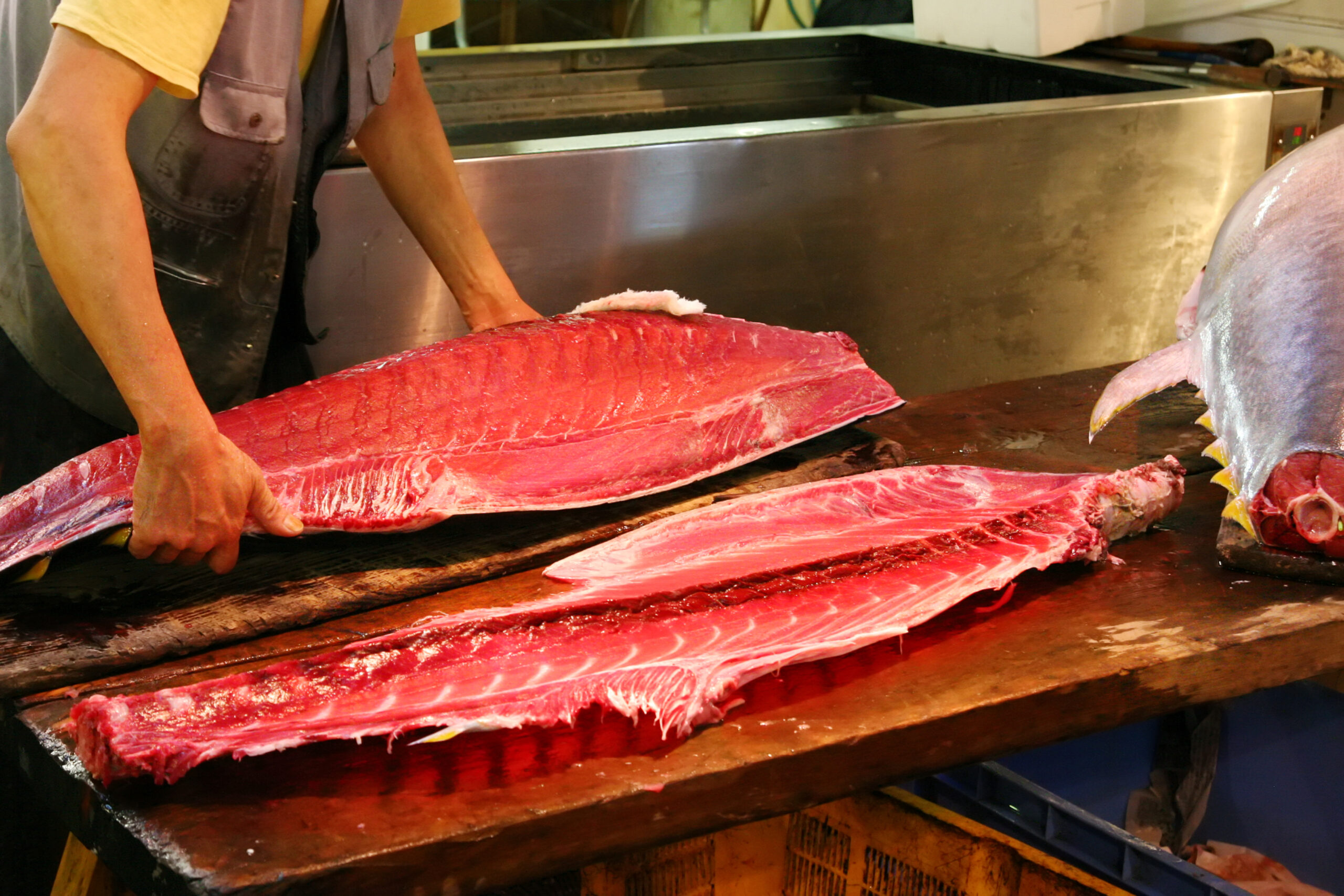
Varieties of the King of Sushi, "Tuna"
Kuromaguro (Bluefin Tuna)
The most famous among tuna is "kuromaguro" (bluefin tuna).
It is said to be the highest grade of tuna, and is also known by the alternate name "hon-maguro" (true tuna).
It is a large fish that lives widely in the tropical and temperate waters of the Pacific, including the Japanese coast.
It can reach a body length of 300 cm and a weight of over 400 kg.
The season for bluefin tuna is October to February. It has a distinctive flavor and aroma, and its fatty flesh is characterized by richness and a slight astringency.
Minamimaguro (Southern Bluefin Tuna)
"Minamimaguro" (southern bluefin tuna), caught only in the Southern Hemisphere.
Because it was once caught in the Indian Ocean, it is also called "Indo-maguro" (Indian tuna).
While minamimaguro is caught in the Southern Hemisphere, kuromaguro is mainly caught in the Northern Hemisphere.
At about 250 cm in total length and 260 kg in weight, it is classified as a medium-sized species among tuna.
Its season differs from bluefin tuna, coming into season from summer to autumn.
Like bluefin tuna, o-toro can be obtained from it, and it is sometimes traded at very high prices.
The color of its flesh is more pinkish compared to bluefin tuna. The pink flesh is unique to southern bluefin tuna.
Mebachimaguro (Bigeye Tuna)
With a catch volume 5 to 7 times that of bluefin tuna, and often sold as sashimi in supermarkets, is "mebachimaguro" (bigeye tuna). It can be said to be the most familiar variety of tuna in Japan.
It is said to get its name ("big-eye") from its wide-open eyes.
Compared to bluefin tuna, it has less toro, with more chu-toro and lean meat.
It grows up to 250 cm in total length and 210 kg in weight, and like southern bluefin tuna, is classified as a medium-sized species. It is a tuna characterized by its white cut flesh.
Binchomaguro / Binnagamaguro (Albacore)
A small tuna about the same size as bonito.
It has long pectoral fins, which look like "bin" (sidelocks of hair) when viewed from the front, hence its name.
It lives in the Pacific and is characterized by pink flesh. At conveyor-belt sushi, bintoro from the soft belly part is popular.
Kihadamaguro (Yellowfin Tuna)
Kihadamaguro (yellowfin tuna), as its name ("yellow skin") suggests, is characterized by its yellow tail fin and dorsal fin.
At 1 to 2 m in body length and around 40 kg in weight, it belongs to the somewhat small category.
It has almost no fatty flesh, with a clean, refreshing flavor free of off-taste, and is the most widely distributed tuna in the world.
It is often used in processed products such as canned goods, and is a popular, common tuna with a low price.
In Japan, Kochi and Kyushu are known as production areas, and the season is around June to November, but with large import volumes from overseas, the distribution volume is stable year-round.
Eaten Without Waste! The Various Cuts of Tuna
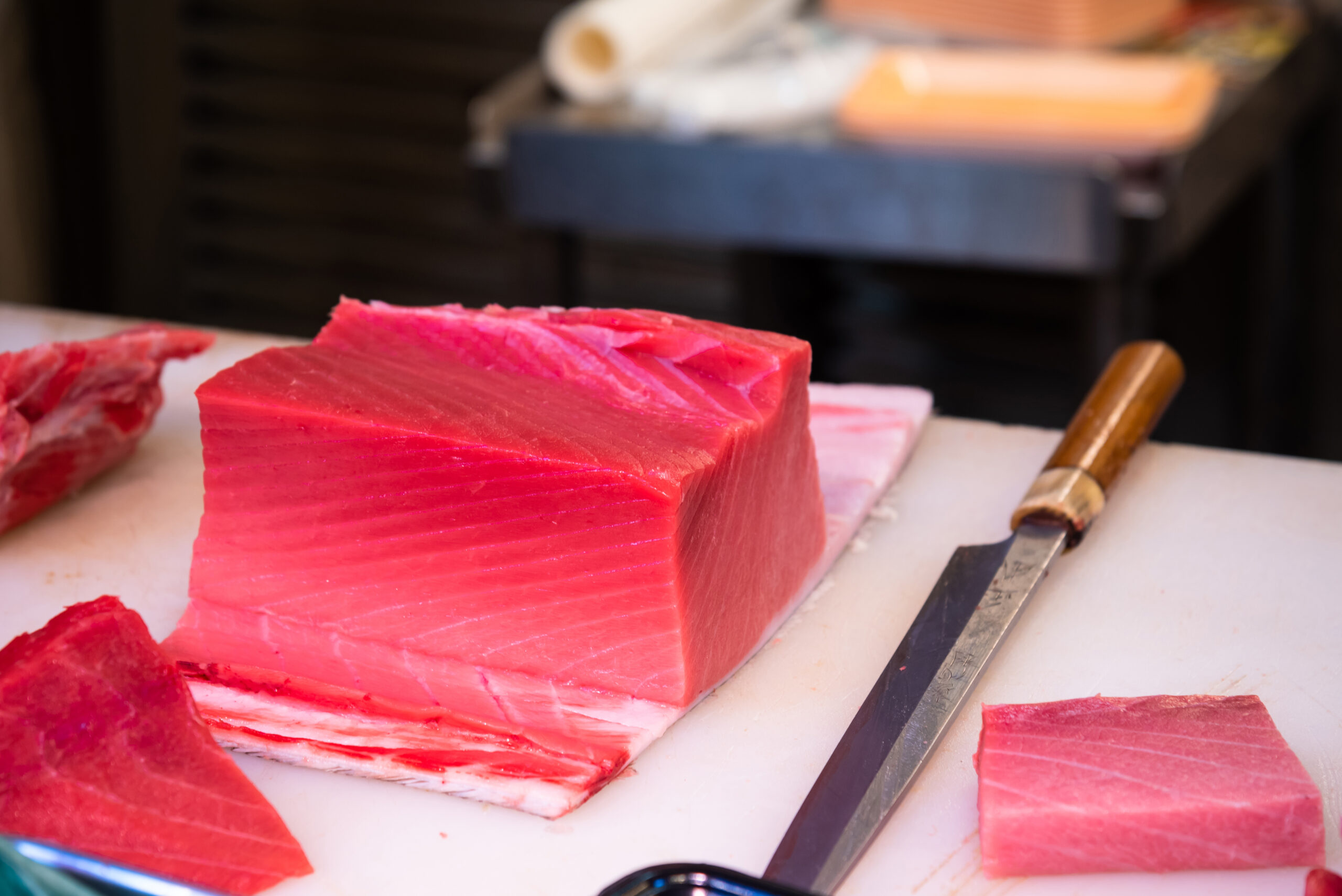
Tuna's flavor and fat content change depending on the cut, and the price also varies greatly, so the cooking method and way of enjoying it differ by cut. Let's take a look along with the ways to eat each cut!
O-toro
The fattiest part of the belly, and the most expensive cut of tuna.
It is treated as an especially high-grade topping even among sushi toppings.
The common theory is that the name "toro" was given because it "melts (torotto toro) in the mouth."
The lustrous marbling is beautiful to look at, and many fans are captivated by its melting sweetness.
Chu-toro
"Chu-toro" is found in the belly and back, a cut with a good balance of lean meat and fat.
It is the second most expensive cut of tuna after o-toro, but is a topping you can also enjoy at popular, casual sushi restaurants.
Its appeal is that you can taste not only the deliciousness of the fat but also the moderate richness and umami of the lean meat together.
It is the most popular cut among tuna.
Akami (Lean Meat)
With little fat, the flesh is firmer compared to toro, but it is a cut where you can enjoy tuna-like umami and a moderate bite.
Because it has little fat, it is low in calories and high in protein, and is popular as a health food too. A faint acidity is a characteristic of akami.
Akami is sometimes formed into sushi as is, and sometimes marinated in soy sauce dare to make "zuke" before forming. Zuke maguro is a representative of Edomae sushi, enjoyed since the Edo period.
Nakaochi
"Nakaochi" is the flesh remaining around the backbone.Although it is near the bone, it has a moderate amount of fat, and the muscle fibers can be enjoyed as a distinctive texture.
Depending on the shop, nakaochi may be served still on the backbone.In that case, you scrape off the flesh with a spoon or the like, place it on the rice, and eat it.
Kama
The cut on the body side next to the gills.Next to the kama is immediately the o-toro cut, and the kama is also firmly fatty.It is a cut where you can enjoy deliciousness that rivals o-toro, but because it has many bones and little flesh, it can be obtained relatively cheaply at supermarkets and fish shops.
In addition to being formed into sushi, by grilling it over charcoal or the like, you can savor a meat-like appearance and the umami of the fat.
The Ecology of Tuna
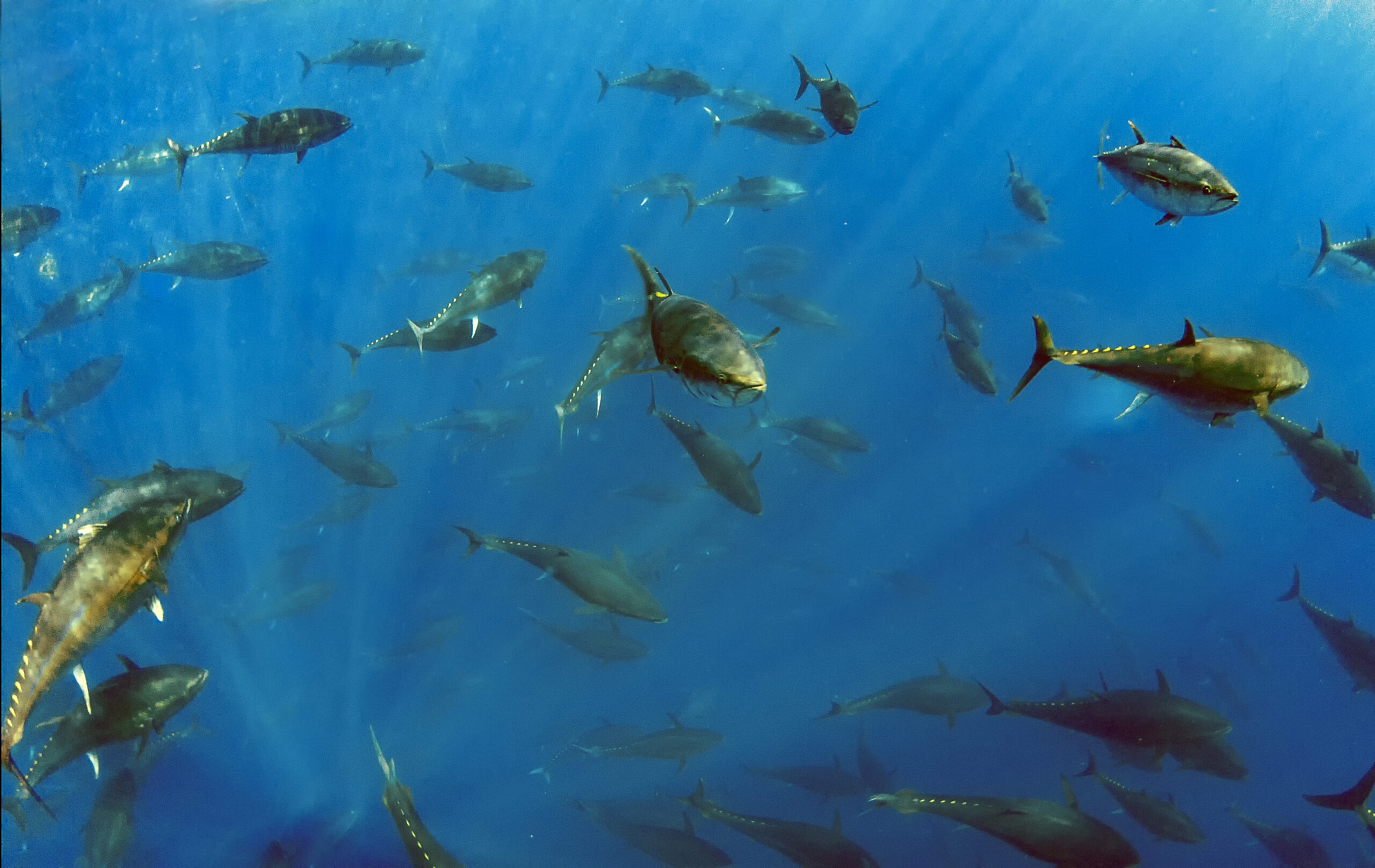
Tuna Can Swim at Ultra-High Speed
Tuna are migratory fish that often swim in the open ocean. Because the open ocean has little food, they swim at high speed to catch prey.
They usually swim at about 30 to 60 km/h, but their top speed is as much as 160 km/h!
The tuna's body is sturdy and spindle-shaped. To reduce water resistance, they can retract their first dorsal fin, pectoral fins, and pelvic fins into devices called fin grooves, and they have a powerful tail fin.
This is by opening their mouth. Because tuna suffocate if they stop swimming, they keep going.
Tuna "Die if They Stop"
Tuna swim with their mouths open, in order to take in oxygen from the water entering through their gills and breathe. Therefore, if a tuna were to stop swimming, oxygen would not be taken into its body, and it would suffocate and die.
Because tuna must keep swimming, at night they continue to swim while slowing their swimming speed. From a human perspective it is a quite mysterious structure, but tuna are fish born under a star that requires them to keep swimming their entire lives.
Reported in the News! The Highest Price at a Tuna Auction
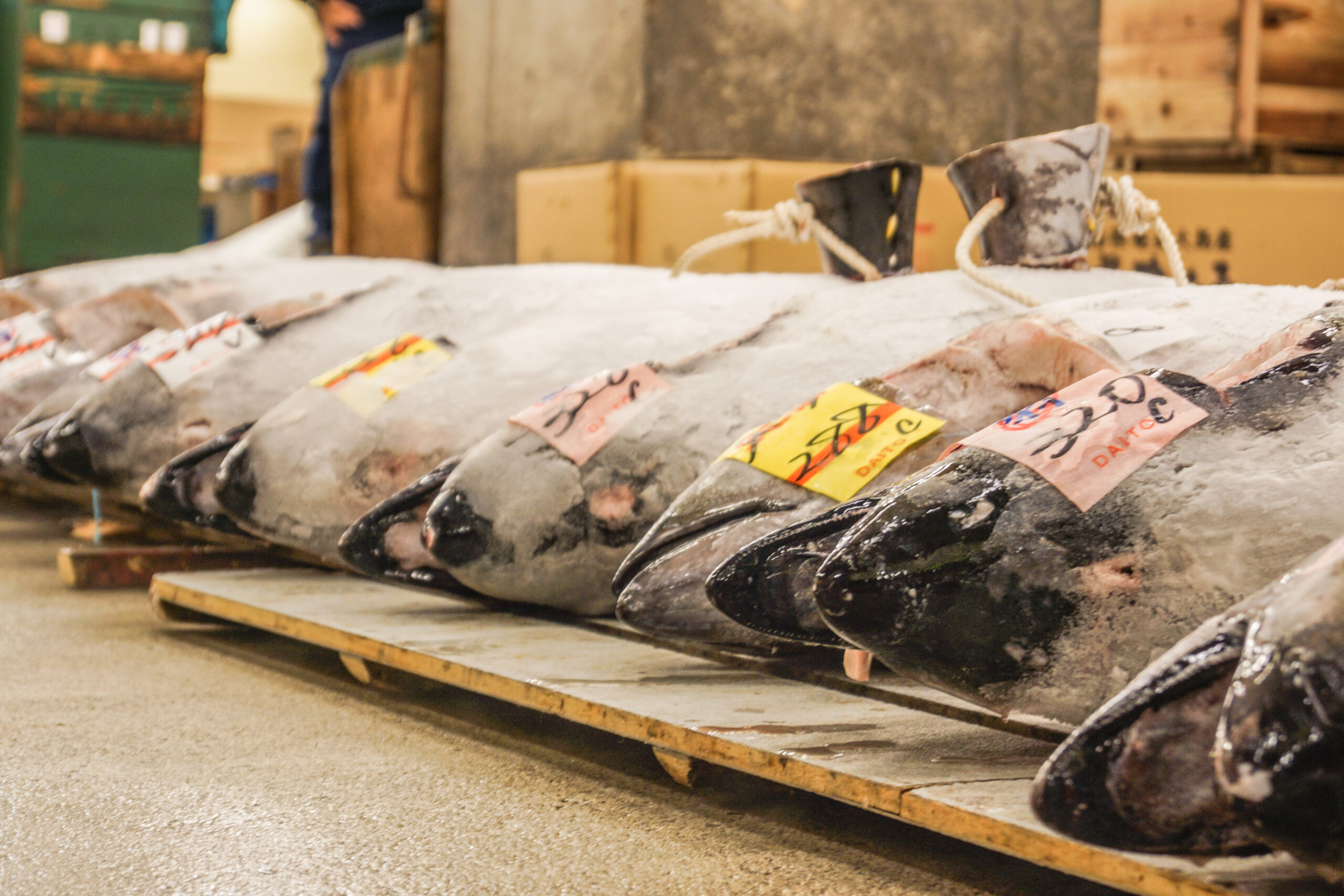
Although it depends on the variety, tuna is a fish often traded at high prices even among fish.
Do you know how much tuna actually trades for? As mentioned earlier, bluefin tuna is a luxury item, but in the past there have been cases where it was won at auction for astonishing prices.
For example, a 222 kg Oma-caught bluefin tuna from Aomori Prefecture put up for auction in 2013 was won at the astonishing price of 155.4 million yen (700,000 yen per kilogram). This trade price was the highest on record since records began in 1999. The buyer who won this high-grade bluefin tuna at auction was "Sushizanmai," a chain sushi restaurant also familiar from TV commercials.
The reason such a high price was paid is, of course, partly because the tuna was good, but rather than the tuna's value alone, a major factor is that being featured in the news serves as advertising for the shop and helps boost the shop's brand image.
In any case, it is fair to say that delicious tuna captivates many people.
Summary
This time, we introduced the varieties and cuts of the king of sushi, "tuna," as well as tuna auctions.
When we think of tuna, we tend to associate it with akami and toro, but learning about little-known cuts opens up new ways to enjoy it, which is interesting.
Depending on the sushi restaurant, some shops are especially particular about their tuna.
While imagining tuna swimming through the vast ocean, it might be nice to enjoy the differences in deliciousness from cut to cut.