Genki GDC, Operator of Uobei and Genki Sushi, Launches Domestic Aquaculture Network Project
One of the major challenges currently facing the sushi industry is the shortage and soaring prices of domestic ikura (salmon roe), along with the risk of maintaining a stable supply of key ingredients including salmon and red sea bream (madai).
Domestic ikura continues to face serious supply concerns, driven by a combination of poor autumn salmon catches, a worldwide shortage of raw materials, and price increases caused by logistics and international affairs. Salmon, meanwhile, relies extremely heavily on imports, leaving it increasingly exposed to price fluctuations from exchange rates and global conditions. Red sea bream, too, has posed a challenge in terms of building a system capable of stable supply across a nationwide chain. Against this backdrop, on November 25, 2025, Genki Global Dining Concepts, the company behind Uobei and Genki Sushi, launched a project to build a full-scale domestic aquaculture network for "ikura x salmon x red sea bream.""Momotaro Salmon" technology in Yatsushiro, Kumamoto expands into ikura aquaculture
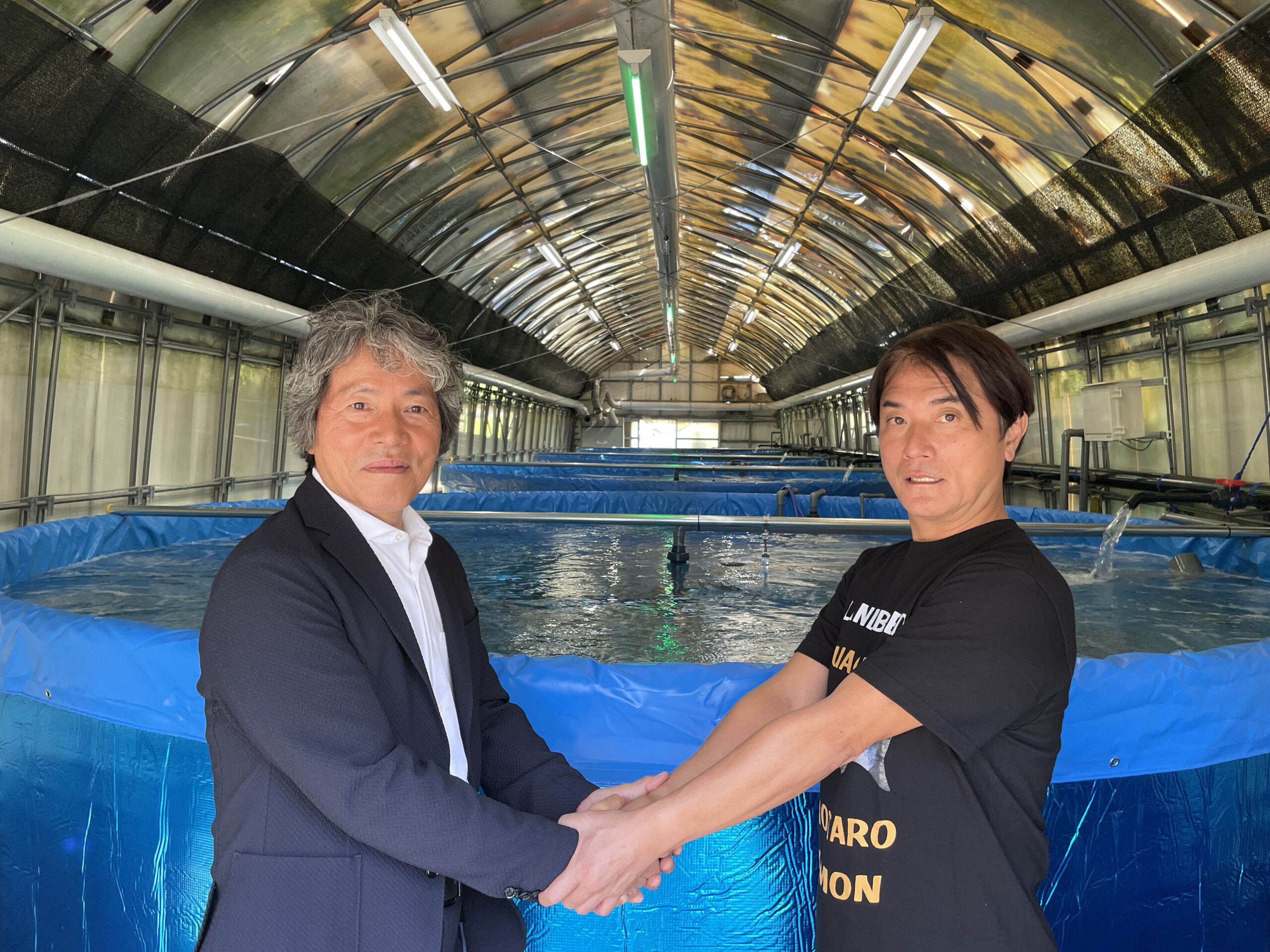
This project is being realized through Genki Global Dining Concepts partnering with domestic aquaculture companies.
The first of these partners is Hirayama Co., Ltd., a land-based aquaculture company in Yatsushiro, Kumamoto.
The "Momotaro Salmon" raised by the company is praised for its rich fattiness, sweetness, and clear, clean flavor, and is drawing attention as a new brand of land-based farmed salmon.
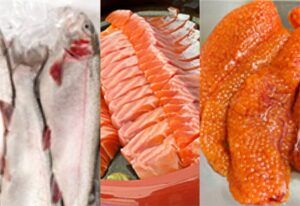
Drawing on Hirayama's advanced water-quality management and feeding techniques, the company has now newly launched "land-based aquaculture of domestic ikura."
It adopts a model in which ikura is produced on the same foundation as salmon farming. The aim is to produce 40 to 60 tons of domestic ikura per year, and in the future the company envisions serving it across all of its group's stores nationwide, including Uobei and Genki Sushi.
A release ceremony for 500 salmon: the start of next-generation aquaculture
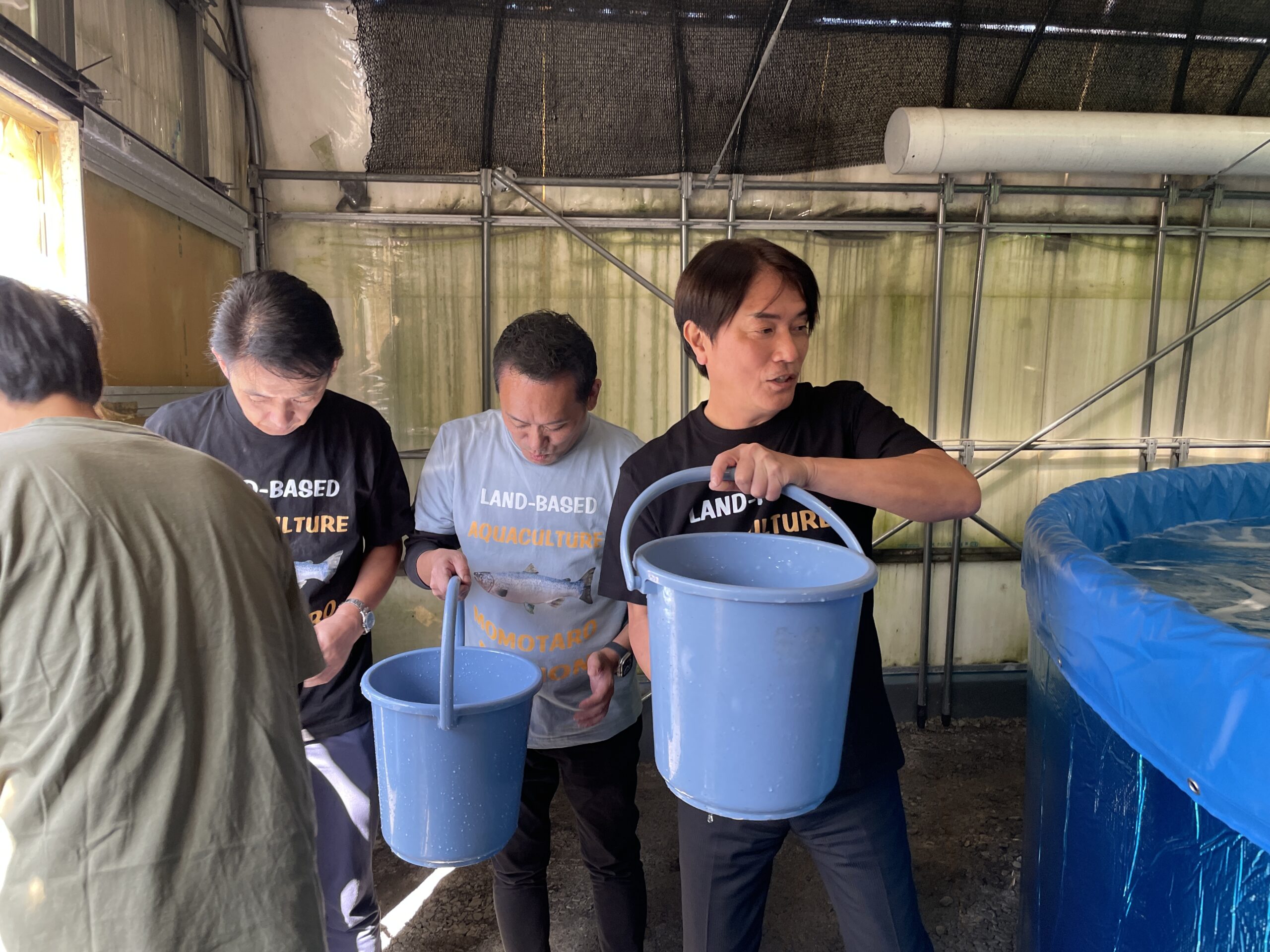
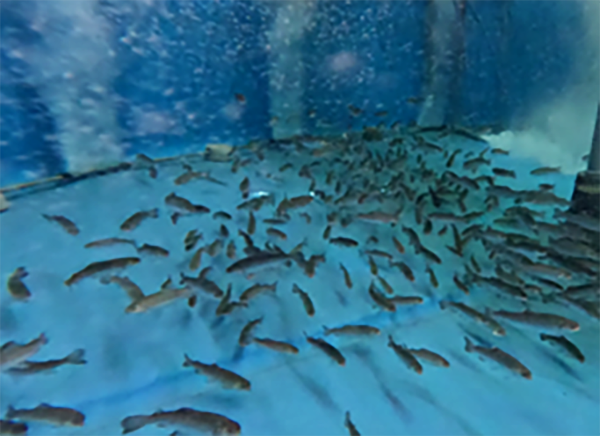
As a symbolic event marking the start of the collaboration, a release ceremony for about 500 salmon was held in Yatsushiro, Kumamoto.
Around the tanks gathered local stakeholders, Hirayama staff, and employees of Genki Global Dining Concepts, who carefully released the fish one by one, wishing for their growth and safety. Each time a young salmon was released into the clear surface of the large tank, quiet cheers rose from the participants, and a distinctive sense of tension and anticipation filled the entire farm.
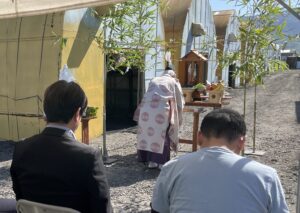
On the day, a prayer was also offered by a local Shinto priest.
For the fishing industry, aquaculture, which deals with "life," is closely connected to the local natural environment.
Through the Shinto ritual, it was striking to see companies and the local community sitting at the same table to discuss the future while respecting the region's cultural values.
To 1,000 tanks in seven years: scaling up to one of Japan's largest land-based aquaculture operations
The two companies had initially drawn up their business plan on the premise of a relatively small-scale start of 36 tanks. However, through repeated discussions, both sides reaffirmed the sheer size of market demand for fully domestic salmon and ikura, as well as the advantages of Yatsushiro's water quality, water volume, and environment, and grew increasingly convinced that it should be developed into a full-scale production base.
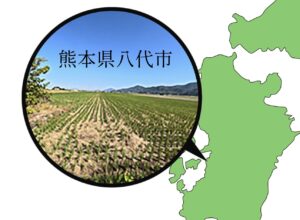
As a result, the plan took a major turn. An ambitious project to gradually expand to a scale of 1,000 tanks over seven years has now officially gotten underway. This is an extremely large scale for land-based aquaculture in Japan, and if realized it will make possible the production of up to 1,000 tons of salmon per year (approx. 260,000 fish).
In the near future, one of Japan's largest domestic salmon and ikura networks is set to be born from the planned expansion site in Yatsushiro, Kumamoto.
A red sea bream collaboration project also begins in Minamiise, Mie
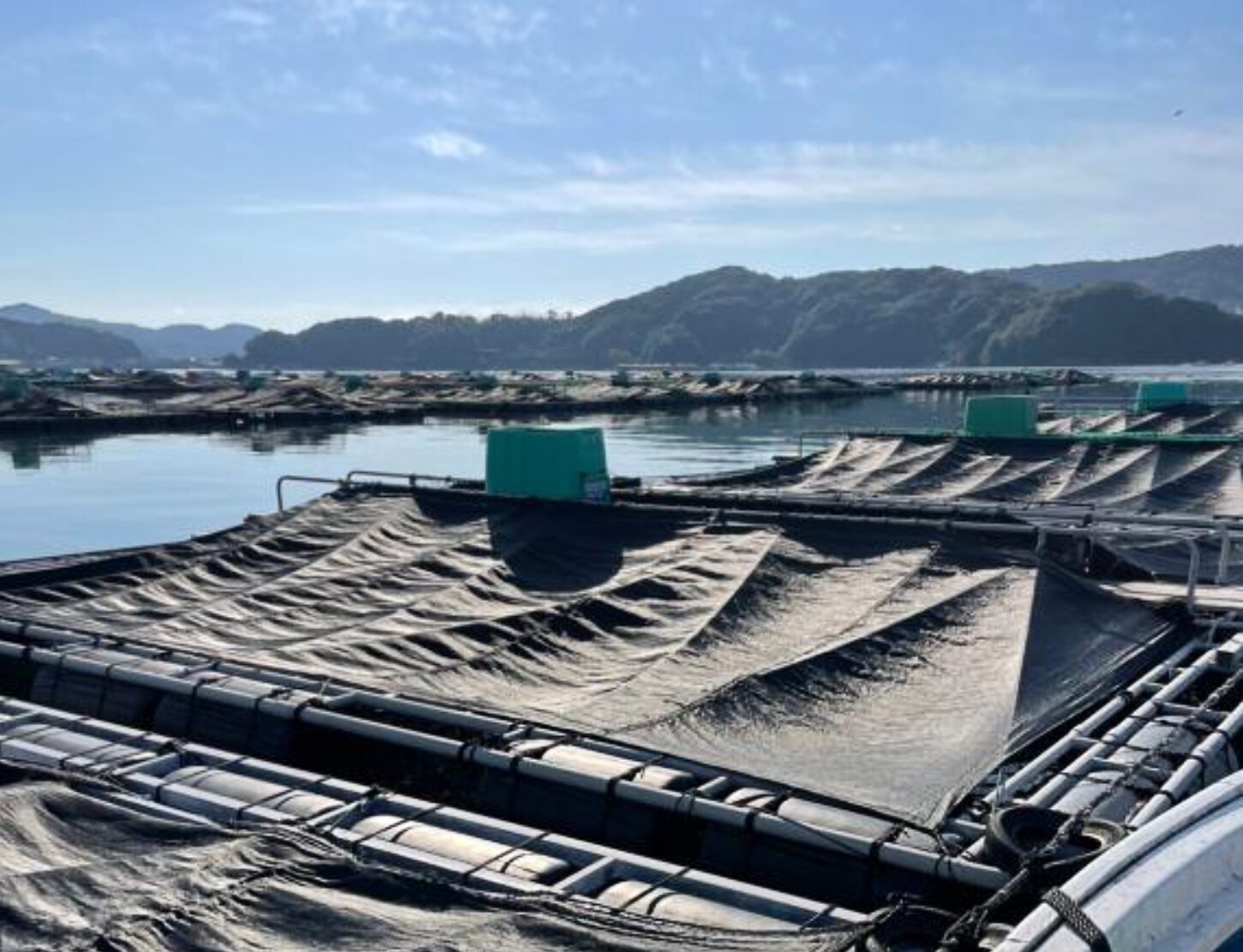
Furthermore, Genki Global Dining Concepts has also begun a "red sea bream aquaculture" collaboration with Takasui Co., Ltd., a long-established aquaculture company in Minamiise, Mie.
Minamiise is known as "the home of red sea bream," and its ria coastline of highly transparent seas is one of Japan's premier areas for raising red sea bream. The aim is to fundamentally strengthen the supply network for domestic fish.
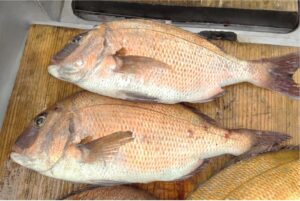
Previously, it had been a challenge that "Uobei," operated by the group, served red sea bream only at some stores. With the annual production of 600 tons of red sea bream (approx. 300,000 fish) made possible by this collaboration, a system will be in place for customers to enjoy Minamiise red sea bream at Uobei locations nationwide.
What strengthening the domestic aquaculture network brings to the sushi industry
This "ikura x salmon x red sea bream" domestic aquaculture network project by Genki Global Dining Concepts is an effort to confront the company's supply challenges head-on and to fundamentally resolve them while building long-term cooperative relationships with local aquaculture operators. For the company, it represents not only securing a stable supply but also a responsible undertaking as a food-service company to nurture a production system rooted in the local community.
Moreover, establishing a production base that can secure domestic fish throughout the year is highly likely to have a positive impact on the sushi industry as a whole, in that it reduces the risks of import dependence, raises quality through cooperation with producers, increases the proportion of domestic sushi ingredients, enhances the value of domestic fish, and stabilizes the supply chain overall.
This collaboration is not limited to the efforts of Genki Global Dining Concepts alone; it can be called an attempt to chart a path toward the sustainability of Japan's sushi culture. We will continue to watch closely how the domestic aquaculture network built through this project grows, and how far it contributes to a stable supply for the sushi industry going forward.
Sushi Walker Editorial Team