Sushi Legends Vol. 3 — Matsugazushi: Edo's Most Luxurious Sushi and Sakaiya Matsugoro

Sakaiya Matsugoro and the Birth of Matsugazushi
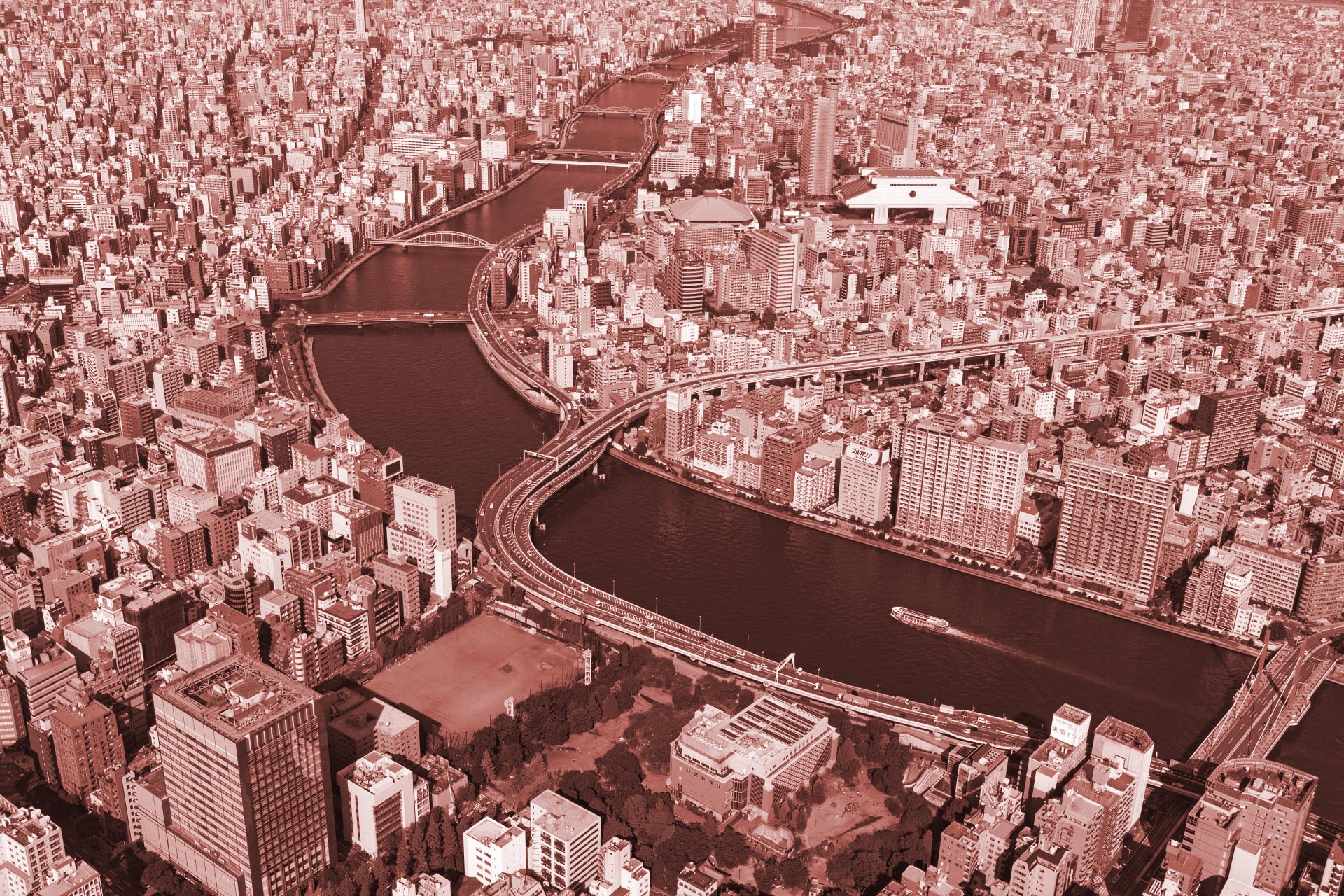
"Matsugazushi," considered one of the three great sushi shops of Edo, is said to have been founded around 1830 by Sakaiya Matsugoro at Ataka Rokkenbori in the Fukagawa district (around present-day Kinshicho and Asakusabashi).
There is much mystery surrounding Sakaiya Matsugoro's birth and not much is clear about it, but he is also said to have come from Senshu Sakai (Osaka Prefecture) and to have moved from Osaka to Edo.
While his real name is recorded as "Kashiwaya Matsugoro"—a different name—in "Senryu Edo Meibutsu," published in 1926, in "Edo Kaimono Hitori Annai," published during the Edo period, he is recorded as "Sakaiya Matsugoro."
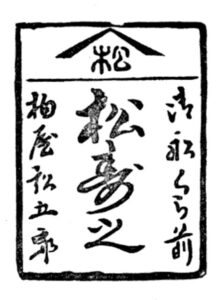
Not much literature remains about Sakaiya Matsugoro himself, but a great deal of literature remains about "Matsugazushi," the shop he founded.
According to the contents described in "Edo Kaimono Hitori Annai," a guidebook of the Edo period, its official shop name was "Isagozushi," and it is said to have been called "Matsugazushi," "Matsunozushi," and "Matsuzushi" by taking "matsu" (pine) from Matsugoro's name and from the famous "Ataka no Matsu" (the pine of Ataka), as well as "Ataka no Sushi" from the name of the area.
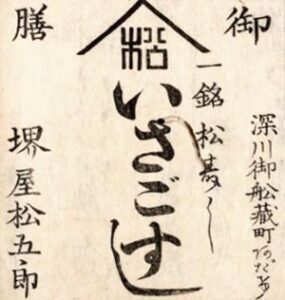
In any case, from its earliest days "Matsugazushi" made a name for itself as the most luxurious sushi shop in Edo at the time—handing out sushi to customers with a one-shu silver coin tucked inside, and sparing no expense in selecting luxurious ingredients—and is said to have influenced many sushi shops.
Why "Matsugazushi" Prospered
The reasons "Matsugazushi" prospered included, of course, its taste and the lavishness of its appearance, but its location is thought to have played a large part as well.
For example, "Edo Meibutsu Shi" contains a passage to the effect that "Ataka-zushi is the finest in Honjo; nothing of such renown can compare with it at this time. As a gift to noble houses, the three-tiered box: the egg is like gold, the fish like crystal," describing the lavishness of "Matsugazushi."
At the time, the residence of Nakano Harima-no-kami—a favorite of the shogun Tokugawa Ienari—stood in Honjo Mukojima, very close to "Matsugazushi," and it is thought that people seeking to curry favor with Nakano Harima-no-kami used "Matsugazushi" as a gift.
Incidentally, a record also remains stating that the price of this gift was about 3 ryo for the "two-tier" rank, one rank below the "three-tier" that appears in the passage above.
Although one ryo varies depending on the period, it is roughly equivalent to 40,000 yen, so this works out to a remarkable 120,000 yen.
You can see just how out of reach "Matsugazushi" was for the common people of the time.
Even today, sushi costing 120,000 yen is quite rare, so you get a sense of how extravagant the powerful and wealthy of that era were.
There is also a senryu that goes "Matsugazushi—a cat gobbles up one bu in a flash," but this "cat" refers to a courtesan of the licensed quarter in front of Ekoin, right under the nose of "Matsugazushi," and it depicts how a courtesan—probably treated by a customer—would gobble up high-class sushi costing one bu in gold (a quarter of a ryo, roughly 10,000 yen).
It seems that behind the prosperity of "Matsugazushi" lay the fact that it was often used as a tribute to the powerful of the day and as a treat for courtesans.
"Matsugazushi," the Most Luxurious Sushi in Edo
As described, "Matsugazushi" was sushi so luxurious it is hard to imagine from a modern perspective, and we can get a sense of this from "Yanagidaru" (Haifu Yanagidaru), a collection of senryu poems published from the mid-Edo period through to the end of the shogunate.
In the senryu "Matsunozushi, which never reaches the mouths of the ohashita," it is sung that ordinary citizens such as the ohashita (women who did menial chores) could not eat "Matsugazushi," and in "Even Matsugazushi won't bring me down, so give it up," the spirit of a courtesan is written—saying that not even Matsugazushi could win her over—showing just how high-class "Matsugazushi" was and how often it was used in pleasure-quarter outings.
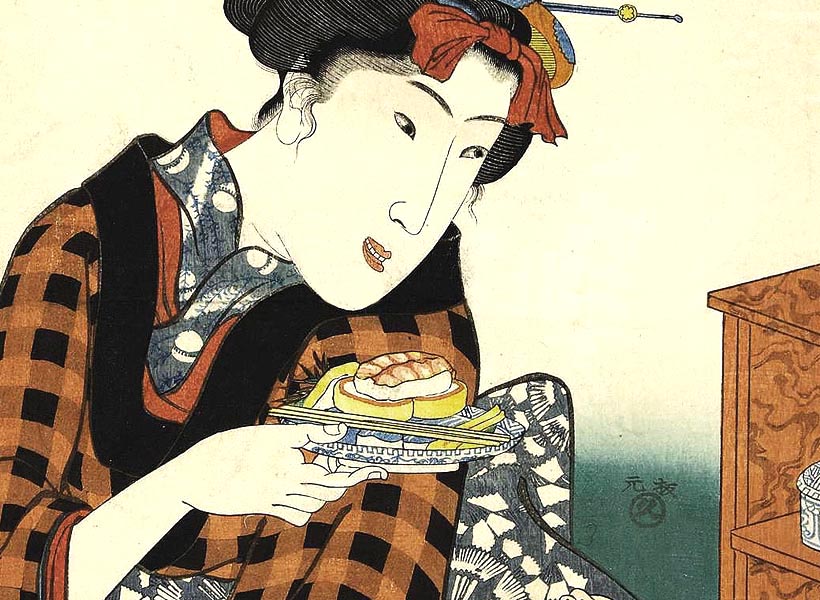
In the large nishiki-e "Shimazoroi Onna Benkei: Matsunozushi" by Utagawa Kuniyoshi, the sushi of "Matsugazushi" appears together with the line "Even little children beg for Ataka's Matsugazushi," and what is interesting is that not only nigiri sushi of shrimp but also egg rolled sushi and mackerel pressed sushi are depicted, suggesting that Edomae nigiri sushi was served together with pressed sushi and the like.
Utagawa Toyokuni III also drew ukiyo-e on the theme of "Matsugazushi" (the cover illustration of this feature), and the fact that the popular ukiyo-e artists of the time vied to take it up as a subject shows that "Matsugazushi" was a much-talked-about, glamorous sushi shop.
The Ordeal of the Tenpo Reforms
In this way, after its founding "Matsugazushi" gained a reputation among Edo's wealthy, the powerful, and courtesans, and it even appeared in ukiyo-e, becoming a topic of conversation among people for its luxury and glamour.
On the other hand, however, that very luxury came to collide with the political climate of the time.
When the shogun Ienari died in 1841, the senior councilor Mizuno Tadakuni pushed through the Tenpo Reforms.
These were meant to crack down on luxury that was seen as a corruption of public morals, and high-class sushi shops like "Matsugazushi" were naturally made targets of punishment.
Thus, because "Matsugazushi" offered many items that emphasized a sense of luxury, it was deemed to be in violation of the frugality decrees, and Sakaiya Matsugoro and Hanaya Yohei were sentenced to the punishment of being placed in handcuffs.
At this time, not only these two but nearly 200 sushi shops are said to have been punished.
Also, Nakano Harima-no-kami—mentioned earlier as someone whose famously opulent lifestyle likely contributed to the prosperity of "Matsugazushi"—was punished by Mizuno Tadakuni with the confiscation of his domain and the demolition of his villa, and fell from power, so "Matsugazushi" and the sushi industry, which had benefited from the splendid culture of the Ienari era, entered a downturn that lasted until Mizuno Tadakuni's own downfall.
Was Sakaiya Matsugoro the Originator of Edomae Sushi?

The common theory holds that the originator of Edomae nigiri sushi was Hanaya Yohei of "Yohei-zushi," but the reason Sakaiya Matsugoro of "Matsugazushi" is also regarded, alongside Hanaya Yohei, as an originator of nigiri sushi is that such an impression appears scattered throughout the literature.
For example, "Kiyu Shoran," an essay written about the customs of the late Edo period and published in 1830, contains a passage to the effect that "around the beginning of the Bunka era, Matsugazushi appeared at Rokkenbori in Fukagawa, and the sushi shops of the world changed completely," describing how "Matsugazushi" had a great influence on sushi shops throughout Edo.
Also, "Edo Meibutsu Shi" contains the description: "This Matsugazushi may be the beginning of nigiri sushi, but perhaps out of a wish to preserve the old form of pressed sushi, a portion of pressed sushi is always mixed into the single-serving platter." Here it suggests the possibility that "Matsugazushi" was the beginning of nigiri sushi. It is also interesting to see that it actively sold pressed sushi as well.
Of course, such records are sometimes mistaken, so we cannot conclude from this alone whether or not he was the originator, but it seems certain that it was a famous shop whose name resounded throughout society alongside "Yohei-zushi."
In Closing
What did you think? This time we introduced Sakaiya Matsugoro, a giant of the Edo-period sushi industry who ranks alongside Hanaya Yohei.
We were surprised by how high-class the sushi was—hard for us moderns to imagine.
Today, Sakaiya Matsugoro's "Matsugazushi" no longer exists, but a shop run by one of Sakaiya Matsugoro's disciples remains—"Nanao Matsunozushi," which was opened in Noto in 1868 by someone who trained at "Matsugazushi" in his youth—where you can eat the egg roll that is said to have been presented to Tokugawa Ienari, who also appeared in ukiyo-e.
Magnificent, gorgeous sushi that even the shogun of the day is said to have savored.
If you ever get the chance, it is something you would surely want to try.