Complete Guide to Becoming a Sushi Chef — Salary, Overseas Opportunities, and the Rise of Female Chefs
The popularity of sushi has now spread to many countries, to the point where there is hardly a foreigner who does not know what sushi is.
At the same time, however, both in Japan and abroad, sushi chefs are in short supply, and supply is not keeping up with demand.
This time, for those who want to become a sushi chef or who are interested in the profession, we will explain in detail the knowledge you should know in order to become a sushi chef—what kind of profession a sushi chef is, what exactly you need to do to become one, and how the role of the sushi chef may evolve in the future.
The Profession of the Sushi Chef
What Is a Sushi Chef?
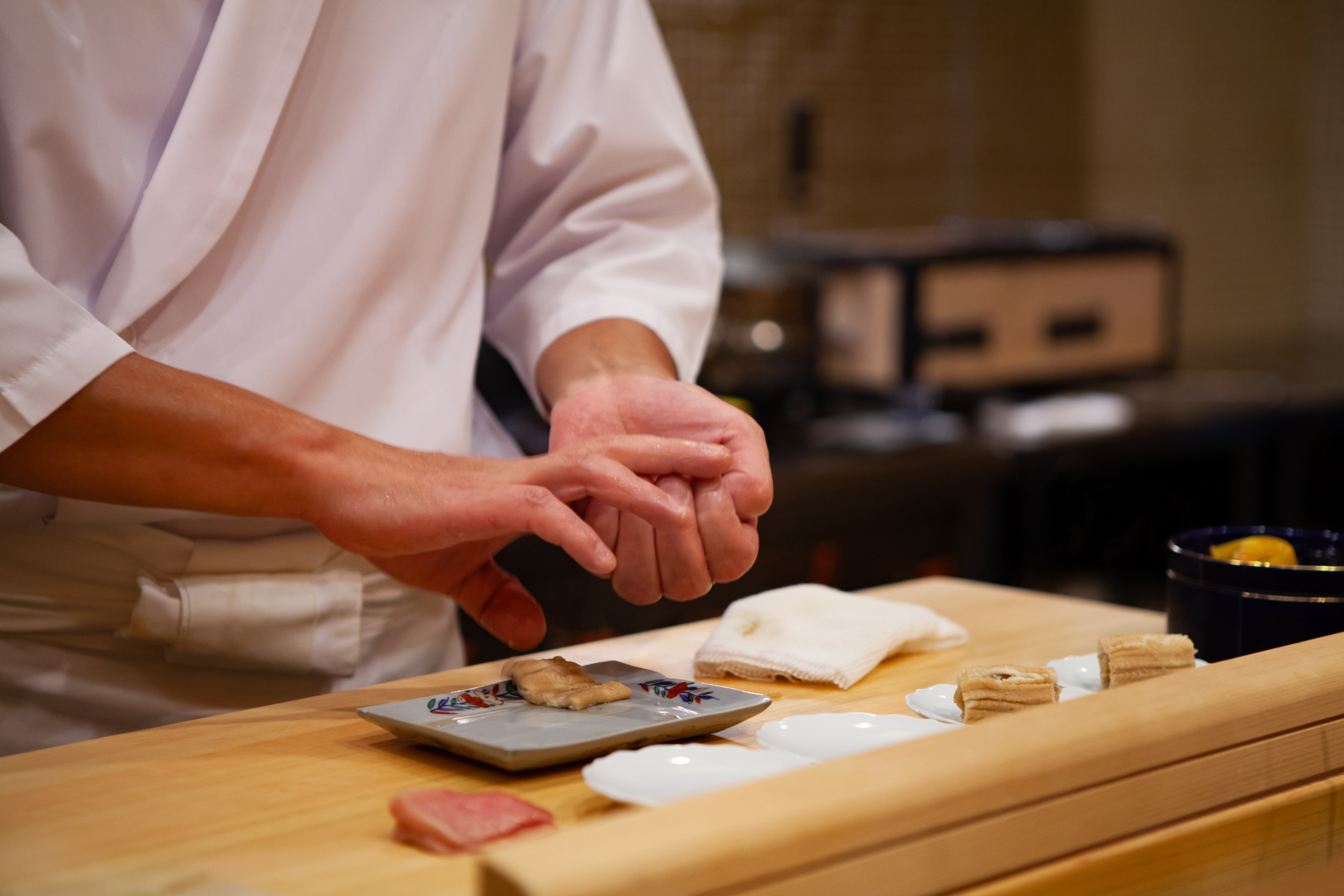
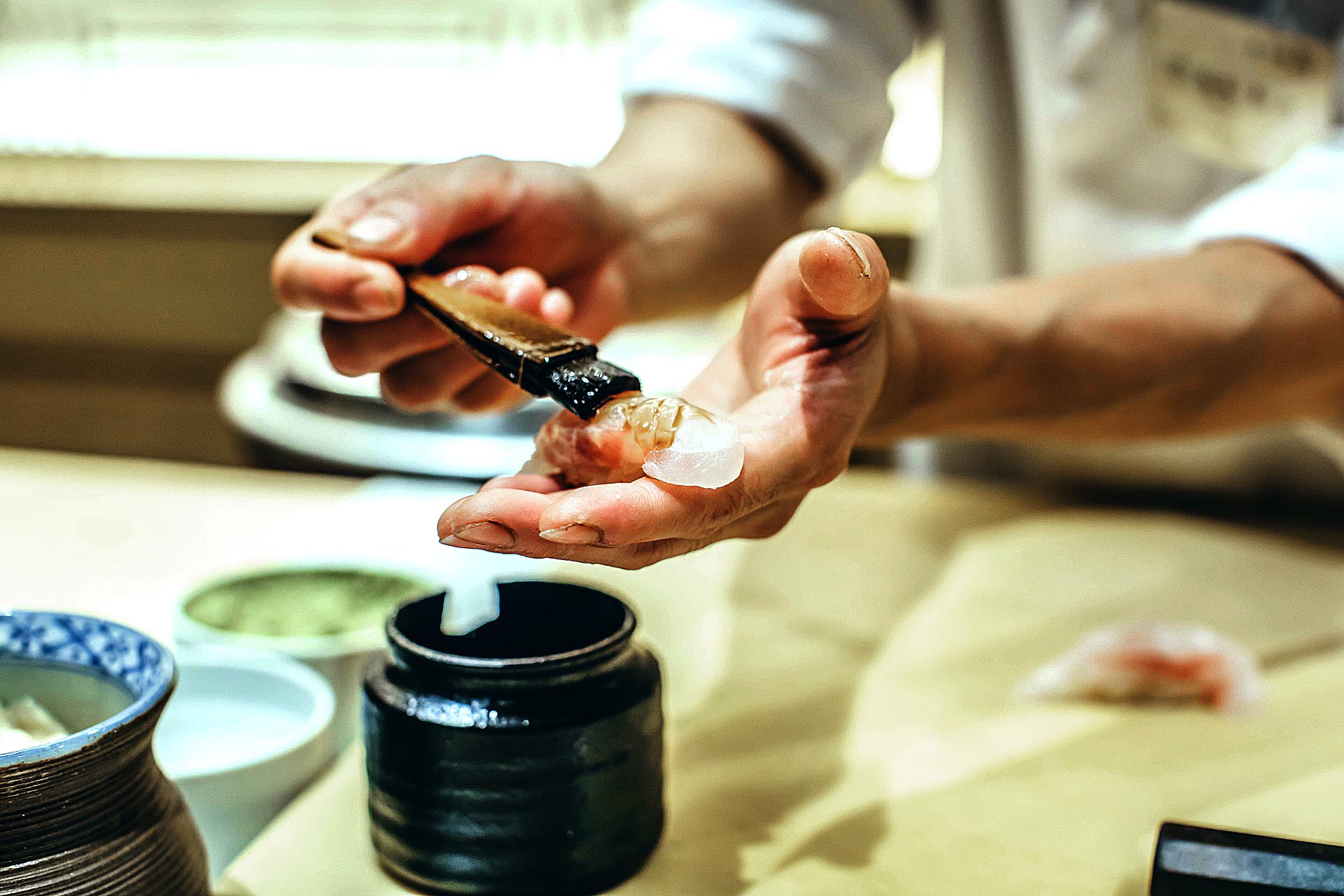
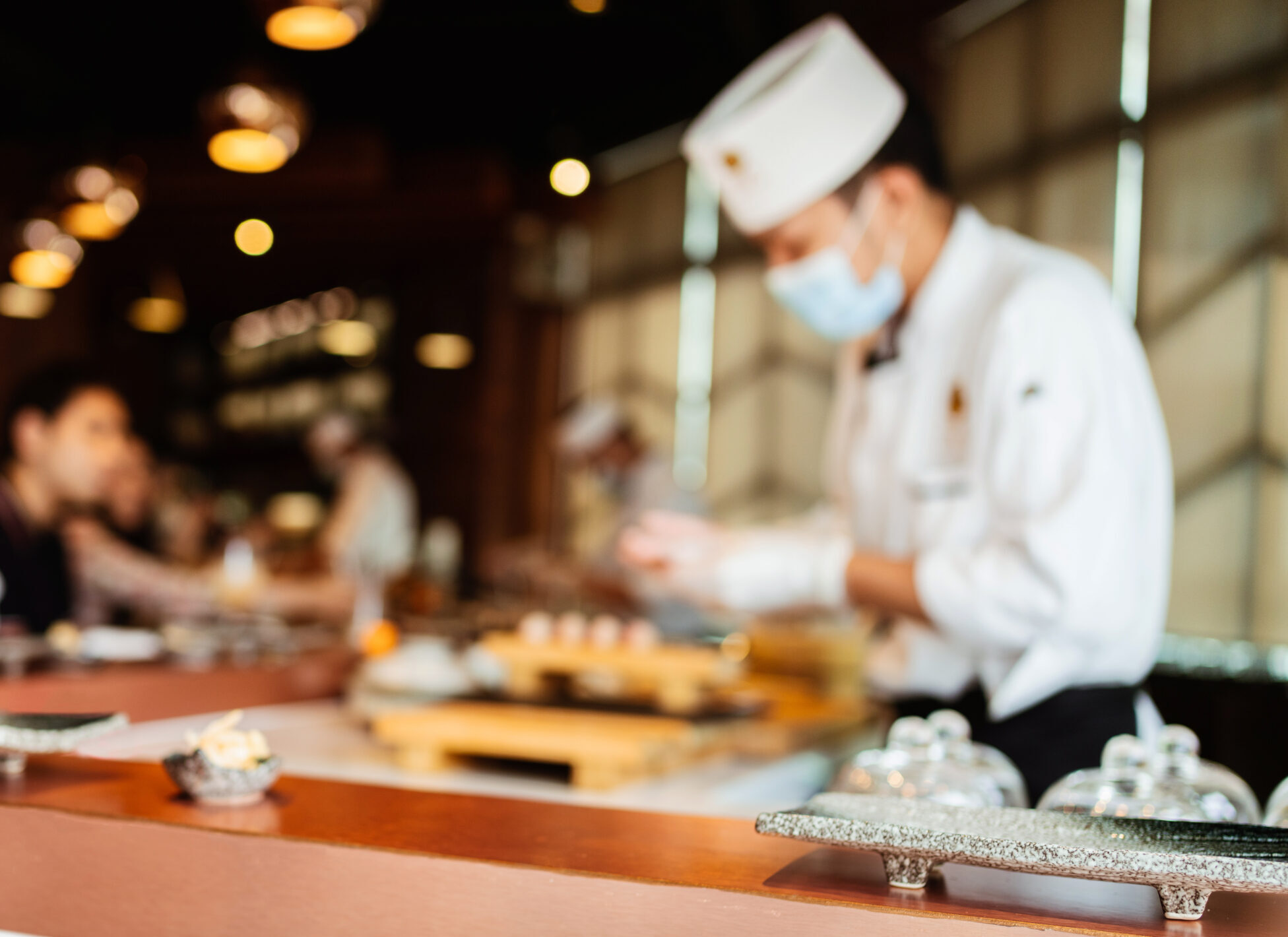
A sushi chef is a craftsman who specializes in preparing sushi. Their main work is to make and serve sushi using seafood and other ingredients.
No specific qualification is required to become a sushi chef, but the knowledge and skills demanded are wide-ranging. From selecting ingredients to preparation and cooking, and on to customer service, a sushi chef is required to have the skills and experience covering the entire process up to serving the sushi.
Types of Sushi Chefs (Casual Restaurants, High-End Restaurants, Conveyor-Belt Sushi)
Broadly speaking, sushi chefs fall into the following three categories.
Casual Restaurants
A casual restaurant is a non-conveyor sushi restaurant that is not high-end. It cannot be defined precisely, but in terms of price range, a sushi restaurant where the cost is under 8,000 yen per person could be called a casual one.
In addition to the seated style, there are many formats such as standing-style, izakaya-style, and small chains, making these sushi restaurants that serve sushi you can enjoy casually.
High-End Restaurants
Among the many sushi restaurants, these are establishments that use especially carefully selected ingredients to offer quality-focused sushi and dining experiences.
Prices can be high, sometimes reaching 100,000 yen, and accordingly the sushi chef is required to have deep knowledge, advanced skills, high-quality customer service, and a refined sense of presentation.
They are also known for requiring a long apprenticeship before one can become a sushi chef.
Conveyor-Belt Sushi
These are sushi restaurants that efficiently serve large amounts of sushi via belt conveyors and the like. Because they generally let you enjoy sushi casually at reasonable prices, they are supported by a wide range of customers.
There are artisan-style conveyor-belt sushi restaurants where sushi chefs hand-press the sushi, and robot-style conveyor-belt sushi restaurants that use rice pressed by robots. While artisan-style conveyor-belt sushi restaurants sometimes have chefs who came from ordinary or high-end restaurants, robot-style conveyor-belt sushi restaurants generally serve sushi made mainly by robots.
The Roles and Job Duties Expected of a Sushi Chef
The work of a sushi chef varies in role and duties depending on the type of establishment.
Below, let us look at the roles and job duties according to the formats of ordinary restaurants, high-end restaurants, and conveyor-belt sushi.
The Role and Job Duties of a Sushi Chef at an Ordinary Restaurant
Among ordinary restaurants, in the case of individually owned ones, the chef handles many of the steps from purchasing the seafood to cooking and serving.
On the other hand, in the case of standing-style sushi or chain restaurants, the head office often handles purchasing and so on collectively, and in such cases the chef tends to be responsible for only part of the work, such as preparation and pressing the sushi.
The Role and Job Duties of a Sushi Chef at a High-End Restaurant
Basically, at high-end restaurants, advanced skills and deep knowledge are required across all aspects of sushi restaurant operations.
Not only purchasing, preparation, and pressing the sushi, but also serving methods and the manner of customer service—down to the finest details—are often required at a high level.
For this reason, it is common to see chefs who trained for a long time at famous high-end restaurants well-versed in such matters going on to become independent and open their own establishments.
When working as a sushi chef at a high-end restaurant, one may also be required to take on the role of an instructor, such as teaching the young chefs in training.
The Role and Job Duties of a Sushi Chef at Conveyor-Belt Sushi
In the Case of Artisan-Style Conveyor-Belt Sushi
Since conveyor-belt sushi restaurants are mostly chain stores, purchasing is often managed by the head office, just as with ordinary restaurants.
Also, although it varies by restaurant, in many cases the sushi toppings arrive already cut, so the preparation work is correspondingly reduced.
Because both pressing the sushi and preparation prioritize speed over meticulousness, those who have transferred from an ordinary restaurant need to adapt to these conditions.
In the Case of Robot-Style Conveyor-Belt Sushi
Large chains such as Sushiro and Kura Sushi often use robots to serve sushi in order to improve operational efficiency. In that case, staff who are not sushi chefs, such as part-timers, assist with part of the robot's cooking process, so no specialized sushi chef is needed at the restaurant.
How Do You Become a Sushi Chef? Required Skills and Qualifications
Although a sushi chef is a specialized profession, in fact no specific qualification is required to become one.
On the other hand, practical skills for serving delicious sushi are required.
Skills Required of a Sushi Chef
The skills required of a sushi chef—that is, the knowledge and techniques—are not merely how to press the sushi but cover a wide range, and they also differ depending on the type of establishment where one works.
For example, when working as a chef at a high-end restaurant, basically all skills are necessary, but in the case of conveyor-belt sushi or chain restaurants that do not require purchasing, purchasing skills are unnecessary.
Here, we will explain the skills required of a sushi chef.
Purchasing Skills
These are the skills needed to judge the freshness and quality when purchasing seafood at the market.
Communication skills are also important, such as negotiating prices while building relationships of trust with suppliers.
Knowledge of Hygiene Management
In order to prevent food poisoning, hygiene management is an important skill for a sushi chef.
Knowing the proper methods of managing and handling cooking utensils and seafood can be said to be must-have knowledge for a professional.
Knowledge of Knives and Cooking Utensils
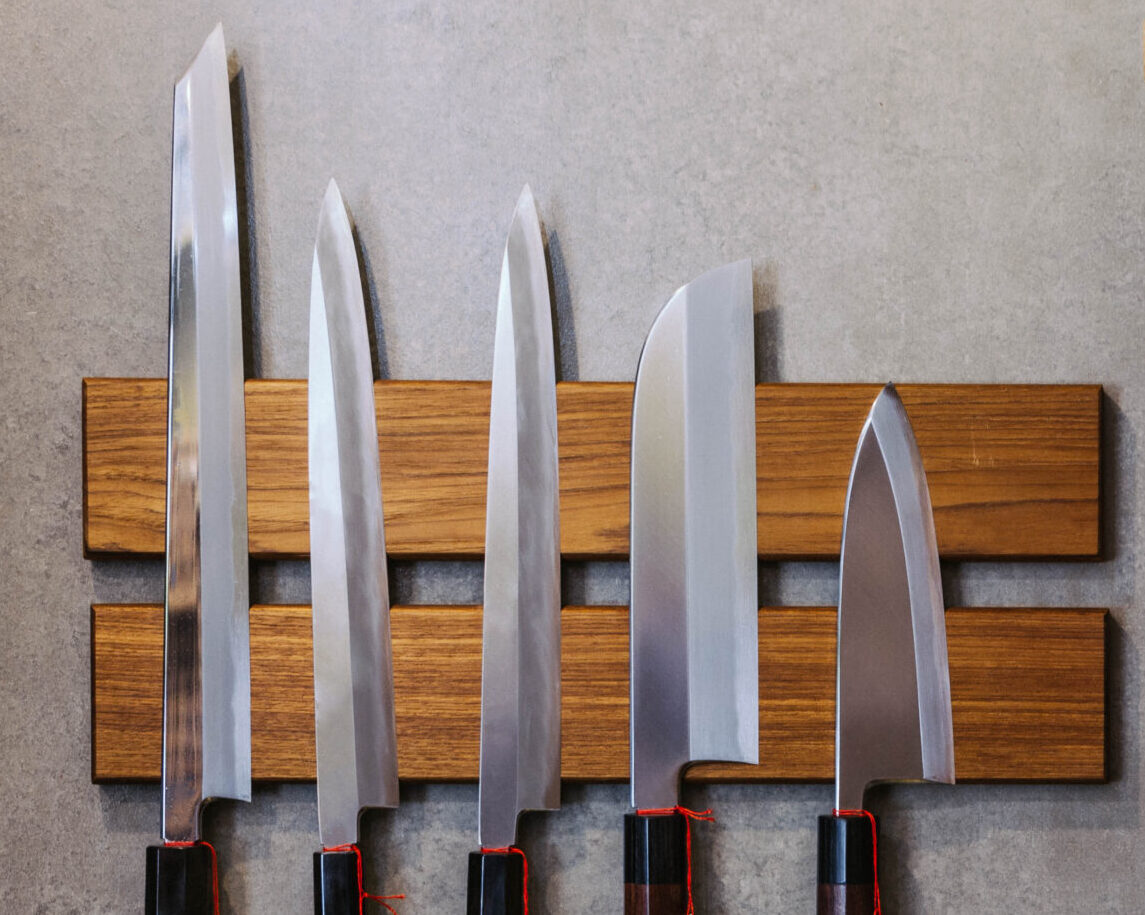
The knives used to fillet fish differ in purpose depending on their type. Knowledge of how to choose the right knife and how to sharpen it is essential.
In addition, specialized knowledge of selecting and maintaining cooking utensils forms the foundation for demonstrating one's craftsmanship.
Knowledge of Shari (Sushi Rice)
One of the major differences between Japanese cuisine and sushi is the vinegared rice.
Knowledge and technique related to shari—such as selecting the rice, adjusting the water, the cooking method, and the blend of vinegar—are indispensable skills for a sushi chef.
Preparation Skills
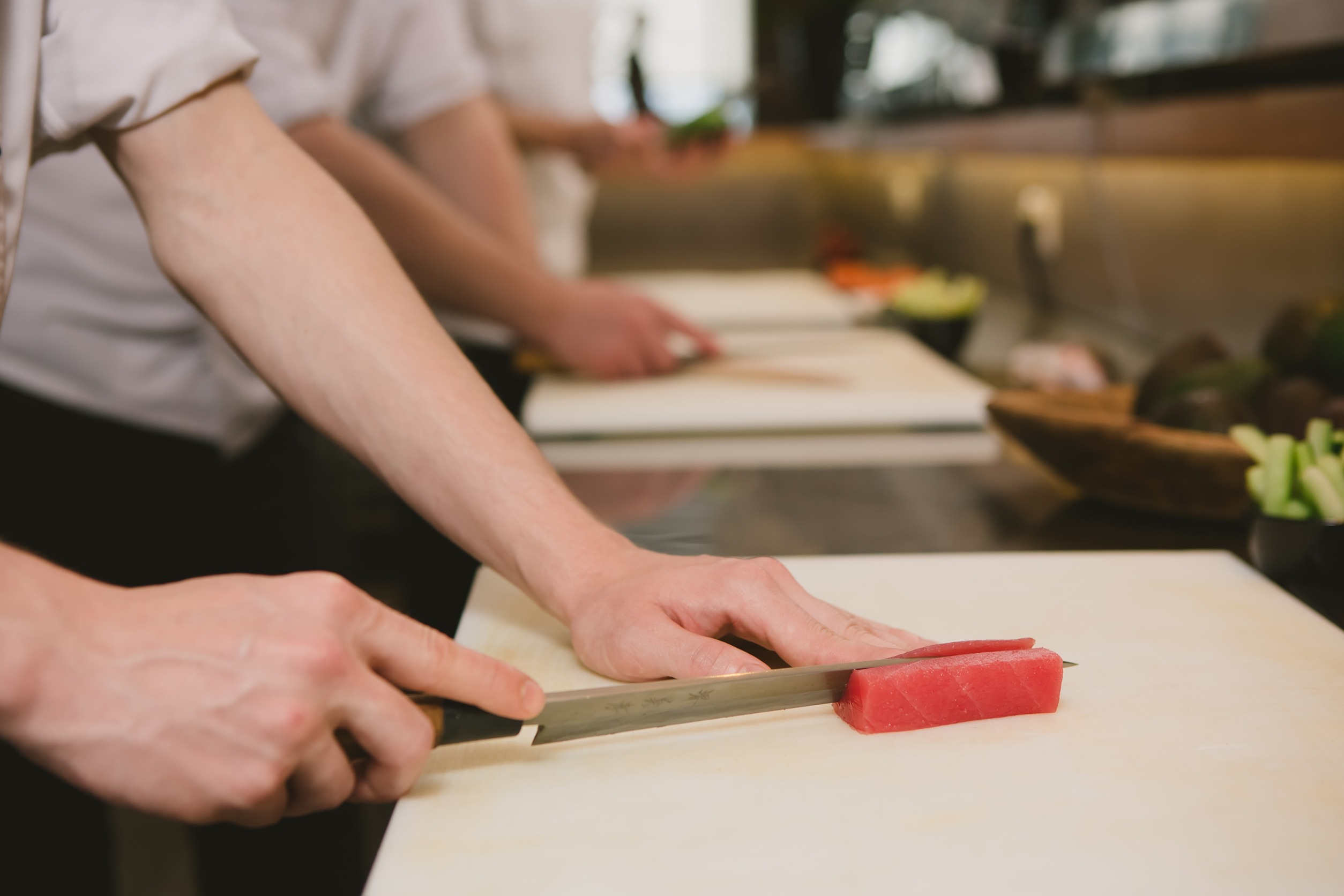
In addition to the technique of properly filleting seafood, such as how to fillet by fish and by cut, sushi requires that each topping be prepped using the method best suited to it.
Japanese Culinary Techniques
Sushi restaurants sometimes offer menu items other than sushi, and especially at high-end restaurants, Japanese culinary techniques are often required as well.
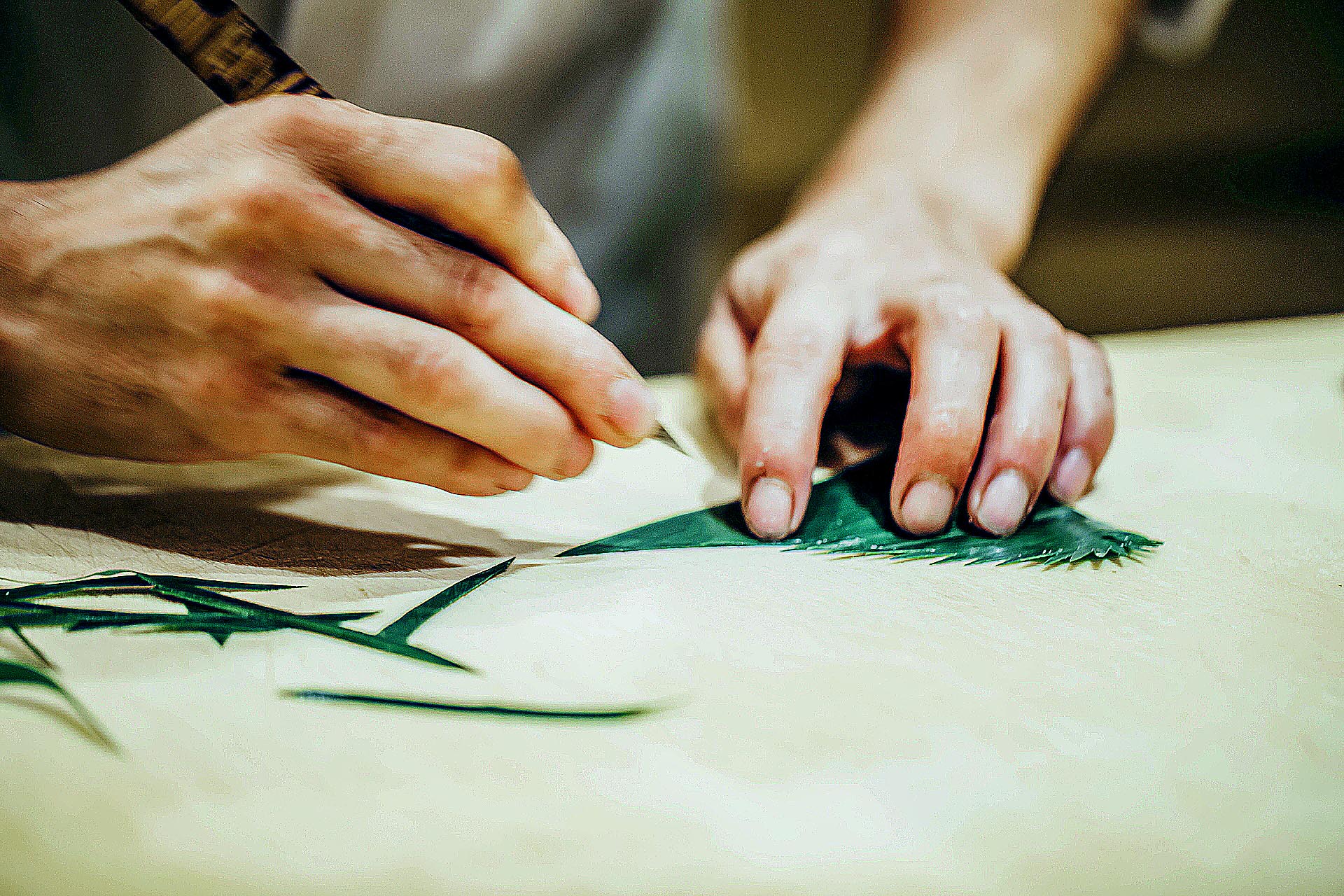
Various Japanese culinary techniques are called for, such as removing fish skin, thinly slicing sashimi, frying tempura, making dashi stock, and plating.
Specialized Sushi Techniques
In addition to understanding the types of sushi, technique and a sense of artistry are required for the pressing method and preparation suited to each topping.
There are various methods of pressing sushi, such as hontegaeshi, tategaeshi, and kotegaeshi, but they cannot be mastered through knowledge alone; they require repeated practice many times over.
Customer Service Skills
Especially at high-end restaurants, customer service skills become important.
One needs to provide friendly, approachable service, such as explaining the ingredients according to the customer's needs.
A Refined Palate
Although taste cannot be seen in any tangible form, a high sensitivity to ingredients and seasoning may be the most important skill for serving delicious sushi.
In fact, many excellent chefs sharpen their palates by researching all kinds of delicious dishes.
Efficiency and Deftness
Not only sushi chefs, but anyone in the restaurant business is required to be deft in order to carry out work efficiently.
A sense of speed that keeps customers from waiting even during busy times, balanced with a composure that does not make things feel hurried, is important.
Management Skills
At sushi restaurants, chefs often have a say, and they may give instructions to the hall and kitchen staff.
Smooth coordination with other staff helps in running operations efficiently.
Qualifications Useful for a Sushi Chef
There are no qualifications that are essential for a sushi chef, but having qualifications such as the following can help demonstrate one's reliability and skills.
Hygiene Manager Qualification
This is a qualification for taking charge of food hygiene management. Since restaurants, including sushi restaurants, must have at least one food hygiene supervisor on the premises, having it can work in one's favor as a sushi chef.
It is a qualification that can be obtained by attending a one-day course, but it may be a must, especially when becoming independent and opening one's own restaurant.
Cook's License
A cook's license, which serves as proof of having acquired culinary skills, also has the benefit of exempting the holder from taking the food hygiene supervisor course, and having it works in one's favor as a sushi chef.
To obtain a cook's license, there are two methods: passing the cook's examination after accumulating practical experience, or studying at a vocational school or the like to obtain it.
It is, of course, a good qualification to have, but as long as you meet the working condition of "four or more days a week and six or more hours a day," you can take the cook's examination, so obtaining it while working at a sushi restaurant is also a recommended method.
Three Ways to Become a Sushi Chef
Method 1: Work as an Apprentice at a Sushi Restaurant
This is a method many people think of, and working as an apprentice at a sushi restaurant could be called the most orthodox approach.
When it comes to sushi restaurants, there are individually owned shops and there are chain stores, and it is difficult to decide once and for all which kind of shop is most suitable for training.
Generally, it is said that training at a high-end restaurant is good.
The more high-end the restaurant, the more you can learn every step at a high level, such as advanced techniques and how to handle precious ingredients.
However, at such restaurants it often takes many years before you are actually allowed to fillet fish or press sushi, and there is also the disadvantage that getting hired in the first place is difficult.
Working conditions depend on the restaurant, so to see whether they suit you, it is a good idea to look at restaurant job sites or inquire directly with the restaurant.
Advantages of Training at a Sushi Restaurant
- You can learn the skills while being paid
- It is easier to develop awareness as a professional
- You can learn how to serve customers
- You can learn not only the skills but also management know-how
The greatest advantage of working at a sushi restaurant is, above all, that you can be taught many things while being paid.
Even if you are not taught hand by hand, just being able to see the entire process—purchasing, preparation, customer service, and how the restaurant operates—from the inside is more than worthwhile.
If it is a first-class restaurant, the very fact of having learned at that restaurant carries brand value, so it will work in your favor when you open your own place.
Also, if the relationship is good, you may receive support, such as in the form of a noren-wake (branch-off) arrangement, when you become independent.
The information you can gain when working at such a sushi restaurant is very difficult to be taught later, so for those who intend to open a sushi restaurant, it is recommended to take detailed notes while at the restaurant and study thoroughly.
Disadvantages of Training at a Sushi Restaurant
- It takes a long period to learn the skills
- It is hard to make time for yourself
- You may feel a physical or mental burden
- On the other hand, there are also disadvantages to training at a sushi restaurant.
The biggest one would be the time it takes to acquire the skills.
Basically, you do not become able to press sushi in front of customers quickly within one or two years.
The more high-end the restaurant, the more you tend to struggle in various ways. At first you start with odd jobs, and it is not uncommon for it to take several years just to be allowed to properly handle the ingredients.
This is not limited to the world of sushi but applies to skilled trades in general: many restaurants have strict hierarchies and a strong macho, sports-club-like atmosphere, so those who are not used to it often struggle until they become full-fledged.
Points to Watch for When Choosing a Restaurant to Work At
- What kind of knowledge and skills you can learn
- What kind of people the manager and senior staff are
- The compensation
The world of craftsmen is harsh. It is said that while entering that path is easy, only a very few become full-fledged.
At first, it is better to focus on what you can learn rather than on the pay.
The point is not to fixate on the pay.
This is true of anything, but especially in skilled trades the starting pay is low in every profession, so the most important thing is to think narrowly about what you can learn.
A mindset of "I'm going there to learn, and I get money on the side" might be just about right.
Also, passion is important to becoming full-fledged, but it means nothing if you cannot continue at your own pace.
The point would be to work at a restaurant where you feel you could keep going even just a little longer.
Method 2: Attend a Sushi Vocational School
Apart from training at a sushi restaurant, there is the method of attending a sushi chef vocational school.
It is suited to those who want to become able to press sushi a little sooner and work abroad, open their own restaurant, or work efficiently at a large chain.
In the past, attending a vocational school to become a sushi chef was not an option, but now, with the passage of time, the number of vocational schools has increased and you can receive high-quality classes. Most instructors are experienced people or active professionals, and you can learn practical techniques.
Advantages of Attending a Sushi Vocational School
- It does not take long until graduation
- You can practice pressing sushi from the start
- An environment with many peers, making it easy to push and improve one another
- It is advantageous for finding employment
- You are less likely to be scolded
Because the classes are set in advance and proceed according to a curriculum, you tend to feel less pressure than working on the job.
The classes mainly focus on becoming able to press sushi, and you can learn the skills rationally.
The fact that the school supports you with skill acquisition and employment is also a key point.
Also, although policies differ somewhat by school, basically you pay money to be taught, so you are hardly ever scolded compared to learning while working, which makes it quite easy mentally.
After graduation, famous restaurants may be tough, but it becomes easier to be hired by major chains or conveyor-belt sushi restaurants, so working at an actual restaurant for a while after learning at school and then opening your own place is also one approach.
Recently, the number of foreigners attending sushi vocational schools from overseas is also increasing, and as a result, schools and courses that let you learn intensively in three months—without the need for a long-term visa—are also increasing.
For better or worse, abroad the precise and skilled techniques demanded in Japan are not required as much; rather, aspects such as presentation become more important.
Also, the job demand for sushi chefs abroad and the demand for sushi itself are quite high, so for those who think "I'll quickly acquire the knowledge and find a job abroad! Open a sushi restaurant and strike it rich!" this could be called a more optimal method than working and learning at a sushi restaurant.
Disadvantages of Attending a Sushi Vocational School
- Tuition is required
- The number of practice sessions is small
- You do not become job-ready immediately after graduation
Since you are attending school, of course tuition is incurred.
The tuition for a vocational school is around 500,000 to 1,000,000 yen for an approximately three-month course.
Also, even if you pay tuition and study, you do not become a professional right away.
Although you can learn systematically, you do not repeatedly practice everything, so it can be said to be difficult to ingrain it into your body the way you would when working at a restaurant.
After graduation, some schools provide job placement assistance to sushi restaurants, but even after graduating you have only learned basic techniques and knowledge, so to actually get a job or open a restaurant, you need to practice and go through trial and error on your own.
As in any other field, in the end it comes down to you, but being able to learn sushi-related techniques systematically and efficiently is a means unique to the modern era that did not exist before.
The sushi vocational school could be called one attractive option.
Method 3: Learn Sushi Self-Taught
"Huh, learn sushi self-taught??" is what many people probably think, but in fact this method is used quite often abroad.
In the past, it was very difficult to obtain information for becoming a sushi chef, but now there are all kinds of videos on the internet, starting with YouTube, on how to press sushi and how to fillet fish, and you can learn the techniques thoroughly while actually watching them.
Also, quite a number of books on sushi techniques have been published, so we now live in an era where you can learn to a certain extent on your own.
In fact, the author once went to a sushi restaurant in Asia that had high word-of-mouth ratings, and when I asked where they had trained, they said they studied on YouTube and then went to various Japanese high-end restaurants to research the flavors and what was necessary.
That person was a local, but the taste was as delicious as its reputation, and I remember being surprised.
Since I encountered many similar sushi restaurants afterward, it seems that individually owned sushi restaurants run by foreigners abroad often follow this pattern.
It means that with motivation and a spirit of inquiry you can do anything, and partly thanks to the arrival of the age of video media, this could be called one option for talented people who can carve out their own path.
Advantages of Learning Sushi Self-Taught
- It does not cost money
- You are free in terms of time and place
- You can practice thoroughly while watching videos and the like
- There are no troublesome interpersonal relationships
You need to buy tools and the like, but since you study on your own, it costs overwhelmingly less than going to school.
Since you are not going anywhere, being able to choose the place and time is also a big advantage, and being able to learn thoroughly while watching videos is another good point.
Also, at school there are teachers and other students, so you need to be considerate to some extent, but when you learn on your own, naturally no consideration is required.
It is also suited to those who are not good at bowing their heads to be taught by someone.
However, since sushi chefs generally work at the counter much of the time and a certain amount of customer service becomes necessary, some communication ability could be said to be required.
In any case, since you can basically cut out everything unnecessary, it could be called a method suited to people who can research and forge ahead on their own—figuring out what flavors are good, what kind of business works well, and so on.
Disadvantages of Learning Sushi Self-Taught
- Since no one teaches you, it is hard to tell what is correct
- It is difficult to maintain motivation
- A certain amount of talent is necessary
This is not limited to sushi, but learning on your own is difficult.
You would need to study and practice by watching all kinds of videos and books, and to research by visiting various restaurants. Also, the freedom of having to decide everything yourself would, for many people, also become a cause that makes continuing difficult.
Also, to put it as "talent" leaves nothing more to say, but you would need all kinds of talents—a strong will to absolutely open a sushi restaurant, a sense for discerning flavors, the ability to research things you do not know, and the management acumen to devise an opening strategy.
That said, even so, abroad the very definition of sushi is vague to begin with, so for those who have a strong will and a certain amount of talent and want to open a restaurant abroad, this method is also one option. Because there are few authentic sushi chefs abroad, Japanese sushi chefs are often highly valued, and negotiating directly for a job on-site would also be effective.
The Training Period for Becoming a Sushi Chef
So, how much time does it take to learn sushi depending on the method?
Taking time is not necessarily a bad thing, but first let us compare each method!
Working at a Sushi Restaurant: About 10 Years
In the sushi industry there is a saying: "Three years to cook the rice, five years to make the toppings, a lifetime to press the sushi."
This means that great skill and effort are hidden behind the making of sushi.
Furthermore, if you add in how to fillet fish and handle ingredients, it would take ten years.
Depending on the restaurant, you may be able to debut as a chef in less than ten years, but even so, you should expect it to take at least five years.
At first, it is a world where it is taken for granted that you come in earlier than your seniors to clean and prepare for opening, and that during business hours you mainly wash dishes.
You are not easily allowed to handle the ingredients. However, by learning from the basics, you can acquire skills you can use for a lifetime as a chef.
Also, even if you are not immediately taught the techniques, by working at a sushi restaurant you come to know the entire process through your body, and that will be a great weapon when you open your own sushi restaurant. If you learn at a first-class restaurant, the fact that you came from that restaurant works in your favor when you open, and you may also be backed up in becoming independent.
In this way, while training at a sushi restaurant is hard, it has the strength of building firm, solid ability. You need to recognize that it takes time, but caution is needed because it cannot be said unequivocally that this is a negative.
If you work hard with a sense of purpose, you can gain a benefit that exceeds the effort you put in.
Attending a Vocational School: A Few Months
There are differences depending on the vocational school's course, but most schools generally graduate students in a few months.
What you learn ranges widely, from preparing the sushi toppings to the technique of pressing the sushi.
Those who have learned at a sushi vocational school often, after graduating, open sushi restaurants abroad, work at large chains that do not require high skill, or begin their groundwork at actual restaurants.
Being able to acquire the techniques you want to know efficiently in a short period—more so than working at a sushi restaurant—is a big plus, but you need to research the actual atmosphere of a restaurant and the know-how of opening one on your own.
For Self-Study, It Depends on You, but Also on Where You Open
It goes without saying that the time self-study takes is entirely up to you. However, the level required would differ greatly depending on where you open. If you open in Japan, since Japanese people know sushi well, the difficulty becomes very high, and opening with self-study alone may be tough.
Conversely, if you open abroad in a place with few sushi restaurants and full of locally run sushi shops, to put it bluntly, you can get started as long as it takes some recognizable form. Setting aside whether that is good or not, management sense—including branding, such as what kind of sushi the people of that country prefer and what kind of performance is well received—would be required.
A Day in the Life of a Sushi Chef
After acquiring the skills of a sushi chef through training, schooling, or self-study, you can finally get a job at a sushi restaurant or open your own.
Here, dividing it into working at an ordinary or high-end restaurant and working at a large chain or conveyor-belt sushi restaurant, let us look at the flow of a sushi chef's day.
Of course, it varies greatly from restaurant to restaurant, so it may differ from this flow.
When Working at an Ordinary or High-End Restaurant
When working at a high-end or ordinary restaurant, you need to do all the work necessary to serve sushi—purchasing fish, preparation, pressing the sushi, customer service, cleaning up, and cleaning.
However, at sushi restaurants with multiple chefs, the early-morning fish purchasing and preparation may be handled on a rotating duty basis.
For fish purchasing, you head to the fish market around 4 a.m. and make the rounds of familiar wholesalers.
In order to purchase good-quality seasonal fish, you need to acquire the discerning eye to tell the condition of the fish.
Preparation begins around 8 a.m. The prep work takes about three hours.
Work such as filleting, vinegar-curing, making nikiri (a sweet soy glaze), making knife cuts, and making the rolled omelet is where the chef shows their skill, and it is said to be such important work that a chef's skill is judged by how well it is done.
When preparation finishes at 11 a.m., it is finally the restaurant's opening time.
After that, most sushi restaurants close once at 3 p.m., and preparation for the evening session begins.
Meals and breaks are also taken during this time.
The evening session begins around 5 p.m.
At high-end restaurants, in order to let customers enjoy their sushi leisurely, the chef creates added value by communicating thoroughly—asking about topping preferences and adjusting the size of the shari and toppings as well as the speed of serving.
After closing at 10 p.m., the day's work ends with cleaning up and cleaning.
When Working at a Conveyor-Belt Sushi or Large Chain Restaurant
At conveyor-belt sushi and large chain restaurants, there are establishments that serve sushi pressed by chefs and establishments that serve sushi pressed using robots, and the work content differs greatly.
For example, restaurants such as Genroku Sushi and Nigiri Chojiro, while being conveyor-belt sushi chains, have chefs display their skills right in front of the customers.
Gatten Sushi has some restaurants that use robots, and at overseas locations there are cases where part-timers press the sushi, but at most restaurants the chefs press the sushi.
At conveyor-belt sushi restaurants of this old-fashioned artisan style, although some sushi toppings come already cut and packed, depending on the topping the fish may be filleted from the preparation stage, and in some cases purchasing is also done.
Furthermore, since there are many regular customers who love conveyor-belt sushi, you can also hone your conversation skills with such customers.
There is less of the attention to detail than at high-end restaurants, but unlike high-end restaurants, the hurdle for appearing before customers is low, so it is possible to acquire practical ability.
In cases where strict skills are not required, such as opening a sushi restaurant abroad, honing your ability at an artisan-style conveyor-belt sushi restaurant can be said to be one option.
On the other hand, at robot-style conveyor-belt sushi restaurants such as Sushiro and Kura Sushi, robots make the sushi and the toppings are almost all packaged, so there are basically no chefs, and part-timers operate the sushi robots and supplement the work the robots cannot do.
For this reason, acquiring skills as a sushi chef at such a large conveyor-belt sushi chain can be said to be extremely difficult.
Estimated Annual Income of a Sushi Chef
When choosing the path of working as a sushi chef, information about salary is probably a concern.
Because sushi is a food loved internationally, sushi chefs are sought after at a wide variety of restaurants both in Japan and abroad.
Since there are restaurants of various levels, from ordinary to high-end and conveyor-belt sushi, try to find a position that matches your experience and skills.
Beginners Such as Apprentices
Annual income of 2 to 3.5 million yen.
Priority is placed on acquiring skills, and a lower salary level is generally set.
Chefs With Some Experience
Annual income of 4 to 6 million yen.
Raises according to skill and experience.
Highly Experienced Chefs
Annual income of 6 to 8 million yen.
Manager candidates, high-end restaurant positions, and the like.
The above are recruitment conditions for Tokyo, so in regional areas they tend to be somewhat lower.
Benefits vary by restaurant, but unlike in the past, exploitative "black" environments have become less common today.
Basic benefits such as health insurance and employees' pension are common.
Overseas Demand for Sushi Chefs, the Advancement of Women, and Future Prospects
The path of the sushi chef is not confined to Japan alone; it holds the potential to be active all over the world.
Also, along with recent changes in society, the number of female sushi chefs is increasing.
The Rising Overseas Demand for Sushi Chefs
Opening Sushi Restaurants Abroad
Sushi, which has now become the world's SUSHI, is popular all over the globe and is highly regarded in many countries.
Especially in urban areas, the demand for sushi is quite high, the venues where sushi chefs can be active are expanding, and simply being Japanese makes one highly sought after.
Also, in such overseas regions with high sushi demand, the opening of sushi restaurants by non-Japanese people from overseas is increasing, and Japanese-owned sushi restaurants tend to be few in number.
In this context, when a Japanese person with a certain level of sushi skill opens a restaurant, the very fact of being Japanese makes attracting customers feasible, so there are many cases where, with ingenuity and effort, one achieves great success.
Opening a sushi restaurant in forms not found in Japan, such as from a stall or a truck, is also something unique to foreign countries.
Working as a Sushi Chef Abroad
In the United States, for a sushi chef with a certain level of experience, exceeding an annual income of 10 million yen, as in the example below, has become quite ordinary.
<Example Job Listing in the United States>
Executive Sushi Chef: Kalahari Resorts & Conventions
,000 - ,000 a year
Full-time
If you do not have the funds to open a restaurant, working at such an establishment until you have saved up while researching the local situation, and then opening your own restaurant, would also be a good option.
The Increasing Number of Female Sushi Chefs
The world of sushi chefs has traditionally been male-dominated, but recently the number of female chefs has also been increasing.
In the past, there were views such as "because women's hands are warmer than men's, the freshness of the sushi is impaired," and it was a difficult environment for women to be active as sushi chefs.
In fact, the reality also exists that among many Michelin-starred sushi restaurants, there are few establishments where female chefs press the sushi.
However, recently it has been shown that with regard to palm temperature, individual differences have a greater influence than the difference between men and women.
Moreover, it is said that these concerns can be overcome by improving one's sushi-pressing technique.
Today, a woman's characteristically delicate sense and aesthetic sensibility are often put to use, and the number of female sushi chefs is increasing.
The sight of female chefs who have graduated from a sushi school, become independent, and succeeded is no longer rare.
The increase in female chefs shows that sushi culture is opening up to a broader range of people, including globally, and could be called proof that a new wind is blowing through sushi culture.
The Demand for SUSHI and Sushi Chefs, Forecast to Continue Expanding
Sushi has become a food culture loved all over the world, and with the end of the COVID-19 pandemic, its popularity is accelerating even further.
Enrollment of foreigners in sushi vocational schools is also increasing, and more and more people are choosing the path of the sushi chef.
Especially abroad, the salary of sushi chefs is said to be as much as two to two-and-a-half times that of Japan, making it a profession with great opportunity for sushi chefs, where global expansion is easy.
Developments such as these employment opportunities around the world, the chances for independent business ownership, the increasing activity of female chefs, and the further spread of sushi culture will continue to be factors that drive the expansion of the sushi chef profession.
The profession of the sushi chef has become one major option for seizing a wide variety of opportunities both in Japan and abroad.
References