Sushi Etiquette for Beginners to Experts — What Refined Adults Should Know
How Can You Enjoy Sushi More?
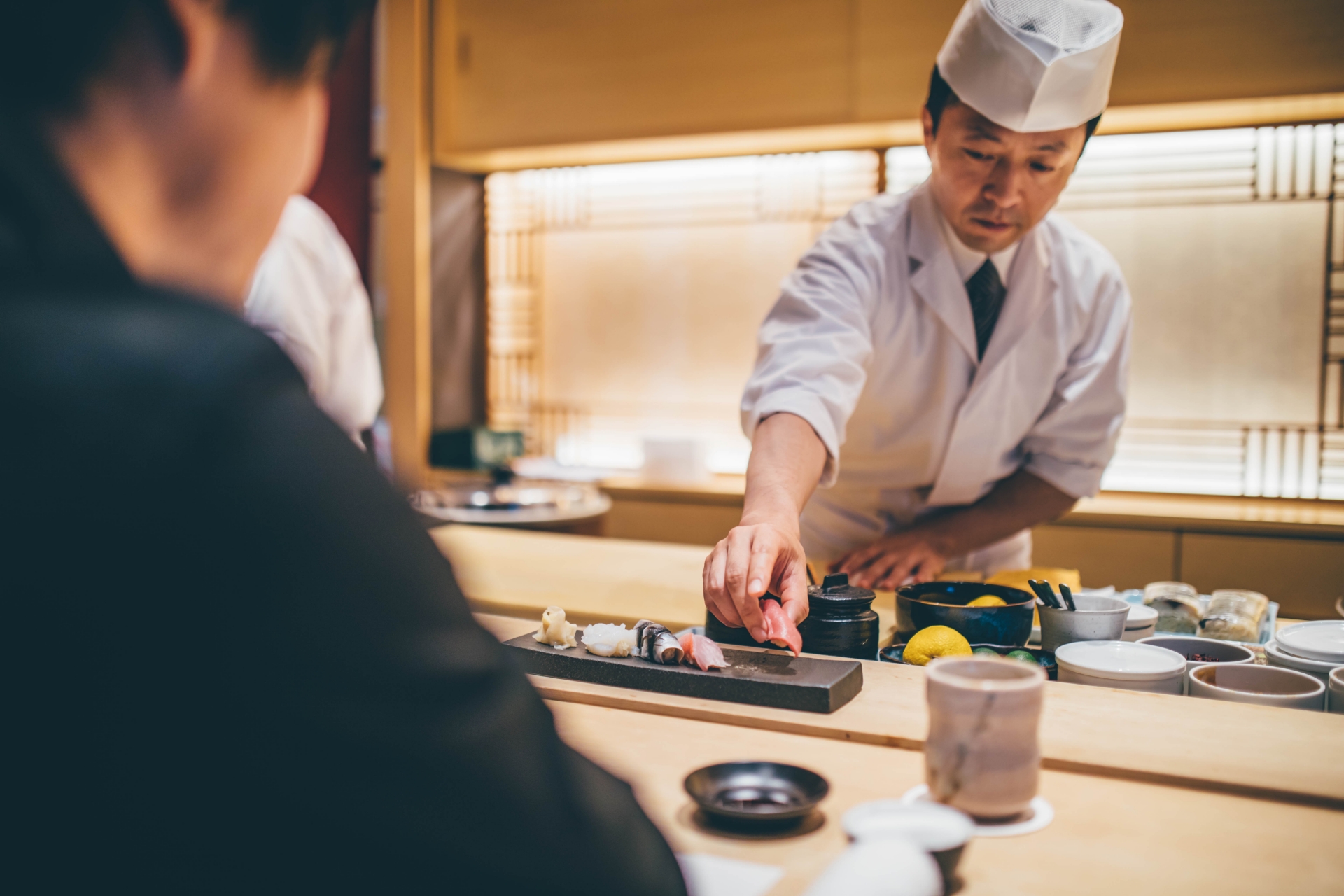
When eating sushi, many people start with their most favorite topping or the topping they want to eat first. Of course that is fine too, but in fact there is an order that allows you to eat sushi more deliciously.
If you order strongly flavored akami toppings or sweetly seasoned toppings first, the flavor of the white-fleshed fish you eat afterward will become blurred. Therefore, it is recommended to eat lightly flavored white-fleshed fish first, then order strongly flavored toppings or fatty toppings.
Some sushi restaurants offer omakase courses and the like, so at a restaurant you are visiting for the first time, it is safer to order the recommended course.
Also, if there is something you cannot eat or a topping you dislike, it is reassuring to tell them before the course begins.
Manners at a Sushi Restaurant
First, let's learn about basic manners at a sushi restaurant and how to eat sushi. There are times when you visit a high-end sushi restaurant for an important business meal or a date. For such occasions, it is reassuring to know sushi restaurant manners and how to eat.
Manner 1: Be Careful About the Smells of Cigarettes and Perfume
Wearing too much perfume or an excessive smell of cigarettes detracts from the flavor of fresh ingredients and their delicate aroma, so refraining is proper manners. This is a manner to be careful about not only at sushi restaurants but at restaurants in general.
Smells also bother those around you, so be considerate before visiting.
Manner 2: Timing of Eating
When you go to a high-end restaurant, sushi is served one piece at a time so you can enjoy it freshly formed. Eating it as soon as it is served, before the rice or topping dries out, is the manner for enjoying the true flavor of sushi.
Also, at conveyor-belt sushi restaurants, it is said to be best to keep no more than two plates of sushi you want to eat at hand. As mentioned earlier, this is to avoid keeping three or more plates, which causes the sushi to dry out and its flavor to deteriorate.
Manner 3: Eat with Your Hands or with Chopsticks
You may wonder whether it is okay to eat sushi with your hands or whether you should eat with chopsticks.
It is fine to eat with either your hands or chopsticks, but in the old days eating with your hands was considered proper manners, so if the person dining with you is eating by hand, it may be good to eat by hand in the same way.
Conversely, on a date or similar occasion, if you do not want to dirty your hands, eat with chopsticks.
However, even when eating with your hands, eating gari with chopsticks is proper manners. It is confusing, but be careful not to mix them up.
[The Correct Way to Eat by Hand]
- Lay the sushi on its side so that the topping comes to the left side.
- Pinch both sides with your thumb and middle finger, and hold the sushi with your index finger resting on top.
- Dip the topping in soy sauce just once, and do not dip the rice in soy sauce.
[The Correct Way to Eat Using Chopsticks]
As when eating by hand, lay the sushi on its side and hold it by pinching the top of the topping and the bottom of the rice with chopsticks.
Dip only the topping in soy sauce.
Manner 4: Handling and Applying Soy Sauce
Keep the soy sauce you put in the dish to a small amount. If there is a lot, the topping or rice absorbs too much soy sauce, and the flavor of the soy sauce may drown out the goodness of the topping and rice.
For toppings that already have sauce or sushi that already has soy sauce on it, there is no need to apply soy sauce, so it is smart to eat it as is.
Manner 5: Do Not Move the Sushi Geta
When you go to a sushi restaurant with a counter and sit down, what you see is the wooden plate on which sushi is placed. This is called a "geta." Depending on the shop, the geta may feel a little high, but basically moving the geta is a breach of manners.
Once the sushi is placed on the geta, reach out from there to take the sushi and bring it to your hand or mouth.
Sushi Restaurant Industry Jargon
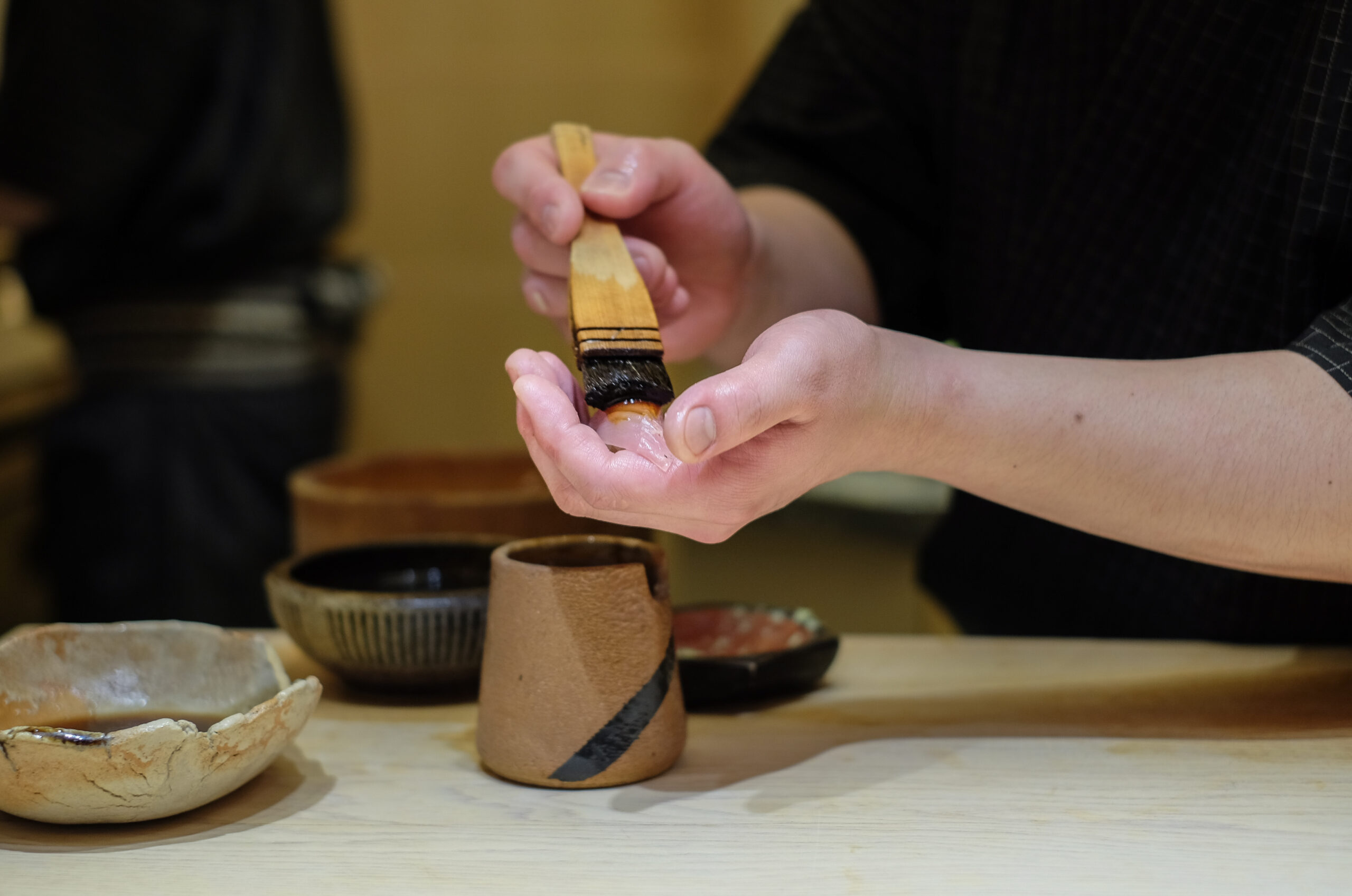
When you are at a sushi restaurant, you hear the distinctive industry jargon used by the craftsmen. If you memorize this kind of industry jargon and slang, the world of sushi will come into clearer view.
However, caution is needed when using industry jargon. For example, "oaiso," which means the bill, is an expression of humility in which the craftsman says to the customer, "I'm sorry for being inhospitable," so it is unnatural for the customer to say it. Saying "okanjo" or "okaikei" (the bill) is more natural and better.
Also, using industry jargon unnecessarily for things that would be understood if said normally can make the sushi craftsman find you bothersome. For example, calling soy sauce "murasaki" is going a bit too far. It is the mark of a mature connoisseur to keep industry jargon merely as knowledge.
This time, we have picked up various sushi industry terms, from popular ones to surprisingly little-known ones.
Agari
The tea served at a sushi restaurant. It originally comes from a word used in the geisha world, derived from the tea served just before a customer leaves, which was called "agari-bana."
Aniki / Otouto
Aniki (older brother) refers to toppings purchased the previous day, and otouto (younger brother) to toppings purchased that day. These are words expressing the freshness of toppings, with older toppings or rice that should be used first called aniki. You may hear them if you listen closely at the prep station.
Garage
Refers to the topping shako (mantis shrimp). Shako is read as "shako" (garage), and from there it is said to have changed to "garage."
Gyoku
Refers to tamago (egg).The reading "gyoku" comes from the on'yomi (Chinese reading) of the "gyoku" (jewel) character in "tamago." Also, the tamagoyaki (rolled omelet) is also called "kera" or "kera-dama."
Gyotoku
Refers to salt. Salt was made in Gyotoku, Chiba Prefecture, from old times, and in Edo, salt made in Gyotoku was often used, which is why this slang term was born.
Geta
The wooden stand on which sushi is served. The sushi stand, sushi serving stand. It comes from the fact that it has legs like the teeth of a geta (wooden clog). Some shops use ceramic plates or leaf liners instead of a geta, and the plate is called a tsuke-zara.
Shari-koma
Shari is sushi rice, and shari-koma is when it is made smaller. Even at a sushi restaurant where the rice is large, if you ask for shari-koma, they will make the rice smaller.
Tsume
A sweet sauce made by grilling the head and backbone of anago (conger eel) and simmering them together with soy sauce, sake, mirin, and sugar. Besides anago, it is used for various toppings such as octopus and shellfish.
Namida
Refers to wasabi. It comes from the fact that eating wasabi makes you cry ("namida" means tears).
Nigasu
To discard ingredients. This slang was born from the desire to avoid throwing away food as much as possible, and because the word "discard" also sounds unpleasant to customers. "Nigasu" (to release) also carries the meaning of returning a creature caught from the sea. There are other slang terms with similar meanings, such as "nageru" (to throw) and "otosu" (to drop).
Pin / Ryan
These indicate numbers. Pin is 1, and ryan is 2.For example, if a craftsman says to an employee "Agari ryan!" it means "Two teas!"
Murasaki
Refers to soy sauce. There are various theories about its origin, such as one deriving from the color of soy sauce being expressed as purple (murasaki), and one deriving from purple being a noble color since soy sauce was a luxury item.
Master the Basic Manners and Enjoy Sushi!
This time we have introduced various knowledge and manners related to sushi, but the most important thing is to eat sushi deliciously and enjoyably! Please make use of this knowledge as a little accent to your sushi-enjoying time or as a topic of conversation.