Related Articles
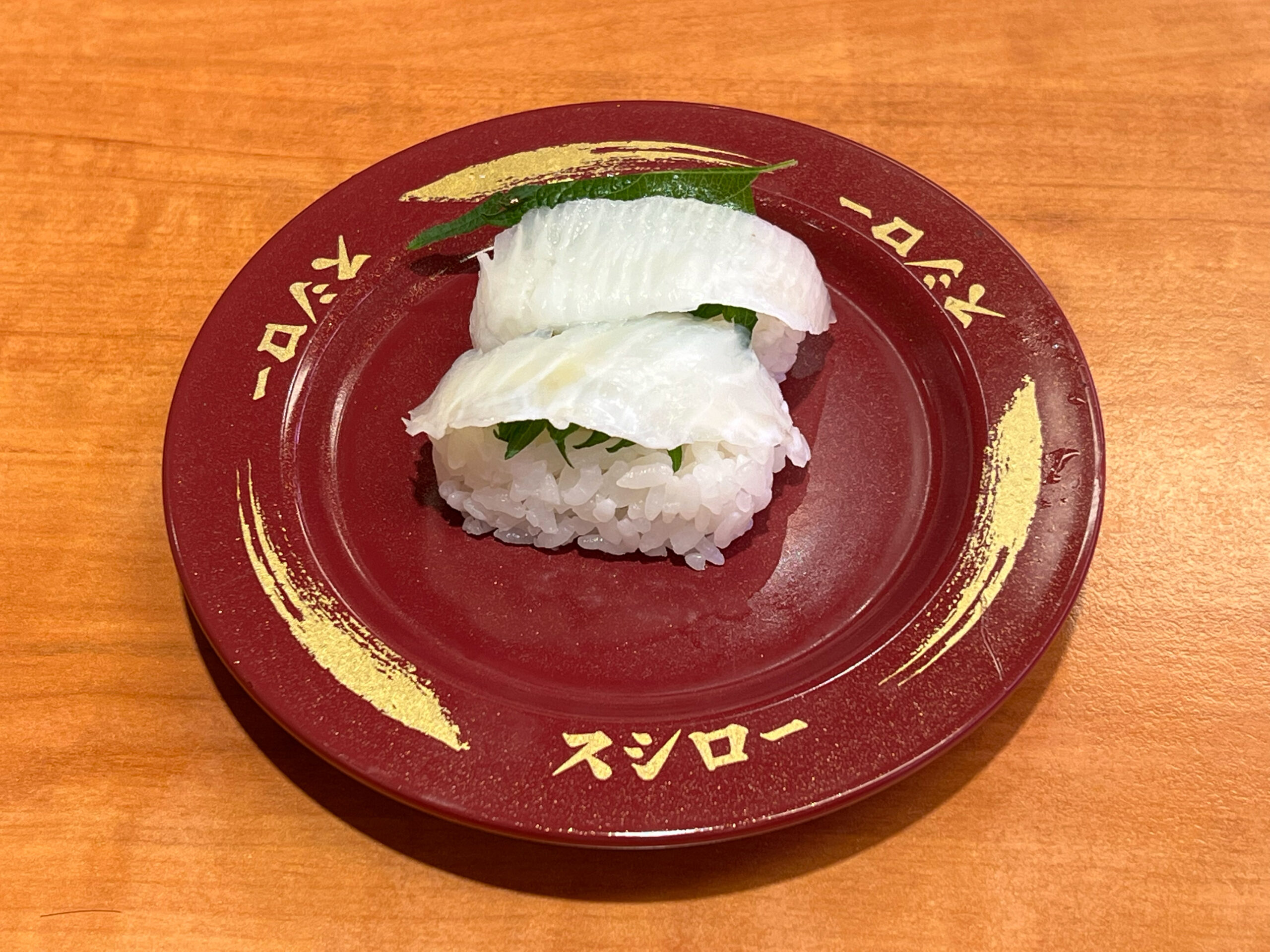
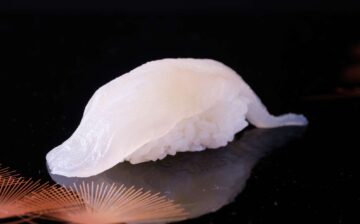
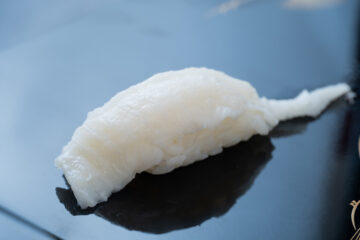
To begin with, what kind of fish is sushi engawa?
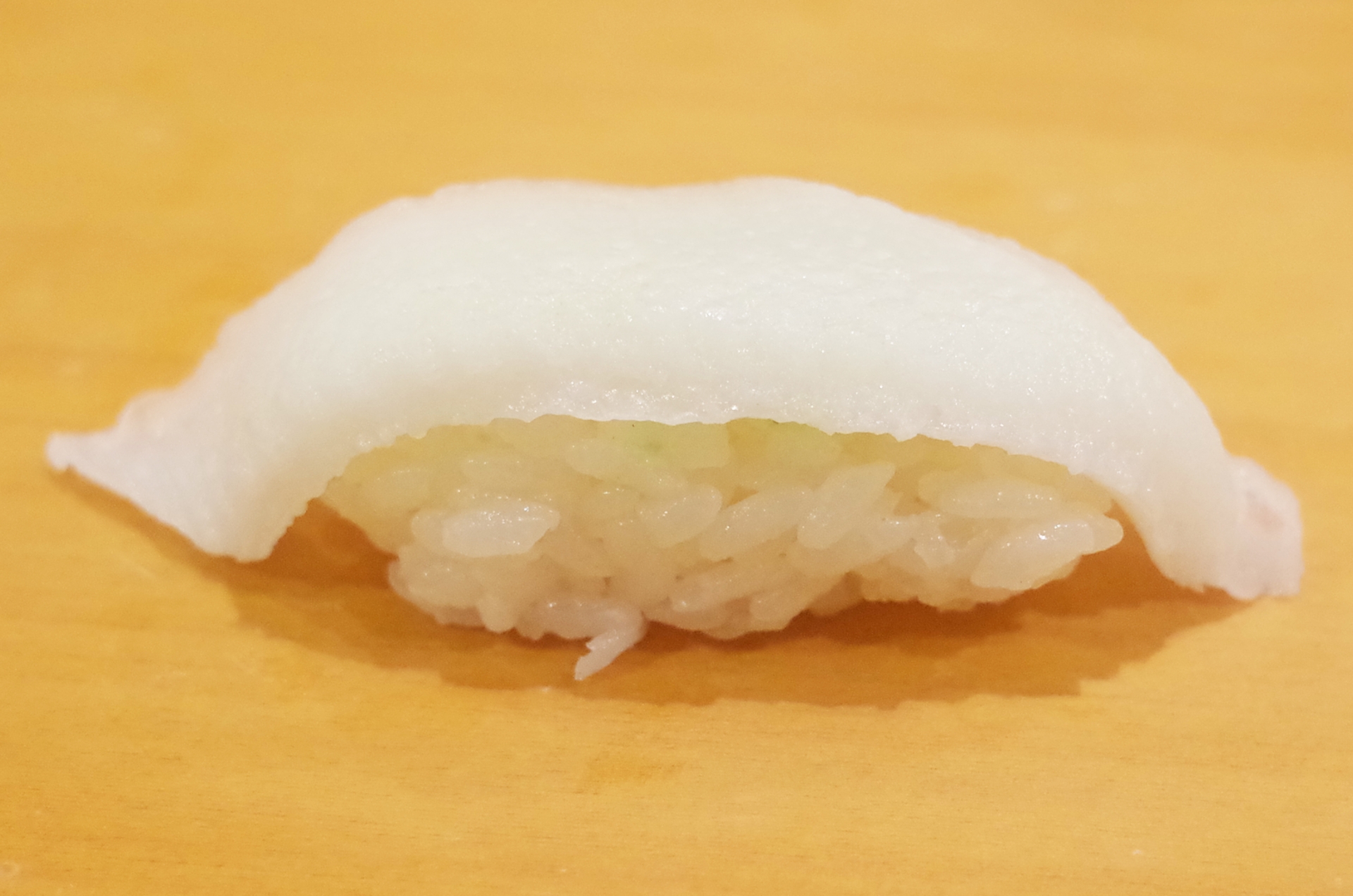
Engawa originally refers to the part at the base of the anal fin of flounder (hirame) or fluke/sole (karei).
In technical terms, it is the part called the pterygiophore (tankikotsu), a bone located at the base of the fish's fin that supports it.
Because it is the part that supports the vigorously moving fin, engawa has a distinctive, crunchy texture. Many people find this chewiness irresistible.
When you order engawa at a high-end sushi restaurant, the engawa of hirame, a premium fish, is what appears. Because it is only a small part supporting the dorsal and anal fins of the hirame, only four pieces' worth can be obtained from a single hirame. For this reason, engawa is generally one of the premium toppings at sushi restaurants, and it is not unusual for it to reach a price on par with toro.
Such a premium topping, engawa, is also seen at conveyor-belt sushi.
The engawa at conveyor-belt sushi, which is not especially expensive, is in most cases not from the premium fish hirame.
So, what kind of fish is conveyor-belt sushi engawa?
Conveyor-belt sushi prides itself on serving delicious sushi at low prices.
Even for the premium topping engawa, each conveyor-belt sushi chain goes through trial and error to serve customers delicious sushi.
The reason engawa can be enjoyed inexpensively lies in the type of fish.
The engawa at conveyor-belt sushi restaurants like Sushiro and Kura Sushi is, in most cases, not from hirame.
For example, Sushiro's engawa often uses Greenland halibut (karasugarei) from Russia or Canada. Although the flesh of Greenland halibut is somewhat watery, the deliciousness of its engawa is said to rival that of hirame. The price-related drawback of ordinary hirame was thus resolved by using Greenland halibut.
What about Kura Sushi's engawa?
In Kura Sushi's case as well, the engawa is mainly from Greenland halibut or Kamchatka flounder (aburagarei), and much of it appears to be from the United States.
Uobei has publicly stated that it uses engawa from Kamchatka flounder from the United States and Russia, and Hama Sushi has publicly stated that it uses engawa from flatfish (karei) from the United States, Canada, Northern Europe, and Russia.
Now, regarding the hirame and karei used for engawa, both are in fact very similar in shape and are very closely related fish.
However, there is a major difference in price. The reason is the catch volume of karei.
With about 100 species existing worldwide, karei is caught in large quantities, so it can be offered at low prices.
Also, at conveyor-belt sushi, there are occasions when hirame engawa appears in campaigns and the like.
Don't miss that chance—be sure to savor genuine hirame engawa.
Even though we say karei in a single word, there are many kinds; in the waters near Japan alone, 40 species live.
For this reason, the value and price differ depending on the type of karei. Among them are types such as Pacific barn-door skate flounder (matsukawagarei) and spotted halibut (hoshigarei) that are traded at higher prices than even the premium fish hirame.
The engawa used for conveyor-belt sushi engawa is, in most cases, from Kamchatka flounder (aburagarei) or Greenland halibut (karasugarei).
Greenland halibut is said to have just the right amount of fat and an elegant flavor, while Kamchatka flounder has less fat compared to Greenland halibut, giving it a somewhat lighter impression.
Karei is a light-flavored white fish, but the part called engawa is popular for its impactful deliciousness.
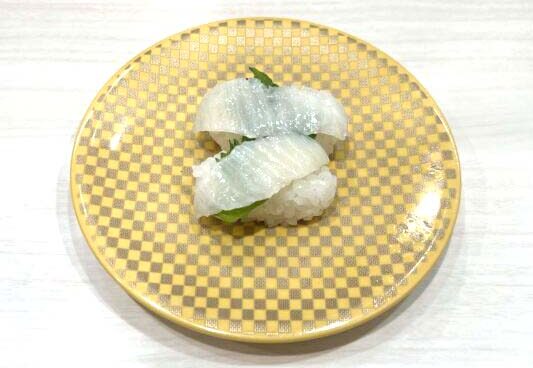
Uobei's Kamchatka flounder engawa
Because hirame can be caught throughout the year, it is a fish with deep ties to Japanese food culture.
The deliciousness of its white flesh is known for being prepared as sashimi, sushi, deep-fried dishes, and more, but the part especially prized by gourmets has been the engawa.
Found only at the base of the upper and lower fins of the hirame, engawa has been cherished as a particularly flavorful part even within the premium fish hirame.
Especially in winter, hirame engawa is rich in fat, and its deliciousness has an established reputation. It is enjoyed not only as a sashimi topping but also in dishes such as simmered preparations.
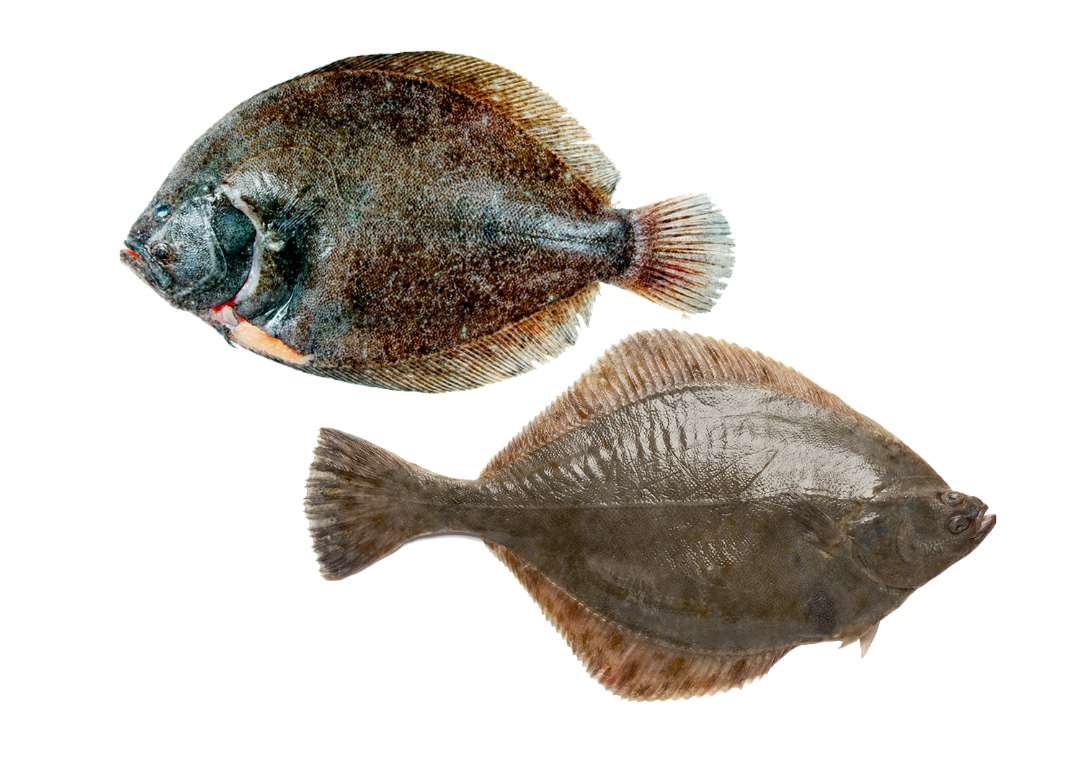
Here we summarize the characteristics of each fish used for the engawa served at sushi restaurants and conveyor-belt sushi restaurants.
It is the source of engawa mainly at high-end and counter-style sushi restaurants.
With just the right amount of fat, it has a light flavor yet you can sense sweetness and umami; it is considered the finest among white fish. It lives throughout the waters near Japan, is often eaten raw, and has the most pronounced crunchy texture with an elegant taste.
It becomes delicious from around August and reaches its peak in winter. Hirame in season is called "kan-hirame" (winter flounder), and its value rises even further.
Incidentally, a grown hirame has both eyes shifted to the left side in order to live on the seabed, but a hirame's eyes right after hatching are on the left and right like an ordinary fish. For about a month after birth it drifts in the sea, and as it grows the right eye moves to the left side. In body length, males grow to about 60 cm and females to about 1 m.
This is a fish often served as engawa at conveyor-belt sushi.
It is well marbled with fat and has plump, tender flesh.
Much of it is imported and it is characteristically cheap. What circulates widely in Japan is landed in Russia, the United States, Canada, and elsewhere, then imported frozen.
Greenland halibut is caught around the world, but in Japan it lives in large numbers in the cold seas of the Pacific and the northern Atlantic. The reason it is called karasugarei ("crow flatfish") is that its entire body is black. Like hirame, it lives on the seabed, but both its eyes are shifted to the right side, opposite to hirame. With a large mouth and sharp teeth, it can grow to about 1 m in body length.
Like Greenland halibut, this is often served as engawa at conveyor-belt sushi. It is a karei produced from the Tohoku region northward, and because it is large, a large amount of engawa can be obtained; like Greenland halibut, it is characteristically cheap.
It comes into season from autumn to winter and is a fish with thin skin and soft bones. As its name ("oil flatfish") suggests, it is a fatty fish, but it has less fat than Greenland halibut and is lighter in taste.
It is caught in Hokkaido, Miyagi, and Fukushima, but the domestic catch in Japan is small, and most of the Kamchatka flounder distributed in Japan is imported from Northern Europe, Russia, the United States, and elsewhere. Fresh Kamchatka flounder sashimi is rarely seen.
The deliciousness of engawa can be enjoyed by purchasing it online.
It is also fun to actually compare and taste the differences between hirame and karei engawa.
The engawa of the premium fish hirame is something you'd want to enjoy domestically produced if possible.
Savor its elasticity and delicate texture.
Shop name: Maguro-dokoro Ichijo
https://store.ponparemall.com/ichijyo/goods/10002911/
Greenland halibut engawa, which often appears at conveyor-belt sushi restaurants, is superb not only as sashimi but also seared. Be sure to try it as an irresistibly delicious snack.
Shop name: Toyosu Maguro Donya
https://item.rakuten.co.jp/toyosushijou/karasu-engawa-500g/?s-id=review_PC_il_item_01
Among karei engawa, Kamchatka flounder has a light flavor.
Because you can take it out of the pack and eat it raw as is, you can casually enjoy engawa at home as well.
Shop name: Sushi Sogo Oroshiuri Sushix
https://item.rakuten.co.jp/sushics/10000050/
The sushi topping engawa is one of the premium toppings at sushi restaurants.
The engawa you can eat at conveyor-belt sushi is not hirame but Greenland halibut (karasugarei) or Kamchatka flounder (aburagarei).
Both are parts that support the fins, and they are extremely popular for their crunchy texture.
Although there are slight differences in texture and fattiness, the deliciousness that impresses gourmets remains the same.
Beyond enjoying its deliciousness at a sushi restaurant, comparing flavors via online shopping is also a fine idea.