What Is Sashimi? Fun Facts and Trivia About Sashimi
What is sashimi? The difference between sashimi and sushi
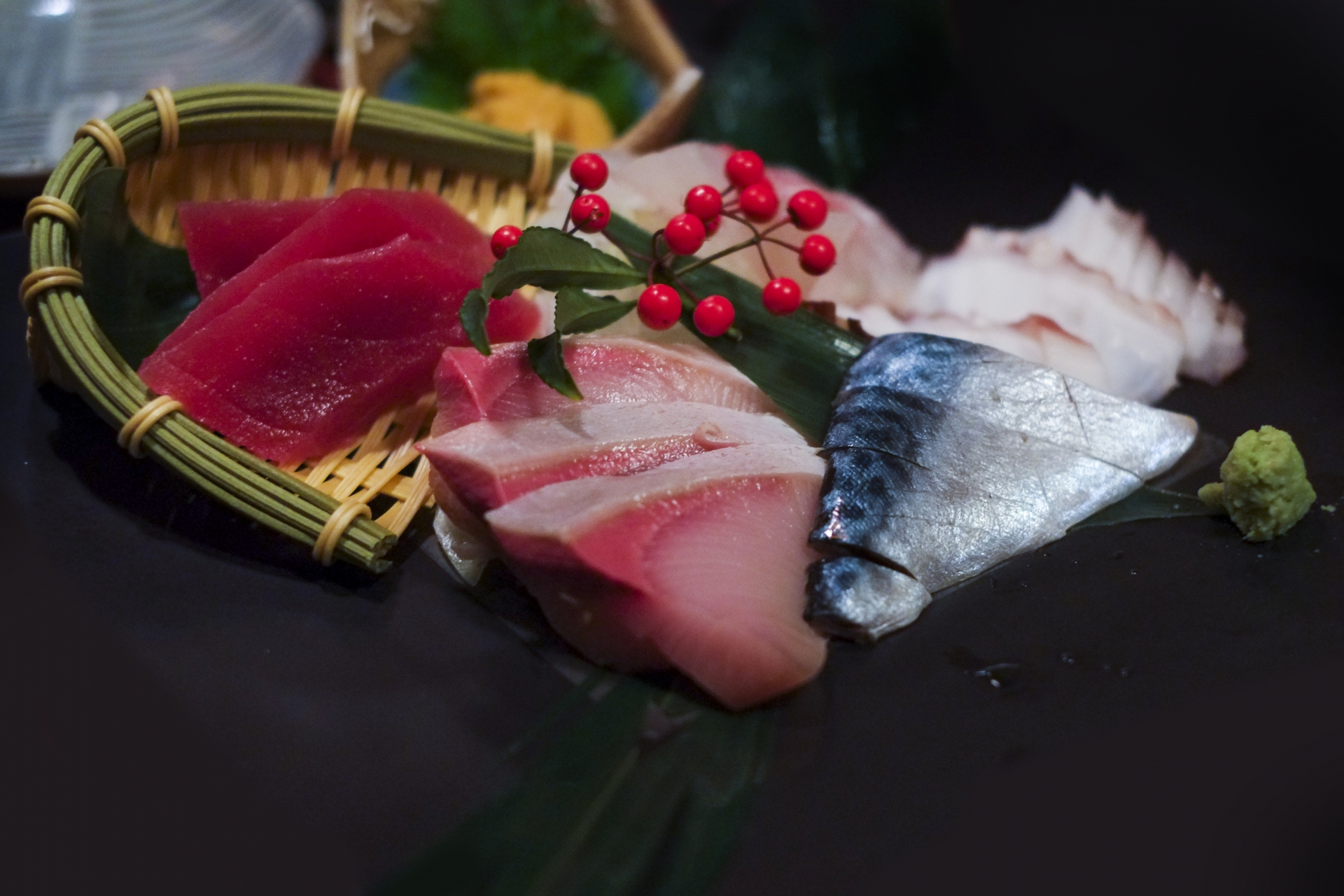
Along with sashimi, sushi has spread around the world as a representative of Japanese cuisine.
Since both sashimi and sushi are part of a raw-food culture that is uncommon abroad, quite a few foreigners regard sashimi and sushi as the same thing.
However, as any Japanese person knows, sashimi and sushi are completely different dishes.
Sashimi is a dish in which raw seafood and the like are sliced and eaten with soy sauce, wasabi, ginger, and so on, while sushi is a dish in which raw seafood or fermented fish is eaten together with vinegared rice and the like.
Today, sashimi has also become somewhat more complex.
Non-seafood ingredients such as horse meat, liver, konjac, and yuba are sliced and served raw or chilled as sashimi; not fully raw but boiled and cooked ingredients are chilled and served as sashimi; and methods such as vinegar-curing and kombu-curing are used to serve sashimi, so it is no longer necessarily the raw consumption of seafood.
The origin of the name sashimi
In old documents from the 15th century, sashimi is sometimes written with the characters meaning "pointing flesh," but there are various theories about the origin of the name sashimi, and the following are considered the leading ones.
- Because the word "to cut" a fish was an inauspicious word, the word "to pierce" came to be used
- It originated from the custom of "pointing" at the tail portion with a finger when identifying a fish
- It was born from the custom of "piercing" the head with a nail-like object when killing a caught fish (ikejime)
The pronunciation "SASHIMI" seems to have spread over a wide area since ancient times, but which characters were used often differed by era and region, and the historical process by which the characters for sashimi came to be used is not yet clearly understood.
The history of sashimi
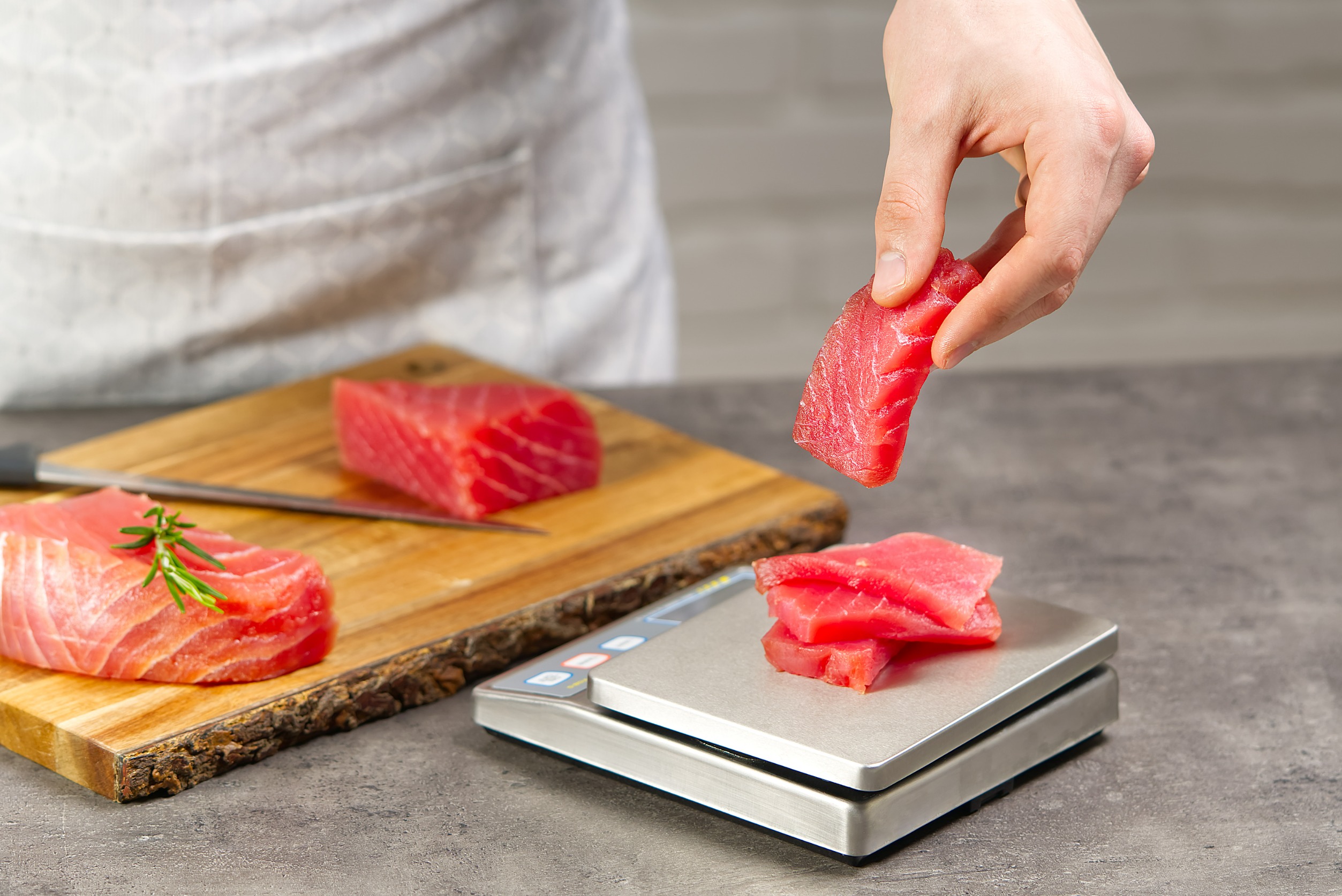
Sashimi is said to have developed in Edo during the Edo period, and the Edo-period document "Morisada Manko" records that "sashimi shops" selling bonito and tuna from stalls flourished.
Until the mid-Edo period, tuna was generally eaten boiled, grilled, or salted, but from the late Edo period people began eating soy-sauce-marinated tuna raw, and because it tasted so good, sashimi culture spread and shops like the "sashimi shops" came to flourish.
In this way, although the raw consumption of tuna and bonito spread during the Edo period, it was not fully raw but soy-sauce-marinated.
However, from the Edo period onward, with the progress and spread of refrigeration and freezing technology and the development of distribution, fresh sashimi came to be eaten throughout Japan.
Also, until around the Taisho era, the fish eaten as fully raw sashimi were mainly translucent fish such as flounder and sea bream, and fish with parasites such as salmon and squid could not be eaten raw, but from the Taisho era onward, further advances in freezing technology made it possible to eat many kinds of seafood raw, and sashimi culture developed greatly.
How to eat and arrange sashimi
The preparation of sashimi involves removing the fish's scales and gills, removing the internal organs from the belly, and washing well with water ("mizu-arai"); filleting the fish by methods such as three-piece, five-piece, or daimyo filleting; performing "sakudori" by removing bones and skin from the filleted flesh with a knife; and then cutting the prepared flesh into sashimi.
Also, sashimi, which is particular about appearance, has various ways of arrangement.
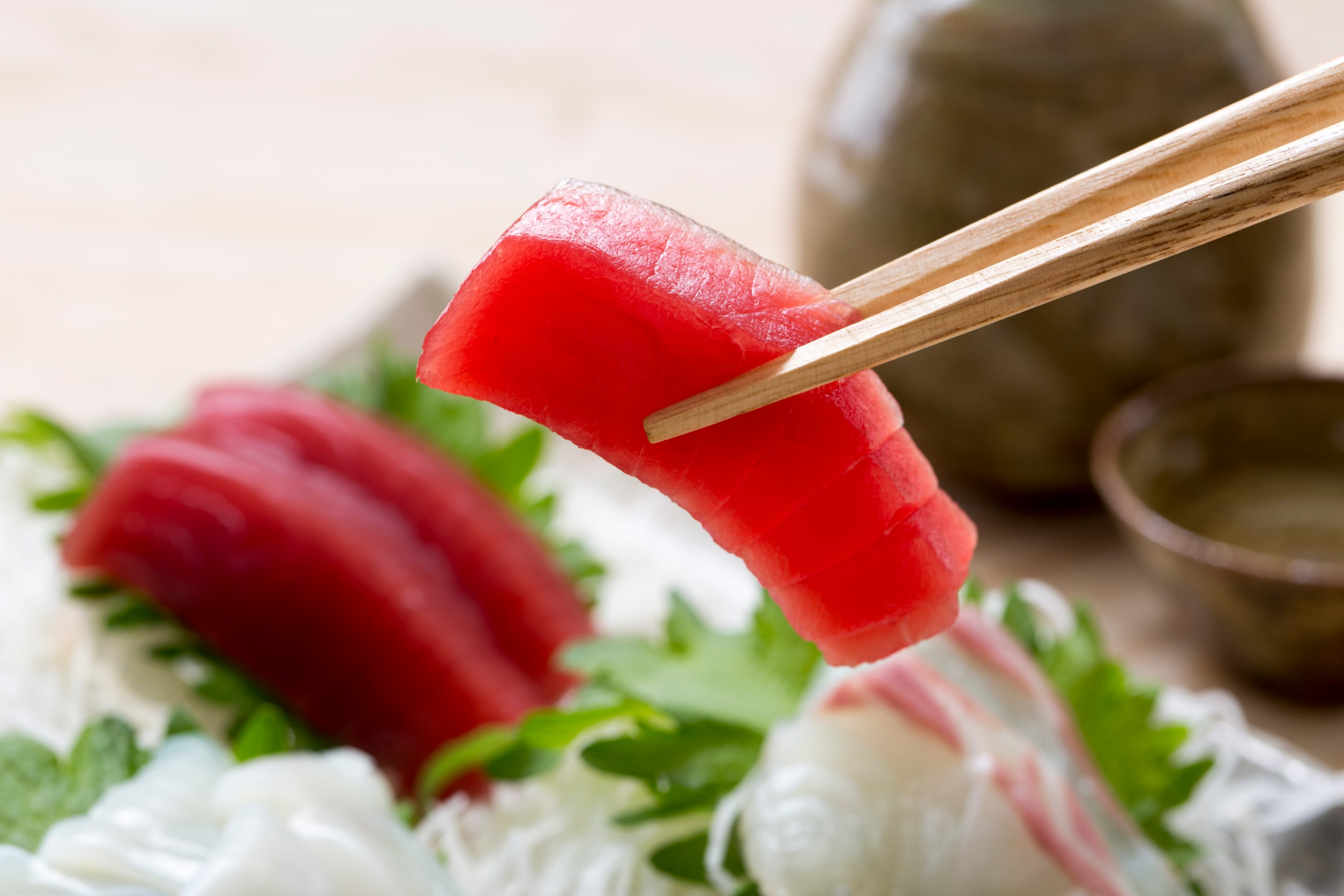
Well-known methods include "arai," in which the fish is thinly cut, washed in cold water, and arranged; "hira-zukuri," a flat cut used for tuna and salmon; "usu-zukuri," a thin cut used for fish such as fugu; and "ito-zukuri," a fine, thread-like cut used for squid and halfbeak.
Furthermore, sashimi becomes even more delicious depending on the tsuma, condiments, and spices arranged with it, and such ingredients are called "ashirai." The most common ashirai include shredded daikon radish and shiso, while cucumber, udo, and seaweed are also sometimes served.
Gari (pickled ginger), which refreshes the palate, and edible chrysanthemum, which enhances the appearance, are also standard accompaniments for sashimi.
Basically, sashimi is generally eaten dipped in soy sauce, but ponzu is sometimes used as well.
Also, as for condiments, wasabi is well known, but ginger, used for bonito and sardines, and momiji-oroshi (grated daikon with chili), used for fugu and flounder, are also familiar condiments.
Is sashimi safe?
Sashimi is familiar to Japanese people and indispensable to their diet, but because it is a raw food, it cannot be called completely safe, and there are risks from bacteria and parasites.
A well-known one is anisakiasis, where if larvae enter the body while still alive, they can cause food poisoning.
Also, because improperly prepared fugu can contain a powerful toxin, eating fugu sashimi prepared by someone without a license is extremely dangerous.
The symptoms of anisakiasis include severe abdominal pain, nausea, vomiting, and peritonitis-like symptoms, and the seafood sashimi most likely to cause it includes mackerel, Pacific saury, horse mackerel, sardine, flounder, salmon, bonito, and squid. Also, since many cases of anisakiasis have been reported with shime-saba (vinegar-cured mackerel) that has not been frozen, caution is needed.
Also, it is sometimes said that seasonings such as vinegar, salt, soy sauce, and wasabi are effective against parasites, but these do not kill anisakis larvae. Anisakis larvae are difficult to bite through, so caution is needed regarding folk beliefs with no scientific basis.
The Ministry of Agriculture, Forestry and Fisheries' page on preventing anisakiasis states that there have been no deaths from anisakiasis, but since food poisoning causes a great deal of pain, be sure to eat sashimi prepared by shops with thorough hygiene management or by knowledgeable people.
Sashimi that only Japan can achieve
Sashimi, which can be called an indispensable presence that adds color to the daily diet even for Japanese people, is, like sushi, now a representative Japanese dish enjoyed around the world.
Raw-food culture is rarely seen abroad, and quite a few people shy away from it, but sashimi can also be said to be a dish achievable only by Japan, which has by far the highest level of hygiene management in the world.
We hope that foreigners unfamiliar with raw-food culture will, when they visit Japan, fully enjoy sashimi at safe establishments!