What Is Salmon Sushi? — Beloved Around the World
The Birth and History of Salmon Sushi
How was salmon sushi born and how did it spread? First, let's look at the circumstances of its origin.
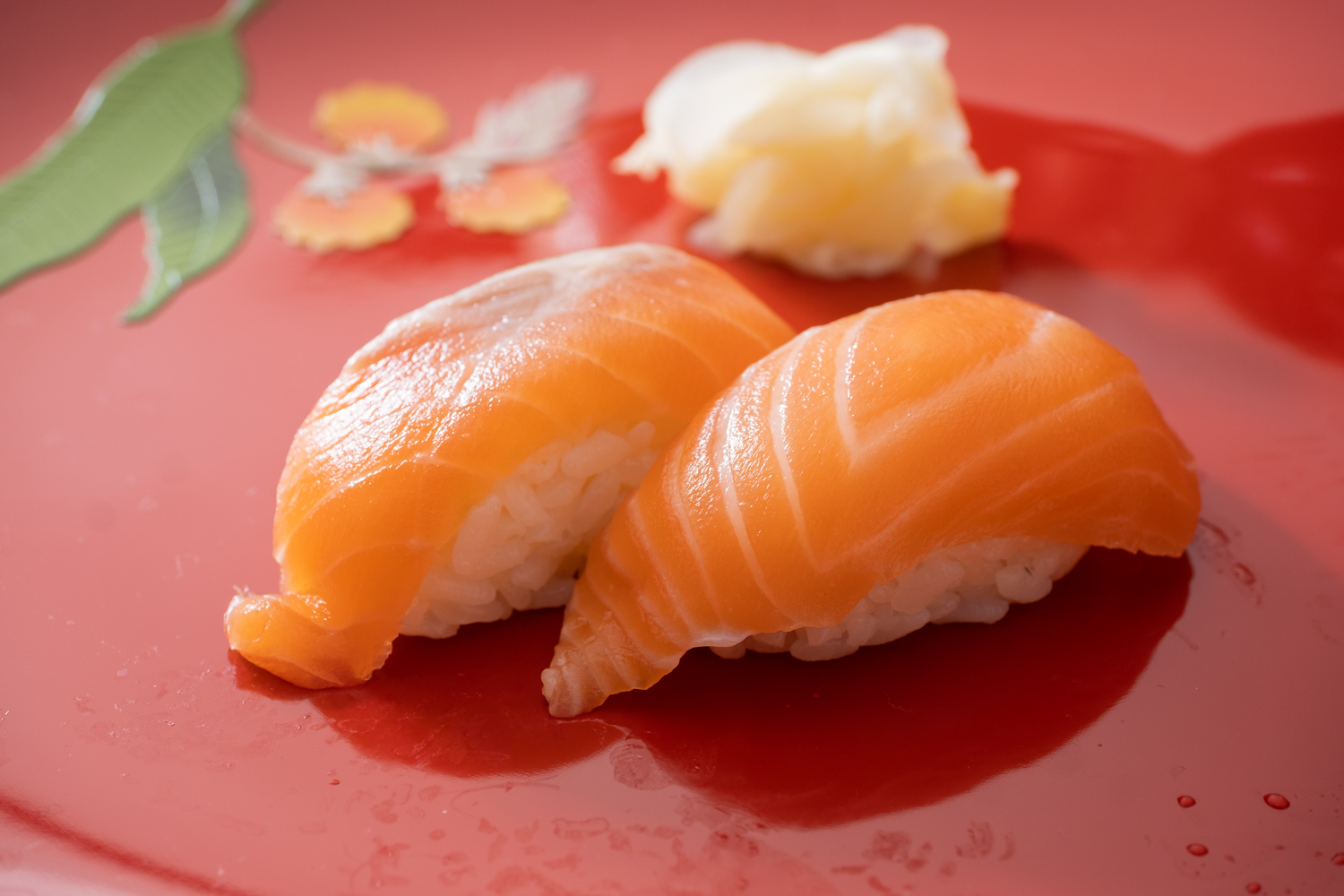
What kind of sushi is salmon sushi?
Salmon sushi is sushi made by combining shari (vinegared rice) with salmon—a topping rich in protein and omega-3 fatty acids. Because salmon also pairs well with other ingredients, it is often combined with onions, mayonnaise, and the like, giving it a notably wide range of variations.
Especially at conveyor-belt sushi restaurants, you can find not only simple salmon sushi but also a variety of salmon sushi menu items such as onion salmon sushi and salmon mayonnaise sushi.
How salmon sushi came to be
In fact, when Edomae sushi first originated, salmon was not a sushi topping.
That's right—the salmon sushi commonly known today is actually not a sushi that originated in Japan.
To begin with, "salmon" as we know it came about in the late 1980s, and the name "salmon" became established in the 1990s. Until then, in Japan, salmon was considered unsuitable for raw consumption because it could carry parasites such as Anisakis, so it was not used as a topping for Edomae sushi.
Amid this, Norway, which had successfully developed parasite-free salmon, launched "Project Japan" in 1986 as part of an overseas market development strategy to spread its domestically produced salmon around the world, and succeeded in selling salmon to Japan as a sushi topping. From there, the full-fledged history of salmon as a sushi topping began.
Delicious salmon sushi spread in the blink of an eye not only throughout Japan but across the world, and in Japan too it became one of the most popular sushi toppings.
Why Is Salmon Sushi So Common at Conveyor-Belt Sushi?
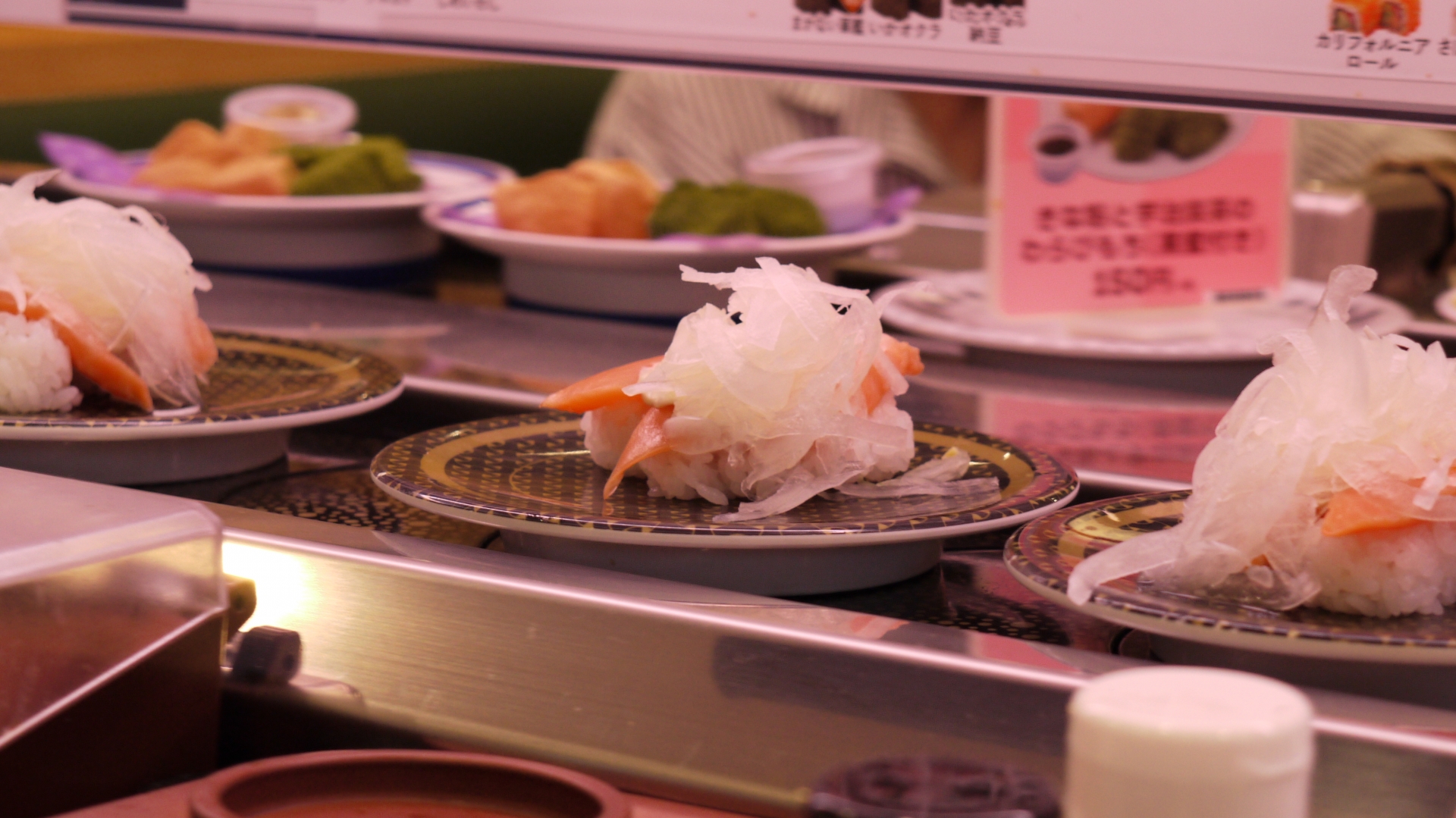
Salmon sushi is a standard at conveyor-belt sushi restaurants, yet you don't see it very often at high-end, counter-style sushi shops. The reason relates to the origin of salmon described earlier.
As its name suggests, Edomae sushi is sushi born in Tokyo, which was called Edo. But salmon could not be caught in Edo Bay, and even if it were transported from regions where it could be caught, the high risk of parasites meant there was no custom of eating Japanese salmon raw.
For these reasons, the topping of salmon basically did not exist in traditional Edomae sushi. Even today, some sushi chefs who value tradition respect this origin of Edomae sushi, and at high-end shops they still do not use salmon as a topping.
However, at conveyor-belt sushi, which likewise has a short history, such considerations don't apply, and salmon—which is delicious and can be served at a reasonable price—became the perfect sushi topping.
The Difference Between Sake, Salmon, and Trout
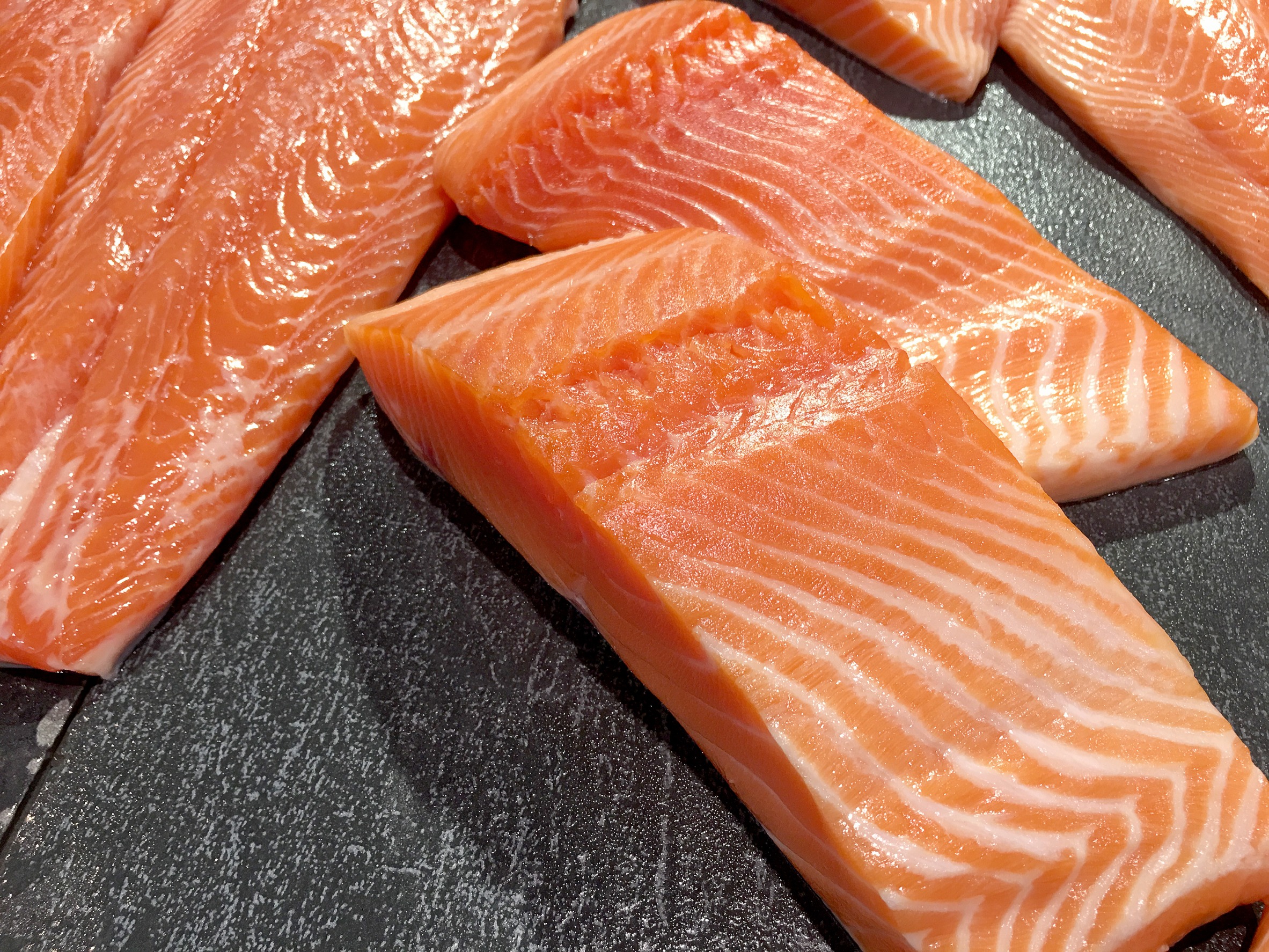
Because they look and taste very similar, "sake (salmon)," "salmon," and "masu (trout)" are hard to tell apart. In reality, it is said that there is no biological difference between salmon and trout, but here we explain how they are generally distinguished.
Sake (Salmon)
In Japan, sake in the narrow sense referred to chum salmon, a saltwater fish belonging to the genus Oncorhynchus of the family Salmonidae, suborder Salmonoidei, order Salmoniformes, class Osteichthyes. But recently, sockeye salmon and coho salmon—once called benimasu and ginmasu—are increasingly being called sake as well.
Salmon
It's confusing because the English name for sake is salmon to begin with, but generally, "salmon" most often refers to Atlantic salmon and trout salmon.
Atlantic salmon, as mentioned earlier, is the salmon that Norway in particular actively exports to countries around the world, and it has even become a brand known as Norwegian salmon.
Trout salmon is mainly produced in places such as Chile in South America and Norway, and it is widely distributed in Japan. The "trout" in trout salmon means masu, so a literal translation would be—of all things—"trout salmon"!
And that makes sense, because trout salmon is rainbow trout—originally a freshwater fish that lives in rivers—farmed in the sea. Even though it's called rainbow trout, rainbow trout raised in the sea grows into a considerably larger fish than conventional rainbow trout.
Masu (Trout)
Among fish of the family Salmonidae, order Salmoniformes, class Osteichthyes, this refers to fish whose names include "masu" or "~masu." In the market, however, pink salmon from the North Pacific was called "masu" and distinguished from Japanese-produced "cherry salmon (sakuramasu)."
In dictionaries and the like, masu is said to mainly refer to "pink salmon (karafutomasu)" and "cherry salmon (sakuramasu)."
In practice, distinguishing masu from sake is difficult—for example, the king salmon also has the academic name masunosuke. At first glance it seems to belong to the masu group, but the masunosuke is in fact the largest type of sake (salmon).
Summary of the Differences Between Sake, Salmon, and Masu
Ultimately, the differences between salmon, sake, and masu are also mixed up with differences between Japanese and English, so a biological classification isn't really possible. But if we force a distinction from a general standpoint:
Sake refers to coho salmon, sockeye salmon, and other members of the genus Oncorhynchus in the family Salmonidae.
Salmon refers to rainbow trout (trout salmon) and king salmon (masunosuke) of the genus Oncorhynchus in the family Salmonidae, plus Atlantic salmon of the genus Salmo in the family Salmonidae.
Masu generally refers to pink salmon (karafutomasu) and "cherry salmon (sakuramasu)."
A Variety of Salmon Sushi
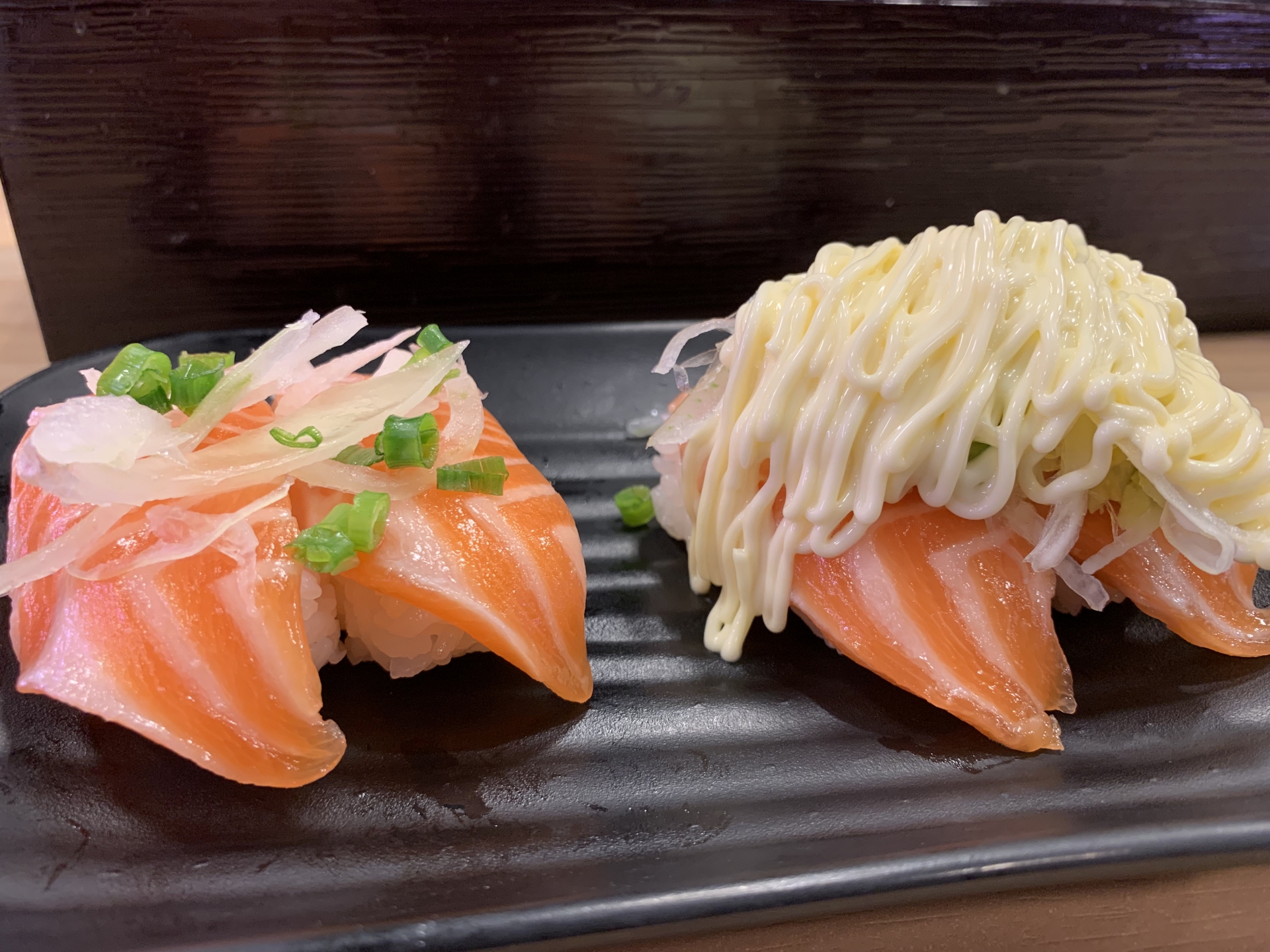
Salmon sushi enjoys tremendous popularity at home and abroad, and one reason is its rich variety. What kinds of salmon sushi are there?We explain the types of salmon and the sushi menu items.
Types of fish used for salmon sushi
The salmon sushi you see at conveyor-belt sushi restaurants is mainly farmed Atlantic salmon and trout salmon.
Cherry salmon, meanwhile, is used in trout sushi (masuzushi), a local specialty of Toyama Prefecture.
Types of salmon sushi
The various salmon sushi you see at conveyor-belt sushi restaurants each have their own distinctive flavors that delight diners' palates.
Well-known salmon sushi includes the following.
Toro Salmon
Sushi made using the fattiest part of the salmon. Its appeal is a mellowness that rivals even tuna toro.
Seared Salmon
Even people who don't like raw fish can enjoy it once it's seared, which removes any fishy smell! There are combinations with mayonnaise and the like, making it deliciously enjoyable. The added sweetness from searing is also delightful.
Salmon Carpaccio and Onion Salmon
A Western-style menu item enjoyed with sliced onion and dressing. There are also types topped with avocado.
Salmon Shabu-Shabu
Sushi topped with salmon that has been briefly dipped in hot water, shabu-shabu style, to make it easier to eat. It can be enjoyed refreshingly with ponzu.
The Taste and Nutrition of Salmon Sushi
It's common to find that even foreigners who don't like raw fish or sushi are fine with salmon sushi.
Because salmon is mainly farmed, it has little of the smell often associated with raw fish, along with a pleasant sweetness and rich flavor, making it easy to eat even for those who dislike raw fish and approachable for sushi beginners.
Salmon is also known for its high nutritional value. What nutrients does salmon contain? Let's look at the main nutrients in 100g of salmon and their benefits.
Nutrients contained in salmon (per 100g)
Protein (19.6g)
An important building block of muscles and organs.
Vitamin D (7.3μg)
Helps keep various functions working properly.
Docosahexaenoic acid (540mg)
Commonly known as DHA, it is said to help prevent arteriosclerosis and blood clotting.
Eicosapentaenoic acid (360mg)
Commonly known as EPA, it works to prevent blood clotting.
3 Recommended Salmon Sushi Recipes
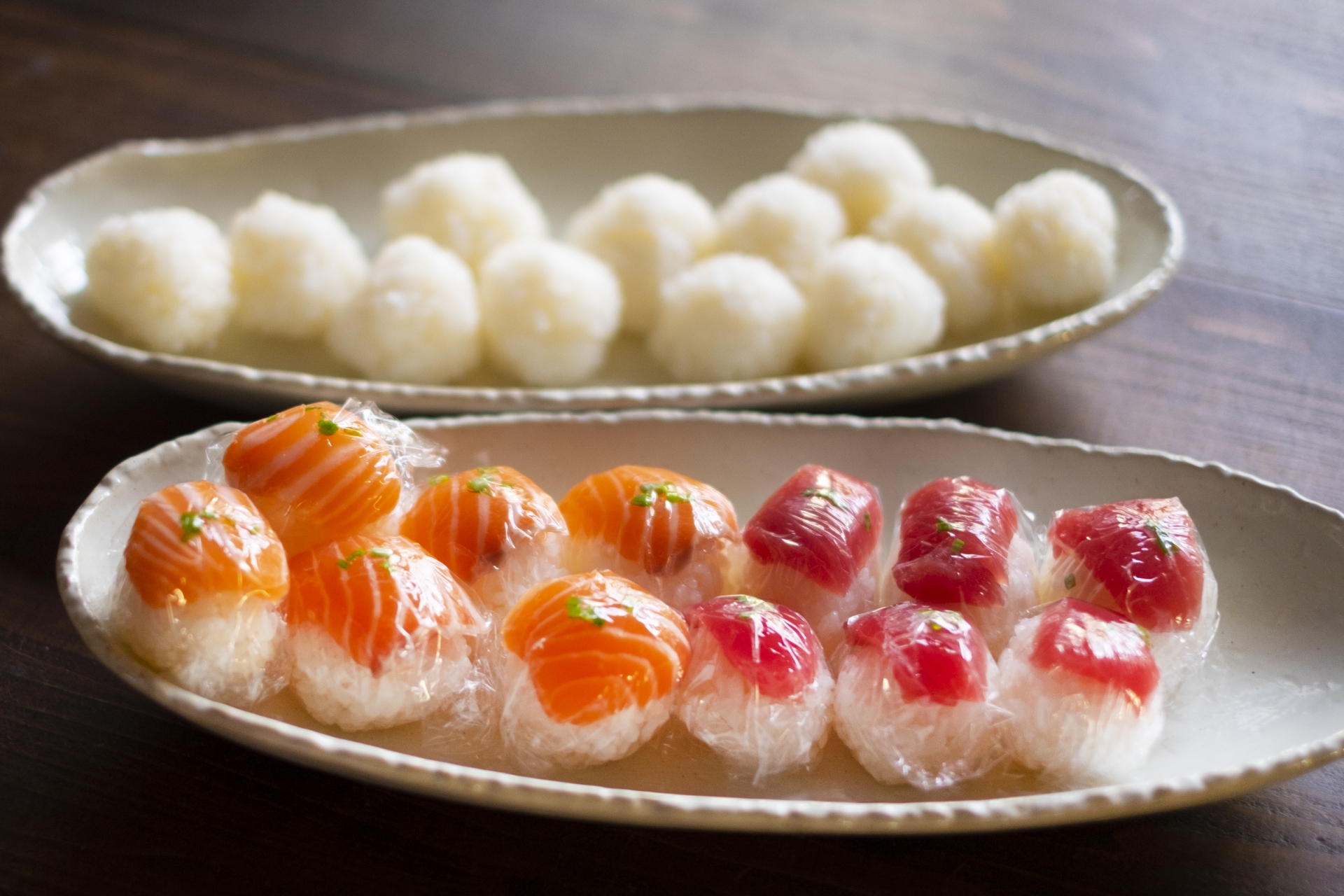
From here, we introduce salmon sushi recipes you can easily make at home using store-bought salmon. They work with either Atlantic salmon or trout salmon, so by all means give them a try.
Temari Sushi
Among the salmon sushi you can make at home, temari sushi looks great and is easy to eat.
Just place cut salmon on top of bite-sized balls of shari, and it's done.
Top it with cream cheese, shiso leaves, salmon roe, and the like for a party-ready dish.
Bamboo Leaf Sushi
One of salmon's strengths is that it has little fishy smell, but if you want to make even more fragrant sushi, try using bamboo leaves.
You can wrap formed sushi in bamboo leaves, or use a mold to make it pressed-sushi style—both are delicious!
Either way, it's wonderful that it's easy to make yet gives off an air of luxury.
Salmon Chirashi Sushi
Salmon's beautiful color is perfect for chirashi sushi.Use shredded omelet (kinshi tamago), avocado, green shiso, and salmon roe to create a dish that delights the eyes.
Available Online! Delicious Salmon Sushi
If making it yourself is too much trouble, you can also buy delicious salmon sushi crafted by professionals online.
Here we introduce three recommended salmon sushi.
Salmon Sushi (Echizen Hagi)
Echizen Hagi's salmon sushi is hugely popular for the thickness and melt-in-your-mouth texture of its salmon.
The Koshihikari rice produced in Fukui Prefecture pairs perfectly with the impressively thick salmon—a celebrated product that has produced one repeat customer after another.
Shop name: Nama Saba Zushi Echizen Hagi
Website: https://item.rakuten.co.jp/namasabazushi/101/
Seared Toro Salmon Belly, Sliced for Sashimi and Sushi (Gourmet no Osama)
The seared salmon familiar from conveyor-belt sushi is also available online!
With outstanding freshness and just the right degree of searing, you can savor the sweetness of the salmon to your heart's content.
Enjoy it on sushi or rice bowls, combined with other ingredients!
Shop name: Gourmet no Osama
Website: https://item.rakuten.co.jp/gourmet-ousama/aburi-salmon/
Rock-Salt Seared King Salmon Box Sushi (Shidashi Yonechou)
This is a box sushi popular for its dynamic approach of sandwiching vinegared rice between thickly cut king salmon.
The amount of salmon—breaking all conventions—is gorgeous, making it a standout dish that shines at gatherings of guests.
Shop name: Shidashi Yonechou
Website: https://item.rakuten.co.jp/yonechou/h-kingsalmon-aaaaa/?s-id=review_PC_il_item_01
References
小学館Japan大百科全書「サケ」
小学館Japan大百科全書「マス」
小学館Japan国語大辞典「Salmon」
The Norwegian campaign behind Japan's love of salmon sushi | The Japan Times
SalmonがConveyor Belt Sushi以外であまり見かけない理由って?知ってるようで意外と知らない!? | クックビズ総研 (cookbiz.jp)
SalmonSushi | Sushi Walker (sushiwalker.com)