Sushi Legends Vol. 2 — Hanaya Yohei, the Founder of Edomae Sushi
The Man Called Hanaya Yohei
Hanaya Yohei's real name was Koizumi Yohei. He is said to have been born around 1799 in Reiganjima (present-day Shinkawa, Chuo-ku, Tokyo), and is sometimes called Hanaya Yohei (written with the "flower shop" characters).
At the time, the mainstream sushi was the pressed sushi popular in the Kansai region, but amid this, he devised a form of sushi close to today's nigiri sushi and took the world by storm.
In the sushi industry of the time, he was a figure who ranked alongside rivals such as Sakaiya Matsugoro, and together with them he led the sushi world of Edo—truly a legendary figure in the sushi industry.
He closed the curtain on his life in the 5th year of Ansei (1858). In an era when townspeople culture flourished splendidly, he established a unique position and was highly active as a chef.
The Birth of Nigiri Sushi and Hanaya Yohei
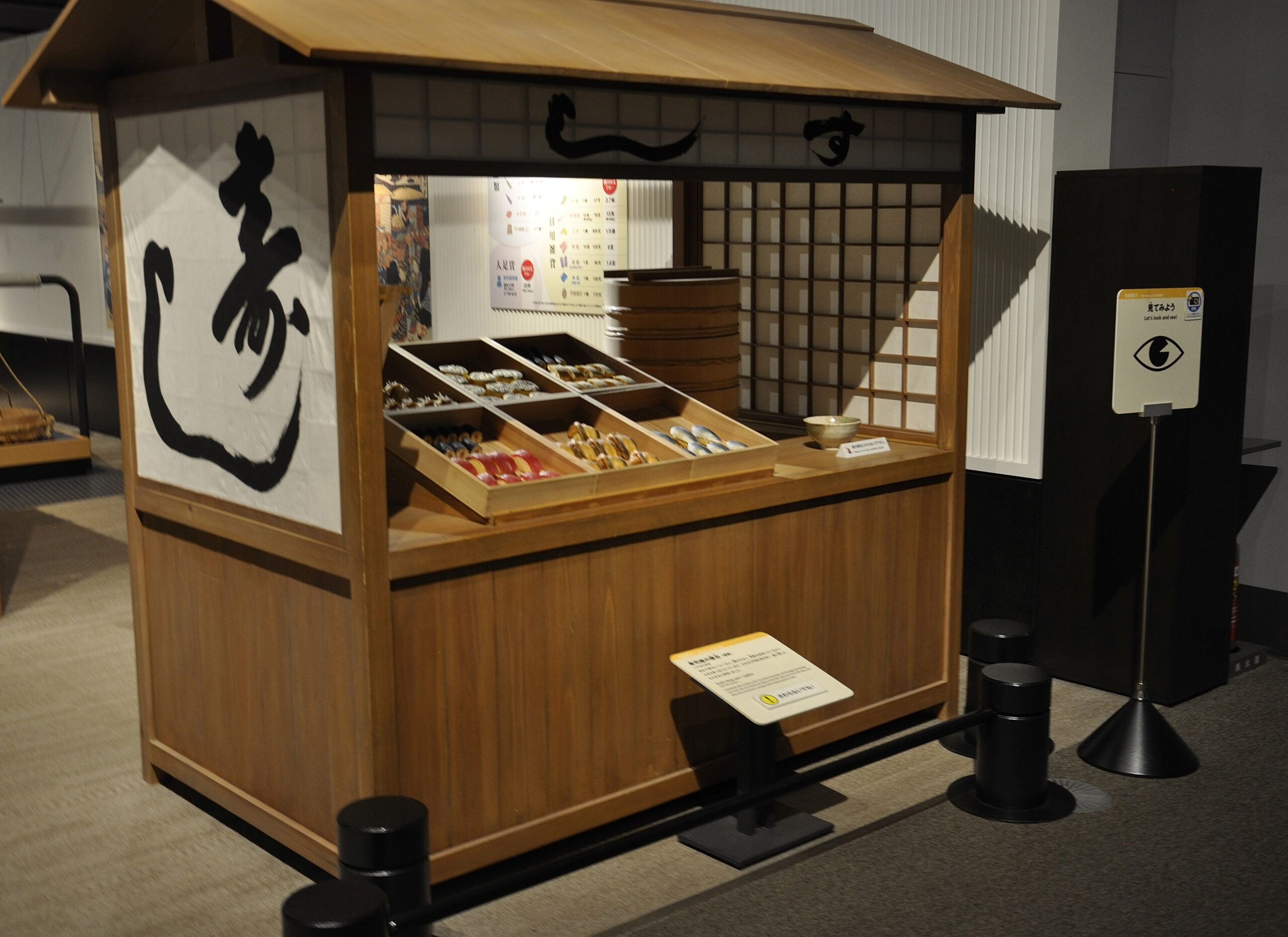
Tracing Hanaya Yohei Through the Literature
The reason Hanaya Yohei is considered the founder of nigiri sushi rests on the writings of the haiku poet Koizumi Ugai.
Koizumi Ugai was the younger brother of the proprietor who became the 4th-generation Hanaya Yohei in the Meiji era.
According to Koizumi Ugai, nigiri sushi was born in Edo in the first year of the Bunsei era, and he clearly states that it was devised by the first-generation Yohei.
On the other hand, he also records that several people had tried to make sushi by the same method before Yohei, but all ended in failure and could not gain the popularity of the Edo natives.
Since Koizumi Ugai was, plainly speaking, a relative, we cannot know whether everything is true, but it seems there were already sushi restaurants other than Hanaya Yohei making modern-style nigiri sushi at the time.
Among them, Hanaya Yohei likely stood out and achieved the greatest success as a business.
Also, according to the "Yohei-den Sho" in "Mata no Aoba" by a person named Bunkyushi, Hanaya Yohei disliked the leisurely cooking methods of Kamigata sushi, and because pressed sushi could not bring out the deliciousness of the fish, he devised a method called "haya-zuke" (quick-pickling) to create nigiri sushi.
Yohei is also said to have devised oboro sushi in addition to nigiri sushi.
At the time, few people favored shiba shrimp, so it was inexpensive. Yohei took advantage of this by boiling shiba shrimp to make oboro, which became very popular.
Yohei's Highly Acclaimed Nigiri Sushi
How much Hanaya Yohei's nigiri sushi was celebrated at the time remains recorded in various writings.
For example, "Edo Meibutsu Kyoshisen" by Domyaku Sanjin records that Yohei sushi, located east of Ryogoku, was all the rage.
Also, a comic tanka recorded in "Buso Ryogan Zusho" sings of "Yohei-zushi" packed in boxes and "Yohei-zu" that could not be bought without standing in a long line.
The nigiri sushi he introduced in an era centered on pressed sushi was a huge hit.
Starting from carrying an okamochi (a food-delivery box) and selling on foot, his business gradually grew until he finally established a fine shop and became a figure truly representative of the sushi industry of the time.
The Sushi Industry in Hanaya Yohei's Era
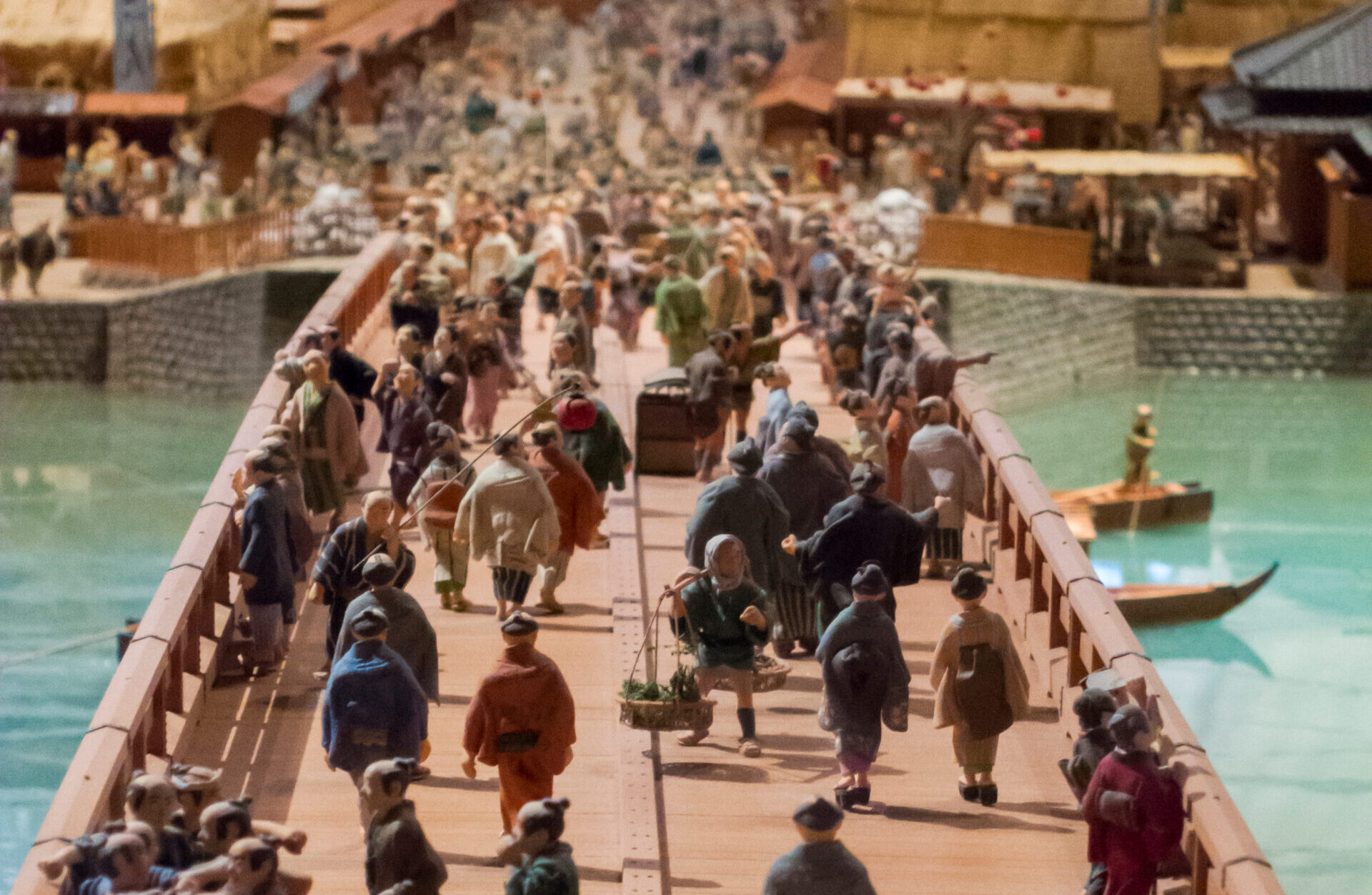
The nigiri sushi said to have been devised by Hanaya Yohei perfectly matched the impatient temperament of the Edo natives, and it spread throughout the town of Edo in no time.
That said, in reality the sushi industry of the time was not just Yohei.
Here, let us introduce the two sushi restaurants—other than Yohei sushi—among the "Edo San-zushi" (the Three Great Sushi of Edo) that led the sushi industry of the time.
Matsugazushi
Around the beginning of the Bunka era, Sakaiya Matsugoro opened a sushi restaurant called "Matsugazushi" in Fukagawa Ataka-cho. There is even a theory that the inventor of nigiri sushi was not Hanaya Yohei but Sakaiya Matsugoro—truly making him a worthy rival for Hanaya Yohei.
Because Matsugoro was the proprietor, the name "Matsugazushi" is famous, but the shop's trade name was Isago-zushi, and because it was located in Ataka, it was sometimes called "Ataka no Su."
There is also a theory that "Matsugazushi" was the first to use wasabi in sushi.
"Matsugazushi" was famous above all for its lavish splendor, and "Kiyu Shoran," which conveys the customs of Edo, records that Matsugazushi's sushi completely transformed the sushi of the time.
Because it was far too luxurious, Matsugoro was imprisoned along with Hanaya Yohei by the senior councilor Mizuno Tadakuni, who had banned extravagance in the Tenpo Reforms.
Incidentally, the prestige of "Matsugazushi" is also conveyed by the fact that it made its ukiyo-e debut through the famous ukiyo-e artist of the time, Utagawa Kuniyoshi. It seems that steamed shrimp has been popular with children both now and then.
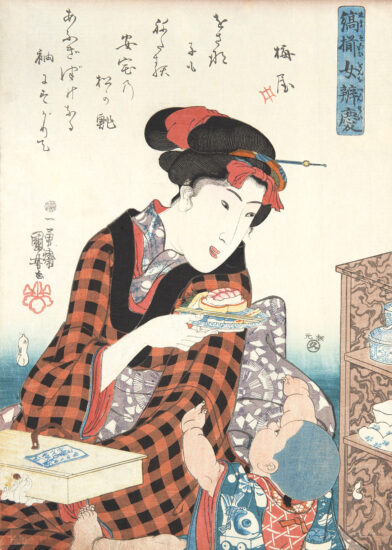
Utagawa Kuniyoshi, "Shimazoroi Onna Benkei: Matsu no Sushi"
Kenukizushi
Kenukizushi is the oldest establishment among the "Edo San-zushi."
It is said to have begun when Matsuzaki Kiemon, from Shibata in Echigo, opened a sushi restaurant called "Kenukizu" in Kamado-gashi (near present-day Nihonbashi Ningyocho) in 1702.
Kenukizu was less a nigiri sushi than a type of pressed sushi wrapped in bamboo grass leaves, called sasamaki sushi. The sushi toppings were not raw but cured several times with salt and vinegar, so it was extremely labor-intensive.
For this reason, it was a luxury item, and its main clientele is said to have been noble figures such as daimyo and hatamoto.
As for the unusual name Kenukizu, there are theories that it came from removing the fish bones with tweezers (kenuki), or that it was so delicious people ate it "forgetting all charm" (a play on words with iroke-nuki).
Kenukizushi still operates today near Kanda as "Sasamaki Kenukizushi Sohonten."
If you have the chance, please be sure to visit.
Yohei Sushi Afterward
Yohei Sushi, Which Survived Until the Early Showa Era
The first-generation Hanaya Yohei died at the age of 60 in 1858.
After that, the 2nd-generation Koizumi Kinzaburo, the 3rd-generation Koizumi Kikutaro and the 4th-generation Koizumi Kitaro succeeded him, and it is known that Hanaya Yohei's sushi restaurant continued until the early Showa era.
According to the stone monument marking the birthplace of Yohei sushi that remains in Ryogoku, Sumida Ward, Hanaya Yohei's sushi restaurant closed in the 5th year of Showa (1930), while another theory places it in the 7th year of Showa (1932).
The Living Pulse of Hanaya Yohei's Skill and Spirit
Although the bloodline of the first-generation Hanaya Yohei died out, it is said that the skill and spirit of the founder of nigiri sushi have been passed down continuously by the craftsmen who apprenticed at his shop.
One such example is "Kizushi" in Ningyocho, Tokyo.
Kizushi, which boasts a history of nearly a century since its founding, began when the first-generation Yui Kitaro trained from the age of nine at a branch of Yohei sushi.
Passed from the 2nd-generation Yui Kanichi to the current Yui Ryuichi, Kizushi still conveys the tradition of Yohei sushi today.
Also, Yoshino Sushi Honten, founded in the 12th year of Meiji (1879), is famous as a long-established restaurant in the lineage of Hanaya Yohei.
Yoshino Sushi, now run by the 5th generation, is the mainstream of Edo nigiri, and is also known as the sushi restaurant that first created toro (fatty tuna) nigiri in Japan.
Hanaya Yohei, a Master Chef Who Shines Across the Ages
This time, we focused on the man called Hanaya Yohei and the sushi industry of the era in which he lived.
As the times changed, he repeated trial and error, devised his own unique style and grasped success.
In fact, Hanaya Yohei challenged himself not only in the sushi business but in various ventures, and the one that finally hit it big was this nigiri sushi style.
Looking at it this way, his greatness as an entrepreneur also comes into view.
Even after he passed away in the 5th year of Ansei (1858), the footsteps Hanaya Yohei left behind continue to have a great influence on today's Japanese food culture.
The name Hanaya Yohei will surely remain in our memories as a symbol of a first-rate chef whose story deserves to be passed down.
References
·講談社Japan人名大辞典「はなやよへえ」
·小学館Japan国語大辞典「よへいずし」
·Japan近代文学大事典「小泉迂外」
永瀬 牙之輔 著『すし通』2016年,土曜文庫刊