Best Prefectures for Sushi — Hokkaido, the Sushi Holy Land
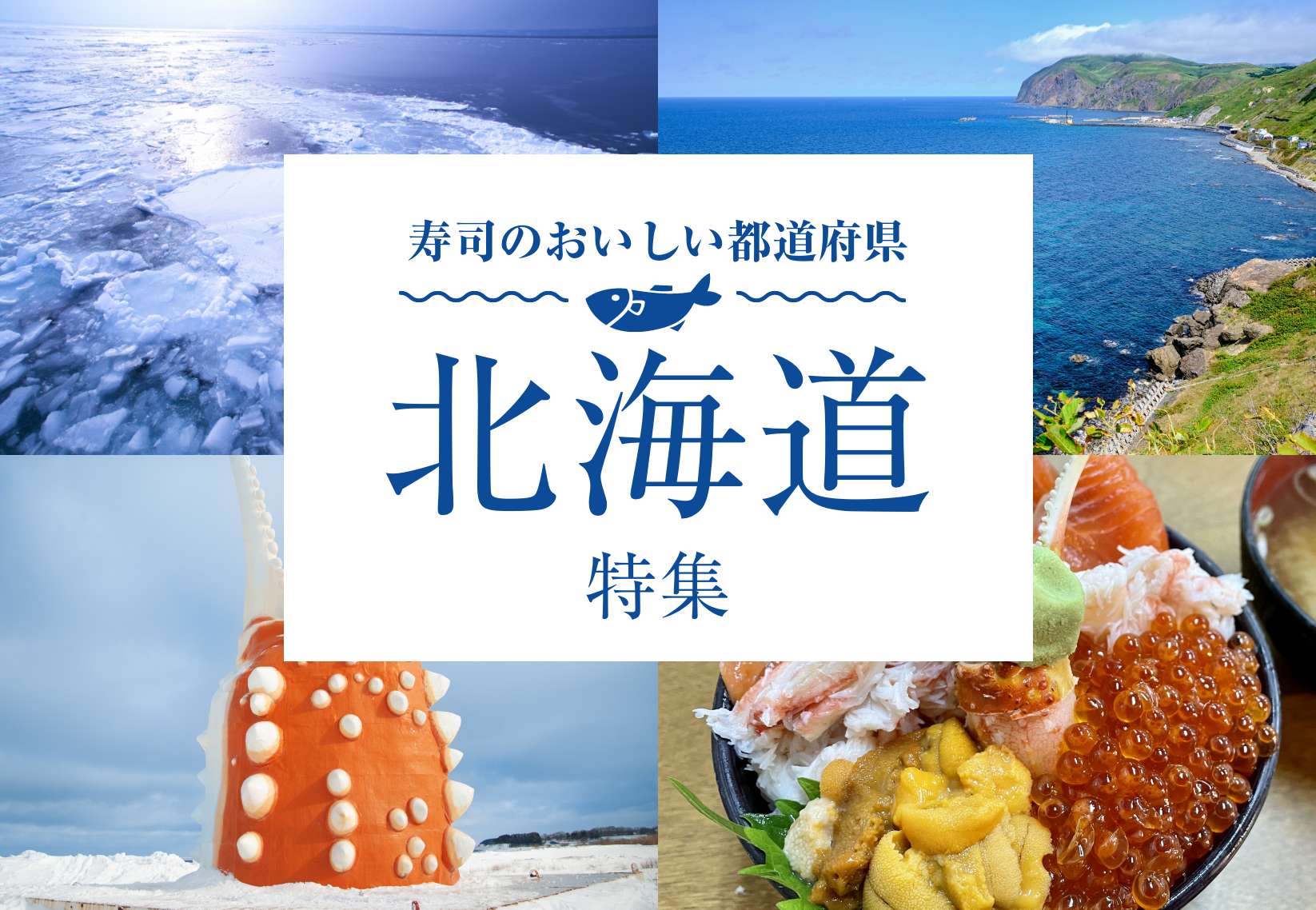
Vast Hokkaido, which accounts for roughly one-fifth of Japan's total land area, is a treasure trove of rich nature and bounty from the sea. Blessed by this exceptional environment, Hokkaido is known as one of the prefectures where you can enjoy the finest sushi. Hokkaido's fish catch amounts to fully one-quarter of Japan's entire haul, and this fresh Hokkaido seafood draws many sushi lovers to the region.
Recently, with the pandemic behind us, many foreign visitors are coming to Japan, and for these international travelers, "Hokkaido" ranks alongside "Tokyo," "Kyoto," and "Osaka" as a famous destination. For foreigners, the impression that "Hokkaido means sushi" is strong, and overseas you will see so many Japanese restaurants bearing the "Hokkaido" name that its brand image is firmly established.
This time, we explore the appeal of the sushi and seafood of Hokkaido—known both at home and abroad as a holy land of sushi—and delve into the secret of its deliciousness. Sushi lovers, let's set off together on a journey through the captivating sushi of Hokkaido!
Why Hokkaido's sushi and seafood are so delicious
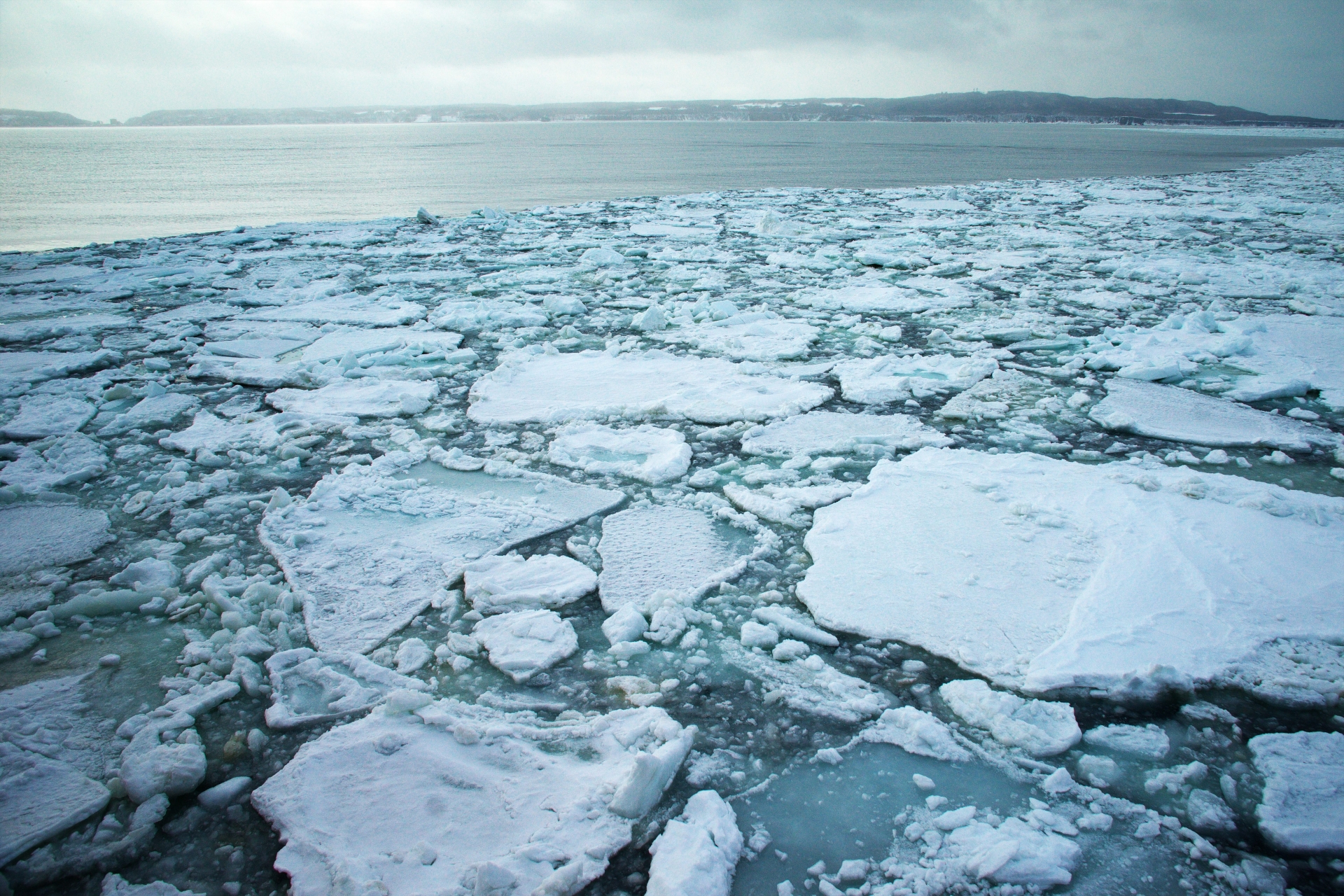
Hokkaido has a strong image as a prefecture with delicious sushi and seafood, and there are solid reasons why Hokkaido's sushi is so good.
Here, let's take a look at the specific reasons.
Hokkaido's frigid environment nurtures high-quality seafood
Located at the northernmost tip of Japan, the seas of Hokkaido are extremely cold.
Fish that live in these rough, wave-tossed waters naturally develop firm, taut flesh, and because they store up plenty of fat to prepare for the winter cold and for spawning, they grow into delicious, fatty fish.
Furthermore, the ocean currents that carry drift ice into the Sea of Okhotsk also bring abundant nutrients along with them.
Beneath the thick ice, plankton multiply explosively thanks to the nutrients carried by the currents, and the seafood beneath the drift ice that feeds on this plankton grows up packed with nutrients and full of flavor.
Abundant, intersecting currents make for prime fishing grounds
Hokkaido is surrounded by three seas—the Sea of Japan, the Pacific Ocean, and the Sea of Okhotsk—and has a great many ocean currents.
Because these currents carry abundant nutrients, they create an environment that is easy for marine life to thrive in.
In particular, areas where currents intersect are home to a wide variety of seafood, making them excellent fishing spots.
The sheer diversity of species is overwhelming, and many of the fish and shellfish used as sushi toppings are raised in Hokkaido.
Many especially important currents converge here
Japan has four important ocean currents.
On the Pacific side are the Oyashio (Kuril Current) and the Kuroshio (Japan Current), and on the Sea of Japan side are the Liman Current and the Tsushima Current.
In particular, the Kuril Current is said to have been named "Oyashio"—literally "parent tide"—because it is so rich in nutrients that it nurtures fish like a parent. Its presence is crucial, and in fact, fishing ports with annual catches of over 50,000 tons are concentrated along the coastlines where this Oyashio flows.
Hokkaido lies precisely in the region through which this "Oyashio" flows, so it makes perfect sense that it is so abundant in delicious bounty from the sea.
Moreover, in addition to the "Oyashio," many warm currents—said to be home to numerous fish species—also flow in, so a truly wide variety of seafood lives here.

Characteristics of Hokkaido sushi
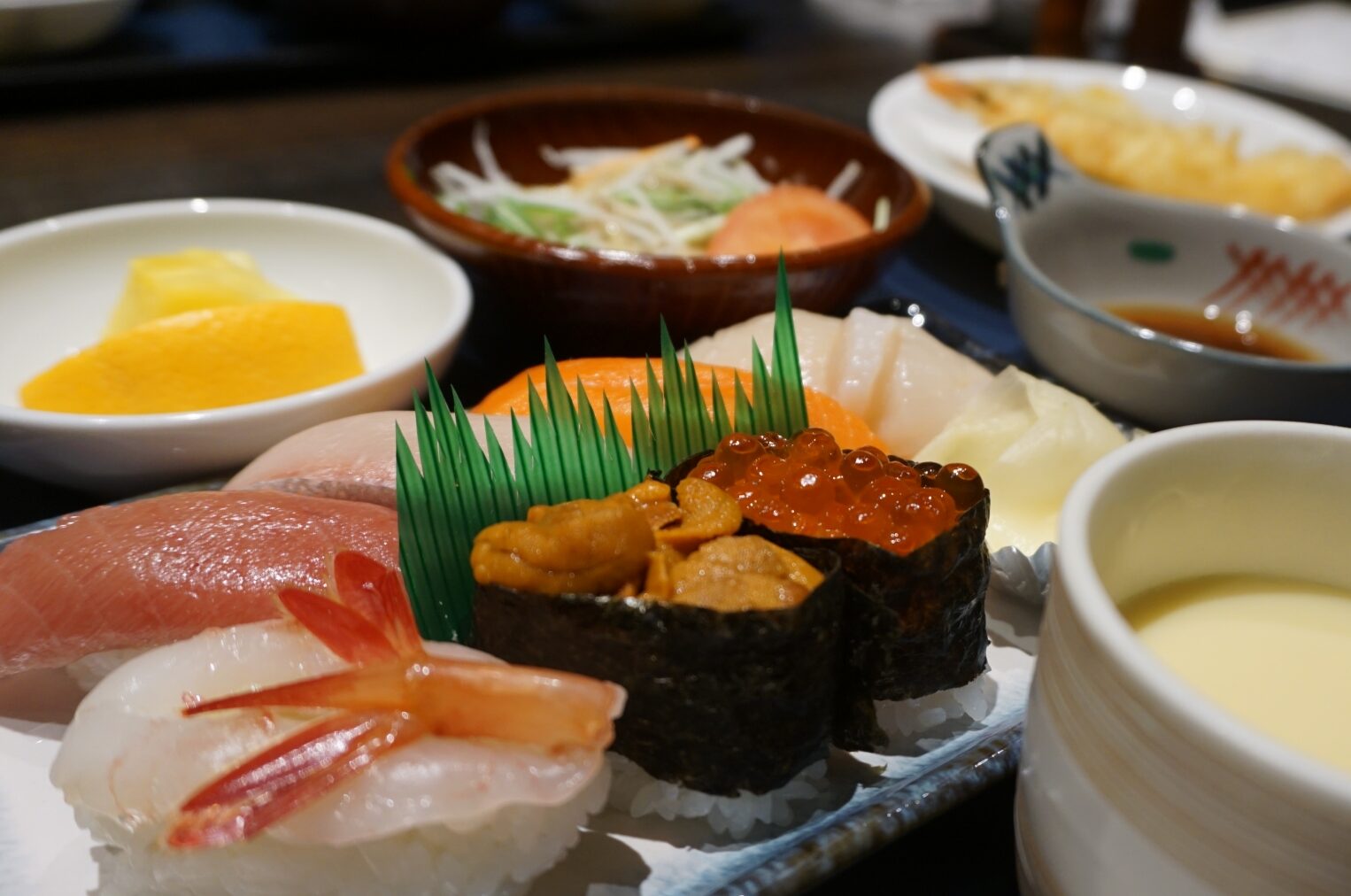
Ezomae sushi: highly fresh raw-style sushi
In contrast to Tokyo's "Edomae sushi," Hokkaido's sushi is sometimes called "Ezomae sushi."
Whereas Edomae sushi is fundamentally about treating the fish—curing it with vinegar or salt and applying various techniques—Ezomae sushi is fundamentally "raw sushi," in which freshly caught fish is immediately formed into nigiri raw.
In particular, "raw sushi" is extremely popular at sushi restaurants in fishing towns.
Sushi made by instantly slicing the choicest seasonal seafood and fish just landed at the local port and forming it with vinegared rice is truly exquisite.
This freshness-proud Ezomae sushi can be served precisely because of Hokkaido's rich bounty from the sea.
Delivering the seafood nurtured by these rich seas in a fresh state is what Hokkaido sushi is all about.
High-level sushi restaurants and conveyor-belt sushi
Hokkaido's sushi restaurants order in sushi toppings that aren't found in Hokkaido from other regions, but they basically draw out flavor to the fullest by using local seafood.
The reason Hokkaido's sushi restaurants are rated as high-level is precisely this freshness.
In addition, Hokkaido's conveyor-belt sushi chains have a reputation for high quality.
Not only is the freshness high, but the fact that the sushi toppings are thick and large is a key reason for their popularity.
Among the famous names, chains that operate mainly in Hokkaido—such as "Nemuro Hanamaru," "Nagoyakatei," and "Kaiten Sushi Toriton"—are well known as conveyor-belt sushi chains that make the most of fresh ingredients.
Hokkaido's markets where fresh seafood gathers
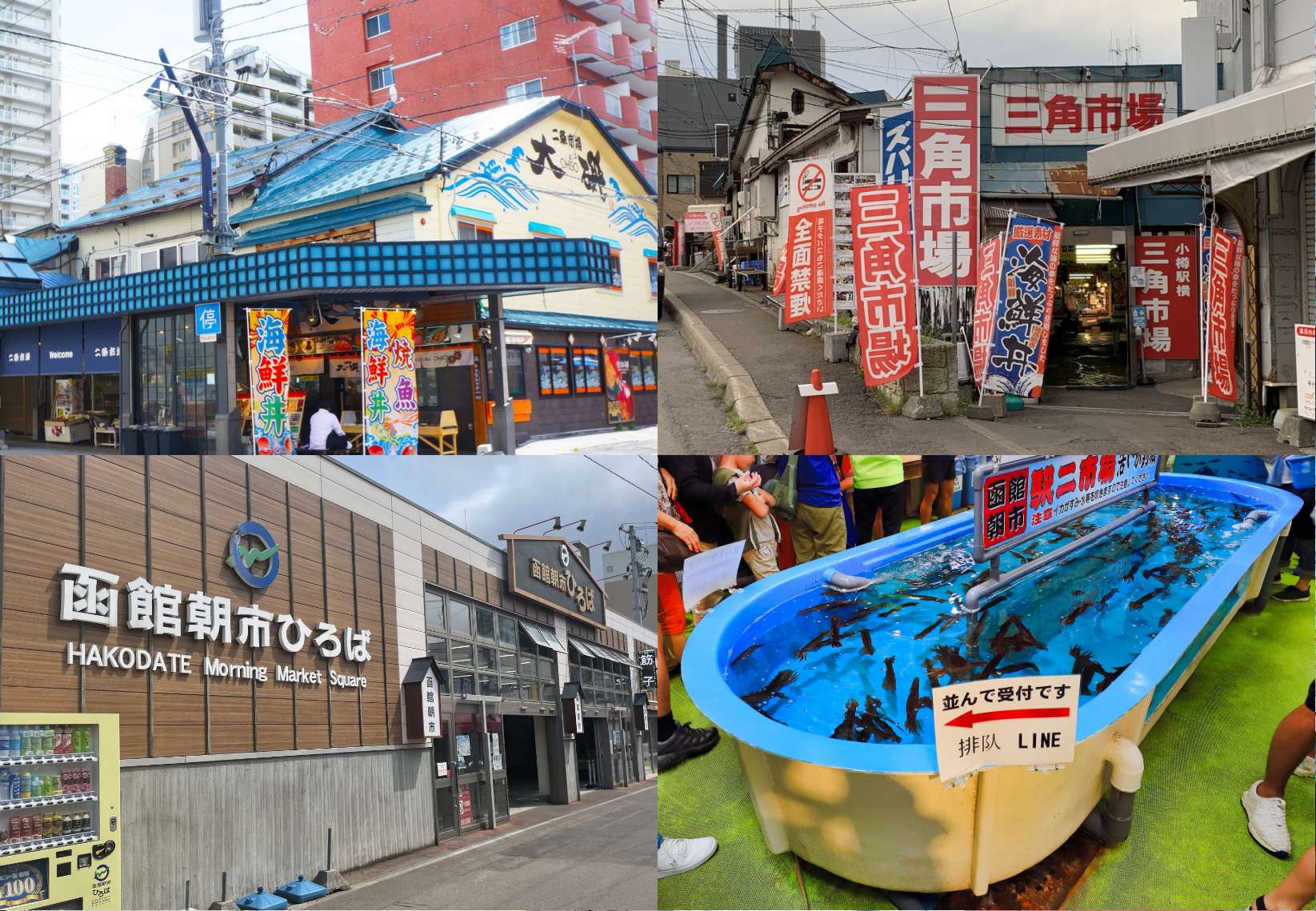
Hokkaido has many areas where fishing flourishes—including Kushiro, home to Kushiro Port, one of Japan's three great fishing ports, as well as Sapporo, Otaru, Hakodate, Erimo, Rebun Island, Rausu, and Esashi—and at the markets in each of these regions you can enjoy delicious bounty from the sea.
Here we introduce some representative markets, so be sure to stop by if you're ever nearby.
Sapporo & Otaru
Sapporo is the area where all sorts of goods gather from across Hokkaido, and it has an overwhelmingly large number of sushi restaurants, from conveyor-belt sushi to high-end sushi.
With over 100 years of history, the Sapporo Nijo Market is also known as the city's kitchen, attracting a wide range of customers from regulars to tourists.
Sapporo also has the Kyoei Market, the Sapporo Central Wholesale Market, and its outer market, all of which bustle with crowds of customers.
Sapporo Nijo Market
Since Otaru is next to Sapporo, it's a place you'll definitely want to visit together with Sapporo.
Otaru has many sushi restaurants using local fish caught in nearby waters, and at the Otaru Sankaku Market—reachable on foot from Otaru Station—you can enjoy a variety of local fish.
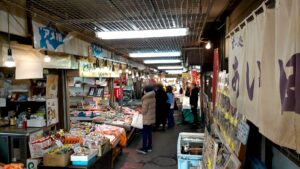
Otaru Sankaku Market
Hakodate
One of Hokkaido's classic tourist spots is Hakodate.
Right near JR Hakodate Station is the "Hakodate Morning Market," a huge market where as many as 250 shops gather.
Here there are not only seafood but also many shops selling daily goods, and it's a fully featured tourist spot where you can even try squid fishing.
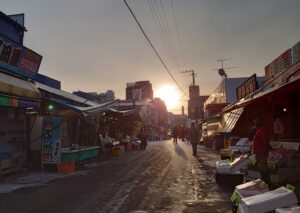
Hakodate Morning Market
Kushiro
Kushiro, home to one of Japan's three great fishing ports, has the "Kushiro Washo Market," which ranks alongside the Sapporo Nijo Market and the Hakodate Morning Market as one of the "three great markets of Hokkaido."
As befits a market overwhelmingly famous in this port town, its selection is stunning.
A must-try is the "Katte-don," the market's signature dish, where you buy rice inside the market and top it with whatever seafood you'd like to eat at the shop.
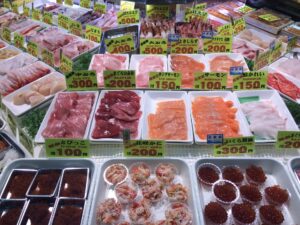
Seafood to top a Katte-don
Hokkaido truly is a treasure trove of sushi toppings
Hokkaido, blessed by the bounty its seas nurture, yields a great deal of seafood, and here let's look at some representative examples.
Sea urchin (uni)
Hokkaido's sea urchin is mainly Ezo bafun uni and kita-murasaki uni. A characteristic of Hokkaido's uni is that, unlike the boxed uni common on Honshu that uses alum, the mainstream practice here is to preserve it in salt water. As a result, it has little bitterness and a rich sweetness, and the fishing season from June through mid-September is your chance to enjoy the finest uni.
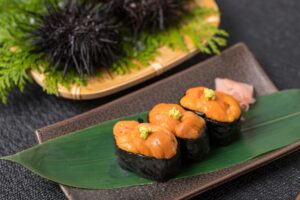
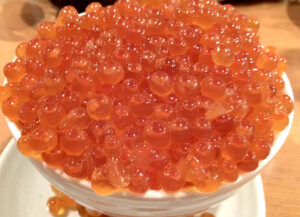
Salmon roe (ikura)
Hokkaido accounts for about 90% of Japan's entire salmon catch, and it also tops the nation in salmon roe production.
With its popping texture and the flavor that spreads through your mouth, ikura is popular with adults and children alike, and in Hokkaido you can eat fresh ikura sushi and ikura rice bowls just about everywhere.
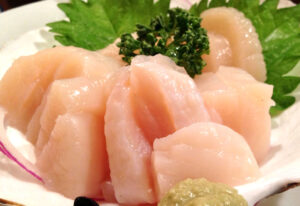
Scallops (hotate)
Hokkaido also boasts the top scallop catch in Japan. In particular, bays with intricate tidal flows are prime scallop-farming grounds where nutrient-rich plankton flows in, and almost all of Japan's domestic scallops come from Hokkaido.
Shrimp (ebi)
In Hokkaido, many shrimp that make for sushi toppings are caught—including botan ebi, the hokkoku akaebi known as ama-ebi (sweet shrimp), the toyama ebi closely related to botan ebi, and the hokkai shima ebi—and even at conveyor-belt sushi you can eat exquisite raw shrimp.

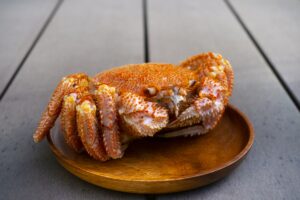
Crab (kani)
Hokkaido is known as a crab kingdom where crab can be caught year-round. In particular, the hairy crab (kegani) nurtured in the Sea of Okhotsk is rich in nutrients—truly a jewel of the Okhotsk Sea. King crab and snow crab are also not to be missed.
In addition to these, a great many representative sushi-topping seafood are caught here, including bluefin tuna, salmon and trout, octopus, flatfish and flounder, atka mackerel, Pacific saury, shellfish such as surf clam (hokki), and kelp, making Hokkaido truly worthy of being called a treasure trove of sushi toppings.
Hokkaido truly is the holy land of sushi!
What did you think? Hokkaido has a natural environment that yields a great deal of delicious seafood, and not only in Sapporo, Hakodate, and Kushiro but across the entire region, fishing flourishes—making it a prefecture truly worthy of being called the "holy land of sushi."
Uni and ikura, scallops, bluefin tuna, and botan ebi—just listing the names is enough to make your mouth water.
When you visit Hokkaido, by all means experience its deliciousness for yourself.
The holy land of sushi, Hokkaido, is sure to live up to the expectations of all you sushi lovers.
References
グラフでみるHokkaidoの漁業-農林水産省 Hokkaido農政事務所