Seasonal Sushi Toppings You Should Know — Winter (December, January, February)
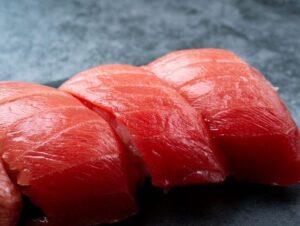
Maguro / Tuna (October to February)
Maguro (tuna) varies in season by species and location, but those famous for coming into season in winter include mebachi maguro (bigeye tuna) and kuro maguro ("hon-maguro," bluefin tuna). Mebachi maguro is mainly lean meat, but toro (fatty belly) can also be taken, and because it is tender, it suits sushi toppings. It has two seasons, around October to December and around April to May.
Kuro maguro is, needless to say, the o-toro (premium fatty belly), a famous luxury sushi topping. Its season is around December to January in winter, but because it is a migratory fish, it can shift depending on location and time. Among them, the most famous is the Oma maguro caught off the Tsugaru Strait in Aomori Prefecture, in season from September to December.
When you eat maguro, which can be called the star of Edomae sushi, you can enjoy it even more deeply by also checking the species and place of origin.
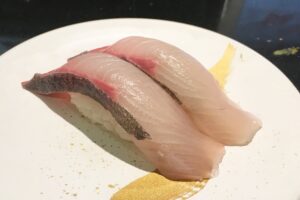
Buri / Yellowtail (November to February)
Buri (yellowtail) is a shusse-uo ("career fish"), the name given to inada and warasa once they have grown even larger. It travels north from spring into summer, and in winter it travels south along the Sea of Japan side. Buri that has stored up fat in the cold season is called "kan-buri," and the "Himi buri" of Toyama Prefecture and the Nanao-grown buri of Ishikawa Prefecture are especially famous.
Kan-buri carries plenty of fat and is rich in umami, with the belly side so rich it rivals even o-toro. It is characterized by a melting flavor, while the back is highly aromatic with a distinctive texture.
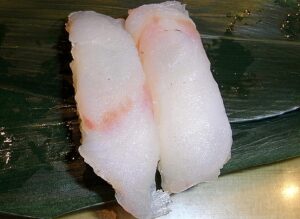
Madara / Pacific Cod (December to February)
Madara (Pacific cod) is a fish beloved by common people in the northern regions, and its season is winter. It is rarely seen as raw sushi outside the northern regions, but in producing areas it is often eaten as a sushi topping or sashimi. It has a translucent appearance and a faint sweetness, making it a sushi topping fitting for a white-fleshed fish.
Besides nigiri, during the season the shirako (milt), the male's testes, also develops, making it a delicious season for shirako too. Shirako is often quickly passed through hot water and made into gunkan-maki, and its creamy, rich flavor is an irresistible delicacy for those who love it.
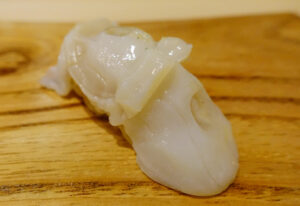
Hotategai / Scallop (January to May)
Farmed ones can be eaten year-round, but wild ones are in season in winter. For sushi, the adductor muscle of the scallop is cut and used. It is characterized by a plump, natural sweetness without any peculiar character, and is popular even among shellfish toppings.
It is often shaped into nigiri raw, but some sushi restaurants serve it lightly boiled to bring out the sweetness.
Hokkaido-grown scallops are the most plentiful, and among them the scallops caught in Notsuke have an established reputation for their mellow sweetness.
Kaki / Oyster (November to March)
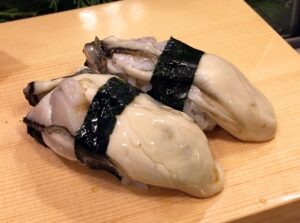
There are various kinds of oysters, but the season for the most widely distributed magaki (Pacific oyster) is winter, when it stores up nutrients for spawning. Oysters are so nutritious that they are called the "milk of the sea." Their smooth, slippery feel going down the throat is indescribable, and a faint bitterness can be felt within the sweetness, giving them a complex flavor.
As much as the flavor matters, what makes them popular is their high nutritional value. They are rich in zinc, which helps prevent taste disorders and strengthens the skin, and taurine, which is effective for recovery from fatigue. In sushi, besides being shaped into nigiri raw, you can also enjoy nigiri simmered in sake and soy sauce. They are farmed throughout the country, with Hiroshima-grown ones being the most famous. Their large size and rich flavor are their appeal.
Zuwaigani / Snow Crab (November to February)
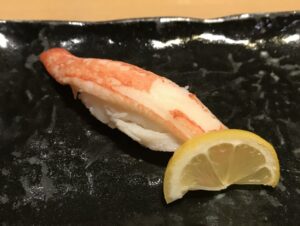
Zuwaigani (snow crab) has a different season for males and females: males from November to March, and females from November to January. Zuwaigani has little bitterness and much sweetness and umami, so it is widely beloved by children and adults alike.
The part most often used as a sushi topping is the leg of the male. The boiled flesh takes on a beautiful crimson color, and the more you chew, the more deep sweetness and umami seep out, matching exquisitely with the acidity of the shari (vinegared rice). In recent years there are many imported ones, but domestically it is caught in the Sea of Japan and off Hokkaido, and among them the Echizen crab of Fukui Prefecture and the Matsuba crab of Tottori Prefecture are famous.
Winter Has Plenty of Richly Flavored Sushi Toppings!
Many of the sushi toppings that come into season in winter have stored up nutrients and carry plenty of fat. There are many toppings with a deep flavor that practically melt in your mouth, aren't there?
Many shellfish also come into season, letting you savor a rich, deep umami and a distinctive texture. It is precisely in winter, with its many toppings that let you feel the bounty of the sea, that you'll want to savor sushi to the fullest.