The History of Kura Sushi — The Unstoppable Evolution of Conveyor Belt Sushi
The history of Kura Sushi
The beginning of Kura Sushi
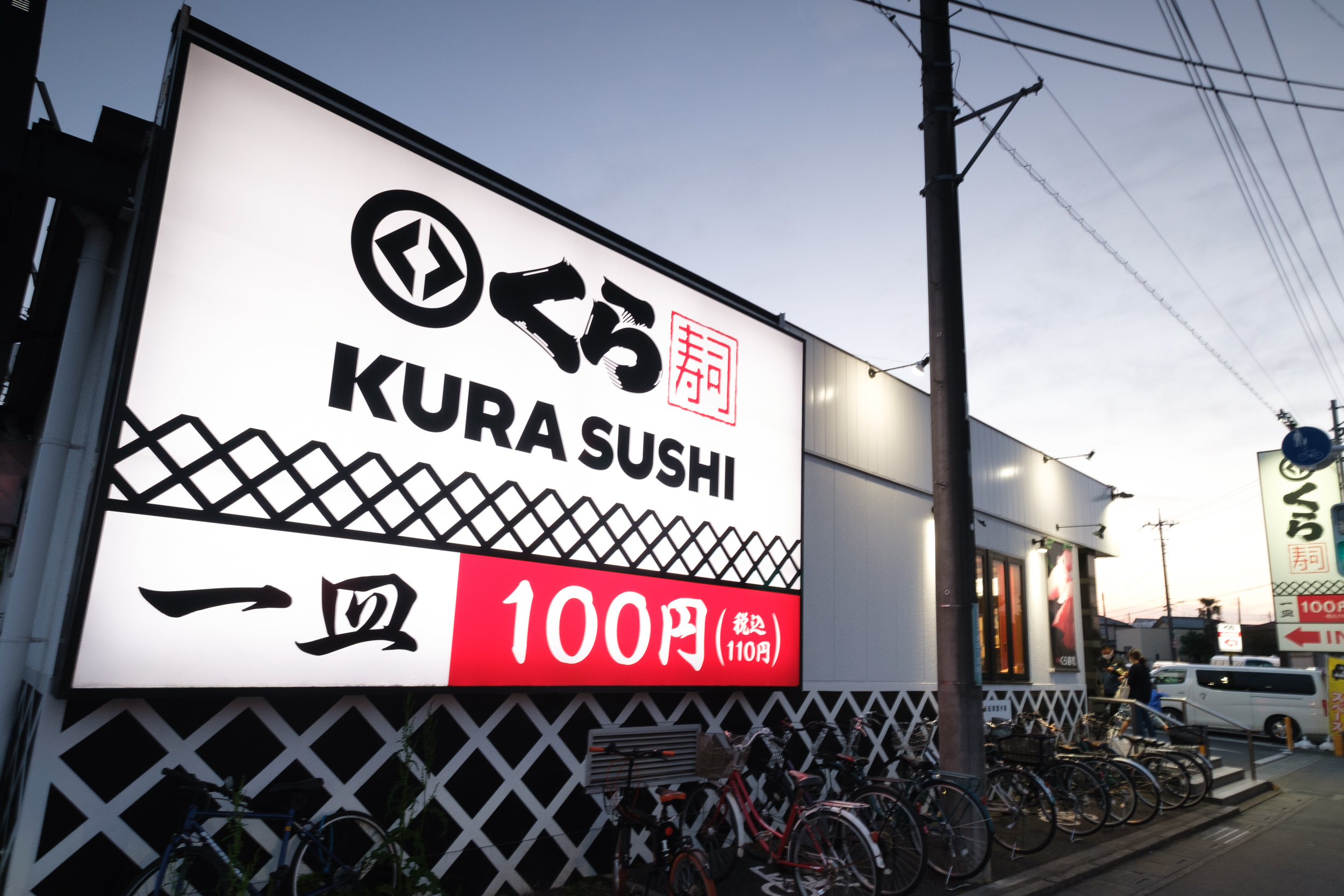
The predecessor of Kura Sushi was an individually run sushi restaurant opened in 1977 by founder Kunihiko Tanaka in Sakai City, Osaka Prefecture.
In 1984, it took the name "Kaiten Sushi Kura" and opened its first shop in Nakamozu, Sakai City, entering the conveyor-belt sushi business, and in 1995 it established Kura Corporation (now Kura Sushi, Inc.).
In the early days of the shift to conveyor-belt sushi, since there were only counter seats, there was the problem that it was hard for families to use, but in 1987 this was solved by introducing box seats and E-shaped lanes.
Having thus built up the image of "Kura Sushi" as a sushi restaurant where families with children gather, it was listed on the Nasdaq Japan market of the Osaka Securities Exchange in 2001, on the Second Section of the Tokyo Stock Exchange in 2004, and on the First Section of the Tokyo Stock Exchange in 2005.
Alongside other robot-style conveyor-belt sushi chains such as Sushiro, Kappa Sushi, and Hama Sushi, it came to take a leading role in the industry as one of the largest conveyor-belt sushi chains.
The founder's wish embedded in the name
Kura Sushi achieved great success by drawing in families.
The wish of founder Mr. Tanaka is condensed into the form of a sushi restaurant where children, too, gather together.
Mr. Tanaka's hometown is a town close to Kurashiki City near Okayama City.
The wish that he wants the children who are Kura Sushi's customers to also feel that thrill he felt as a child, peering into the storehouses (kura) around town in Kurashiki City—known as the town of storehouses—while playing, is embedded in the store's name.
Kura Sushi's changes and strengths
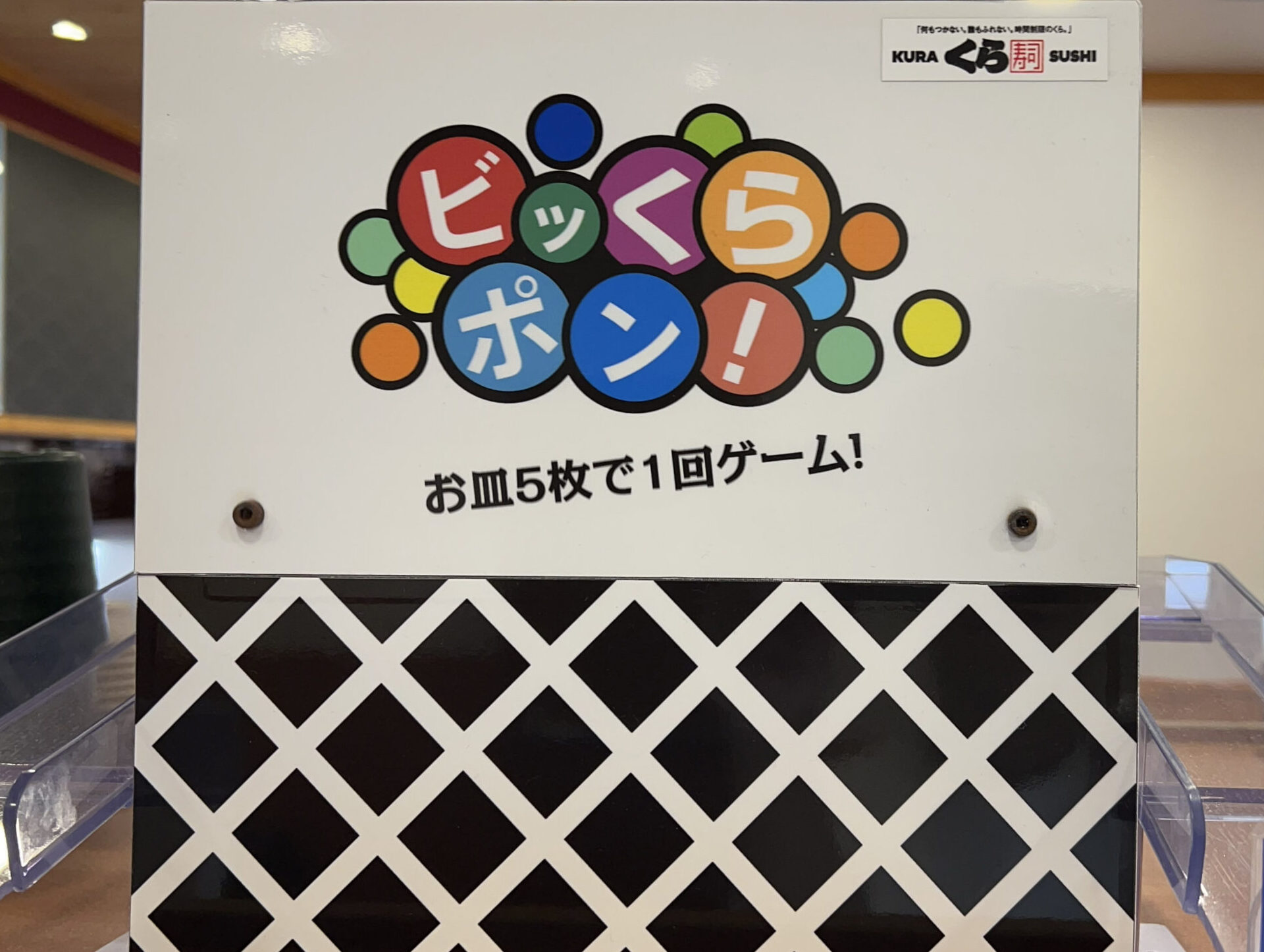
Kura Sushi introduced its own systems one after another, such as the automatic plate-counting water plate-collection system, Bikkura-Pon!, the touch panel, and the Sushi Cap Freshness-kun.
Through what process were Kura Sushi's innovative mechanisms and systems developed? We delve into the background.
Developing its own systems one after another
In the early days of opening the conveyor-belt sushi restaurant, the ordering system had many flaws, and troubles such as dishes being delivered to a different person rather than the one who ordered were constant.So, through technical reform, they introduced dedicated order panels and order lanes, completing a system that delivers dishes correctly and quickly to the person who ordered.
The hygiene technology was also overhauled.
The collection of used plates using running water, the automatic disposal of sushi after a certain amount of time has passed—there are no shortage of systematized processes.
These systems, which made possible not only food safety but also the efficiency of manpower, are Kura Sushi's own.
Groundbreaking and diverse attempts led to the success of business expansion.
Marketing power that values customers' voices
One of Kura Sushi's features is that it makes use of customers' voices.
For example, the used-plate collection system was born from a female customer's comment that it was embarrassing to leave empty plates on the table.
There are many other innovations born from customers' voices.
In response to comments that "it's not great hygienically for the sushi to come flowing down the lane uncovered," caps came to be placed over the sushi plates.
You could say that Kura Sushi's distinctiveness was born as a result of picking up customers' voices one by one.
Rationality also in improving the food waste problem
At conveyor-belt sushi restaurants, do you take and eat the sushi flowing on the lane?
Or do you order from the touch panel?
At many conveyor-belt sushi chains, the ratio of the former to the latter is said to be 3:7.
On the other hand, at Kura Sushi this ratio is 5:5.
Since sushi can be provided more efficiently, there is also the benefit that it connects to the food loss that is much talked about these days.
Emphasizing entertainment value
Also, the service that embodies the founder's feelings for children is famous.
The service hugely popular with children, "Bikkura-Pon," works by having five finished plates serve as a lottery ticket.
With this service, in which you get a prize when you win, it has gained great popularity for its entertainment value.
In recent years, collaboration projects with anime characters have also become a hot topic, and there is no end to families coming to the store for the prizes.
Kura Sushi's accelerating business expansion, including overseas expansion
Kura Sushi has also expanded into the United States and Taiwan, and without being defeated by the COVID-19 pandemic, it continues to steadily increase its overseas openings.
In the United States, where it has already opened more than 10 stores, it plans to expand into even more states, and it is also planning to open in Shanghai, China, with a target of around summer 2023.
Going forward, with the recovery of dining-out demand after the COVID-19 pandemic and the revival of inbound tourism, the pace of overseas openings is highly likely to accelerate, and business expansion in overseas markets is anticipated.
In 2022, Kura Sushi also carried out a price increase—something it had not done for a long time—and overcame the unprecedented crisis of the COVID-19 pandemic.
Going forward, along with the recovery of demand, competition for survival with other major conveyor-belt sushi chains such as Sushiro will intensify.
Muten Kura Sushi taking flight to the world
The history of Kura Sushi.
It may be fair to say that it is an accumulation of development born as a result of continuing to respond to the times and the voices of its customers.
The passionate wish of founder Mr. Tanaka, who wanted customers to eat with peace of mind and, furthermore, to have fun, took shape, and Kura Sushi has grown.
The great appeal of Kura Sushi is that it has mastered not only food safety and work efficiency but also entertainment value.
We should keep a close eye on the strategy of Kura Sushi, which is expanding its number of stores both in Japan and abroad.