Seasonal Sushi Toppings You Should Know — Summer (June, July, August)
Shinko (July)
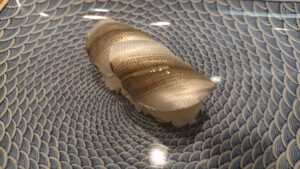
Shinko is the juvenile of the kohada (gizzard shad). As it grows, its name changes to kohada, but unlike shusse-uo ("career fish") such as hamachi, it is a rather unusual sushi topping that loses value the larger it gets.
Because the period when it can be eaten is limited, it is a luxury sushi topping that can cost up to 60 times as much as a fully grown kohada. When the season for shinko arrives, Edomae sushi restaurants compete to procure it, staking their pride and stubbornness regardless of the soaring prices.
Trying to serve the first catch with no regard for profit is an expression of the spirit of Edomae sushi craftsmen who carry on the chic style of the Edo period, but once the season has progressed somewhat, prices settle down a little.
Because shinko is small, two or more fish are used to make a single piece. It is difficult to fillet, and the seasoning of salt and the degree of marinating in vinegar test the skill of the craftsman.
Uni / Sea Urchin (June to August)
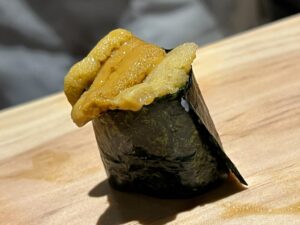
Uni (sea urchin), with its vivid orange color and rich, distinctive flavor, is mostly served as gunkan-maki (battleship rolls). Because the season differs by species, uni can be eaten year-round, but the most widely circulated "murasaki uni" (purple sea urchin) and "ezo bafun uni" are in season in summer.
Ezo bafun uni is harvested on the Sea of Japan side of Hokkaido and is characterized by its slightly reddish, vividly colored appearance and rich sweetness. On the other hand, murasaki uni is pale yellow and popular for its lighter taste compared to ezo bafun uni.
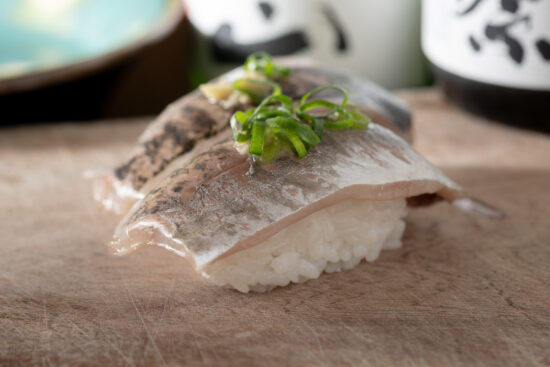
Iwashi / Sardine (June to November)
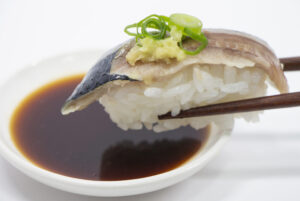
Iwashi (sardine), which can be called a representative of the hikarimono (silver-skinned fish), is also in season in summer. When you eat a fatty summer sardine, you can feel it melt smoothly in your mouth. Despite being fatty, an in-season sardine is rich in flavor without any fishy smell, and is characterized by the sweetness of the fish that you can taste.
There are several kinds of sardine, but the one most often used as a sushi topping is the maiwashi (Japanese sardine). During the hot summer, it is lovely to enjoy it refreshingly together with ginger. Some sushi restaurants serve it cured in vinegar (su-jime), letting you savor the balance of fatty umami and vinegar. Sardines are caught throughout Japan, and the famous Choshi-grown sardines from Chiba Prefecture stay in season until autumn.
Anago / Sea Eel (June to August)
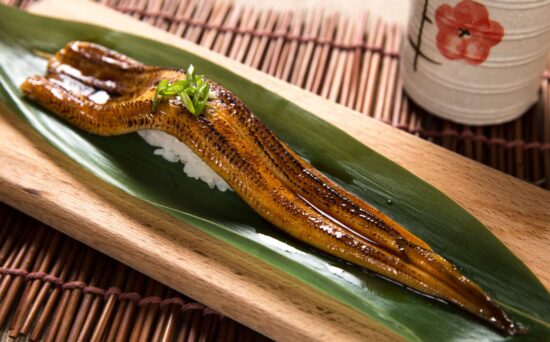
When it comes to anago (sea eel) nigiri, the gently simmered version is the most common. In the Edo period when there were no refrigerators, simmering was essential for sushi, so anago sushi was a chance for Edomae sushi craftsmen to show off their skill. In this way, simmered anago became mainstream in the Kanto region, but in the Kansai region there are also sushi restaurants that serve grilled anago.
The season for anago runs from early summer into summer. In-season anago is fluffy and so tender that it crumbles in your mouth, making it very popular. As represented by Edomae, anago is also caught in Tokyo Bay, but because it is scarce, anago caught in other regions is also widely circulated.
Kanpachi / Greater Amberjack (June to August)
Kanpachi (greater amberjack) is a relative of buri (yellowtail) and hiramasa (yellowtail amberjack), but it is said to have a more refined taste than buri. It is widely farmed in Kagoshima Prefecture, while wild ones from Wakayama and Kochi Prefectures are famous. Kanpachi was named "kan-pachi" because, viewed from above, it has a figure-eight-shaped pattern between its two eyes ("hachi" meaning eight).
Its firm flesh has a satisfying texture, and you can enjoy a deep, rich umami. Kanpachi, with its faintly sweet, fatty flesh, is a perfect summer nigiri sushi.
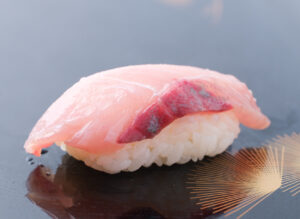
Aji / Horse Mackerel (April to July)
Aji (horse mackerel) is a representative of the hikarimono. It is such a popular, common fish that it is said to be called "aji" because its taste (aji) is so good. It is a fish caught in the seas near Japan, and Nagasaki Prefecture boasts the largest catch. Non-migratory aji are called "ki-aji" (yellow aji), while migratory aji have darker flesh and are called "kuro-aji" (black aji).
It has no fishy smell and is rich in umami components, so even when fatty it is never heavy. Condiments such as ginger, added to prevent loss of freshness and odor, bring out its distinctive umami. In some regions it is also eaten cured in vinegar, making it a sushi that can be called a summer seasonal tradition.
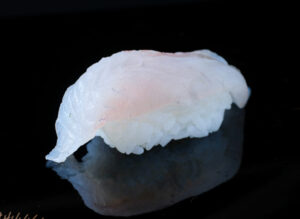
Suzuki / Japanese Sea Bass (April to August)
This is a fish caught throughout Japan year-round, but because its taste declines in spring after spawning, summer is the delicious season. In-season suzuki (Japanese sea bass) is characterized by its semi-transparent white flesh, and since it also contains fat, the more you chew, the more the sweetness of the white flesh comes through.
It is often found near river mouths, and one of its features is the distinctive river-like aroma you can sense. In summer its flesh is tender and its taste is without any peculiar character, making it an easy-to-eat sushi topping. Because it can also be procured relatively cheaply, it is loved as a commonly seen sushi topping in Edomae sushi.
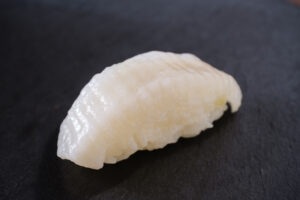
Makogarei / Marbled Flounder (June to August)
It is such a representative white-fleshed fish that people say hirame (flounder) in winter and makogarei (marbled flounder) in summer.
The "Joka garei" caught in Oita Prefecture is famous, and its season runs from early summer to early autumn. The translucent flesh is light and refreshing in taste. It is tender with a good texture, and the more you chew, the more the sweetness seeps out for you to enjoy.
The engawa (fin muscle) along the fins is also used as a sushi topping and is popular for its distinctive texture.
Mizudako / Giant Pacific Octopus (June to July)
The octopuses widely eaten in Japan include mizudako (giant Pacific octopus) and madako (common octopus). Mizudako can be caught all year, but its season is from June to July, when it fattens up in preparation for summer spawning.
Mizudako is a giant octopus that can grow up to 9 meters. It is commonly boiled in salted water, and although it has less sweetness and umami compared to madako, it is characterized by being high in moisture, tender and succulent. It is more suited to being eaten raw than madako, and can be enjoyed refreshingly together with citrus or salt.
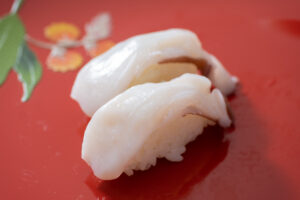
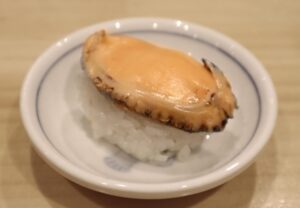
Awabi / Abalone (June to August)
It is one of the finest toppings among shellfish. The season varies by location, but generally runs from early summer to early autumn. The kinds used as sushi toppings are the "madaka awabi" and "megai awabi," which are easy to cook with heat.
It is caught throughout Japan, and abalone from the Sotobo area of Chiba Prefecture is especially famous. To make it into a sushi topping, it is carefully steamed to give it a springy, tender texture. It is a summer luxury that lets you enjoy the lingering aftertaste while savoring its aromatic sweetness and umami.
Beat the Summer Heat with Sushi! Enjoy the Season While It Lasts
During the hot summer months we tend to avoid white rice, but sushi can be eaten refreshingly because it uses vinegared rice. Many fish in season in summer have a light flavor as their selling point, and the variety is rich.
It is also the season when more vinegar-cured toppings appear, so let's savor sushi unique to summer and beat the summer fatigue!