Essential Tools for Making Sushi at Home
1. Knife
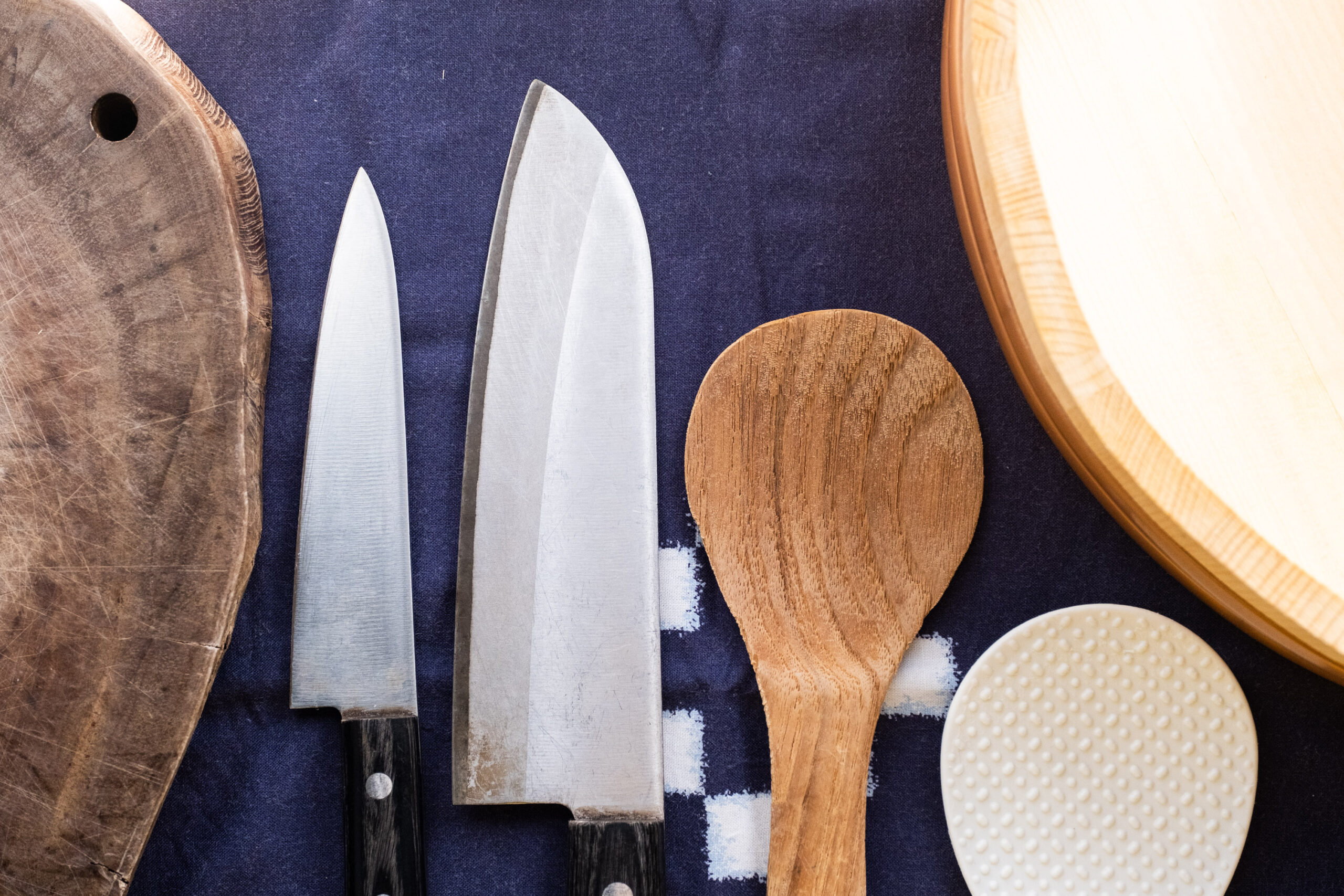
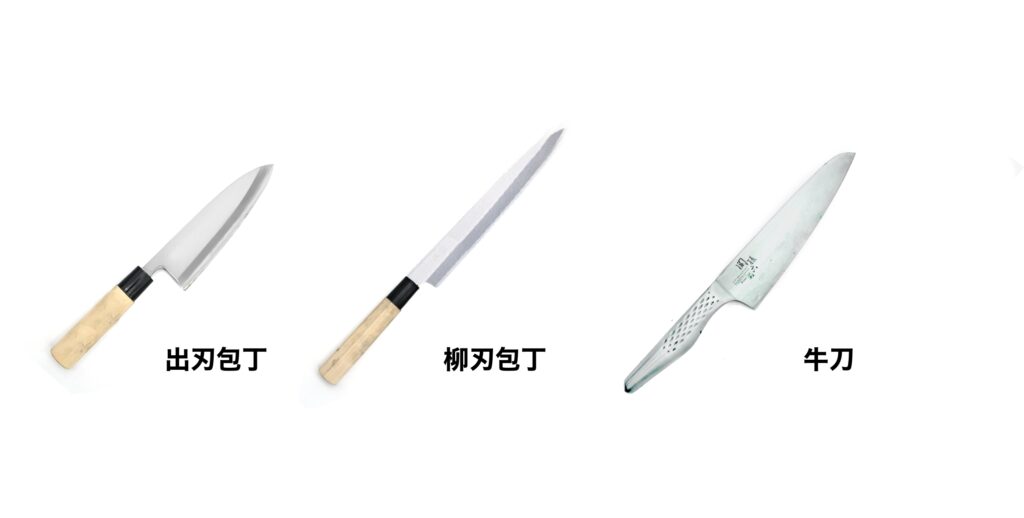
Professionals use different knives depending on whether they are filleting fish or making cuts, but for enjoying sushi at home, a single household all-purpose knife called a gyuto (chef's knife) is sufficient.
Knife materials include carbon steel and stainless steel, but since carbon steel is heavy and rusts easily, stainless steel, which is rust-resistant and light, is recommended for amateurs. What matters is whether the blade cuts well. First, check the sharpness.
If you have the means, you may also want to choose knives by their purpose.
When filleting fish, use a deba knife, which is heavy, can cut firmly through bones, and is suited to filleting fish.
For making cuts of sushi toppings or sashimi, a yanagiba knife, which can cut beautifully without losing the umami of the fish, is used.
When cutting rolled sushi and the like, it is good to wipe the blade with a water-dampened cloth after each cut so that rice grains do not stick to it.
2. Cutting board
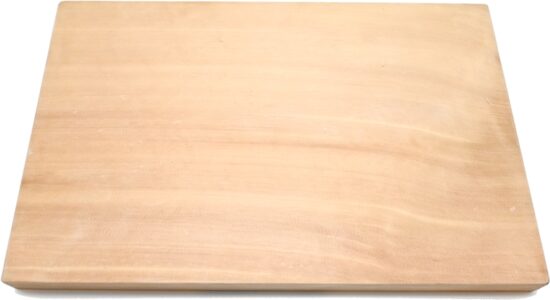
The cutting board should be large enough that the fish you handle does not stick out. When making rolled sushi, a larger one is easier to roll on. The basic shape is rectangular, but if your kitchen is small, a smaller square cutting board is also an option.
Cutting board materials include wood, plastic, and rubber. Wooden cutting boards are easy to cut on and gentle on the knife's edge, but many cannot be used with bleach, so they are hard to maintain at home.
Plastic boards have a harder feel under the blade and are slippery, which are drawbacks, but they can be used with bleach and are easy to maintain, so they are recommended for home use. Also, although a little expensive, a rubber board that combines the features of both wood and plastic is a good choice.
3. Rice cooker
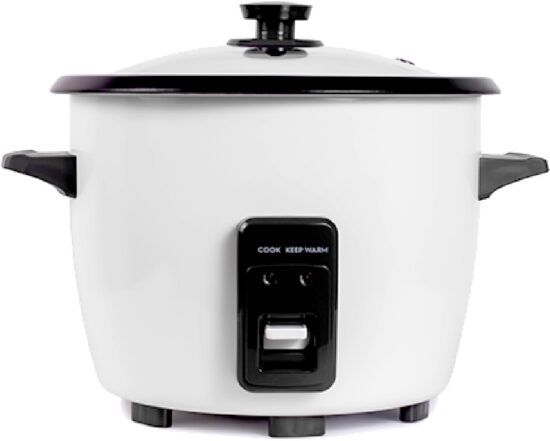
At sushi restaurants, commercial rice-cooking pots are sometimes used, but you can also cook rice deliciously with a household rice cooker.
When cooking the rice, since vinegared rice (sushi rice) is not tasty if it has too much moisture, it needs to be cooked a little firmer than ordinary rice.
For ordinary rice, the standard is 380 cc of water for 2 go of rice, but for vinegared rice, the basic rule is to use a little less water, such as about 360 cc for 2 go of rice. Many rice cooker pots also have a line for vinegared rice, so you may use that as a guide.
For vinegared rice, light, refreshing varieties such as Akitakomachi, Sasanishiki, and Sasashigure are suitable. Also, if you can choose, select older rice or a blend of old and new rice rather than fresh new rice, which is more sticky.
When you don't have a rice cooker, you can also cook rice in a pot, but when cooking rice in a pot, be careful not to let it scorch!
4. Handai (sushi rice tub)
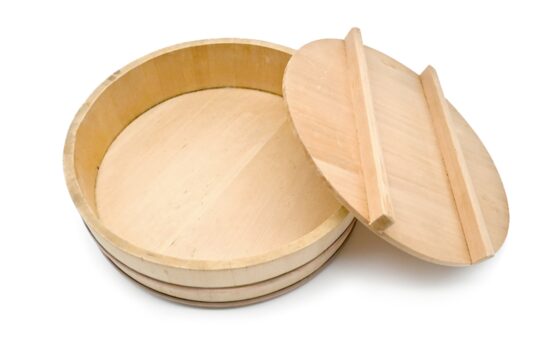
A handai is a sushi tub used when mixing vinegared rice or serving dishes such as chirashi-zushi. There are types with a lacquered surface and types without lacquer.
If your main purpose is to make vinegared rice, choose an unlacquered wooden handai.
Because the wood absorbs moisture moderately, you can make fluffy, delicious vinegared rice.
You can also make vinegared rice with a lacquered handai, or with a flat plastic or metal tray or a large bowl, but the rice tends to have too much moisture and become sticky.
As for the size of the handai, for two people a slightly larger 2-to-3-go size is convenient.
5. Shamoji (rice paddle)
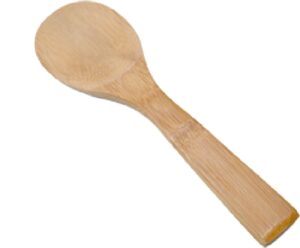
For the same reason as the handai, a wooden shamoji, used to cut and serve the rice, is best, but the embossed plastic type commonly used in ordinary households is also fine.
Embossing refers to having many small bumps; adding these bumps helps the rice separate easily and makes it less sticky.
If the paddle is too small, it becomes hard to cut the rice, increasing the number of strokes and causing stickiness, so a slightly larger size is better.
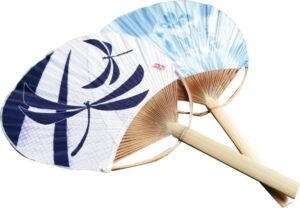
6. Uchiwa (hand fan)
A hand fan is used to cool the vinegared rice placed in the handai.
By rapidly cooling the hot rice mixed with vinegar using a fan, you can drive off the moisture inside the rice and instead let it absorb the vinegar, preventing stickiness. It also has the effect of keeping the aroma of the vinegar from being lost and giving the rice a glossy shine, so it is an important step in making vinegared rice.
Hot rice absorbs vinegar well, but once it cools the vinegar no longer soaks in, so the key is to use the fan to quickly cool the rice to about body temperature.
For the size, one that is not too small and is easy to fan with is best.
7. Makisu (rolling mat)
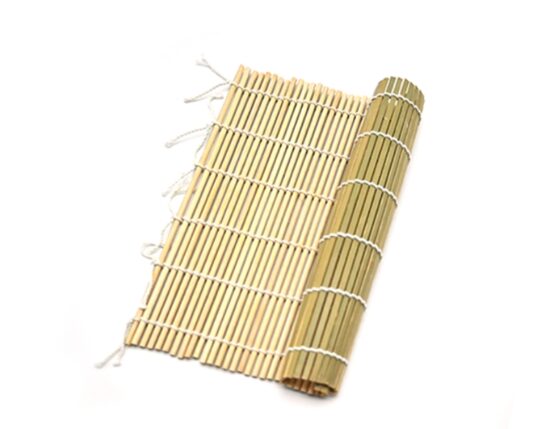
A makisu is a small bamboo mat used when making rolled sushi.
Makisu are broadly divided into those for thick rolls (futomaki) and those for thin rolls (hosomaki). You can also make thin rolls using a thick-roll mat, but it is difficult for amateurs, so if you want to make thin rolls neatly, it is best to prepare a thin-roll mat.
The most common material is bamboo, but there are also plastic and silicone ones. A bamboo makisu has moderate elasticity and a good response, making it easy to roll with, but it has the drawback that ingredients easily get stuck between the bamboo strips, making it a bit troublesome to clean.
If you want to make inside-out rolls such as California rolls (rolled sushi with the rice on the outside), plastic or silicone is recommended, but you can also roll them well with bamboo by wrapping the entire makisu in plastic wrap.
Which side of the makisu is the front or back depends on what you are rolling. A makisu has a flat side and a rounded side; when rolling sushi rolls you place the nori on the flat side, and when you want to add a pattern to items like datemaki or rolled omelet you use it the other way around.
When using the makisu, it is easier to roll if you place the side where the string ends and the knot is visible on the far side, and the side without the knot toward you. After you finish using it, wash it clean and dry it thoroughly so that mold does not grow.
Tools for making sushi are surprisingly easy to obtain!
We have introduced the tools needed to make hand-formed sushi and rolled sushi at home, and these sushi-making tools can be easily obtained online, at home centers, or at discount stores such as Don Quijote.
The internet in particular is convenient, as you can buy items like a handai for around 2,000 yen and compare products by reading reviews.
Even if you cannot prepare the tools right away, there are many substitutes available, so by all means, if you get the chance, feel free to try making sushi at home.