Conveyor Belt Sushi Customer Satisfaction Rankings — Kanto Edition
No. 5: Sushiro
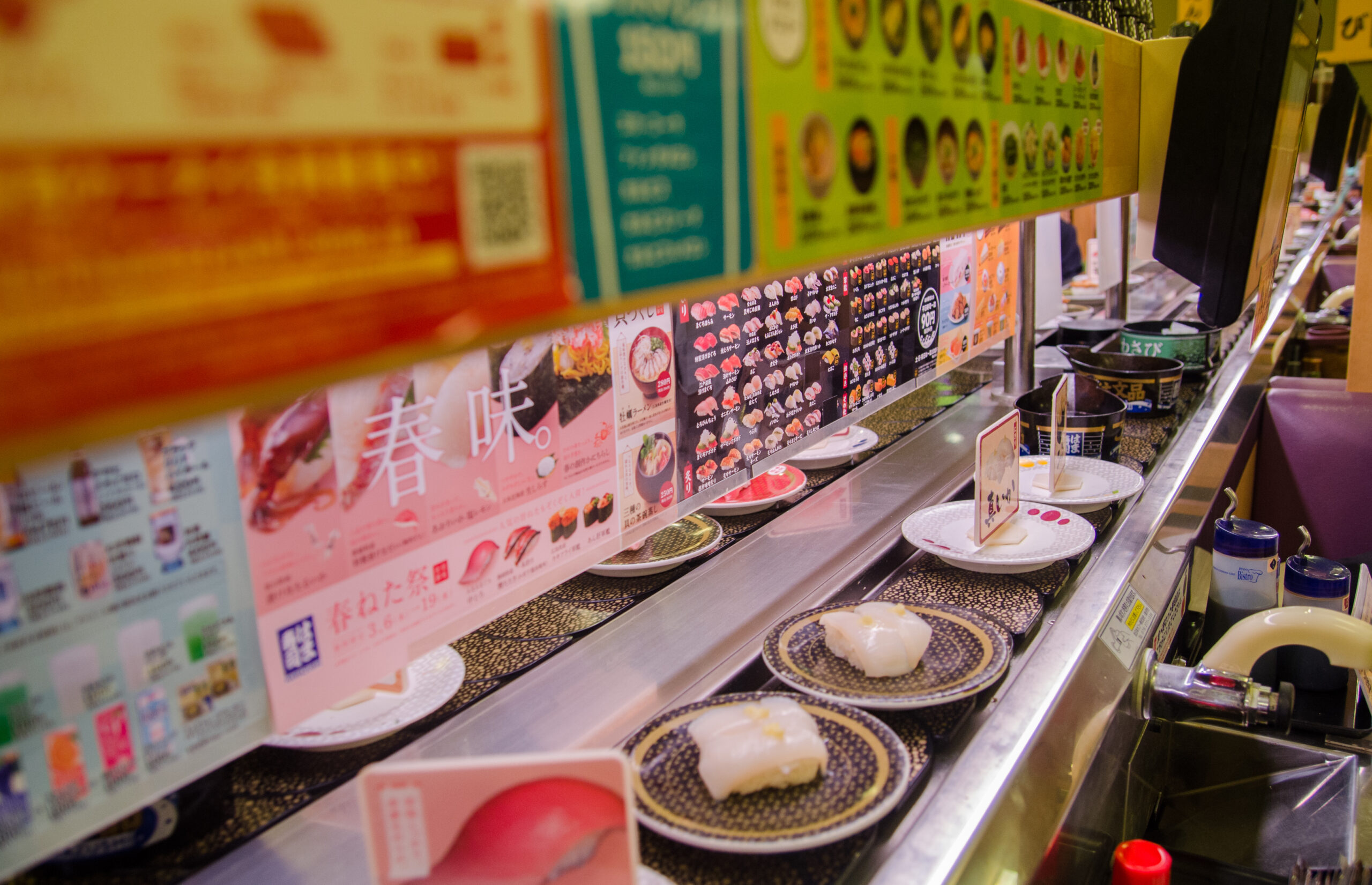
In recent years, continuing to update its record-high sales, “Sushiro” boasts the top sales among conveyor-belt sushi chains. Veteran experts assess and source delicious fish from around the world, and the toppings are always prepared in-store. You can enjoy sushi of outstanding quality and freshness at 100–300 yen per plate (excluding tax).
“Sushiro” has introduced “Sushi-Robo,” which can make as many as 3,600 rice balls per hour. There are apparently also robots that shape rolls and gunkan.
The menu has over 120 kinds including side menus. Among them, a popular sushi topping is yellowtail. It's rich in fat and very satisfying to eat. Yellowtail has back and belly portions, and the fatty belly is a rare cut. Yellowtail using this part cannot be ordered and only flows around on the conveyor lane, so if you spot it, be sure to give it a try.
“Sushiro,” where you can taste high-quality sushi toppings at low prices through its unique ingenuity.
Even among conveyor-belt sushi chains in the same price range, some people feel it has particularly high cost performance.
Precisely because it's popular, there are cases where you can't get in without waiting, but counter seats may be relatively easier to get into.
No. 4: Uobei
“Uobei” prides itself on the speed of serving after ordering.In addition to introducing state-of-the-art robots that shape the rice and automatically place it on plates, instead of the rotating rails found at typical conveyor-belt sushi shops, it has set up three-tier high-speed lanes, and sushi ordered from the touch panel at the seats is delivered individually—putting effort into efficiency.
“Uobei” offers over 80 kinds of regular menu items, providing most of them at 100 yen per plate (excluding tax).
Seasonal limited menus also include items priced at 140–180 yen per plate (excluding tax).
Among them, the topping to watch is salmon. Besides sushi simply topped with raw salmon, there's a rich variety of toppings such as “salmon with green onion and chili oil,” “onion salmon,” and “grilled salmon.”
The interior of “Uobei” has few counter seats and is centered on box seats, making it popular with families. Furthermore, the trays that bring the food have unique designs such as bullet trains and racing cars, so small children are likely to be delighted.
No. 3: Sushi Choushimaru
“Sushi Choushimaru” operates stores across the Tokyo metropolitan area's one metropolis and three prefectures.
Centered on toppings delivered directly from Choshi Port in Chiba Prefecture, which boasts one of the largest catch volumes in the country, it offers freshly filleted, freshly shaped sushi.
What differs from the 4th- and 5th-ranked conveyor-belt sushi chains is that the chefs fillet the toppings and shape the sushi right before the customer's eyes. The interior always has a lively atmosphere, and the quality of its customer service also seems to be a reason for its popularity.
Standard nigiri sushi comes in 5 kinds of plates, priced at 143–462 yen (incl. tax).
Compared to 100-yen-per-plate conveyor-belt sushi, it may feel somewhat more expensive, but it's surprising that you can taste sushi just shaped by a chef at this price.
One of “Sushi Choushimaru's” signature menu items is Aurora salmon.
Salmon can normally only be eaten frozen, but salmon raised near the Arctic Circle is delivered to the stores without freezing using a unique technique, so you can enjoy the original deliciousness of salmon.
No. 2: Gatten Sushi
“Gatten Sushi” operates stores centered on the Kanto region.
It prepares high-freshness toppings delivered directly from the market in-store and offers carefully crafted sushi.
“Gatten Sushi's” specialty is the tuna cutting show.
Held irregularly, the sight of a chef filleting a tuna right before your eyes is spectacular and brings the restaurant to life. The freshly filleted tuna is shaped and served immediately.
Nigiri sushi is centered on 120–500 yen per plate (excluding tax) for standard toppings.
The seasonal menu is abundant, and you may even get to eat unusual toppings rarely seen at other conveyor-belt sushi chains.
Also, “Gatten Sushi's” lunchtime-only menu is popular. The “Daily Nigiri Lunch” comes in three options priced at 980–1,880 yen (excluding tax) according to the grade of the toppings.
Although it's a conveyor-belt sushi chain, “Gatten Sushi” has a special feel because you can see the chefs shaping the sushi.
Compared to the shops introduced in 3rd through 5th place, the price range is somewhat higher, but it's perfect for when you want to indulge just a little more than usual.
No. 1: Kanazawa Maimon Sushi
“Kanazawa Maimon Sushi” is a conveyor-belt sushi chain originating in Kanazawa City, Ishikawa Prefecture. Its sushi making the most of seasonal toppings unique to the Hokuriku region, such as blackthroat seaperch and white shrimp, is highly regarded, and it is known as a particularly authentic conveyor-belt sushi even among conveyor-belt sushi chains.
Nigiri sushi has a wide price range of 165–880 yen per plate (incl. tax) and is served in a style where the chef shapes it right before your eyes. With nothing but fresh toppings sourced from Hokuriku and across Japan, you can taste sushi of such high quality you wouldn't think it was conveyor-belt sushi.
A particularly recommended topping at “Kanazawa Maimon Sushi” is “gasu-ebi” (splendid alpheid shrimp). Its taste is said to be sweeter than sweet shrimp, with a chewy texture to enjoy. It can only be caught in limited areas of the Sea of Japan, and because it spoils quickly, it is said to be a rare topping that rarely circulates outside Hokuriku.
Kanazawa Maimon Sushi Homepage
Let's Enjoy Delicious Sushi at Conveyor-Belt Sushi!
When dining at a conveyor-belt sushi chain, for the three shops in 3rd through 5th place the budget is around 2,000 yen. The 1st-place “Kanazawa Maimon Sushi” and 2nd-place “Gatten Sushi” have a somewhat higher price range compared to the other shops, so you'll want to set aside a bit more budget. It may be wise to plan for around 3,000–4,000 yen per person.
Every conveyor-belt sushi chain is high-level, and their appeal is letting you taste authentic toppings that rival high-end sushi restaurants at affordable prices. Check the features and menus of each and try choosing a shop.