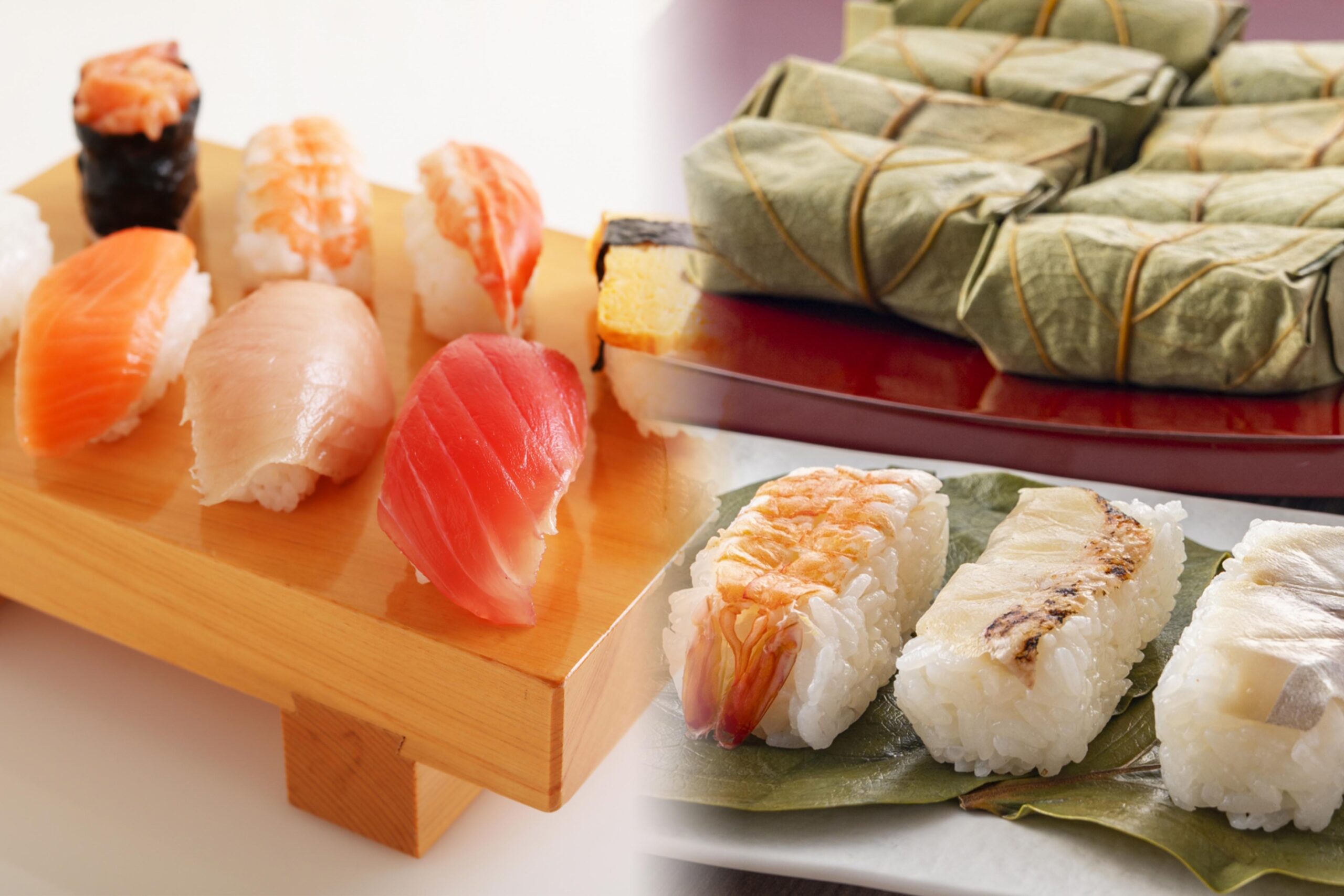
5 Differences Between Edomae and Kansai Sushi — How Different Are Eastern and Western Sushi?
No. 1: Kansai Sushi Inherits Tradition, Edomae Sushi the Revolutionary
The first major difference is history. Kansai sushi, such as Osaka's hako sushi and Kyoto's saba (mackerel) sushi, a type of bo sushi, traces its origins back to the Nara period.
Sushi was originally a preserved food called "narezushi," made by fermenting fish with rice and salt in parts of Southeast Asia such as Thailand, Myanmar, and Laos. In "narezushi," the rice fermented together with the fish was discarded, and only the fish was eaten, making it a fermented food consisting solely of fish. It passed from Southeast Asia to China, from China to the Korean Peninsula, and then was transmitted to Japan.
"Narezushi" was transmitted to Japan along with rice cultivation, but records remained in documents only from the Nara period. In the Nara and Heian periods, rice, food, and regional specialty products were paid to the capital as taxes. "Narezushi," which could preserve seafood for long periods, was offered as tribute to the capital. In the Muromachi period, "namanare," with a shortened fermentation period so that "the rice could also be eaten," appeared, and further in the Edo period, "hayazushi," made by mixing in vinegar rather than fermenting, was born.
"Hayazushi" is made by layering vinegar-cured or salt-cured fish on rice mixed with vinegar and pressing firmly. After leaving it for several hours to overnight, it can be eaten once the flavors have melded. The prototype of the pressed sushi eaten in the Kansai region today lies in "hayazushi." Kansai sushi can be said to be sushi in the lineage of "narezushi," which requires a certain amount of time from preparation to actually being eaten.
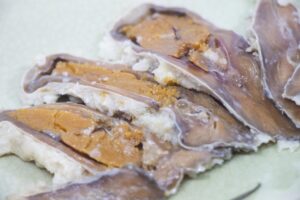
A type of narezushi, funazushi (fermented crucian carp sushi)
On the other hand, Edomae sushi was a newcomer that appeared in the Edo period.
Until the early 1800s of the Edo period, "hayazushi" was mainstream, but around the 1820s, it is said that an Edo sushi craftsman named Hanaya Yohei devised sushi close to the current form of nigiri sushi. To allow it to be eaten more quickly, Yohei eliminated the previous sushi-making step of "pressing ingredients packed into a box to let the flavors meld," and invented sushi that could be eaten immediately after being formed by hand. Sushi that could be eaten right after being formed was a groundbreaking product that exceeded conventional wisdom, and it quickly became popular; nigiri sushi stalls appeared in the town of Edo, sparking a major boom.
Compared to previous sushi made over time, Edomae sushi was formed by placing simmered or vinegar-cured seafood on top of vinegared rice, and both its preparation method and cooking time differed greatly from conventional sushi. Whereas Kansai sushi inherited tradition, Edomae sushi was a young revolutionary that newly appeared in the world of sushi.
No. 2: Kansai Sushi for Preservation, Aging, and Carrying; Edomae Sushi Fresh and Fast
The second difference is that Kansai sushi and Edomae differ greatly in concept.
Kansai sushi, with its lineage of pressed sushi, is made by aging it over time, as mentioned earlier. Originally, Kansai sushi was a preserved food and at the same time a special dish to take on outings, eat while watching plays, or enjoy at events.
Edomae sushi, on the other hand, was an everyday fast food eaten by the common people of Edo for lunch or a light meal. Aside from the time and effort of preparation, it was made on the premise of being eaten right away.
You could say the concepts of Kansai sushi and Edomae are opposite.
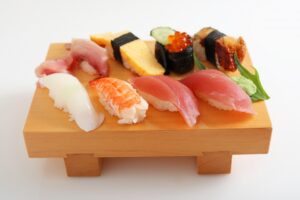
Nigiri sushi, the fast food of the Edo common people
No. 3: Kansai Uses Specialties from Various Regions, Edomae Centered on Local Ingredients
In Kansai and Edomae, regional character also appears in the ingredients.
For example, Kyoto's saba sushi was a feast eaten at festivals, made from mackerel transported all the way from the Hokuriku region. Also, Osaka's pressed sushi was sushi that lavishly used specialties from across Japan, such as Hokkaido kombu and Seto Inland Sea seafood. Both were special dishes using ingredients from distant places.
On the other hand, Edomae sushi, as the name suggests, centers on local seafood caught in the sea in front of Edo, the area near present-day Tokyo Bay. Even today, only sushi made with ingredients caught near Tokyo, crafted with traditional artisan techniques, is considered Edomae sushi. Edomae was sushi centered on local food.
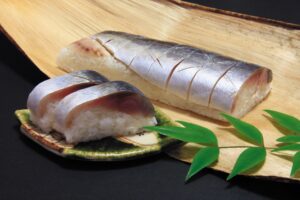
Saba sushi
No. 4: Differences in Cooking Method
Kansai and Edomae also differ greatly in cooking method. Kansai sushi is made by layering vinegared rice and seafood in a wooden mold or box, applying pressure, and fermenting over time. The quantity made at once is large, and the size is also bigger. A large amount is made, then cut and divided to eat.
In contrast, Edomae sushi is prepared per individual serving, and what is made is eaten immediately. Although effort goes into preparing the vinegared rice and toppings, it is characterized by having no cooking process of fermenting the ingredients.
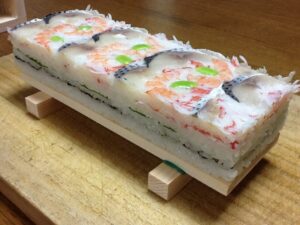
Hako sushi, beloved in the Kansai region
No. 5: Sweet and Bold Kansai, Light Edomae
Since the cooking methods differ, there are of course differences in flavor too. In Kansai sushi, to enhance preservability and prevent it from drying out over time, more sugar is used in the rice, characterized by a slight sweetness. Also, the toppings placed on the rice are seasoned more boldly with the umami of aging, for a satisfying flavor.
Edomae sushi uses minimal sugar except in the preparation of some ingredients. Especially in the case of traditional Edomae sushi, many toppings are marinated in soy sauce, brushed with sauce when grilled, or thoroughly prepared and seasoned, while the rice has a relatively light seasoning.
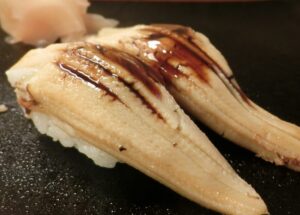
Anago (conger eel) sushi, a representative Edomae sushi
Summary
Kansai sushi is mainly pressed sushi, made by aging over time with origins in narezushi, with an emphasis on preservability and sweeter-seasoned rice. In contrast, Edomae sushi has a short history as sushi, having been born in the 1800s, and rather than being made by fermenting like pressed sushi, the toppings are vinegar-cured or seared and formed into sushi so it can be eaten right away, with the rice also having a relatively light flavor.
Kansai pressed sushi and Edomae nigiri sushi differed in everything from history to preparation method, ingredients, use, and seasoning. With Edomae sushi craftsmen evacuating to the provinces due to the Great Kanto Earthquake and war damage, and the commissioned-processing measures during the postwar food shortage, nigiri sushi (Edomae sushi) has now become common nationwide. Today, even in Kansai, nigiri sushi has become a mainstream form of sushi alongside pressed sushi.
Although nigiri sushi has become as common in Kansai as pressed sushi, there are actually some differences between Kansai and Edomae even in the same nigiri sushi.
Edomae sushi uses toppings such as tuna, anago, and kohada, with tuna in particular considered an indispensable topping. As for seasoning, the fish is marinated in soy sauce (zuke) or vinegar-cured, or the flesh is aged to bring out the fish's umami.
On the other hand, Kansai nigiri sushi uses many white-fleshed fish toppings, and they are eaten while fresh, enjoying the flavor of the ingredients. This is because fresh white-fleshed fish is often caught in the Seto Inland Sea, and in Kansai, rather than adding extra work to the toppings as in Edomae, there is a tendency to enjoy the natural flavor of the ingredients.
Between Kansai sushi and Edomae sushi, there are several differences not only in the pressed sushi descended from narezushi but also in nigiri sushi. Since everyone has their own preferences, it cannot be said unconditionally which sushi is better, but it might be interesting to compare the flavors of Kansai sushi and Edomae sushi.