Sushi Basics Part 2 — Shiromi (White Fish)
Why do fish have different flesh colors?
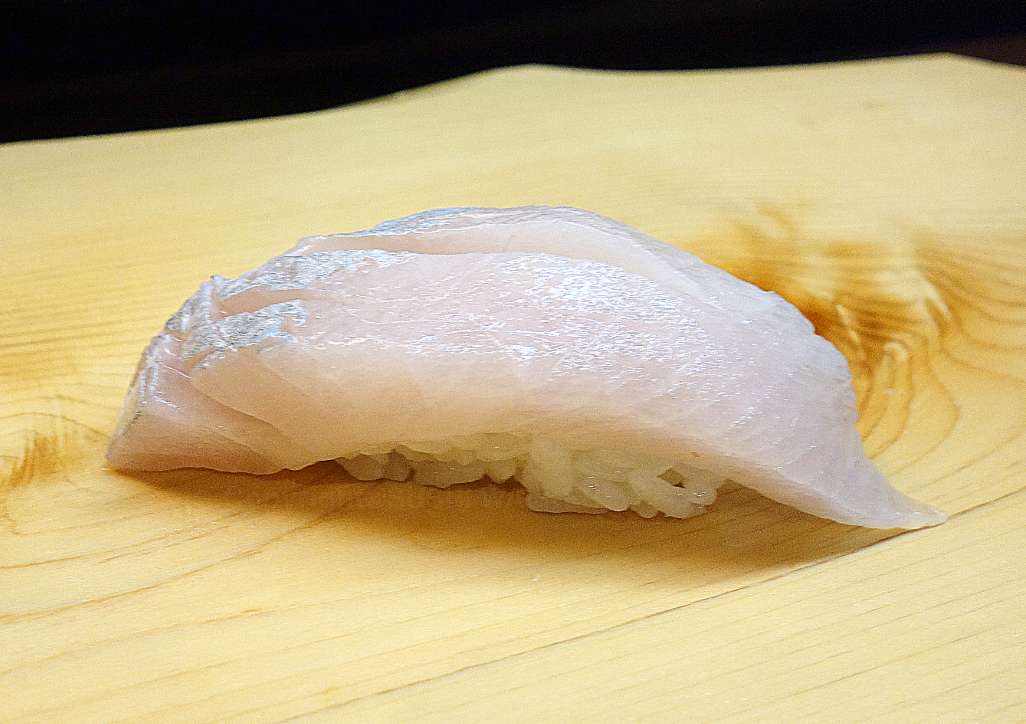
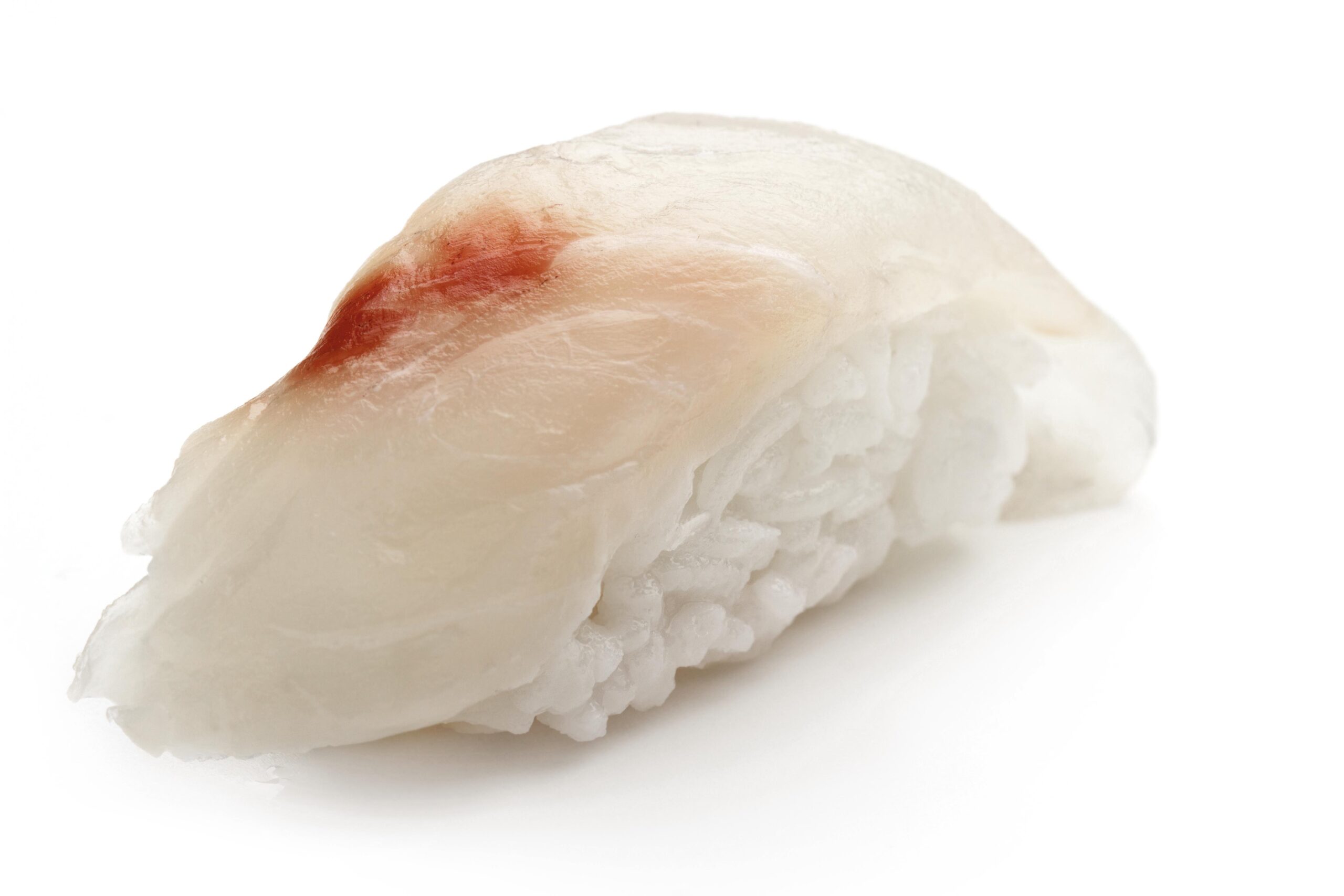
In the world of sushi, sushi toppings are classified by the color of the fish flesh as \"akami\" (red-fleshed), \"shiromi\" (white-fleshed), and \"hikarimono\" (silver-skinned fish). A representative example of akami is tuna; for shiromi, sea bream and flounder; and for hikarimono, gizzard shad and the like.
So, in the first place, why is the flesh of white-fleshed fish white?
The difference in fish flesh color is caused by the type of muscle and the proteins in the blood. The muscle fibers that make up fish muscle come in two types, slow-twitch and fast-twitch; slow-twitch is called \"red muscle,\" and fast-twitch is called \"white muscle.\"
Red muscle is endurance muscle that can be actively moved over long periods, and migratory fish such as tuna and bonito that swim around the wide ocean have red muscle. Like humans, fish also need oxygen to exercise. Red muscle contains a lot of \"hemoglobin,\" a pigment protein that efficiently supplies oxygen in the blood, and \"myoglobin,\" which stores oxygen. Because the pigments of hemoglobin and myoglobin are red, the fish flesh becomes red as well.
On the other hand, fish with white muscle are not fish that constantly swim around like migratory fish; they usually lurk on the seabed and move quickly only when capturing prey.
This muscle with explosive power is white muscle. Because it does not use much oxygen to move the muscle as migratory fish do, it has little myoglobin, and inevitably almost no pigment protein, so the flesh becomes whitish.
The classification of white-fleshed and red-fleshed fish
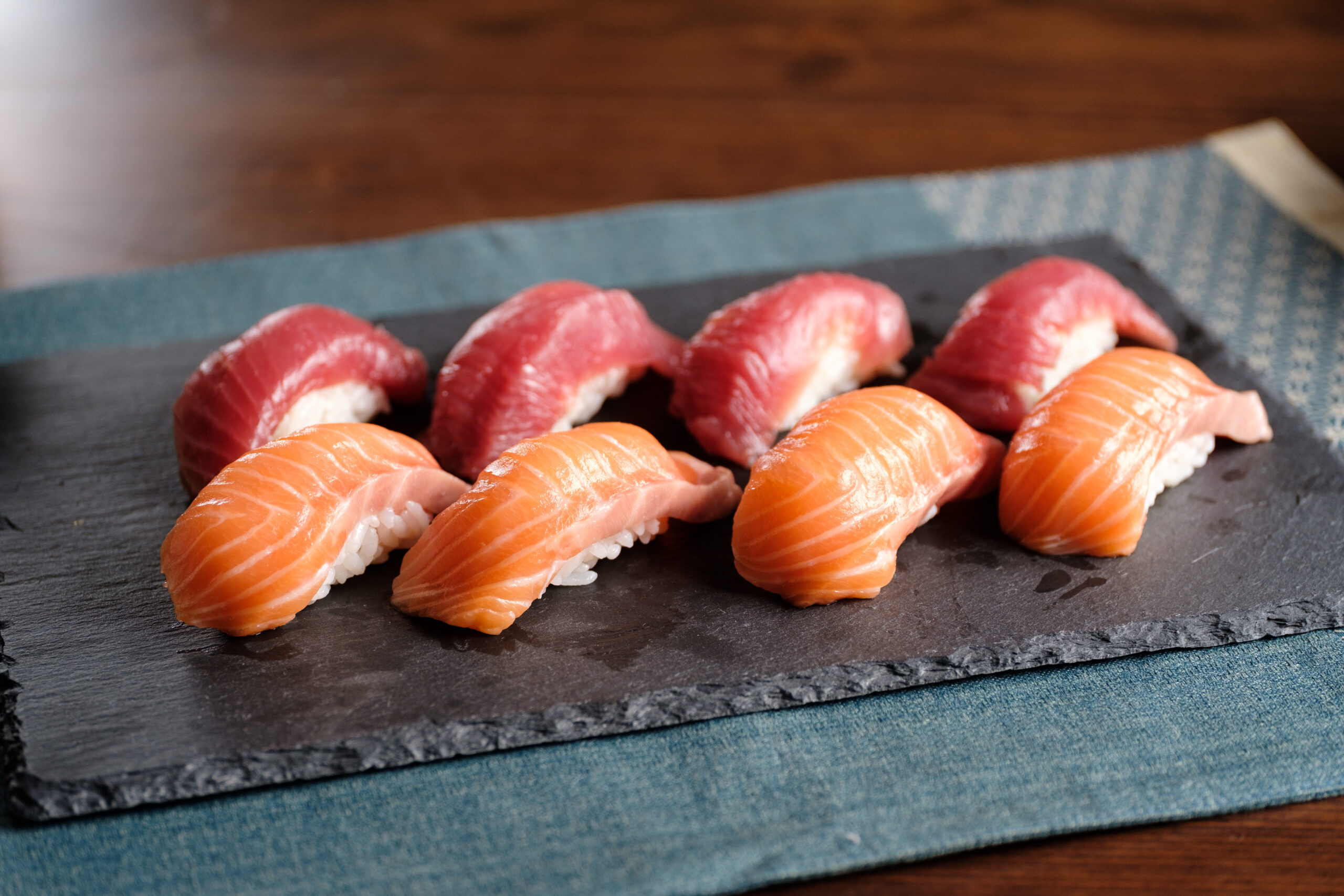
As mentioned earlier, the color of fish flesh changes according to the pigment proteins in the muscle that carry and store oxygen, but in fisheries science, \"white-fleshed fish\" and \"red-fleshed fish\" are classified by the content of these pigment proteins.
Fish containing 10 mg or more of the pigment proteins hemoglobin and myoglobin per 100 g are classified as \"red-fleshed fish.\" Those with less than 10 mg are classified as \"white-fleshed fish.\"
From the standpoint of the fisheries science definition, yellowtail is in fact red-fleshed. Yellowtail tends to be treated as white-fleshed among sushi toppings, but it is a migratory fish like tuna. It also has more pigment protein than other white-fleshed fish.
What is interesting is that, unlike tuna and bonito, yellowtail also has explosive power, making it a somewhat unusual fish that possesses both red muscle (slow-twitch) and white muscle (fast-twitch).
Salmon is a white-fleshed fish
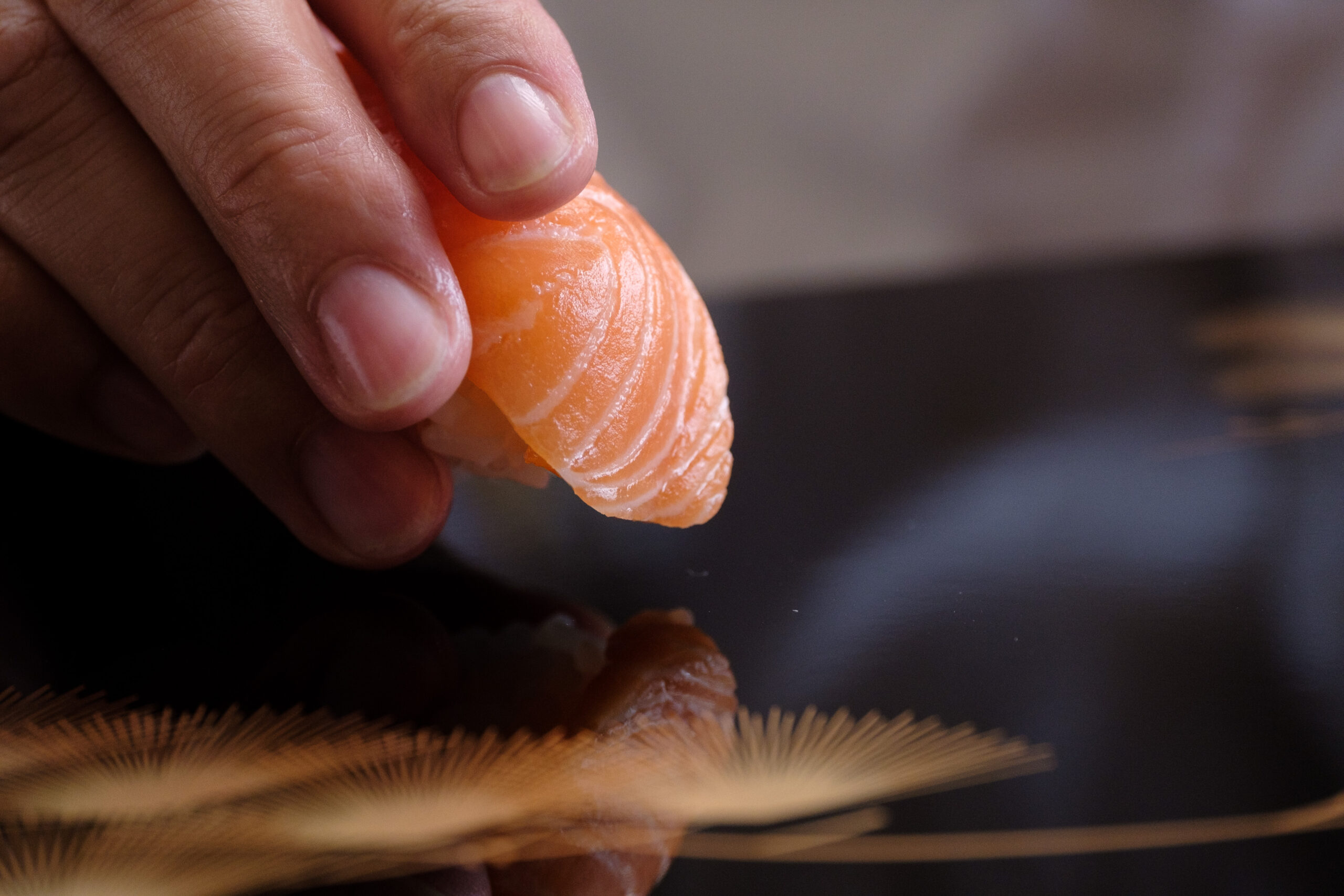
In contrast to yellowtail, which is easily mistaken for a white-fleshed fish, salmon is a fish that is often mistaken for a red-fleshed fish. Because it has reddish-orange flesh, some people may be surprised to hear that salmon is white-fleshed, but salmon is in fact a white-fleshed fish.
The reason the flesh turns red lies in the crustaceans (small shrimp, crabs, and plankton) that salmon eat as food. Crustaceans feed mainly on Haematococcus algae, and because this alga contains the pigment astaxanthin, the salmon's flesh becomes red.
The reason salmon roe (ikura), the eggs of salmon, is red is the same. If farmed salmon are not given astaxanthin, they become whitish salmon.
Are blue-backed fish blue in the flesh?
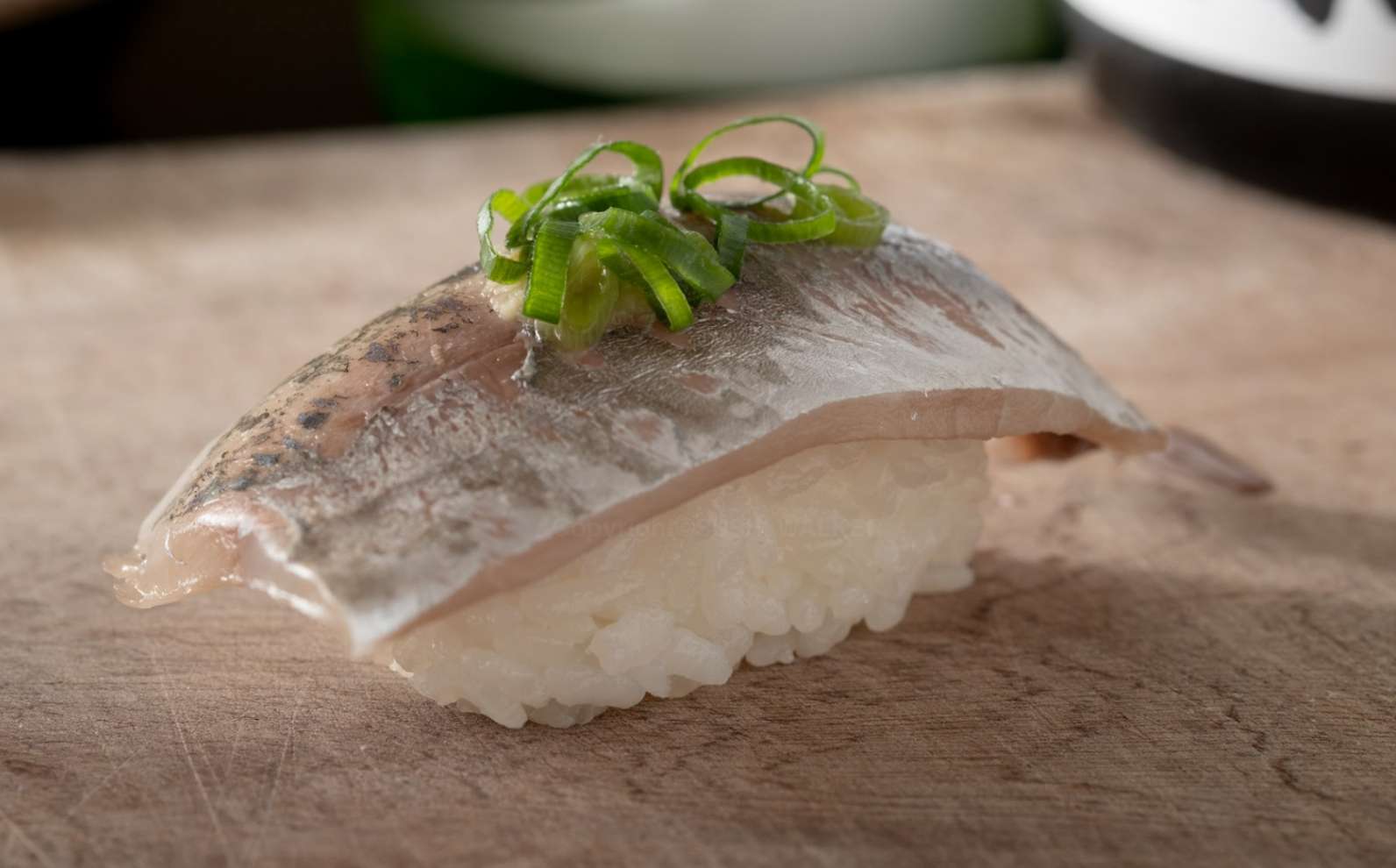
There are fish generally called \"aozakana\" (blue-backed fish), such as Pacific saury, horse mackerel, and sardine. As an aside, blue-backed fish are not classified by flesh color like red-fleshed and white-fleshed fish, but by the color of their backs.
Although they are distinguished by their glossy, bluish backs, this distinction is a convenient classification based on appearance, not a fisheries science definition like akami or shiromi, but merely a concept used for practical purposes.
Blue-backed fish contain EPA (eicosapentaenoic acid) and DHA (docosahexaenoic acid), which have the effect of reducing bad cholesterol in the blood, but they oxidize and lose freshness easily.
White-fleshed fish in sushi

So then, what kinds of white-fleshed fish are used as sushi toppings?
Representative ones include sea bream, flounder, salmon, Japanese sea bass, chicken grunt, filefish, and conger eel.
Sea bream and flounder are white-fleshed fish that could be called the kings of sushi toppings, so much so that people speak of \"sea bream in spring\" and \"flounder in winter.\" Salmon, among the many lightly flavored white-fleshed fish, has rich, fatty flesh and is in season in autumn, while Japanese sea bass, chicken grunt, and conger eel reach the peak of their deliciousness in summer.
Let us introduce the representative white-fleshed sushi toppings available in each season.
Sea Bream (Tai)
Sea bream is the most favored white-fleshed fish. The Japanese have treated sea bream as a luxury fish since ancient times. In particular, the sea bream that enters the Seto Inland Sea from the Naruto Strait in spring is a luxury fish called \"sakura-dai\" (cherry blossom sea bream).
Sea bream has an especially notable transparency even among white-fleshed fish. Its springy texture and moderate fat let you enjoy a distinctive sweetness not found in other white-fleshed fish.
From November to May, sea bream that have eaten plenty of food in time for spawning have flesh that shines amber, at the peak of deliciousness.
To use it as a sushi topping, it is basically formed after removing the skin, but if you leave the skin and form it after a quick blanch or searing, you can also enjoy the moderate texture of the skin. Sushi formed with salt to bring out deep umami, or kelp-cured, lets you enjoy the refreshing flavor unique to white-fleshed fish and has become popular.
Conger Eel (Anago)
Conger eel is in season from early summer to summer. Among white-fleshed fish, conger eel has especially plump, soft flesh, and its melt-in-the-mouth texture attracts many fans.
The rainy season of early summer is the time of year when conger eel is most delicious. Conger eel, which is simmered before forming, has long been formed using the traditional methods of Edomae sushi. The way it is simmered differs from restaurant to restaurant, making it a place where the chef's skill shows.
Brushing on a sweet-and-savory \"tsume\" glaze made from the simmering liquid is a method dating back to the Edo period, but it is also eaten topped with salt or citrus.
[Autumn] Filefish (Kawahagi)
Among white-fleshed sushi toppings, filefish is known as a fish especially favored by connoisseurs.
It lives in shallow sandy areas from Honshu to Kyushu, and the amount caught is not very large.
It used to be a fish that fetched high prices nationwide, but now aquaculture is actively practiced, and large wild specimens can sometimes become luxury fish.
From September to December, filefish whose liver has enlarged develop thick flesh and become ready to eat. You can enjoy an elastic, pufferfish-like texture, and a refined flavor that is light yet deeply profound.
The appeal of filefish is, above all, nigiri sushi that makes use of the deliciousness of its liver. The liver is dressed with ponzu, and the thinly sliced flesh is formed with wasabi, then the dressed liver is placed on top. The flavor in which the umami-rich liver and the light flesh intertwine exquisitely can be called the true essence of white-fleshed fish.
[Winter] Flounder (Hirame)
Like sea bream, flounder is highly popular as a white-fleshed topping.
There is a term \"kan-birame\" (cold-season flounder); in the cold winter, the fat builds up, the flesh firms up, and it becomes ready to eat.
On the other hand, once it enters the spawning season after March, the flavor drops sharply, so the season is from October to February. It is said that \"even a dog will not eat March flounder.\"
Flounder has a moist fat overall, and is characterized by a faint sweetness of fat felt within the fine, light flavor unique to white-fleshed fish. The sweetness of its toned muscle can be said to be unique to white-fleshed fish.
The four muscles in the fins are a rare sushi topping called \"engawa.\" With a crunchy texture, you can enjoy the umami of the fat that seeps out the more you chew.
Summary
This time, we introduced \"shiromi\" (white-fleshed fish), which ranks alongside the classic sushi topping \"akami\" (red-fleshed fish).
We learned that white-fleshed toppings include not only lightly flavored fish such as flounder and filefish, but also fish like salmon that let you enjoy a rich umami.
The clear, refreshingly colored white-fleshed fish is low in calories, yet has a refined umami within its light flavor, and lets you enjoy a distinctive springy texture.
Even those who usually eat mainly red-fleshed fish should pay attention to white-fleshed sushi toppings when visiting a sushi restaurant. You may discover a new way to enjoy sushi that is different from usual.