The History and Culture of SUSHI — The Visual Appeal and Charm of SUSHI
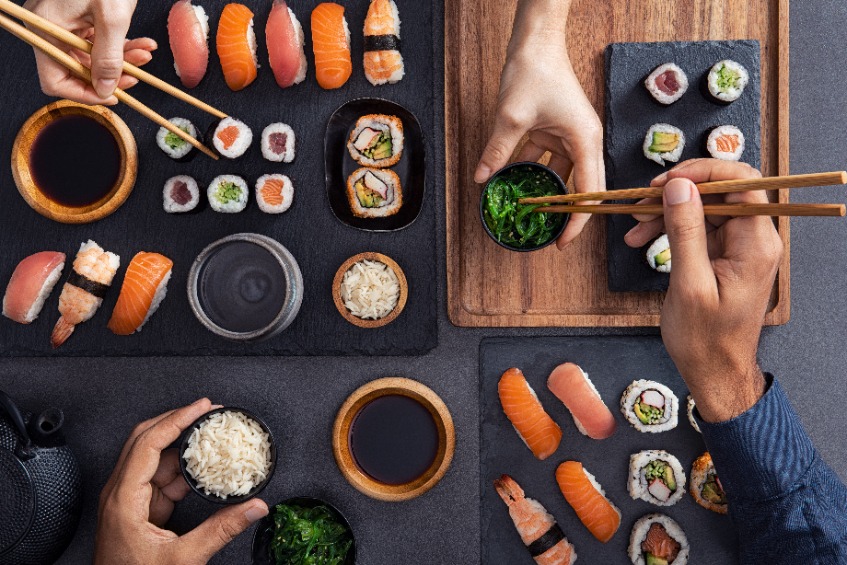
So, what exactly is modern SUSHI?
SUSHI, a food culture loved around the world.
How is it defined in the modern age?
Modern SUSHI is considered to be the following kind of dish.
"A dish that originated in Japan, has spread to America and Europe, and has many variations. It combines rice seasoned with vinegar, salt, and sugar with seasonal seafood and vegetables, either raw or cooked."
This is a general description, and there are a great many kinds of SUSHI.
Many are also arranged to suit the dining circumstances of each country, and types that differ greatly in appearance from original Japanese SUSHI have emerged.
No matter the form, wherever there is a sign reading SUSHI, people gather, and the sight of them savoring its deliciousness has become commonplace.
The history of SUSHI in Japan
What kind of history does SUSHI have in Japan, its true home?
Let us briefly introduce an overview of that history of SUSHI.
SUSHI was originally a preserved food
The birth of the dish called SUSHI is said to date back to before the 10th century.
The SUSHI of that time was called "narezushi," a dish that could be preserved for a long time by fermenting rice and fish together.
In other words, SUSHI was originally a preserved food.
SUSHI, the fast food loved by the people of Edo!
So when was the sushi we know today born?
Nigiri-zushi, in which cooked rice is mixed with vinegar and topped with vinegar-cured fish, was born in the Edo period.
The people of Edo were known for being impatient, and instant SUSHI was created to satisfy their cravings. At the time, it was often sold at food stalls, giving SUSHI very much the character of what we would today call fast food or street food.
Are there really this many? The varieties of SUSHI
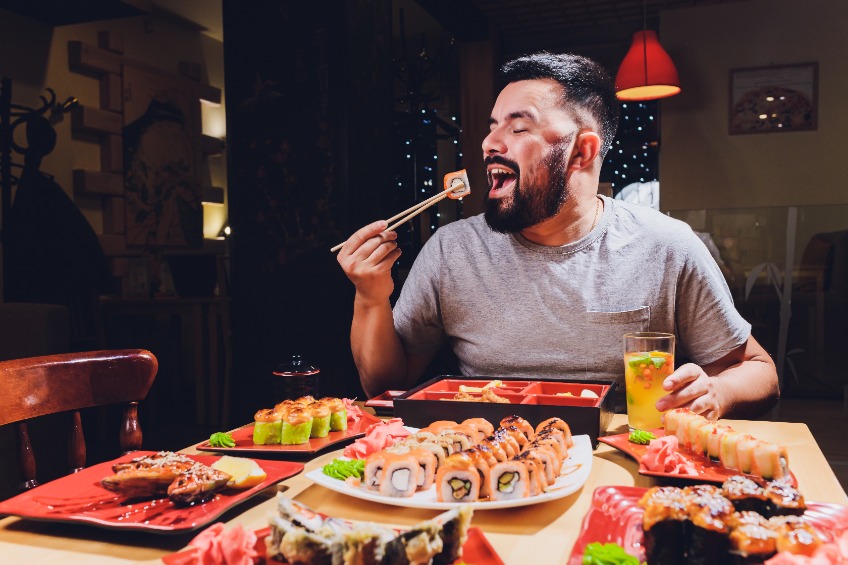
When you think of SUSHI, the nigiri and rolled types come to mind first.
In reality, there are many dishes that call themselves SUSHI, and there may be some you have never tasted.
We will introduce the well-known varieties of SUSHI along with their characteristics.
Nigiri-zushi
What people around the world picture when they hear SUSHI is nigiri-zushi.
Nigiri-zushi is sushi in which a bite-sized mound of vinegared rice is pressed together and topped with ingredients such as fish or shellfish.
Chirashi-zushi
Chirashi-zushi refers to a dish in which rice is placed in a large bowl and topped with various ingredients.
Not only raw sashimi but also ingredients such as rolled omelet, boiled shrimp, kamaboko (fish cake), and kanpyo (dried gourd strips) are used.
Inari-zushi
Inari-zushi, which has a modest color among SUSHI, is made by forming sweet-and-salty simmered fried tofu into pouches and stuffing them with vinegared rice.
The advantage is that even those who dislike raw food can eat it.
Maki-zushi
Along with nigiri-zushi, maki-zushi is regarded as a representative of SUSHI.
Maki-zushi is made by wrapping seafood, vegetables, and other fillings in vinegared rice as the core and rolling it in nori (seaweed).
There are many types, such as hosomaki (thin rolls) that wrap a single item and futomaki (thick rolls) that wrap multiple ingredients.
Uramaki
Uramaki is sushi that was born outside Japan.
It is said to have been devised for foreigners who were averse to the black, paper-like nori, so the nori is rolled on the inside and the vinegared rice is on the outside.
California roll
The sushi that gained popularity in America gave rise to original SUSHI varieties in various regions.
The representative example is the California roll.
It is an American SUSHI made with avocado, imitation crab, and lettuce as fillings, seasoned with mayonnaise.
In America, there are many such sushi named after towns, and they spread throughout the world.
In closing: the beauty of SUSHI, recognized even by aesthetically refined foreigners
Among the reasons SUSHI spread throughout the world is, of course, its deliciousness, but its visual appeal cannot be ignored.
SUSHI, which satisfied even the aesthetically refined people of Europe, has been arranged in each country, developing like art and adorning social media.
There are countless visually stunning kinds of SUSHI that astonish even the Japanese, and once you taste them, there is a strong chance you too will be captivated!