The History of Conveyor Belt Sushi Spans Over Half a Century — Features of Each Chain
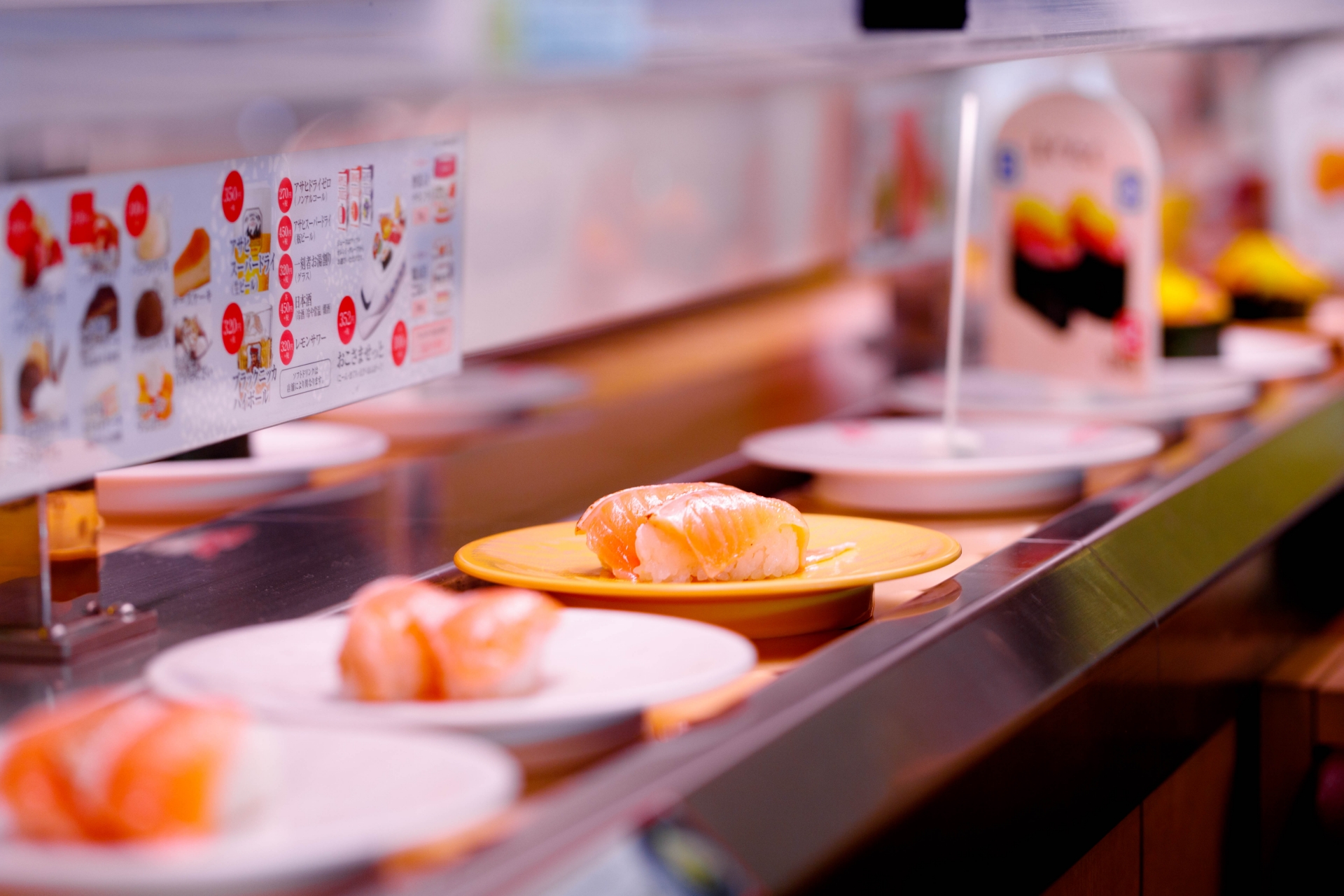
Born in Osaka! Conveyor-belt sushi, created in a city of merchants
Reasonable prices and an atmosphere families can enjoy.
There are many reasons conveyor-belt sushi restaurants are popular. Conveyor-belt sushi is now a familiar part of daily life, but where did the idea come from?
Conveyor-belt sushi was conceived as far back as 1948, shortly after the war.
Yoshiaki Shiraishi, founder of the still-existing conveyor-belt sushi chain "Genki Sushi" (then called Genroku Sushi), got the idea from the belt conveyor at a beer factory.
After many twists and turns, conveyor-belt sushi actually appeared about 10 years later, in 1958.
The first store, opened in Higashiosaka City, captured the hearts of the merchant city of Osaka with its low and clear pricing.
That concept is said to have led to its later development.
Indeed, conveyor-belt sushi has a history of more than half a century.
Even today, a stone monument stands in front of this first conveyor-belt sushi store, commemorating its great achievement.
Popularity exploded with the Osaka Expo! The evolution of conveyor-belt sushi
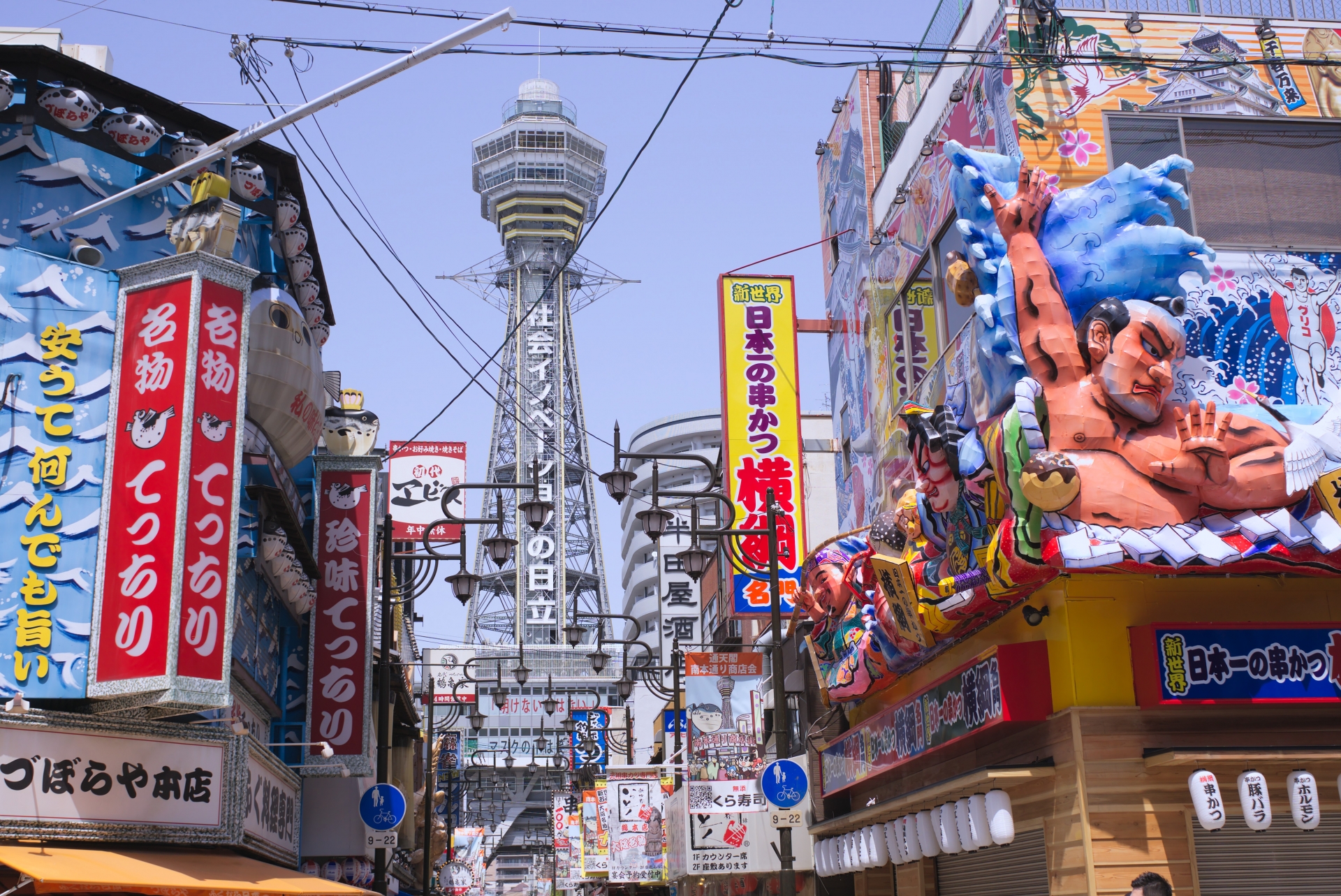
Genroku Sushi later obtained a patent for conveyor-belt sushi in 1962 under the name "rotating conveyor dining table," and gained another chance to shine at the World Exposition held in Osaka in 1970.
Genroku Sushi, which participated as an exhibitor at the Expo, won an award for excellence in dining.
Having already opened its first franchise store in Sendai City, Miyagi Prefecture, in 1959, Genroku Sushi came to attract nationwide attention from this point on.
Conveyor-belt sushi, with Genroku Sushi as its progenitor, later saw the birth of numerous chains as Genroku Sushi's belt-conveyor patent expired, and along with that, it evolved significantly in technical aspects as well.
Automatic tea dispensers, sushi robots, and other innovations were developed, and by 2021, conveyor-belt sushi had finally grown into a 700-billion-yen market.
So, what exactly is the difference between conveyor-belt sushi and a regular sushi restaurant?
For many people, eating sushi may mean exclusively conveyor-belt sushi.
Conveyor-belt sushi has that many locations, and the advantage is that you can drop in very casually.
So, what is the difference between conveyor-belt sushi and a regular sushi restaurant? We explain the differences between the two categories.
Price
First and foremost, price is the biggest difference. There are also high-priced gourmet conveyor-belt sushi restaurants, but compared with so-called non-conveyor sushi restaurants, conveyor-belt sushi restaurants basically have a fixed price per plate and generally serve sushi at reasonable prices.
On the other hand, at a regular sushi restaurant, the price itself can change depending on the supply of ingredients and purchase costs. Quality generally surpasses that of conveyor-belt sushi, but the price is naturally higher than conveyor-belt sushi.
Store layout
Conveyor-belt sushi has also diversified, and there are now stores that take a non-conveyor format.
However, the mainstream is, after all, the style where the lane of rotating sushi takes center stage. The standard style features belt-conveyor lanes at the center, with table seating arranged around them.
In many cases, tea and chopsticks are self-service, and since customers often take and use the tableware themselves, durable, break-resistant items are frequently used.
In the case of non-conveyor sushi restaurants, there are counter seats where the ingredients are visible, and typically a chef prepares the sushi right in front of you. At higher-priced establishments offering omakase courses, many places are particular not only about the sushi but also about side dishes, tea, desserts, and tableware.
Purpose of visiting
Conveyor-belt sushi restaurants have an appealing casualness that even small children can join.
The main purpose is to enjoy sushi without reservation among close family and friends, or even alone.
Non-conveyor sushi restaurants are often used for private meals with friends or important people, or formal occasions with relatives, and apart from low-priced chains, they tend to be used less often by families.
Popular conveyor-belt sushi chains: history and features
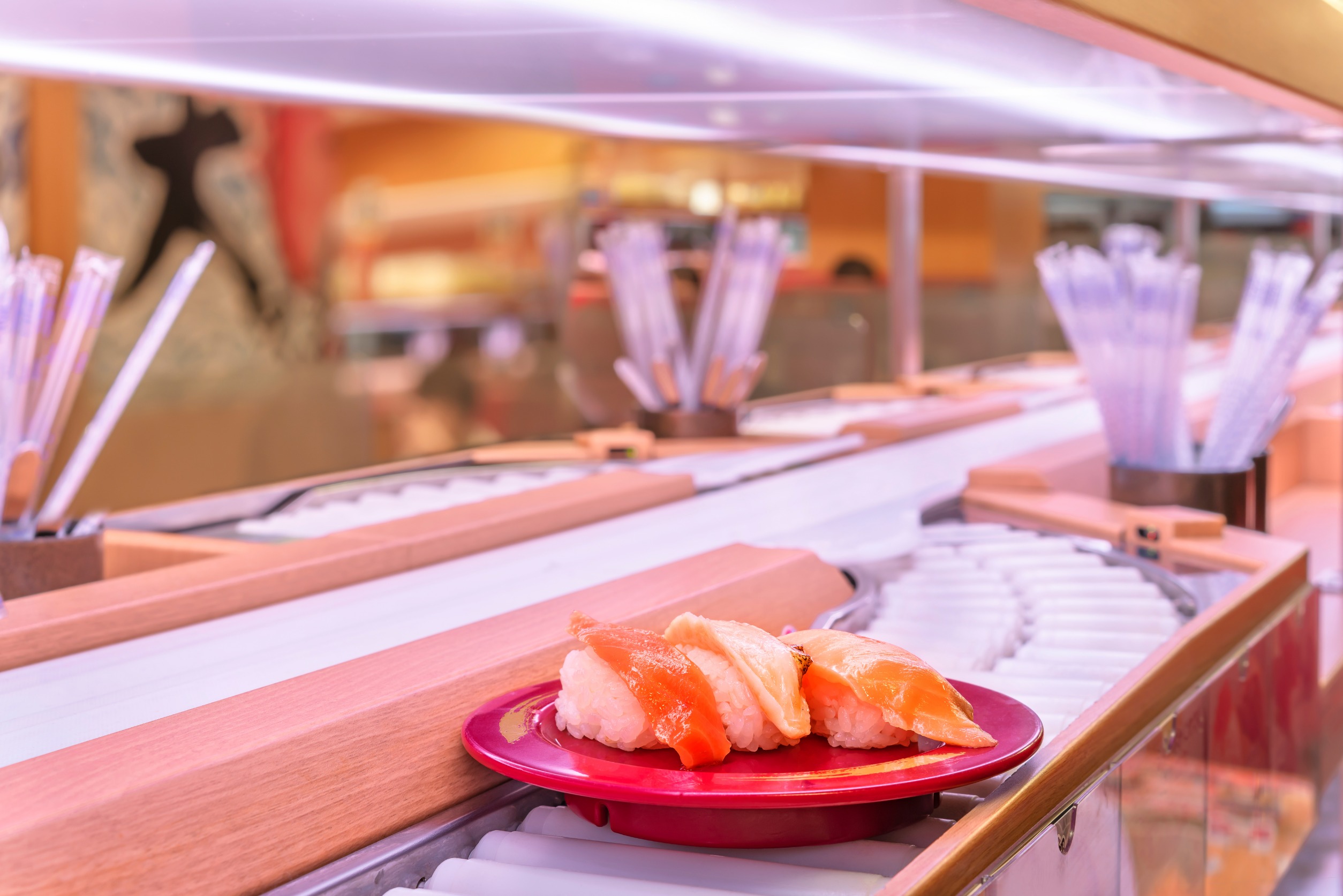
What kind of conveyor-belt sushi restaurants are near where you live?
Familiar conveyor-belt sushi restaurants, and ones you have never been to but are curious about.
There are very many conveyor-belt sushi chains, each with its own features and appeal.
Broadly speaking, there are also two styles of service: the traditional artisan-style conveyor-belt sushi, where chefs hand-form and serve the sushi, and robot-style conveyor-belt sushi, which serves sushi made by robots.
Here, we introduce famous conveyor-belt sushi chains, divided into the two categories of artisan-style and robot-style conveyor-belt sushi.
Artisan-style conveyor-belt sushi
Kanazawa Maimon Sushi
An authentic conveyor-belt sushi restaurant that records the top sales in Kanazawa City, said to be the most fiercely competitive area for conveyor-belt sushi.
Although it bears the name Kanazawa, it has nearly 20 locations not only in Kanazawa but also in Tokyo, Osaka, Kyoto, and elsewhere, and it even has a store in Taipei, Taiwan.
True to its claim that it serves only what it would want to feed its own family and friends, it is thoroughly particular down to the smallest details, including not only fresh fish but also seasonings, rice, and nori. While major conveyor-belt sushi chains introduce sushi robots to improve operating efficiency, Maimon Sushi maintains the original sushi-chef style of using fresh fish formed by hand by artisans.
It is a conveyor-belt sushi restaurant strongly supported by sushi lovers, not just the discerning palates of Kanazawa residents.
Kanazawa Maimon Sushi Official Website
Gatten Sushi
"Gatten Sushi" is a conveyor-belt sushi chain with nearly 100 stores that became independent from the Genroku Sushi franchise, and it is especially well known among major conveyor-belt sushi chains where chefs hand-form the sushi.
It is committed to being a gourmet conveyor-belt sushi that affordably offers the quality of so-called non-conveyor sushi, where chefs prepare the sushi right before your eyes. One of its features is its large overseas presence, with 64 stores in Japan and 34 overseas.
Recently, some stores also serve sushi made by robots, but "Gatten Sushi," which pursues affordable luxury, is supported by many sushi lovers.
Genroku Sushi
"Genroku Sushi" is known as the originator of conveyor-belt sushi.
The conveyor for conveyor-belt sushi was invented by Yoshiaki Shiraishi of "Genroku Sushi," and since the patent was obtained, in the old days conveyor-belt sushi meant only "Genroku Sushi."
Later, as the patent expired, various conveyor-belt sushi spread throughout the country, and furthermore, franchise stores under its umbrella became independent, giving rise to chains such as Genki Sushi, Heiroku Sushi, and Nigiri Chojiro.
Today it is a chain of about 10 stores centered on Osaka, but it still operates in the traditional artisan-style conveyor-belt sushi format and is truly a conveyor-belt sushi chain that could be called the father of conveyor-belt sushi.
Genroku Sushi Official Website
Nigiri Chojiro
"Nigiri Chojiro" is an artisan-style conveyor-belt sushi chain with around 60 locations centered on the Kansai region, and it also has a few stores in Tokyo as well as offering sushi delivery.
Just as its official website states that, despite being conveyor-belt sushi, it offers quality that rivals non-conveyor counter sushi restaurants, it is highly rated by sushi lovers as offering good value even at higher prices.
Some stores even have fish tanks inside, and while certain sushi ingredients can be somewhat pricey, it is a recommended conveyor-belt sushi for when you want to eat delicious sushi but feel robot-style conveyor-belt sushi is not quite it, yet high-end restaurants are too expensive.
Nigiri Chojiro Official Website
Kaiten Sushi Misaki
"Kaiten Sushi Misaki" mainly opens locations in places such as in front of stations in Tokyo, and it has stores where chefs prepare sushi before your eyes as well as stores where robots make the sushi.
The operator, "Kyotaru," is a subsidiary of FOOD & LIFE COMPANIES, which operates "Sushiro." It is a gourmet-style conveyor-belt sushi that sets itself apart from the robot-style Sushiro.
Misaki's specialty is high-quality tuna carefully sourced from around the world. In addition to medium fatty tuna, premium fatty tuna, and lean tuna, it also offers rare cuts of wild tuna such as hagashi and chikaramira for limited periods.
You can also enjoy seasonal seafood sourced from Toyosu Market and its signature red shari (vinegared rice) blended with aged red vinegar, all at reasonable prices.
At artisan-style stores, you can also order while communicating with the chefs. Committed to in-store preparation by artisans, it aims to offer conveyor-belt sushi that Sushiro cannot.
Kaiten Sushi Misaki Official Website
Mawashi Sushi Katsu
"Mawashi Sushi Katsu," with 7 stores in the Kanto region, prepares about 200 kinds of fresh ingredients, with artisans hand-forming carefully selected materials.
The recommended item is the signature "Ippon Anago Tsuke" (whole conger eel). Made by a unique method and simmered until even the small bones are soft, the conger eel has a smooth texture and offers exquisite umami and mouthfeel. The sauce generously poured over the bold, whole conger eel stimulates the appetite.
Also appealing are the original menu items devised by the artisans based on the ingredients they procure, offered in limited quantities each day.
When announcing recommended items or freshly made sushi, the artisans' microphone performances liven up the venue.
Mawashi Sushi Katsu Official Website
Daiki Suisan
"Daiki Suisan" was born in Osaka as a wholesale company for salted and dried fish.
It operates about 45 stores centered on Osaka and is an artisan-style conveyor-belt sushi that hand-forms freshly filleted fish before your eyes, with a commitment to freshness.
Using a direct-from-source distribution system centered on Sakaiminato in Tottori Prefecture, it sources seafood and offers a wide variety of high-quality ingredients at low prices.
Daiki Suisan's signature item is its outstandingly fresh "bluefin tuna." The reason it can offer rare cuts such as kamatoro (collar fatty tuna) and cheek meat is that it sources whole tuna from markets around the world with advanced aquaculture technology and breaks them down whole.
In addition to standard ingredients, you can also savor unusual wild fish.
Robot-style conveyor-belt sushi
Sushiro
Sushiro, the top conveyor-belt sushi chain in Japan with more than 650 stores (as of March 2023).
Sushiro, which opened its first store in Toyonaka City, Osaka Prefecture in 1984, expanded into the Kanto and Chubu regions after the turn of the 21st century and achieved nationwide expansion.
Since 2011, it has also actively opened stores overseas, surpassing 100 overseas stores in December 2022, and continues its triumphant advance, aiming for 200 stores by 2030.
Sushiro's sushi is made by sushi robots, some of which reportedly cost as much as 2.5 million yen and form the sushi. With its abundance of desserts, it boasts high popularity among children and women as well. Earning customer satisfaction through large investments and customer-focused menu development may be one reason it has secured the No. 1 spot in the industry.
Kura Sushi
Focusing on families and offering an abundance of services for children is "Kura Sushi," a leader in robot-style conveyor-belt sushi like Sushiro.
Kura Sushi was founded in Sakai City in 1977, and it has built new concepts for conveyor-belt sushi by developing box seats, which are rare for conveyor-belt sushi restaurants.
Kura Sushi is also famous for successively introducing advanced technologies, not only robots that form the rice but also measures for contactless service suited to the times.
Furthermore, the "Bikkura-Pon!" introduced in 2000 is an innovative concept that lets you play a game by inserting finished plates, boasting tremendous popularity among children.
For children, Kura Sushi's sushi is wasabi-free by default.
The "last-minute wasabi" option, which lets you add wasabi just before eating, is also highly rated in terms of both convenience and freshness.
Kappa Sushi
The one said to surpass others in terms of price is Kappa Sushi.
Starting with its all-you-can-eat "Tabe-Ho" plan, its low-priced side menu is also a factor in its popularity.
Kappa Sushi also became a topic of conversation for introducing not only robots that form the rice but also robots for serving and transport.
Founded in 1973, Kappa Sushi has in recent years also begun offering an on-site conveyor-belt sushi catering service.
Rather than relying solely on the advantage of price, it continually rolls out flexible services one after another.
Hama Sushi
Hama Sushi, which boasts the second-largest number of stores in the industry, is characterized by its strength in technology, such as the use of customer-service robots and apps.
Hama Sushi, which opened its first store in Ashikaga City, Tochigi Prefecture, was founded in 2002.
As a young company, it excels at putting original ideas into practice, with many features customers appreciate, such as the industry's first drive-through system and reduced waiting times through app use.
It is also particular about developing original soy sauce, and in recent years, its takeout coin-priced rice bowls topped with tuna and salmon have been popular.
Uobei
Genki Sushi operates "Uobei," "Genki Sushi," and "Senryo" in the sushi industry.
This company, whose parent is the originator of conveyor-belt sushi, "Genroku Sushi," has "Uobei" as its main force.
The store's strength is, above all, the "Triple Smile Lane," where vehicles bring the sushi to you.
Indeed, while Uobei is technically non-rotating sushi, it has gained popularity through reasonable prices combined with an entertainment element.
With this service that delights not only vehicle-loving children but also adults with a sense of excitement, Uobei is a well-known presence among conveyor-belt sushi restaurants.
Because it uses a full-order system, which is unusual for conveyor-belt sushi, it is also highly rated for contributing to the food-waste problem.
High expectations for the future of the conveyor-belt sushi industry!
Challenging the image of "sushi = luxury," conveyor-belt sushi created a new category as affordable, popular-priced sushi.
With its reasonable prices and various services for families who visit becoming popular, it has now grown into a major presence in the food-service industry, with a market size exceeding 700 billion yen.
Operational efficiency has also advanced, and today, not only the traditional artisan-served conveyor-belt sushi but also robot-style conveyor-belt sushi has a strong presence.
While sushi made by robots has its supporters and detractors, with sushi lovers feeling the quality is not high, there is no doubt it plays a part in the vitality of the conveyor-belt sushi industry.
In the Edo period, sushi was known as a food for the masses.
Conveyor-belt sushi is a major presence in the sense that it returns such sushi to its original form.
How it will develop and change going forward is something we are very curious about.