Related Articles
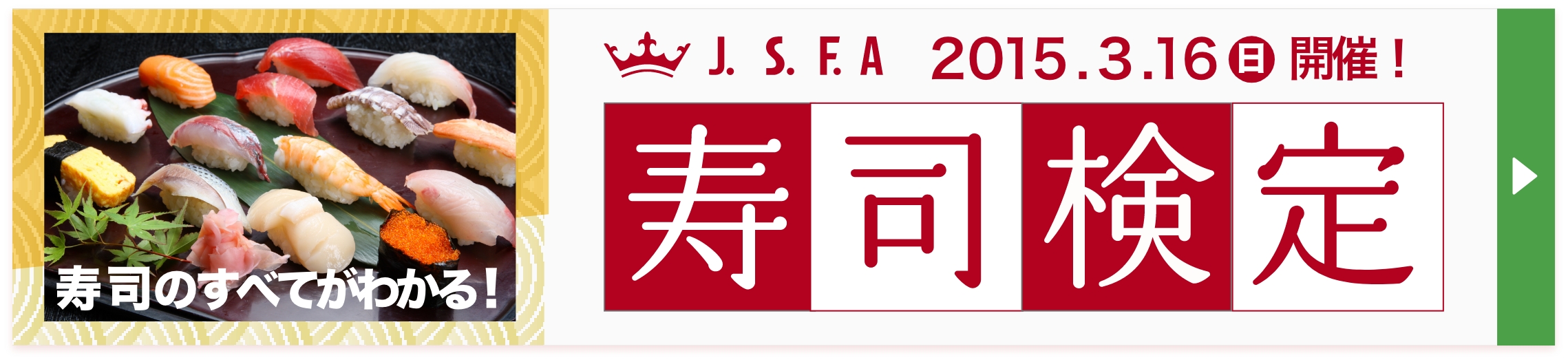
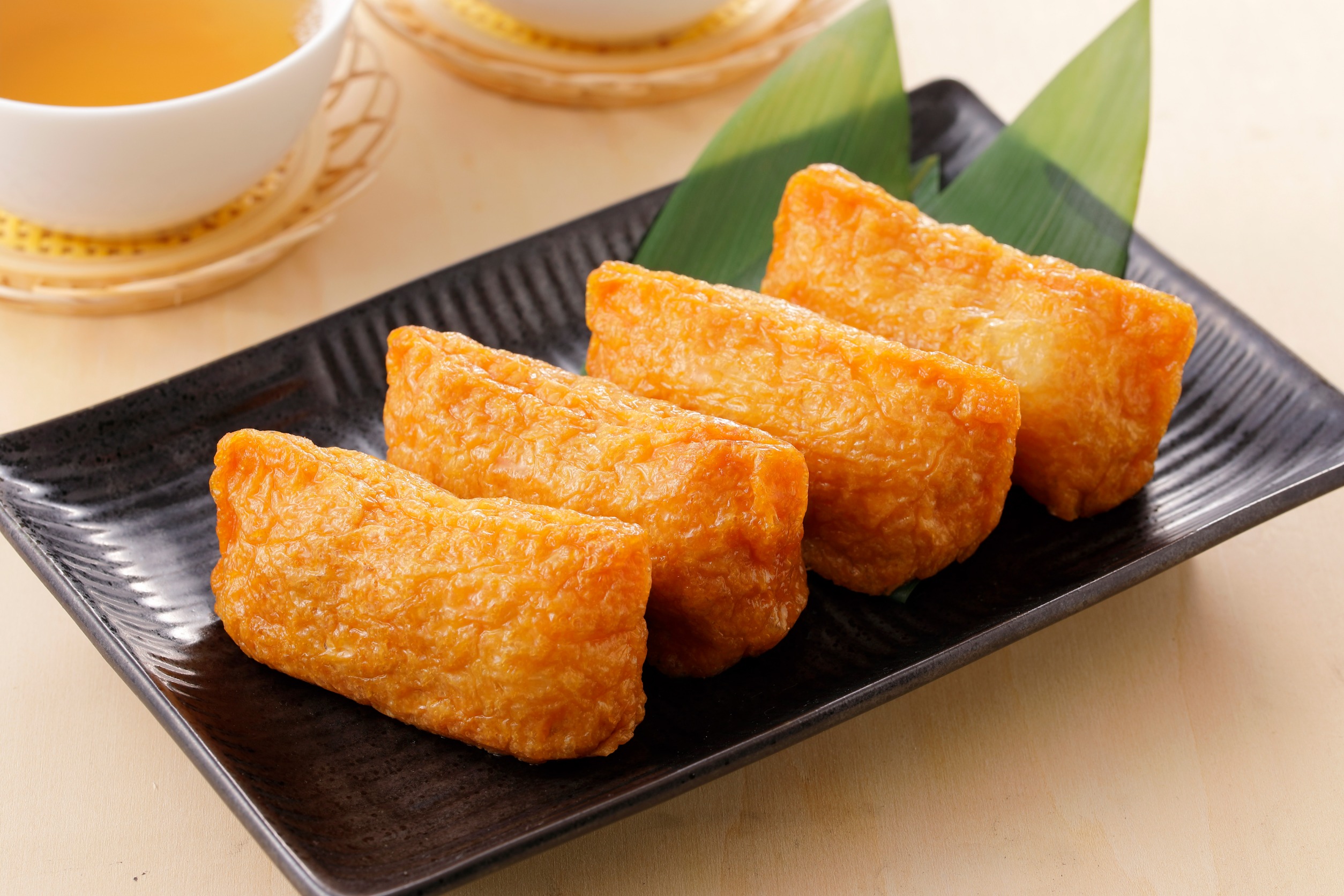
Inari sushi has other names such as "aburage-zushi," "kitsune-zushi," "oinari-san," and "shinoda-zushi," and is a sushi that has been especially loved by Japanese people.
The form and method of making inari sushi differ somewhat by household and region, but as a general definition, it is "a pouch made by opening up sweet-and-savory simmered fried tofu (abura-age) and filling the inside with vinegared rice," and because vinegared rice is used, it is a type of sushi, falling under the genre of inro-zushi in classification.
In the general sense, you might think, "Eh, is oinari-san really sushi?" but it can also be called a type of local sushi like pressed sushi or funa-zushi, and although it is a different type from nigiri sushi in so-called Edomae sushi, inari sushi too can be said to be a fine type of sushi.
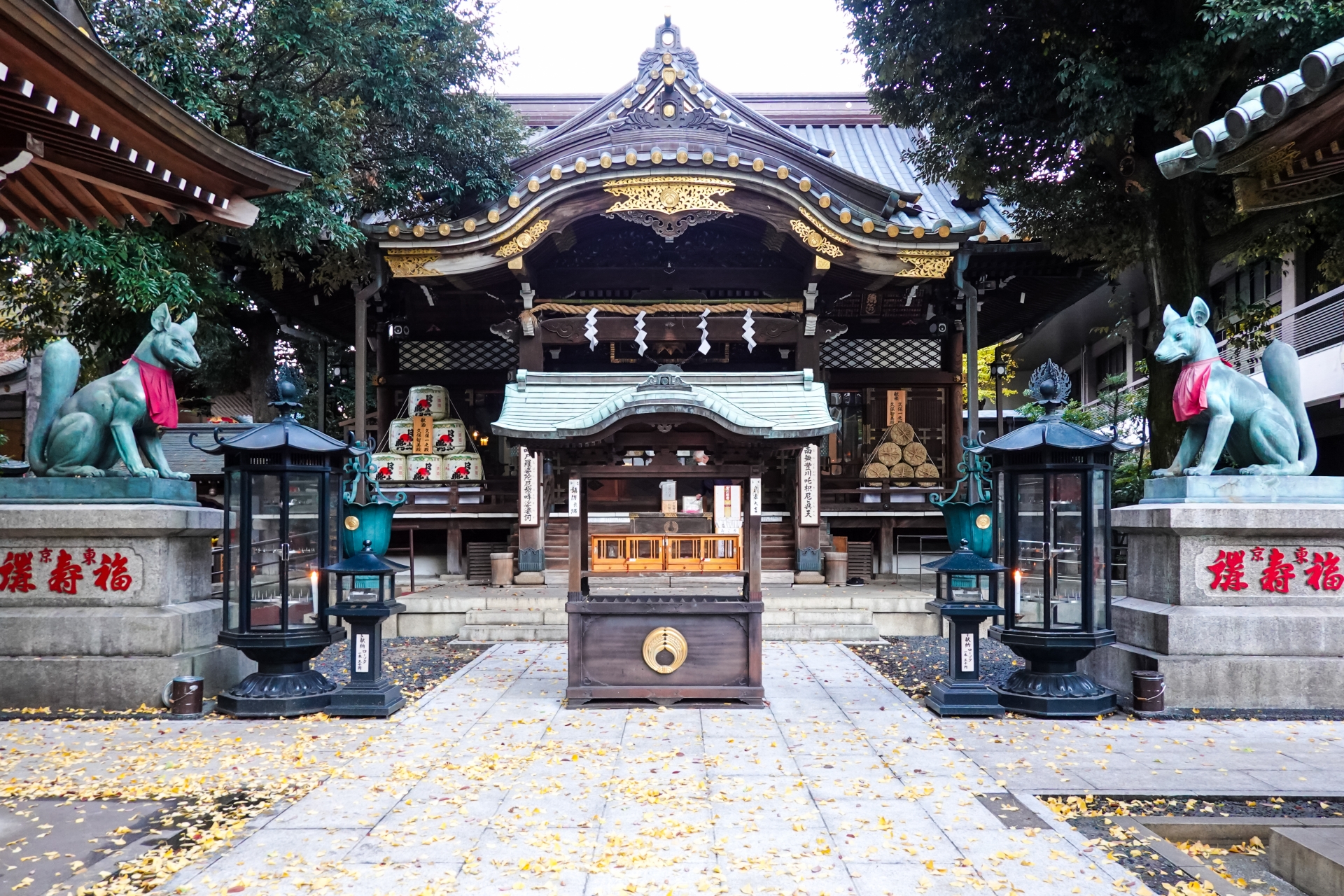
There are various theories about the origin of inari sushi, and the general theory holds that it originated in Nagoya or Edo around the Tenpo era (1830–1844).
Also, in the town in front of Toyokawa Inari, one of Japan's three great Inari shrines, there is a sushi called "aburage-zushi," and there is a theory that this is the ancestor of inari sushi. Toyokawa Inari has long been widely known as one of the birthplaces of inari sushi, with inari sushi having been served to worshippers since ancient times.
In any case, from the documents that remain, it is known that inari sushi gained popularity in Edo. Episodes also remain, such as how, when extravagance was banned during the Tenpo Reforms, cheap inari sushi spread in an instant, and for the people of that time it likely had the character of a casual street food.
Inari sushi is known as a representative popular sushi, but on the other hand, it is also used as an offering in the Shinto ritual called the Hatsuuma Festival.
Hatsuuma is a traditional Japanese event that enshrines the god of grains, and because it is held on the first "day of the horse" in February (the Hatsuuma days in 2022 and 2023 were February 5, in 2024 February 12, and in 2025 February 6), on this day festivals called "Hatsuuma Festival" are held at Inari shrines throughout the country, and offerings are added to the god of grains to pray for a bountiful harvest, where inari sushi is used.
In this way, inari sushi has the aspect of being both a common people's sushi and used in Shinto rituals, making it a culturally rich sushi through which you can view both sides of Japan's popular culture and traditional Shinto rites.
The origin of the name inari sushi is said to derive from the favorite food of the fox, the messenger of the Inari deity, the god of agriculture symbolizing rice.
From ancient times, the fox's favorite food was thought to be mice, so at Inari shrines too, fried mice were initially offered. After that, instead of mice, fried tofu came to be offered, and sushi using fried tofu came to be called "inari sushi" or "kitsune-zushi (fox sushi)," it is said.
Also, inari sushi is sometimes called "shinoda-zushi," and this too is related to the female white fox that appears in the "Legend of the Shinoda Forest" in Izumi City, Osaka Prefecture. According to a passage in "Morisada Manko," which could be called an encyclopedia of the Edo period, it came to be called "shinoda-zushi" or "inari sushi" because it is sushi using fried tofu, which foxes favor.
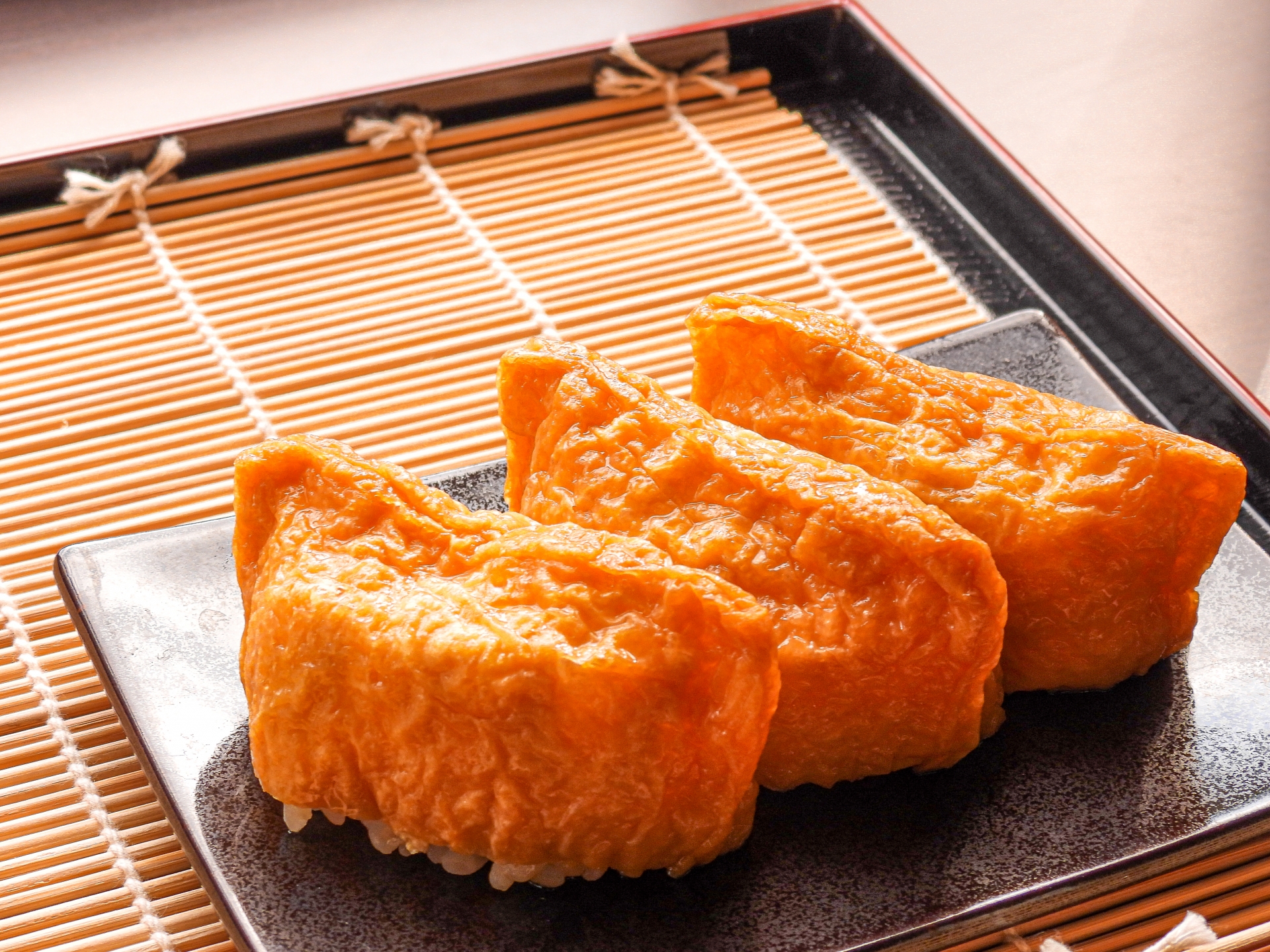
Cheap and delicious inari sushi is something many people buy at supermarkets or convenience stores to nibble on at mealtimes or when a little hungry, but you can also make it yourself.
The basic steps for making inari sushi are as follows.
Fried tofu is a food that spoils easily, but if you simmer it in a sweet-and-savory seasoning and freeze it, it is convenient the next time you make inari sushi too.
<A>
Fried tofu: 4 pieces
Cooked rice: 250g
Sesame: 1 teaspoon
Dashi stock: 100ml
Sugar: 2 tablespoons
Soy sauce: 1 and 1/4 tablespoons
<B: Sushi vinegar>
Rice vinegar: 1 tablespoon
Sugar: 1 teaspoon
Salt: 1/4 teaspoon
The calories of inari sushi are roughly 115 kcal per piece (105g).
Inari sushi tends to be seen as relatively simple sushi, but fried tofu is a plant-based ingredient, containing high-quality protein as well as abundant minerals such as calcium and phosphorus, and nutrients such as vitamin B1 and folic acid.
Also, the isoflavones contained in soybeans, the raw material of fried tofu, are said to have antioxidant effects, so inari sushi surprisingly contains a great deal of nutrition.
With its long history and its connection to Inari faith throughout Japan, inari sushi is also rich in variation. In addition to the flavors passed down in each household, there are regional characteristics. We will introduce some of them.
Inari sushi is a simple dish, but the flavor changes depending on the seasoning of the fried tofu and the amount of sugar in the vinegared rice. As a tendency, the further north you go, the stronger the seasoning of inari sushi becomes, and the further south you go, the lighter it becomes.
It may be helpful to imagine the difference in seasoning between Tokyo and Kyoto, not limited to inari sushi. The firmly seasoned Tokyo, the gentle-flavored Kyoto.
That image is reflected directly in the seasoning of inari sushi as well.
Inari sushi also differs in shape from region to region.
Much inari sushi is a long, slender straw-bale shape, but in the Kansai region many places make it in a triangular shape to imitate a fox's ear.
For inari sushi, which became popular in the town of Edo, records remain that kanpyo (dried gourd) and kikurage (wood ear mushroom) were used as fillings.
Today's inari sushi generally uses shiitake, lotus root, carrot, and so on as ingredients. Also, in Aichi Prefecture and Aomori Prefecture, there is inari sushi as one of the local dishes. In particular, Aomori Prefecture's inari sushi has red pickled ginger added, making it a dish characterized by a vivid pale pink color.
There are famous shops for delicious inari sushi all over Japan.
We definitely want to try the taste of famous shops, which is a little different from the inari sushi we are usually accustomed to eating.
Here we introduce inari sushi from famous shops you should try at least once.
If you want inari sushi with Tokyo-style strong seasoning, "Mikan," a specialty shop for nori rolls and inari sushi, is recommended.
The lustrous golden-brown inari sushi of Mikan has an outstanding presence of thin fried tofu. The exquisite texture of the rice and the Tokyo-style sweet-and-savory flavor are the shop's signature.
Restaurant Name: Inari Sushi Mikan
Address: 2-14-6 Narihira, Sumida-ku, Tokyo
https://goo.gl/maps/4eCu4T3ZRxdsAw3r6
Phone: 03-3623-3950
"Kanryu" is located in Osaka's entertainment district Kita-Shinchi. Befitting the chic town, Kanryu's inari sushi is famous as inari sushi called "koinari." Born from a play on words for "small inari," koinari is cute bite-sized inari sushi. "Namida no koinari (teary koinari)" topped with wasabi is also very popular along with its naming.
Restaurant Name: Sushidokoro Kanryu
Address: 1-10-1 Sonezaki-shinchi, Kita-ku, Osaka City, Osaka, Espacion Yamada Building 4F
https://goo.gl/maps/cTgSu9Vsdn19PZb98
Phone: 06-6344-0708
"Agezushi no Mise Takeya" is a specialty shop for agezushi. It offers agezushi (inari sushi) with various seasonings. The shop is in a residential area, so it is a little hard to find, but it is an inari sushi shop known to those in the know.
Restaurant Name: Agezushi no Mise Takeya
Address: 504 Kisogawacho Monma Saigo, Ichinomiya City, Aichi
https://goo.gl/maps/BmLkTxfssqoZKLhX7
Phone: 090-9181-1790
Do you think inari sushi, which spoils quickly, has a high hurdle to buy by mail order?
In fact, delicious inari sushi can also be bought online.
We introduce 3 recommendations.
This is inari sushi reputed to offer authentic deliciousness while being as casual as heating it in the microwave.
Mitsuhashi Rice's frozen inari sushi is a bit small, and it's wonderful that it has a wide range of uses—for parties, late-night snacks, and bento!
Product Name: Mitsuhashi Rice Frozen Inari Sushi
Website: https://item.rakuten.co.jp/3284rice/inari2/?s-id=review_PC_il_item_01
This product from Hanshin Shuhan became very popular for its refined Kyoto-style seasoning, selling a cumulative total of over 50,000 units.
The inari-age, with no food additives or preservatives added, brings out a mellow flavor. You need to make the vinegared rice at home, but it's also delicious served as-is in kitsune udon and the like!
Shop Name: Hanshin Shuhan Kyoto-Style Seasoned Inari-age
https://item.rakuten.co.jp/kaisenshop/018-0276-001/?s-id=review_PC_il_item_01
The Osaka-born inari sushi specialty shop "Mamedanuki" is known for its refined taste, also familiar from department store basement food halls. The fluffy, distinctive sweetness and the slowly simmered ingredients create a flavor representative of western Japan's inari sushi.
Shop Name: Mamedanuki
https://web.hh-online.jp/hankyu-food/goods/index.html?ggcd=h3230212
https://isetan.mistore.jp/kyoto/product/0130900000000000000002275663.html?rid=d7b84644eac14c5081bd157979ec4560