China has a long history of food culture.
Its diversity and depth have captivated countless gourmets and attracted tourists from both home and abroad.
In recent years, a new trend has emerged within this traditional food culture.
That trend is "sushi," born in Japan.
Chinese people once tended to avoid eating raw food, but thanks to the boom in healthy Japanese cuisine and the rapid growth of the middle class, sushi—which can be enjoyed at reasonable prices close to home—is attracting more and more interest.
Sushi chain restaurants located in Chinese shopping malls draw a wide range of customers because they are cheaper than authentic sushi restaurants.
The popularity of conveyor-belt sushi is also rising in Shanghai, the overseas city with the largest Japanese population, and major Japanese conveyor-belt sushi chains have entered the market.
Sushi chains tailor their services to Chinese tastes—for example, performing operations right in front of customers, or, in the case of high-end establishments, using ingredients sourced from Japan.
The High-End Sushi Boom Coming to China: OMAKASE
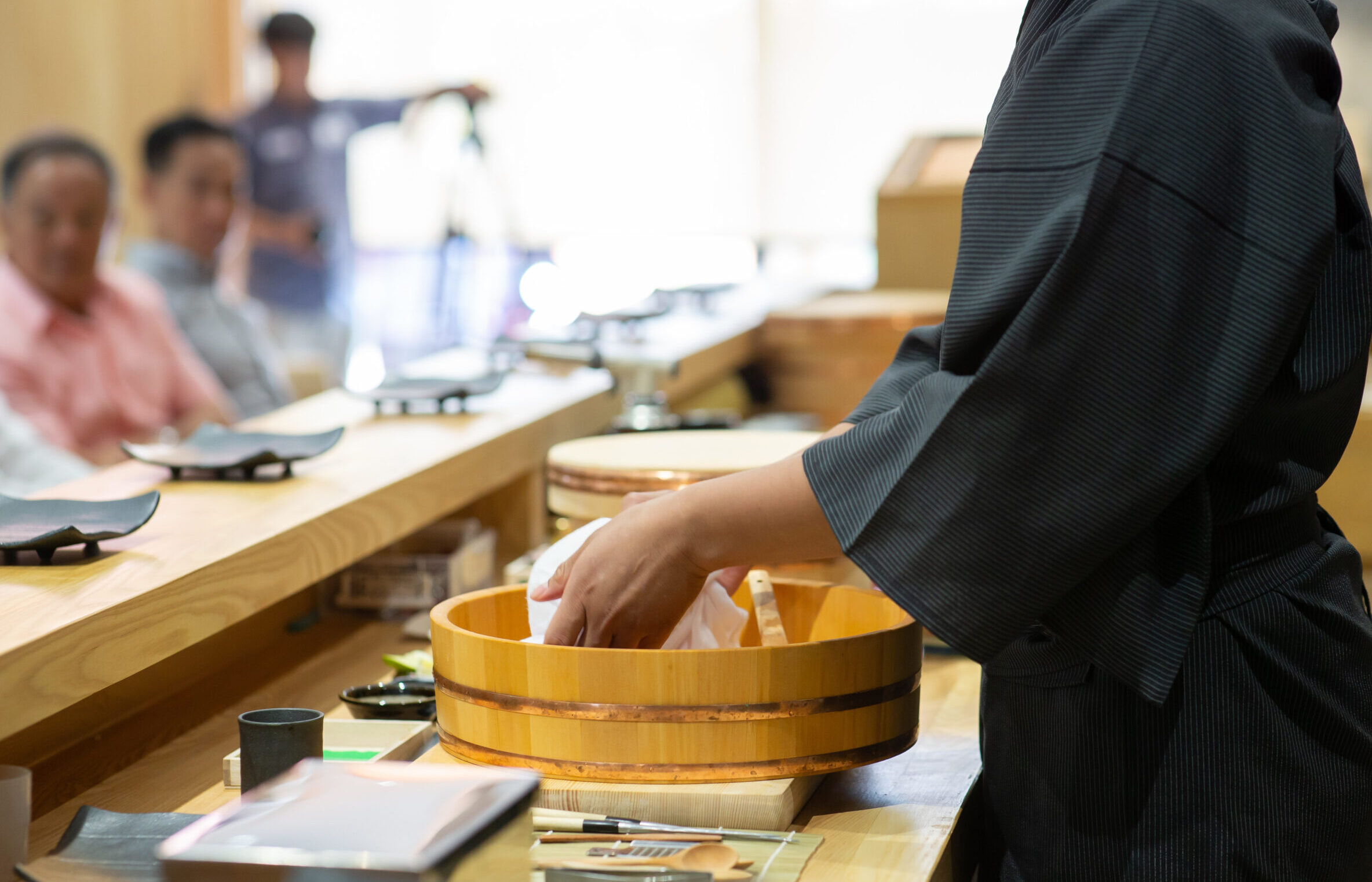
While affordable sushi chains are thriving in China's sushi boom, high-end "OMAKASE"-style sushi, where everything is left to the chef, has become a huge trend.
OMAKASE has no menu; it is a style in which the sushi chef decides the day's dishes based on the seasonal ingredients.
Prices vary by city and restaurant. In regional cities they may start at around 500 yuan per person, but generally, at sushi restaurants in major cities, prices are high, reaching as much as 2,000 yuan per person (about 40,000 yen as of June 8, 2023).
Despite such expensive dishes, the popularity of OMAKASE has soared along with China's rising incomes.
Also, although costs are high because many ingredients are air-shipped from Japan, OMAKASE allows the restaurant to decide the menu, reducing leftover ingredients. This minimal waste is said to be one of the advantages for the restaurant.
The Sushi Boom and Business Opportunities in the Chinese Market
About 40% of China's sushi restaurants and Japanese restaurants are concentrated in eastern regions such as Shanghai and its surroundings, and southern regions such as Guangdong Province.
The market is also expanding in regions where the Chinese government is focusing on economic growth, such as Sichuan Province and Chongqing, and Japanese companies are paying close attention to this sushi boom.
China's food and beverage market is changing rapidly, and sushi has emerged as a trend in recent years.
From the spread of conveyor-belt sushi to the boom in high-end "OMAKASE" sushi, these movements symbolize the growth of China's middle class and its heightened awareness of food.
They also point to new business opportunities in the Chinese market.
China's sushi boom is expected to grow even further as the incomes of Chinese people increase, and through the development of China's sushi industry, many companies—including those in Japan's food and beverage sector—are likely to discover new business opportunities.