Seasonal Sushi Toppings You Should Know — Spring (March, April, May)
Katsuo (Bonito) (Spring: March–June, Autumn: September–October)
Bonito has two seasons during the year. There is the "hatsugatsuo" (first bonito), which migrates north from Kyushu to the central part of Honshu from spring into summer, and the "modorigatsuo" (returning bonito), which heads south in autumn. The first bonito is said to have been the most popular during the Edo period. In the Edo period, when there were no refrigerators, freshness was easily lost, so bonito was eaten as sashimi.
Bonito sushi only appeared in the Showa era. The first bonito has a large proportion of lean meat, with a light flavor and a refreshing acidity as its defining features. The returning bonito, on the other hand, has a rich flavor with plenty of fat. Even though it is the same bonito, the amount of fat changes, so it can be enjoyed in different ways in spring and autumn. The first bonito of spring not only has a light flavor but is also low in fat, so it can be called healthy.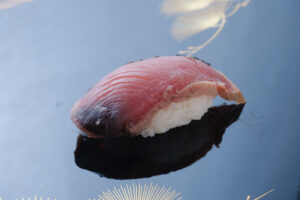
Kasugo (Young Sea Bream) (March–May)
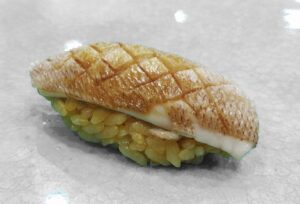
The young fry of sea bream are called kasugo. They are about 15 centimeters in length, and kasugo are in season from spring into summer. Because they are young fry, their flavor is too delicate for sashimi or salt-grilling, so they became popular as a sushi topping.
By applying the traditional Edo-style sushi technique of curing with salt and vinegar, a rich umami is drawn out. Cured kasugo develops even more umami when further cured with kelp, and its indescribable double umami has made it popular.
Sayori (Halfbeak) (March–May)
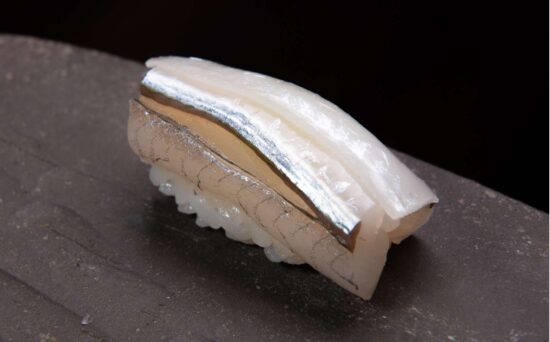
You cannot miss sayori in this season, when it is rich in fat. It is a fish often caught on the southern side of Honshu, and its name changes with the size of its body: small ones are called "enpitsu" (pencil), and larger, thicker ones about 40 centimeters long are called "kannuki" (bolt).
It is known for its refined aroma and crisp texture, and it is in season in the early part of spring.
Later in the season its flavor declines as it spawns. Even before spawning it is low in fat, light, and rich in protein, making it a sushi topping that can be enjoyed by everyone from children to the elderly, regardless of age.
Shirauo (Icefish) (January–March)
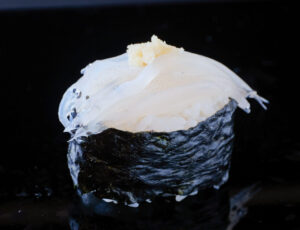
The shirauo, a small semi-transparent fish, has a popping texture because of its small size, letting you enjoy its sweetness and a faint bitterness. Because it swims up rivers to spawn, it is also caught near river mouths and in brackish lakes where seawater and fresh water mix, with fishing being especially active in Lake Shinji in Shimane and Lake Kasumigaura in Ibaraki.
In the Edo period it was presented to the shogunate and was a precious fish that rarely made it to market. Toward the end of its season, it carries plenty of eggs, allowing you to enjoy the umami of the roe as well.
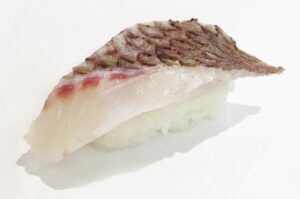
Madai (Red Sea Bream) (November–May)
Sea bream, which could be called the king of white-fleshed fish, was a high-grade fish indispensable at the shogunate's celebratory feasts during the Edo period. Research into farming began in the Meiji era, and farming spread in earnest in the 1980s. Today, 80 percent of sea bream are farmed, while wild ones, known for their firm, elastic flesh, have become an ultra-premium fish out of reach for the ordinary person.
It is in season from winter, when it approaches the coast ahead of spawning, until the end of April. Its appeal lies in the sweet richness of its fat and its lustrous, beautiful appearance. Since its flavor declines after spawning, it is best enjoyed before then.
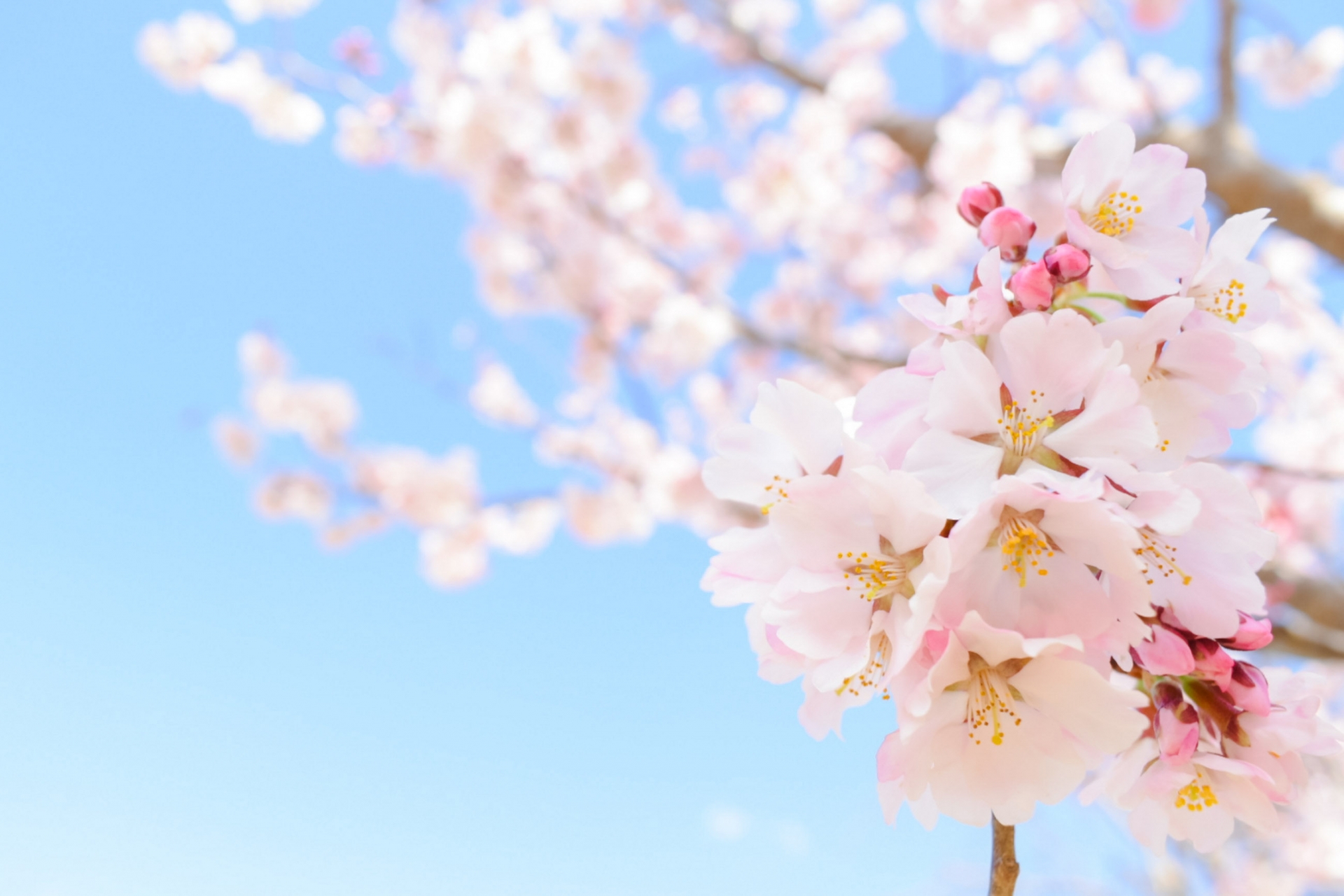
Because it is caught in time with the cherry blossom season, it is sometimes called "sakuradai" (cherry blossom sea bream). Sea bream flesh tinged a faint cherry-blossom pink is perfect for spring. It is low in fat and rich in protein, easy to digest and absorb, and is even used in baby food.
Shako (Mantis Shrimp) (April–June)
Shako (mantis shrimp) has two seasons. One is when it is full of roe, from April to June. Mantis shrimp carrying ovaries are called "katsubushi," and they offer the rich sweetness and texture characteristic of crustaceans along with the umami of roe that seems ready to burst.
In the Edo period, mantis shrimp were often caught in Tokyo Bay and were cheap to buy, so they were popular among common people. When boiled, they do not turn red like shrimp but turn purple, and they are eaten brushed with nitsume (a sweet glaze). The spring mantis shrimp, which lets you savor the umami of its roe, is wonderful, but the late-autumn mantis shrimp before molting is also full of meat and offers a rich sweetness and aroma.
It might be fun to compare the flavors of spring and autumn mantis shrimp.

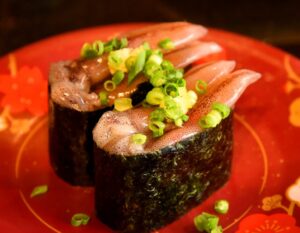
Hotaru-ika (Firefly Squid) (March–June)
In Toyama Bay, a major production area for firefly squid, huge schools of firefly squid appear ahead of spawning from March to June. On spring nights, the sight of the sea glowing a pale blue-white from the schools of firefly squid that come close to the shore is truly magical.
Firefly squid lose their freshness very quickly and are often served boiled, but in-season firefly squid can be enjoyed raw with their soft, rich umami and sweetness. Because they are eaten whole, you can enjoy the springy bite characteristic of squid together with the rich flavor of the innards.
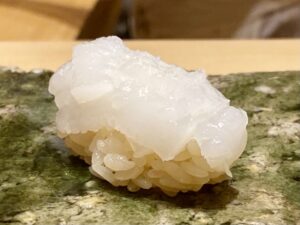
Aori-ika (Bigfin Reef Squid) (March–August)
Aori-ika is called the king of squid. "Aori" refers to the cloth mud flaps used on horse tack, and it got this name because its shape resembles those flaps.
It is the largest among squid, and because its swimming form is as clear as water, it is sometimes called "mizuika" (water squid). Its semi-transparent flesh is thick with a distinctive bite, and its melting sweetness is its defining feature.
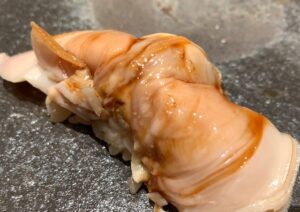
Hamaguri (Clam) (March–May)
Hamaguri clams are in season from early spring into summer. Thick, large ones are considered precious. In Japan there is no custom of eating clams raw; they are generally eaten after being simmered. Sushi made by simmering clams has been handed down as a technique unique to Edo-style sushi.
The shelled clam is opened by passing it through boiling water, then marinated in a broth made from the clam's own simmering liquid. Once the flavor has soaked in, it is shaped into sushi and most often finished by brushing on a sweet-savory nitsume glaze made from conger eel simmering liquid. Its indescribable springiness and sweetness are its charm.
Aoyagi (Round Clam) (January–May)
It is in season from winter into spring, and its formal name is "bakagai." Aoyagi is a common name, given because it was caught in the village of Aoyagi in Kazusa Province, located in what is now Ichihara City, Chiba Prefecture.
It is known for its soft, gentle bite, and its distinctive aroma and sweetness are its great appeal. The pair of large and small adductor muscles is called "kobashira" and is prized, also serving as a topping for gunkan-maki sushi.
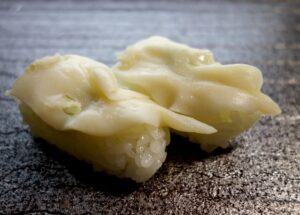
Savor spring with light, refreshing sushi toppings
Many of the sushi toppings that come into season in spring are white-fleshed fish, low-fat varieties, and shellfish. From those with a faint bitterness to those with a fragrant, aromatic sweetness, each has its own springlike flavor.
Even toppings that can be eaten year-round are enjoyed differently depending on the season. Please be sure to enjoy the flavors unique to spring.