Seasonal Sushi Toppings You Should Know — Autumn (September, October, November)
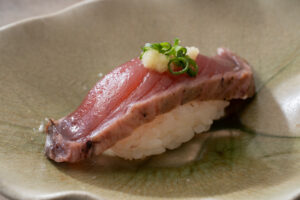
Katsuo / Bonito (Autumn: September to October, Spring: March to June)
Katsuo (bonito), a large migratory fish that can exceed 1 meter at its largest, varies in how much fat it carries depending on the time and place.
The katsuo heading north in spring has little fat and is light, while the autumn "modori-gatsuo" (returning bonito) is fatty, offering a flavor different from the spring "hatsu-gatsuo" (first bonito).
Eaten with ginger and green onion on top, you can enjoy the fine aroma combined with the fatty umami. The fresher it is, the firmer the flesh and the more satisfying the texture. Katsuo is caught in the largest quantities in Shizuoka Prefecture, and the "modori-gatsuo" from Kesennuma in Miyagi Prefecture is famous for its rich flavor.
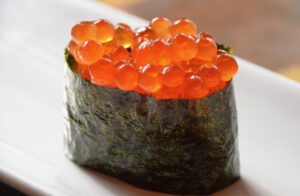
Ikura / Salmon Roe (September to November)
Ikura means "fish eggs" in Russian. It is said the way of eating it was introduced from Russian fishermen during the Meiji era.
Ikura starts appearing in the market in summer, with its short season running from mid-October to mid-November. The eggs still inside the salmon's ovary are called sujiko, and ikura is what you get when they are separated and cured in salt or soy sauce.
The season for ikura is around September to November, when autumn salmon are caught. The ikura caught especially from late September to mid-October is delicious and recommended.
Even frozen ikura caught during the peak season of September to mid-October will have a distinctly different flavor.
The fatty, vermilion-glistening grains of ikura offer a pleasant saltiness and a distinctive texture.
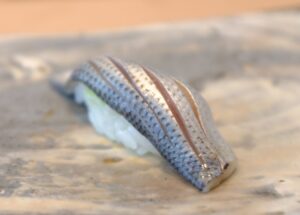
Kohada / Gizzard Shad (September to December)
Kohada is a shusse-uo ("career fish"); as a juvenile it is called "shinko," and at about 8 centimeters in length it is called "kohada." Because kohada is fattier than shinko, you can enjoy the fatty umami unique to silver-skinned fish.
Kohada, a representative of Edomae sushi, spoils easily, so it is sprinkled with salt during preparation and finished by curing in vinegar. It is a sushi where the craftsman's skill is tested in the balance of salt and vinegar. The tender flesh, cured in vinegar, spreads a refreshing taste throughout the mouth, letting you feel the chic of Edomae sushi.
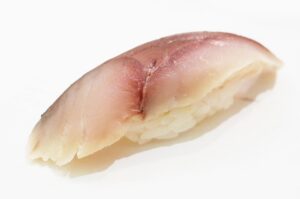
Masaba / Chub Mackerel (October to February)
Mackerel in season from October to January is called aki-saba (autumn mackerel), and mackerel at the peak of its deliciousness from December to February is called kan-saba (cold mackerel). The mackerel used as sushi toppings includes "masaba" (chub mackerel) and "gomasaba" (spotted mackerel), and the one that is fatty and delicious in autumn is the "masaba."
Mackerel is a representative of Edomae sushi. Because it spoils quickly, it is carefully prepared by curing with salt and vinegar. In-season mackerel stores up plenty of fat and is deeply flavorful, melting smoothly in the mouth and letting you savor a rich umami. Branded mackerel such as the "Seki saba" from Saganoseki in Oita Prefecture and the "Kinka saba" from Miyagi Prefecture have become popular.
Sanma / Pacific Saury (September to December)
Sanma (Pacific saury) can be called a representative ingredient that conveys the autumn season, not just in sushi. Because it is caught in large quantities it is inexpensive, and the richly fatty sanma has a deep flavor that is loved by many people.
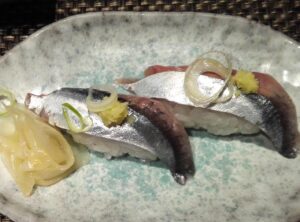
There are various ways to eat it, from serving it raw with ginger on top, to curing it in vinegar, to grilling it and topping it with onion. In particular, sanma finished in the Edomae vinegar-cure style has its abundant fat and vinegar intertwined, with the finest umami drawn out through the craftsman's skill.
Surumeika / Japanese Flying Squid (October to February)
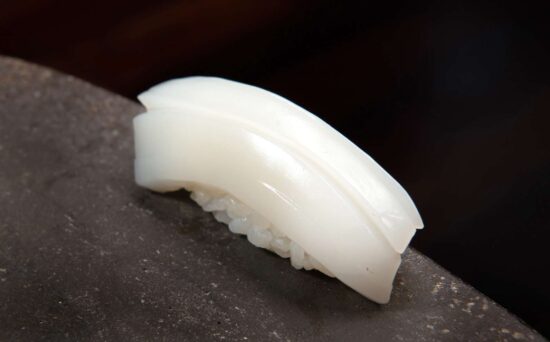
There are many kinds of squid, with over 80 species existing even in the seas near Japan. Among them, surumeika (Japanese flying squid) is caught at different times depending on the sea area of Japan, whether summer-born, autumn-born, or winter-born.
Because its catch is large even among squid, the price is also reasonable, making it a topping for the common people. The Hokkaido-grown surumeika, number one in catch volume, is in season in autumn. The surumeika at this time has firm flesh with a good chewiness, and the more you chew, the more sweetness you can feel.
Kawahagi / Filefish (September to December)
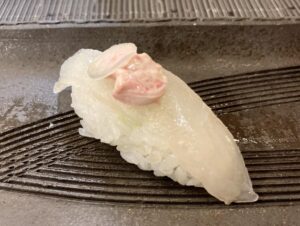
It is said to have gotten the name kawahagi ("skin-peeler") because it has a hard, thick skin that can be peeled off easily.
From autumn into winter its liver enlarges and its flesh thickens, reaching exactly the best time to eat, when it is served with sudachi citrus or salt, or made into nigiri combined with its liver. The springy white flesh has a profound sweetness, and the liver in particular captivates those who eat it with its melting sweetness.
These Are the Sushi to Savor in Autumn, the Season of Appetite!
Among the four seasons, autumn is a time with many delicious things, but the sushi toppings that come into season in autumn are often ones that can be enjoyed for only a short period. From vinegar-cured toppings that can be eaten refreshingly to richly flavored fish roe and fatty ones, autumn sushi is full of variety.
Don't miss the season, and please enjoy it to the fullest.