Various Types of Sushi Through History
The Origins of Sushi

The history of sushi in Japan spans more than a thousand years, but the birth of sushi in the world is even older, with its origins said to lie somewhere in Southeast Asia.
The prevailing theory is that peoples of mountainous regions created "narezushi (fermented sushi)"—a method of preserving fish for long periods by fermenting it using rice, salt, and so on—and that this was transmitted to Japan via China together with rice cultivation and other practices.
Incidentally, in China the Chinese character now read as "sushi" (gi) appears in writings from around the 3rd to 5th centuries BC, but this differed from "narezushi" and is thought to have referred to "gyosho (fish sauce)," a seasoning made from seafood.
The Beginning of Sushi in Japan
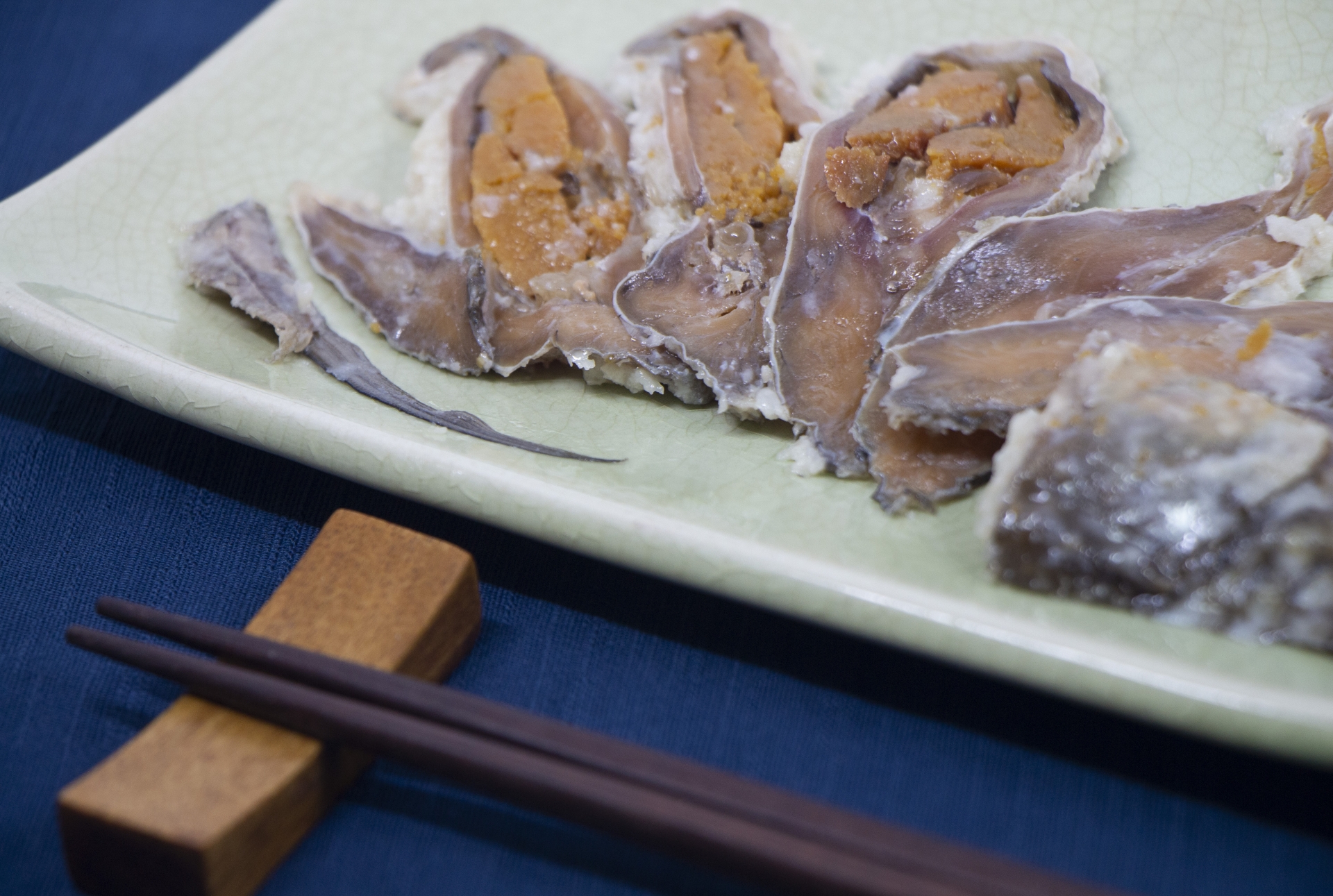
The "narezushi" born in Asia eventually made its way to Japan as well. It is not certain exactly when sushi began in Japan, but its existence is documented in records from the Nara period.
Sushi in the Nara period was "narezushi," the same as the sushi of Southeast Asia; the rice was used to ferment the fish and is thought not to have been eaten.
In the Muromachi period, a sushi called "nama-nare-zushi" (half-fermented sushi), with a shortened fermentation period, spread. Because "nama-nare" had a short fermentation period, the rice is thought to have been edible as well, and from around this time "sushi," once a preserved food, transformed into a "dish made using rice" that was eaten together with the rice.
In addition, production methods that would become the prototype of today's oshi-zushi (pressed sushi) emerged—such as layering fish and rice alternately in a sushi tub and placing a weight on top to let the flavors meld—and ingredients like wild mountain vegetables came to be used as well.
The Birth of Edomae-zushi
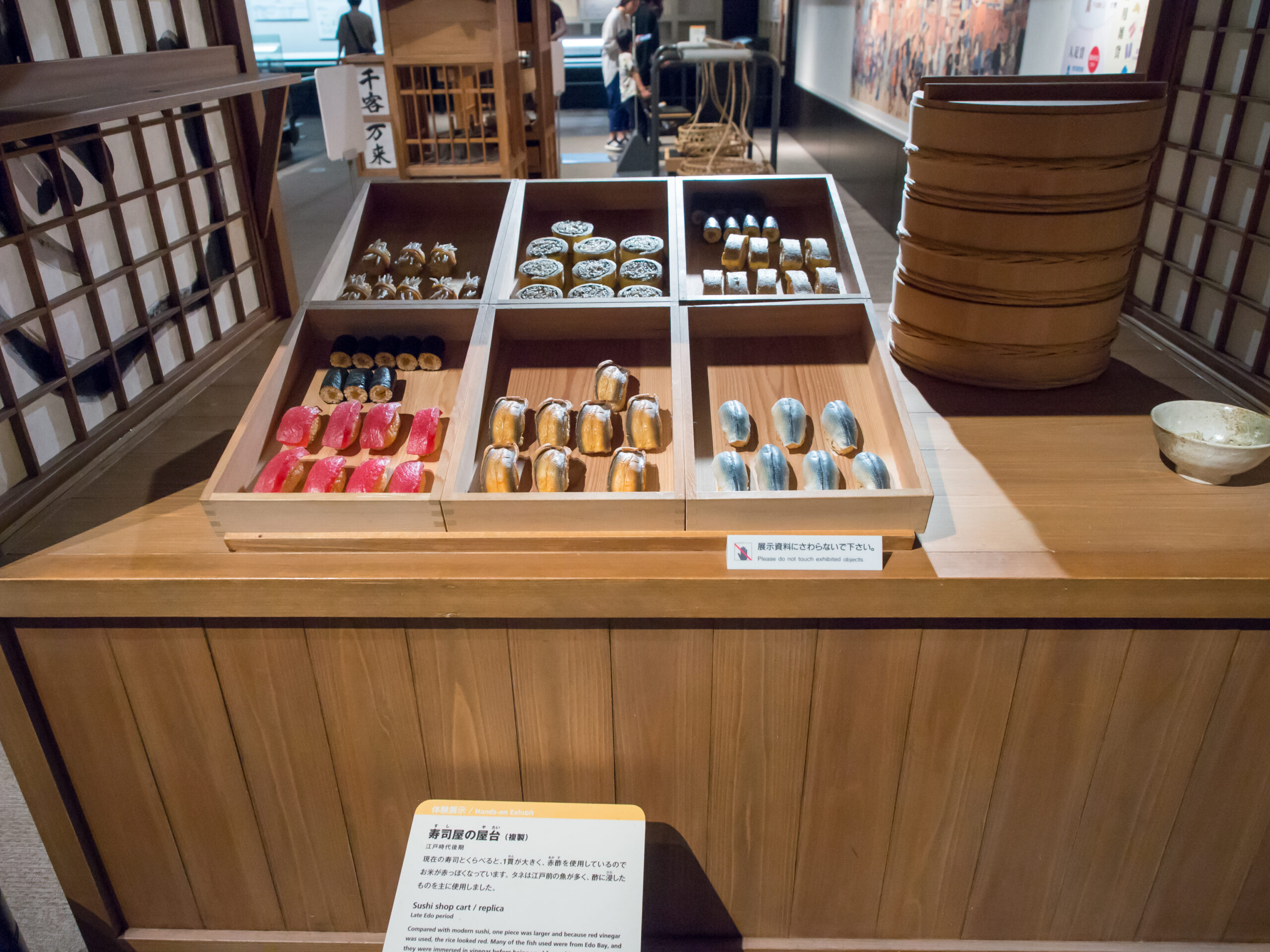
Eventually sake, sake lees (sakekasu), and koji (malted rice) also came to be used in fermentation, and in the Edo period, at last "haya-zushi" (quick sushi)—in which rice was seasoned with rice vinegar and eaten without fermentation—was born.
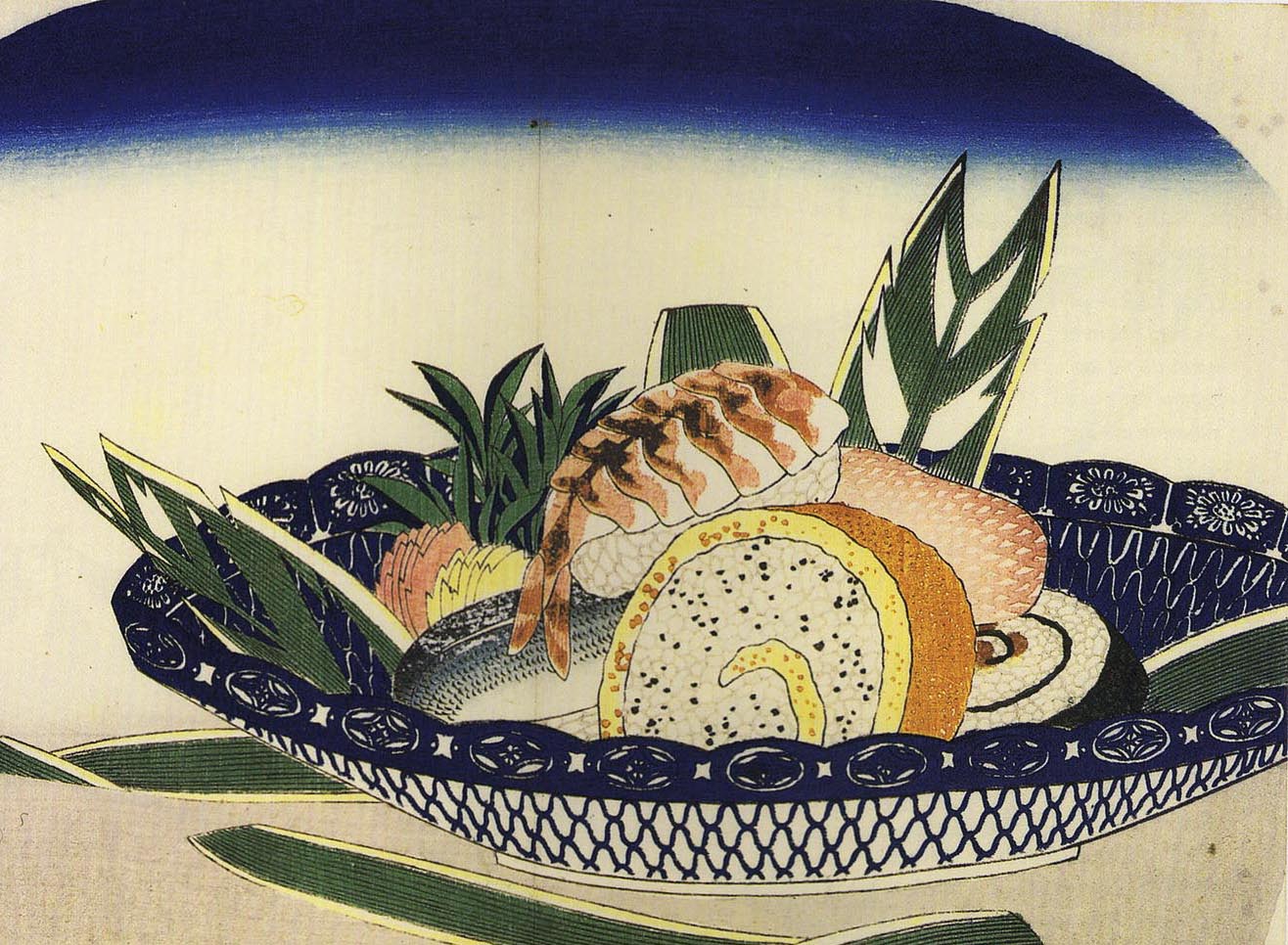
"Haya-zushi" eventually transformed into "nigiri-zushi (hand-pressed sushi)," and as rice vinegar was replaced by kasuzu (lees vinegar) made from sake lees, it spread throughout Edo in the first half of the 19th century. This was the birth of "Edomae-zushi," so familiar to us today.
The leading theory holds that the word "sushi" derives from "sushi," meaning sour, and while it was common to write it with the Chinese characters ("gi" or "sa") that came from China, from around this time the auspicious ateji (phonetic) spelling "sushi" came to be widely used.
The "Edomae-zushi" born in this way spread nationwide thanks to freezing technology, transport technology, and changes in the environment, going from a local dish of Edo to becoming practically synonymous with sushi itself, and further came to be known around the world as "SUSHI," a traditional Japanese food.
Types of Sushi
Up to this point we have introduced the history of sushi and traced how modern sushi came to be; now let us introduce, in addition to the "Edomae-zushi" mentioned earlier, various kinds of sushi from across the country.
Edomae-zushi (Edo-style Sushi)
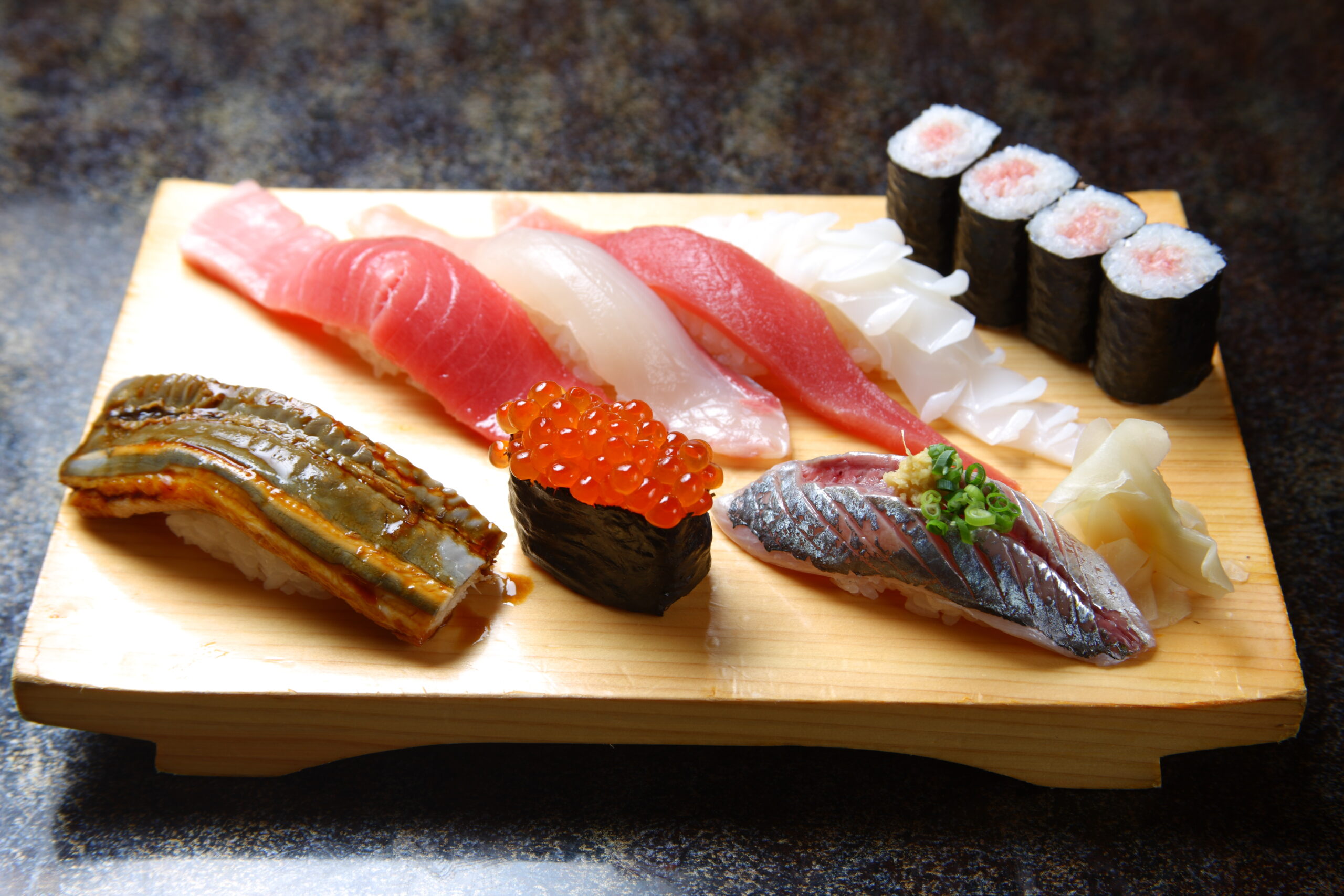
The "Edomae" in Edomae-zushi—which can be called the representative form of sushi—originates from the fact that it mainly used seafood caught in Tokyo Bay, which lies in front of Edo (Edo-mae meaning "in front of Edo").
When "Edomae-zushi" was first born, serving it from food stalls was the norm, and the size was two to three times larger than today; it was a kind of fast food that one would quickly eat one or two of at a stall. Eventually it changed to a bite-sized portion, and the styles of taking it out or eating it in the shop became widespread.
Also, while it is now taken for granted that sashimi is used as sushi toppings, freezing and refrigeration technology had not developed in the Edo period, so most sushi toppings were vinegar-cured, marinated in soy sauce, or cooked. This is the origin of the tradition that Edomae-zushi basically applies preparation work to its toppings.
"Edomae-zushi" thereafter developed greatly, evolving into its modern form while giving rise to various styles, such as "gunkan-maki" (battleship roll), in which topping-laden rice is wrapped with nori like a battleship.
Maki-zushi (Rolled Sushi)
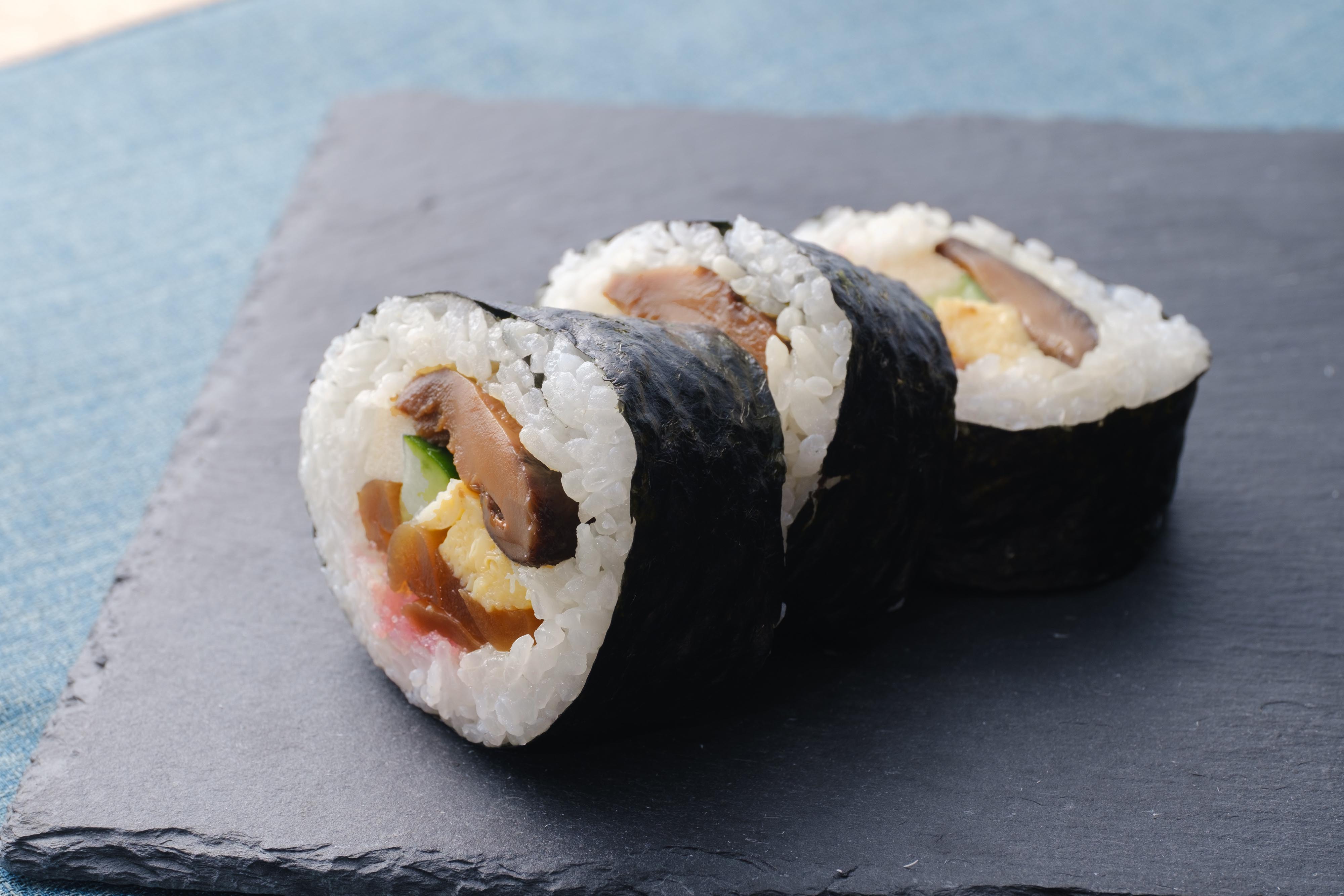
Maki-zushi is introduced as "maki-zushi" (rolled sushi) in "Ryori Sankaikyo," a collection of delicacies and rare foods published in 1750, and it is known to have become popular among the general public in the late 18th century.
There is also maki-zushi within Edomae-zushi; in particular, "makimono" (a roll) refers to "kanpyo-maki" (dried gourd roll), but since the documentary records of Edomae-zushi date from around 1827, it seems maki-zushi has a slightly older history than Edomae-zushi.
Though we say maki-zushi as one thing, there are futomaki (thick rolls), in which many ingredients are wrapped using nori; hosomaki (thin rolls), in which mainly a single ingredient is wrapped to a thickness of about 3 centimeters; and chumaki (medium rolls) in between. Hosomaki is mainstream in the Kanto region, and futomaki in the Kansai region.
The basic method of maki-zushi is to spread rice over nori, place toppings on top, and roll it using a sushi-rolling mat (makisu), but in the past there were also many maki-zushi rolled with things other than nori, such as egg, wakame seaweed, or bamboo sheaths.
Today there are not many maki-zushi using anything other than nori, but overseas, a type of maki-zushi called the uramaki (inside-out roll, or "sushi roll")—with the nori on the inside—has appeared, aimed at foreigners who dislike nori.
Oshi-zushi (Pressed Sushi)
Oshi-zushi is sushi in which vinegared rice and ingredients are layered and pressed down from above. "Haya-zushi," which evolved from "narezushi," split into two directions: it developed as "nigiri-zushi" in Edo and as "oshi-zushi" nationwide.
Oshi-zushi can be broadly divided into two types. One is oshi-zushi that mainly uses fish such as saba (mackerel) and aji (horse mackerel); examples include Kyoto's "saba no bo-zushi" (mackerel stick sushi), Osaka's "battera," and Toyama Prefecture's "masu-zushi" (trout sushi).
The other is a type of oshi-zushi called "hako-zushi" (box sushi), packed into a large box and cut into pieces. Hiroshima Prefecture's "kaku-zushi," Yamaguchi Prefecture's "Iwakuni-zushi," and Osaka's "hako-zushi (Osaka-zushi)" are famous, known as local sushi indispensable for celebrations and entertaining guests.
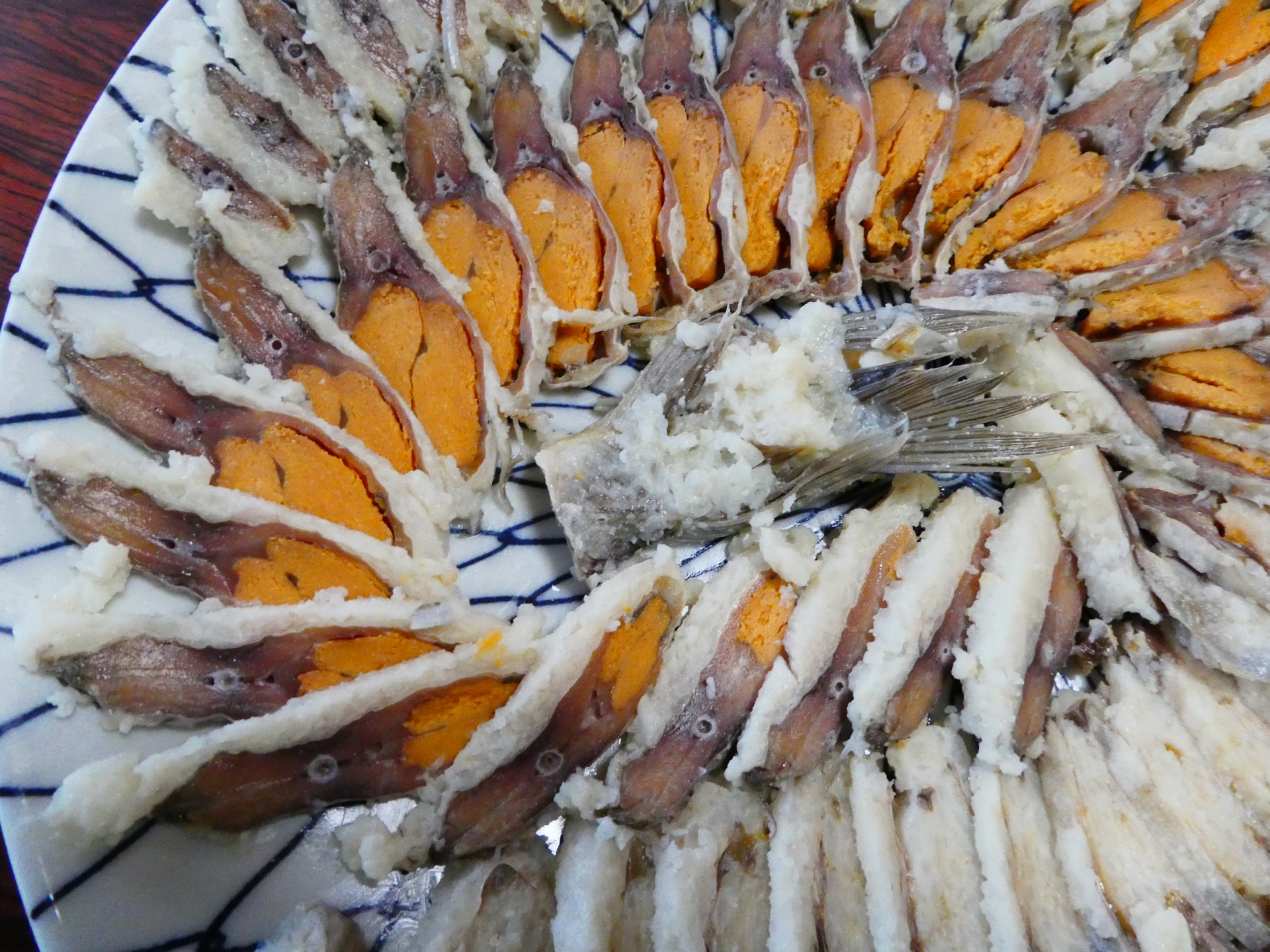
Nare-zushi (Fermented Sushi)
Narezushi is written with characters meaning "matured/aged fish" (jukushi) or "familiar/accustomed fish" (narezushi).
As introduced earlier, it is a food that can be called the origin of sushi—a preserved food in which fish and the like are pickled in rice, salt, and so on, weighted down, and left to undergo lactic acid fermentation for anywhere from several days to several years. By modern sensibilities, it may be closer to nukazuke (rice-bran pickles) than to sushi.
It was born as a preserved dish in an age without refrigerators, and there are also "narezushi" made using not only fish such as ayu (sweetfish) and funa (crucian carp), but also the meat of game such as wild boar and deer, and vegetables such as eggplant.
"Narezushi" can also be broadly divided into two categories. The first is the "narezushi type," fermented with only rice and salt. Shiga Prefecture's funa-zushi (crucian carp sushi), and the saba (mackerel) narezushi of Toyama and Wakayama Prefectures, are famous.
The other type is the "izushi type," which uses not only rice and salt but also koji to add sweetness; Akita Prefecture's hatahata-zushi (sandfish sushi) and Ishikawa Prefecture's kabura-zushi (turnip sushi) are well known.
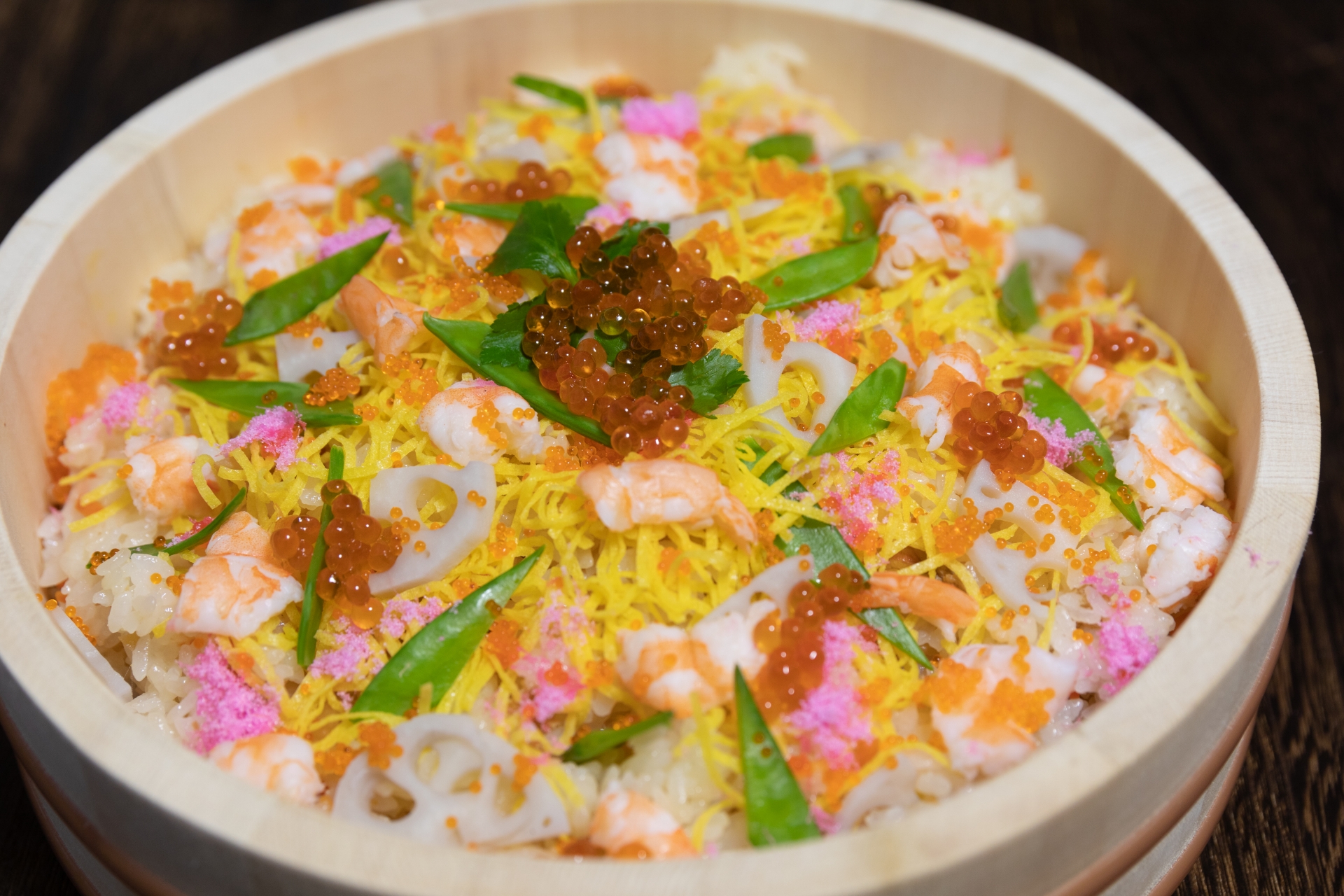
Chirashi-zushi (Scattered Sushi)
"Chirashi-zushi" is so called because numerous ingredients are scattered on top of or within the vinegared rice. There is "Edomae chirashi-zushi," derived from Edomae-zushi, and "chirashi-zushi" of other regions.
"Edomae chirashi-zushi" originated after the Edo period, but the "chirashi-zushi" outside of Edomae includes types whose origins date back to the Kamakura period; many are local dishes long rooted in their regions, and they are sometimes called "gomoku-zushi" or "bara-zushi."
"Edomae chirashi-zushi" began as a staff meal for the chefs; typically seafood, rolled omelet, dried gourd, and the like are placed on top of white vinegared rice, and because it uses prepared sushi toppings, soy sauce is basically not poured over the whole thing. As a derivative form, there is also "bara-chirashi," in which finely chopped sushi toppings are scattered.
On the other hand, "chirashi-zushi" outside of Edomae is often made at home or served on celebratory occasions; many feature seasoned ingredients such as dried shiitake, dried gourd, carrot, and bamboo shoots mixed into vinegared rice, with shrimp, grilled conger eel, and the like placed on top, and gorgeously decorated with shredded egg crepe, shredded nori, and so on.
Such "chirashi-zushi" is found widely across the country—Okayama's "bara-zushi" and Ehime Prefecture's "Matsuyama-zushi" are well known—and there is a rich variety, including "chirashi-zushi" that fuses "chirashi-zushi" and "oshi-zushi," such as Nagasaki Prefecture's "Omura-zushi" and Saga Prefecture's "Suko-zushi."
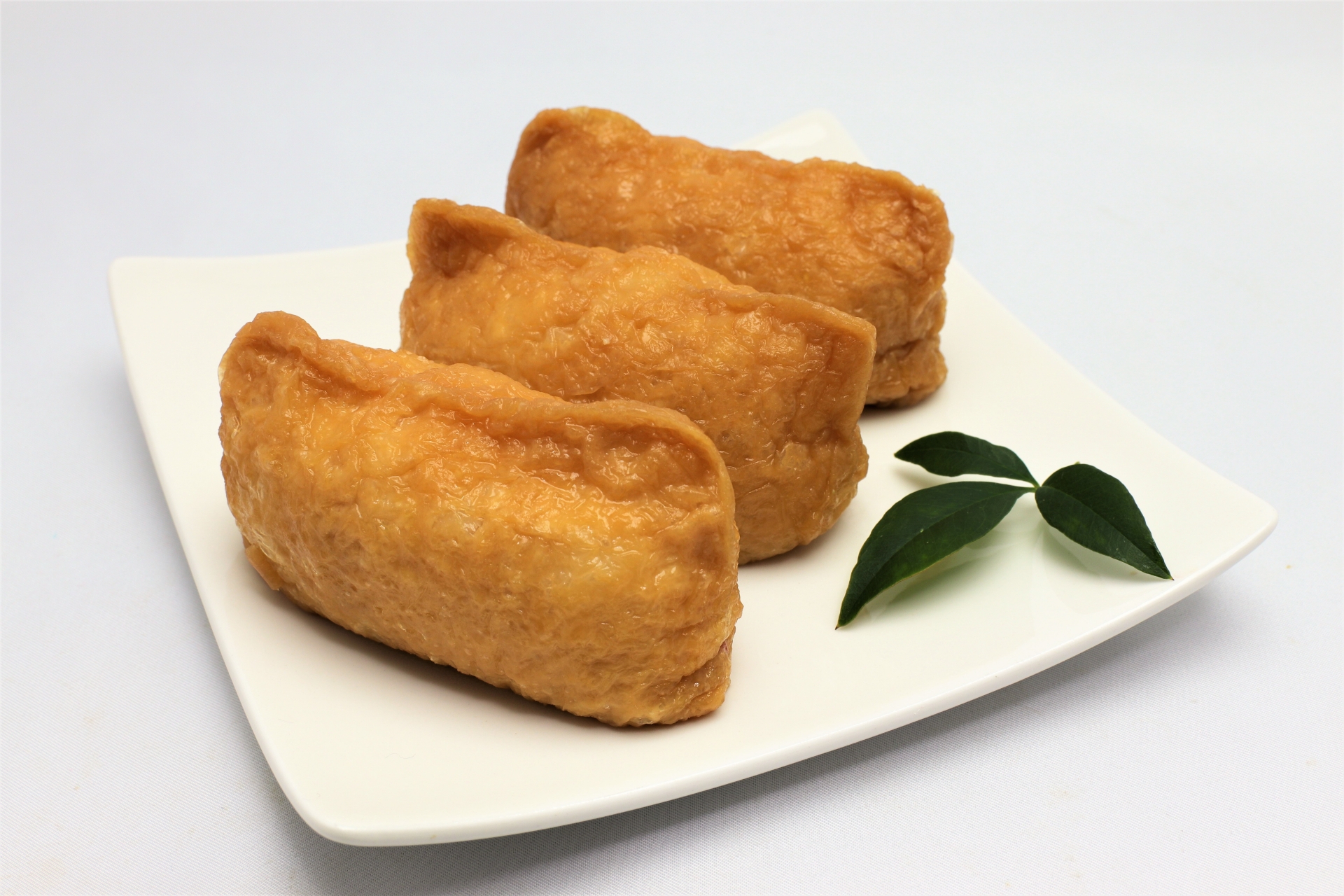
Inari-zushi
"Inari-zushi" is vinegared rice stuffed inside aburaage (deep-fried tofu) that has been simmered until sweet or sweet-and-salty. It is confirmed to have already been sold in Edo in the late Edo period, but its specific origin lacks corroboration and is uncertain.
There are also various theories about the origin of the name, but the leading one is that, since aburaage is said to be the favorite food of the fox, the messenger of the deity Inari, and aburaage was offered at Inari shrines, sushi made with aburaage came to be called "Inari-zushi."
"Inari-zushi" was at first sold cut from a stick-shaped form, and is thought to have been quite an inexpensive food bought and eaten not at restaurants but from stalls and itinerant peddlers.
The characteristics of "Inari-zushi" differ between eastern and western Japan: in the east it is bale-shaped (tawara), with the filling being only vinegared rice or at most mixed with sesame, and because it is seasoned with dark soy sauce the rice is dark in color; in the west it is triangular, and because light soy sauce is used the color is pale, with the filling often packed with ingredients such as carrot and shiitake.
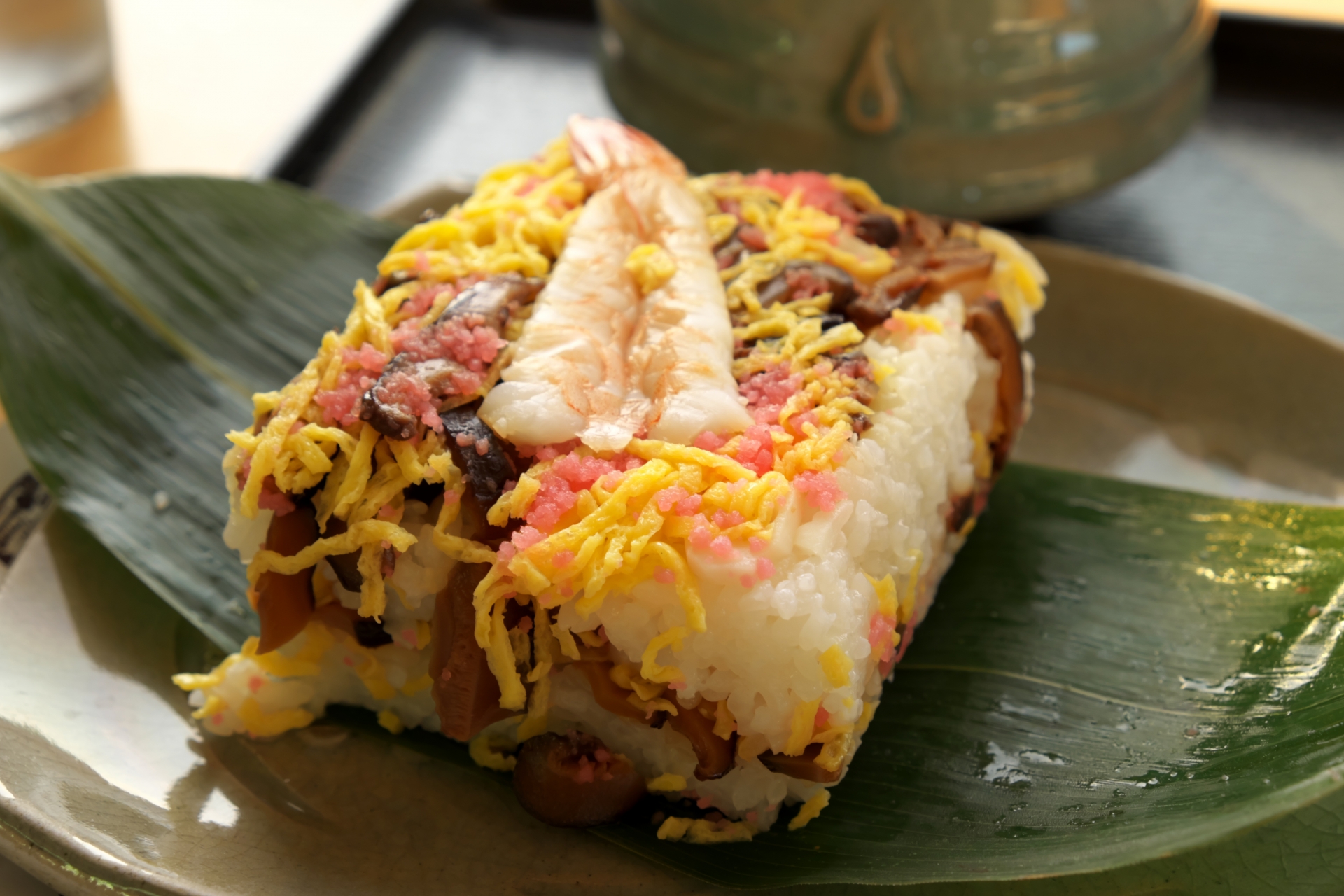
Mehari-zushi
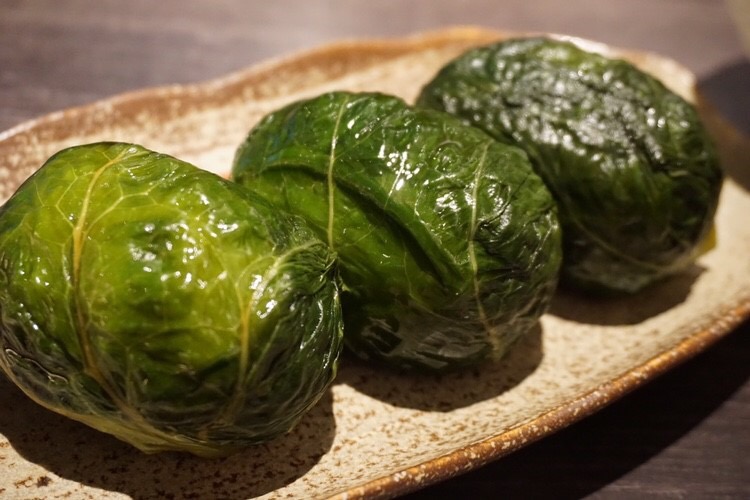
"Mehari-zushi," handed down in the Kumano region that straddles Wakayama and Mie Prefectures, is a local dish that began when rice balls were wrapped in pickled takana (mustard greens) to be eaten as a boxed lunch during breaks from field work, mountain work, and the like.
In the old days it was about the size of a softball, and because it used long-pickled greens rather than lightly pickled ones, the sourness transferred to the rice, giving it a flavor like vinegared rice—which is said to be why it came to be called sushi.
The ingredients put inside the rice include chopped pickled takana, jako (small dried fish), katsuobushi (dried bonito flakes), sesame, and the like, but since it was originally a rice-ball lunch, it is sometimes just rice. The rice wrapped inside was also mainly barley rice in the past, but today white rice and vinegared rice are used.
The specific time of origin of "mehari-zushi" is unknown, but it has a unique array of theories for the origin of its name—such as that one opens one's eyes wide (me o miharu) in amazement at how big it is, or that one opens one's mouth so wide to eat it, or that the rice is completely wrapped as if sealing it shut (mehari).
Sugata-zushi (Whole-fish Sushi)
"Sugata-zushi" is, as the name suggests, sushi made from a whole fish, prepared so as not to spoil its original form.
Generally, the fish is butterflied with the head still attached, the bones and innards are removed, and then rice is stuffed in to return it to its original shape; but as with Kyoto's "saba no sugata-zushi" (whole mackerel sushi), it is sometimes called sugata-zushi even without the head attached.
Besides Kyoto, various sugata-zushi exist all over the country. Famous examples include Tokushima Prefecture's "bouze (ibodai / butterfish) no sugata-zushi" and Oita Prefecture's "aji no maru-zushi" (whole horse mackerel sushi), in which a whole fish is cured with vinegar or salt.
In addition, Hyogo Prefecture's "ayu no narezushi" (sweetfish narezushi) is also a kind of "sugata-zushi" using a whole fish, but this is a "narezushi" in which the ayu is fermented whole.
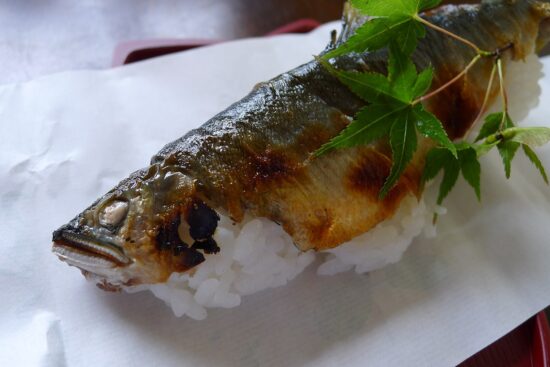
Whole grilled sweetfish sushi (yaki-ayu no sugata-zushi) Photo by Indiana jo
Conclusion
This time, we have introduced various kinds of sushi while touching on the origins of sushi. Though we speak of sushi as one thing, it is moving to think that, over its long history, with "narezushi" as the starting point, many kinds of sushi—not only "Edomae-zushi" but also "hako-zushi" and "oshi-zushi"—were born and spread.
We have seen that even the sushi we regularly eat, such as "chirashi-zushi" and "inari-zushi," each have their own historical background; and on the other hand, local sushi such as "mehari-zushi" and "sugata-zushi" each have their own history as well.