Why Is Sushi Served in Pairs? The Surprising Reason
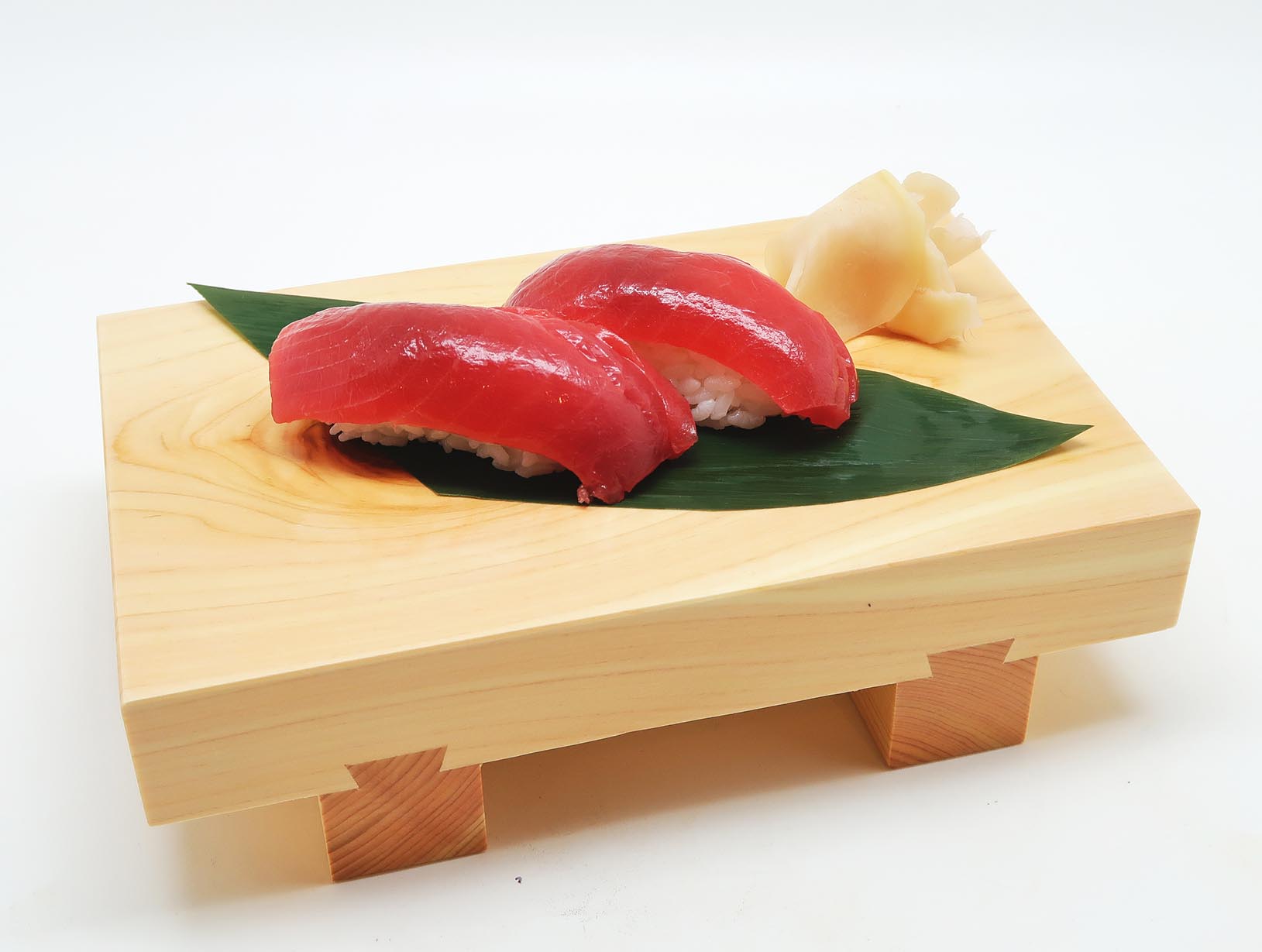
When you order sushi at a conveyor-belt sushi restaurant, it is served as a set of two pieces in most cases.
At counter-style sushi restaurants other than conveyor-belt sushi, when eating a course or omakase, sushi is placed one piece at a time on the counter ledge, but there are also some shops that serve it as a set of two.
So, have you ever wondered why sushi is served two pieces at a time in the first place?
This time, we would like to explore the reason why sushi is served as two pieces, while touching on the history of how nigiri sushi was born.
It Has Been Served Two Pieces at a Time Since the Edo Period
When we think of sushi, what we modern people imagine is "nigiri sushi."Nigiri sushi is a local sushi born in Edo during the Edo period, around the early 1800s.Until then, "sushi" meant a dish that took labor and time to make through fermentation, like Osaka's box sushi or Hokuriku's kabura-zushi.
That is when Hanaya Yohei appeared. Yohei was a sushi chef in Edo, and what he devised so it could be made more quickly than box sushi was nigiri sushi. Rather than being made by fermentation, nigiri sushi is made by placing seafood on vinegared rice and shaping it by hand, so it can be made quickly, and it also had the effect of preventing the fish's fat from dripping out as happens when pressing box sushi.
The nigiri sushi Yohei devised—fresh seafood placed on vinegar-seasoned rice—was a food like modern fast food that was "quick to make and easy to eat casually," and it instantly became a hit among the common people of Edo, becoming a huge boom.
However, although nigiri sushi could be made quickly and eaten easily on the spot, when it was first released, nigiri sushi was about the size of today's rice balls and hard to eat. This is said to be because the customers who ate nigiri sushi at the time were manual laborers such as scaffolders, carpenters, plasterers, and palanquin bearers, so each piece of sushi was naturally made large.
Nigiri sushi became popular, but its drawback was that it was large and hard to eat. So Hanaya Yohei began cutting the large sushi in half to make it easier to eat. Furthermore, rather than simply cutting it, he improved it into a style of placing bite-sized seafood on bite-sized hand-shaped vinegared rice.
In "Morisada Manko," which chronicles life in Edo, there remains a record that Hanaya Yohei gained popularity by dividing sushi into two pieces to make it easier to eat. It seems that the practice of serving sushi as two pieces originated from Hanaya Yohei dividing the large sushi into two.
Why Did It Become Two Pieces at a Time?
We understand up to the point that the originally large sushi was cut up to make it easier to eat, but why did it become two pieces at a time? If it was large and hard to eat, one might wonder why they didn't just make the size smaller. There seem to be several reasons why sushi came to be served as two pieces as it is today.
1. Because Merely Cutting a Large Sushi Looks Unappealing
When cutting sushi in half, it is fine if you can cut it cleanly, but depending on the type of topping, simply cutting it does not turn out well. Since it is a meal, it is best for it to look good. So, rather than just cutting it, they came to shape it into an easy-to-eat size, and following the flow of cutting the rice-ball-sized sushi in half at first, they came to serve "two pieces as one set."
2. Because a Pair Was Considered Good
On the other hand, as a value that has long taken root in Japan, there is the idea of regarding a "pair"—two as one set—as good. The New Year's kagami-mochi has two tiers, celebrations come in red-and-white pairs, and the Japanese seem to feel that, rather than having just one vessel, having two in good balance is prettier and more desirable. The Japanese also seem to have a temperament that favors left-right symmetry; for example, the guardian dogs (komainu) at shrines, and in the ancient imperial court, the Minister of the Right and the Minister of the Left lined up to the left and right as if flanking the Emperor. Due to such uniquely Japanese sensibilities, the people of Edo seem to have thought that having two bite-sized pieces as a pair, rather than simply cutting a large sushi in half, looked more beautiful and was more auspicious.
3. Because One Piece Is Not Enough
Apart from the theory born in the Edo period that "the large nigiri sushi was divided into two," there is a theory that, relatively more recently, it became two pieces because one was not enough.
In his own book "Edomae no Sushi," Eiichi Uchida, the fourth-generation owner of the long-established Asakusa shop "Bentenyama Miyakozushi," wrote: "In the old days, sushi was not served two pieces at a time, but one at a time. Old sushi had a topping on rice about the width of four fingers, so it was two to three times the size of today's sushi. (omission) However, after the war, sushi gradually became smaller, and because one was not enough, at the customers' request, before we knew it, the custom of serving sushi two at a time came about."
Also, Yukio Morooka, the first-generation owner of the Kanda sushi shop "Tsuruhachi," wrote in "Kanda Tsuruhachi Sushi Banashi": "In terms of the sense of satisfaction from eating tuna sushi, one piece is a bit unsatisfying; when you have a second piece, you feel, ah, I've eaten tuna sushi, and you're satisfied. But three is a bit too much. So I think two is just right." Along with Eiichi Uchida above, he states from the standpoint of "satisfaction" that the now-smaller sushi may have come to be served two pieces at a time.
4. Because You Cannot Fully Savor the Flavor With One Piece
Likewise, Hisataka Ishimaru, the third-generation owner of Kanda "Tsuruhachi," wrote in "Sushi 12 Months": "With bonito, I want you to taste the deliciousness of bonito from both the back side and the belly side. With conger eel too, the head side and the tail side differ in flavor. With horse mackerel, the upper fillet and the lower fillet make up the flavor of one fish. So if possible, I'd like you to eat two pieces." He explains the reason why shops serve sushi as a set of two pieces when you order omakase at the counter—because with just one piece you can taste only part of the topping's true flavor.
Summary
How was it? This time we explored the reason why sushi is served two pieces at a time. Behind the well-balanced two pieces of sushi were the trial and error of dividing the large sushi to make it easier to eat when nigiri sushi was born in the Edo period, and the uniquely Japanese sensibility of regarding a pair as good.
Also, in other theories, there was the idea that one piece was not enough, so they made it two, and further, the view that one piece could not fully convey the flavor, so they made it two.
Each theory offers a fairly convincing explanation, and it is impossible to narrow the conclusion down to just one, but since "Morisada Manko" records that Hanaya Yohei served sushi divided into two, it appears that sushi has been served as a set of two since the Edo period in the first place.
After that, as the modern era approached, the idea of serving two pieces to fulfill satisfaction may have been added. Even with the sushi we casually eat at conveyor-belt sushi and the like, thinking about why it came to be served two pieces at a time, and savoring it while reflecting on the history of sushi, may bring a different kind of enjoyment than usual and be quite interesting.