A Clean Sushi Shop Is a Great Sushi Shop! Hygiene Management at Beloved Restaurants
What is the hygiene management that sushi restaurants thoroughly practice?
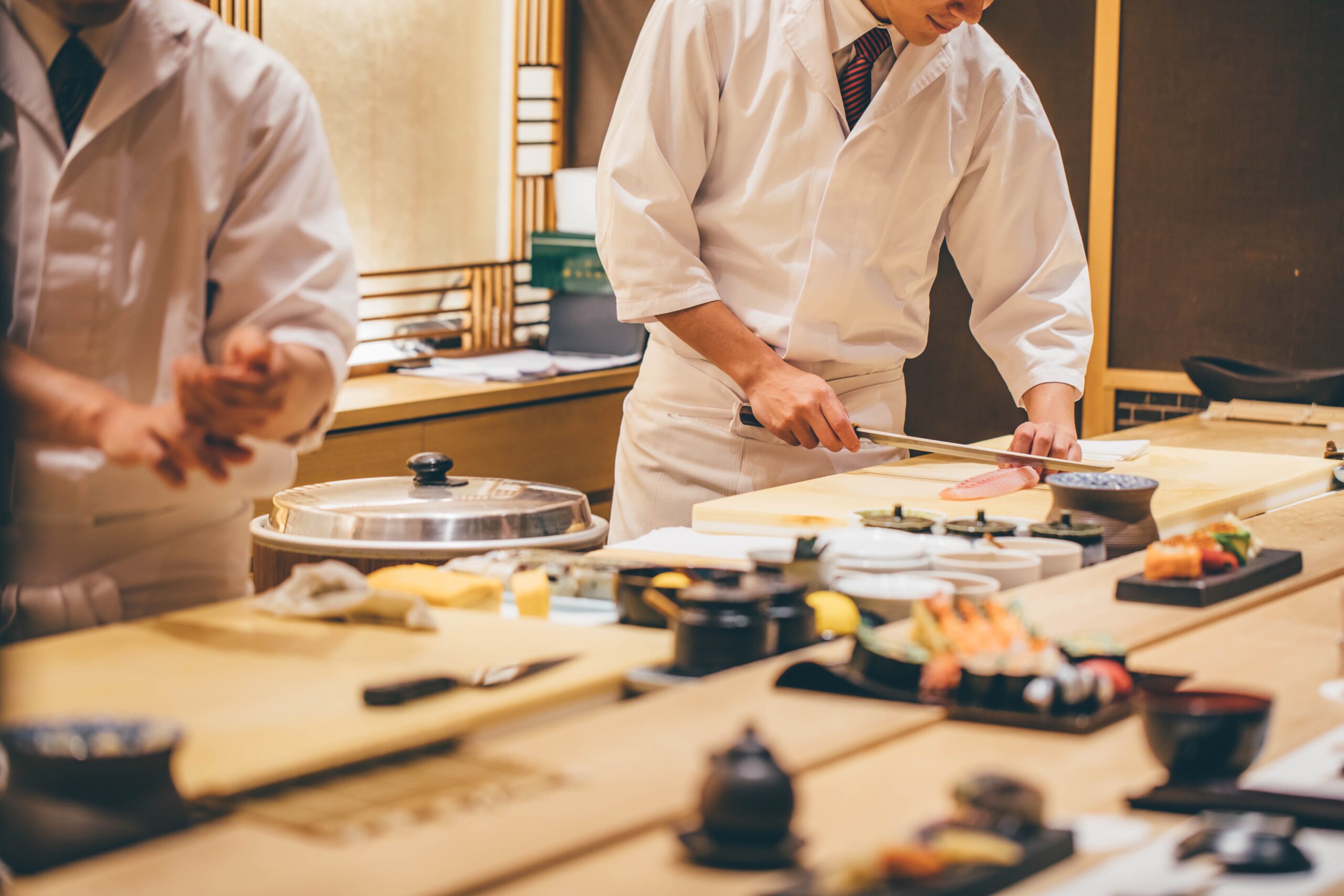
First, let us look at the clothing of sushi chefs.
When sushi chefs prepare food at the itaba (the workspace at the counter), it is common for them to wear a pure white chef's coat and a white apron.
The reason the chef's coat is white is so that any splattered or attached dirt can be noticed immediately.
By wearing white, chefs become sensitive to dirt and can always maintain a sense of cleanliness.
Recently, some restaurants outfit their staff in black or dark navy chef's wear, and this too is an effort to maintain a sense of cleanliness. Unlike white, black and dark navy do not show dirt easily, which has the effect of creating a clean atmosphere, but they require careful management.
The chef's lifeline! Keeping hands clean
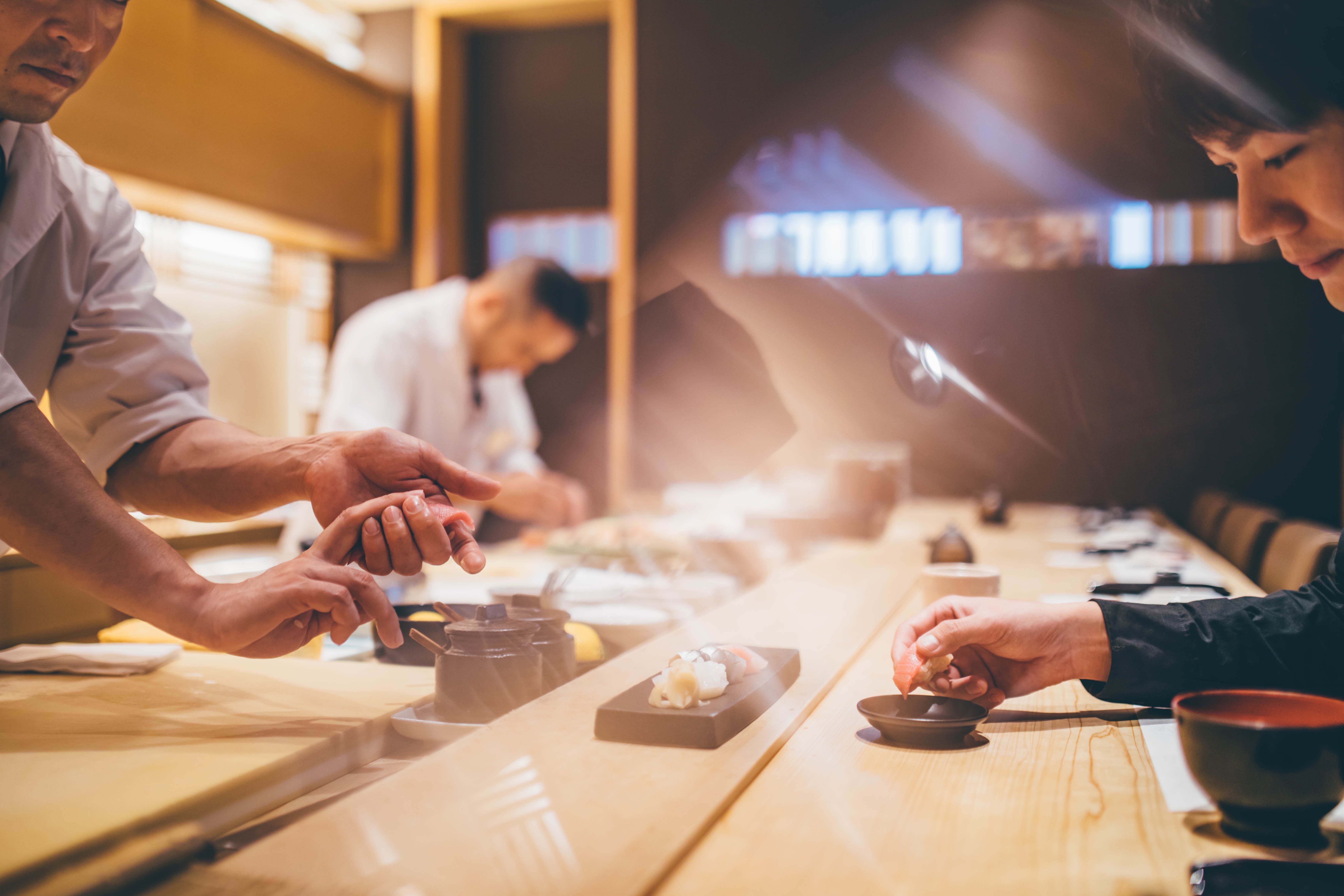
Sushi chefs who form sushi basically pay constant attention to keeping their hands clean when they stand at the itaba.
However, they do not wash or disinfect their hands every time they form sushi or pick up a knife.
When forming sushi, sushi chefs use something called \"tezu\" (hand vinegar).
As the word implies, \"tezu\" is vinegar applied to the hands. For sterilization and disinfection, sushi chefs moisten their hands with vinegar during preparation.
In addition to its sterilizing and disinfecting effect, vinegar also has the effect of cooling the palms.
The temperature of the palm of an ordinary person is 33C to 34C, slightly lower than normal body temperature.
However, a sushi chef's hand temperature is kept even lower, around 30C.
By keeping the heat of the hands down, they avoid raising the temperature of the rice and toppings, taking care not to spoil the raw ingredients.
A first-rate sushi restaurant is also a cleaning professional
It is said that sushi training begins with cleaning.
From their apprenticeship, chefs are thoroughly taught to clean every corner of the restaurant beautifully, including the itaba, counter, tables, and washing area.
After firmly understanding the restaurant's hygiene management, sushi chefs go on to learn how to fillet fish and how to form sushi.
Hygiene management at sushi restaurants in the Edo period
The Edo period, when the culture of nigiri sushi was born, was an era without refrigerators.
Unlike today, there was no sushi made by forming raw fish; the sushi handled was all vinegar-cured, marinated in soy sauce (zuke), or made with simmered seafood.
In the Edo period, not only were there no refrigerators, but there was also no soap for washing hands. Instead, people seem to have washed their hands with the fruit of a plant called mukuroji, which has a sterilizing and disinfecting effect.
How to eat seafood deliciously without letting it spoil, and taking care to sterilize and disinfect the hands for that purpose, was the same even in the Edo period.
Overseas, debates have arisen over sushi restaurant hygiene management
The food culture of sushi has now come to be enjoyed not only in Japan but also overseas.
With its rising popularity, sushi restaurants have opened in many countries, but there have also been cases where debates arose due to differences in hygiene concepts.
For example, the health departments of New York and California in the United States have introduced hygiene standards for dining establishments such as \"when preparing food that is not heated, it must not be touched with bare hands.\"
Due to these hygiene standards, sushi restaurants located in New York and California became obligated to wear disposable gloves.
And this sparked a debate over \"which is more hygienic, bare hands or gloves?\"
However, even if gloves are used out of consideration for hygiene, it does not necessarily become safer than touching with bare hands.
If you touch the kitchen with dirty gloves, it can ultimately lead to more dangerous cross-contamination.
Furthermore, replacing gloves every time they get dirty can be a waste of resources, and reusing them can ultimately result in poorer hygiene.
Also, beyond hygiene, even after using their discerning eye to select the fish they purchase, when sushi chefs actually form the sushi, they touch the topping directly to assess its freshness and fattiness before forming it.
The subtle adjustment of force when adding rice while forming sushi is also difficult without bare hands.
Whether it is better to wear gloves or to form sushi with bare hands cannot be stated definitively, but many chefs seem to believe that the true flavor of sushi can only be brought out by forming it with bare hands.
Infection control is also important in sushi restaurant hygiene management
Infection prevention measures trouble dining establishments, but especially since around 2019, with the spread of the novel coronavirus, the general public has become sensitive to infection control, and infection prevention measures are likely to become an even more important undertaking.
Many restaurants are carrying out the following measures as coronavirus responses, but because these efforts are also effective against other infectious diseases, they may remain even after the novel coronavirus and the like subside.
- Installing alcohol disinfectant at entrances
- Temperature checks upon entry
- Installing register covers and splash-prevention sheets
- Periodic disinfection of the restaurant interior
- Recommending electronic money and credit card payment
Summary
This time, we introduced hygiene management at sushi restaurants.
A restaurant that not only forms delicious sushi but also carries out thorough hygiene management to provide \"peace of mind\" is the kind of restaurant that can be loved by many people and become popular.
By taking a fresh look at sushi restaurant hygiene management and its subtle services, you can enjoy sushi more deeply. So when you visit a sushi restaurant, looking at the hygiene management aspect may help you discover the restaurant's good points that you had not noticed before.