

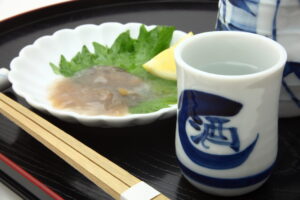
Tsumami — Appetizer / Snack
【Reading】つまみ
【English Name】Tsumami
"Tsumami" refers to light dishes served alongside drinks, written in kanji as 摑み. The term originates from the action of "picking up food with the fingers to eat" (tsumamu), and is said to have begun with foods that could be picked up with the fingertips, such as dried fish and nuts, which were called "tsumamimono."The expression is widely used mainly in the Kanto region, while in Kansai the word "ate" is preferred for the same meaning. The word "sakana" refers more broadly to dishes served with alcohol and is an older expression, said to derive from "sakana" (酒菜), literally "sake vegetables."
At sushi restaurants, tsumami generally refers to the appetizers served with sake before the nigiri course. Representative items include sashimi, grilled clam (yaki-hamaguri), dashimaki tamago (rolled omelet), and squid shiokara (salted fermented squid). The tsumami portion of a meal is also an opportunity to converse with the chef across the counter, offering the pleasure of building one's meal while asking about seasonal ingredients and the day's catch.
Historically, fruits and Chinese-style confections were served at drinking gatherings during the Heian period. Around 1740 in the Edo period, the establishment "Toshimaya" in Kanda is regarded as the prototype of the izakaya, where it is said that tofu dishes and simmered foods were offered as tsumami.
Related Features: つまみ
-
家庭でもできる!おSushi Restaurantさんのオススメおつまみレシピ
Sushiがおいしいことはもちろん、一品Cuisineも定評のあるおSushi Restaurantさんはたくさんあります。 新鮮な魚介を活かしたおつまみは、板前さんの腕の見せどころです。バリエーション
Load More
Close