

Saba Sushi — Mackerel Sushi
【Reading】さばずし
【English Name】Saba-zushi (mackerel sushi)
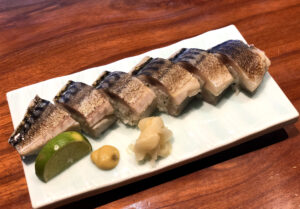
Saba-zushi is a general term for pressed sushi (bo-zushi) using mackerel (saba), including the narezushi (fermented sushi) form. Its spread as a food culture is notable, having long been cherished across regions from Kyushu to the Hokuriku region. Demand is especially high in the San'in region and mountainous areas.In Kyoto it has long been counted among the representative local dishes, and the custom of each household making it by hand for festivals and seasonal events took root. To inland Kyoto, true mackerel caught in Wakasa Bay (Fukui Prefecture) was salted and transported overland, and this transport route is known as the "Saba Kaido" (Mackerel Highway).
The saba-zushi culture is also deeply rooted in the northern part of Okayama Prefecture, with a history of salt-cured mackerel being sent in from the San'in side via the Izumo Kaido. It is said that during the day-long journey delivered while still salt-cured, the umami was drawn out. Depending on the region, names such as "kanabo-zushi" and "saba-zutsumi" also exist.
Distinctive saba-zushi cultures are also alive in the inland part of Hiroshima Prefecture and throughout Kochi Prefecture. In Hiroshima, sugata-zushi (whole-fish sushi) of mackerel is mainstream, and a style of wrapping it in Hiroshima-na pickles is also seen. In Kochi, the standard form is sugata-zushi in which mackerel split along the back and cured in vinegar is stuffed with vinegared rice.
Variations include the pressed sushi battera, heshiko-zushi using heshiko (fermented mackerel), and grilled-mackerel sushi; in recent years new styles such as "toro-saba bo-zushi" using Hachinohe maesaki mackerel are also showing signs of spreading.
Related Features: 鯖Sushi
-
鯖Sushiとは?歴史やオススメの名店など
Kansaiに行くとよく目にするのが、鯖Sushiです。 酢でしめた鯖の美味しさが格別の鯖Sushi。駅弁として、あるいは物産展で購入するという方も多いかもしれません。 鯖Sushiには
Load More
Close