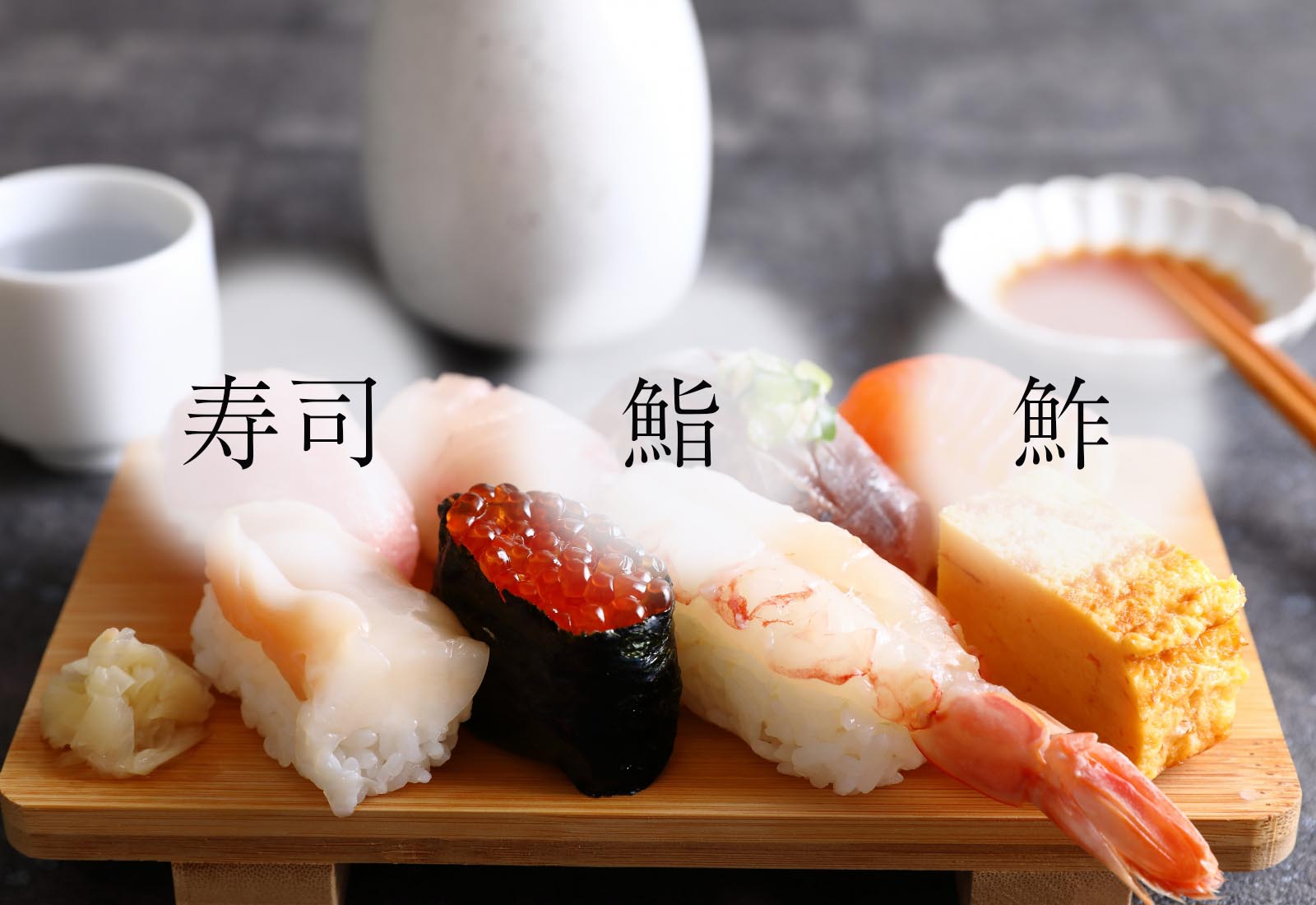
The Difference Between "Sushi," "Sushi (鮨)," and "Sushi (鮓)"
A Quick Look at the Origins of Sushi
The history of sushi is long. Tracing it back, it is said to have begun with a method used by peoples of the mountainous regions of Southeast Asia to preserve fish for long periods, fermenting fish using rice, salt, and other ingredients. This was called "narezushi" (matured, fermented sushi). In Japan, too, there are old records of "sushi" being made, and the word "sushi" already appears in documents from the 8th to the 10th century.
The sushi of that era was different from the sushi we picture today; it was narezushi that relied on natural fermentation. Narezushi was a preserved food commonly eaten in Japan from ancient times into the modern era.
Naturally, over its long history sushi went through a number of changes.
For example, during the Muromachi period the custom spread of eating the rice itself, which until then had been merely one of the ingredients of narezushi and was not actually consumed. In the 17th century, the prototype of today's oshizushi (pressed sushi) is said to have been born.
The nigirizushi and other styles of sushi that came to be known abroad as SUSHI were created in Edo in the early 19th century.
The impatient people of Edo did not favor time-consuming dishes like narezushi, so they devised nigirizushi as a quick dish made simply by placing raw fish on vinegared rice.
Today's sushi can broadly be divided into two lineages: narezushi, which carries on the ancient tradition, and hayazushi ("fast sushi"), which adds tartness with vinegar.
The sushi people generally eat, represented by nigirizushi, oshizushi, and inarizushi, are types of hayazushi, but regional dishes such as funazushi (fermented crucian carp sushi) and ayu no narezushi (fermented sweetfish sushi) remain in various areas as vestiges of narezushi.
The Etymology of "Sushi"

Where does the word "sushi" come from?
The origin of the word "sushi" is said to lie in two Chinese words from around the 3rd century BC: "sa," meaning salted, fermented fish, and "shi," meaning a stored, preserved fish. The common theory is that these came to Japan and transformed into the word "sushi."
In Japan, various kanji have been applied to the word over time, but all except the two oldest fish-radical characters came into use from the mid-Edo period onward. Also, during the Muromachi period, "sumoji" and "osumoji" remained as elegant court ladies' terms (nyobo kotoba) used to refer to sushi.
"Sushi" Changing with the Times
So then, what kind of sushi does the long-established fish-radical character read as "sushi" specifically refer to?
The kanji used to write "sushi" are said to have had their own fashions depending on the era.
In documents from around the 8th century, when sushi was beginning to take root in Japan, one particular fish-radical character was predominant. Representative examples are awabizushi (abalone sushi) and igaizushi (mussel sushi). On the other hand, around the 10th century a different fish-radical character came to occupy the majority. Words such as shikabizushi (deer sushi) and shishizushi (boar sushi) are recorded in the 10th-century legal text known as the "Engishiki."
In China and elsewhere, the original meaning of this character is said to have been fish sauce (gyosho).
However, in Japan today, this character has come to most often refer to so-called Edomae sushi made with fish. In fact, it is quite commonly written on the signboards of sushi restaurants. This is a vestige of that ancient character also being used in the era when nigirizushi was born.
The Etymology of the Old Character for "Sushi"
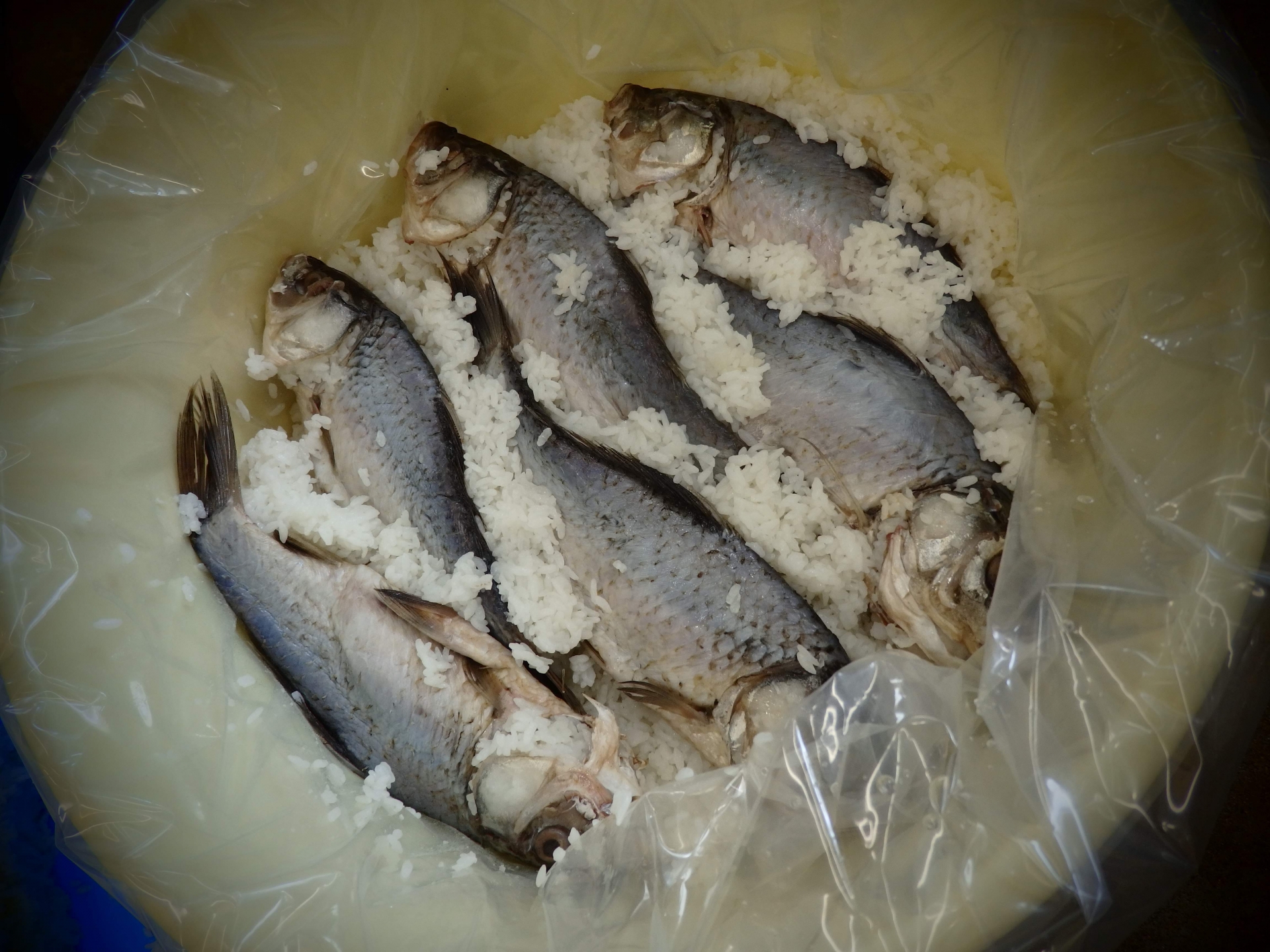
Alongside the fish-radical character mentioned above, another fish-radical character has also long been used for "sushi."
The common theory is that sushi began as a Southeast Asian preserved food, "sour fish," which passed through China and was transmitted to Japan together with rice cultivation; this character is found in pre-BC Chinese kanji dictionaries.
When it first came to Japan it was used as a word for "narezushi," but even after narezushi changed and "nigirizushi" was born, it continued to be used, alongside the other characters for sushi, as a word referring to "nigirizushi."Because of this history, this character is still sometimes used today as a word referring to "narezushi."
Representative examples of "narezushi" include ayu no narezushi (fermented sweetfish sushi) of Mie Prefecture, funazushi (fermented crucian carp sushi) of Shiga Prefecture, and kaburazushi (fermented turnip and fish sushi) of Ishikawa Prefecture, all of which convey the tradition of Japanese sushi that has continued since ancient times.
The Difference Between the "Longevity" Sushi and the Fish-Radical Sushi
Among the kanji used to write "sushi," the auspicious "longevity" form (kotobuki-tsukasa) is the most common today.
This form of the kanji was created from the mid-Edo period onward.
It is an ateji (phonetic kanji) chosen for its auspicious meaning, but is there a difference from the fish-radical form?
There are various theories about the distinction, but it is generally said that the "longevity" form refers to sushi in general, including the diverse forms that have spread around the world, whereas the fish-radical form refers to traditional sushi made with seafood and vinegared rice.
In other words, the fish-radical sushi is one category within the broader "longevity" sushi.
The Difference Between the "Longevity" Sushi and the Fermented Sushi
The difference between the "longevity" sushi and the fermented-fish form is clearer than you might expect.
The "longevity" form is an inclusive term covering all sushi, but the fermented form refers to fermented sushi, a preserved food.With its distinctive flavor, this fermented form can be regarded as one of the oldest types of sushi within the broader category.
Summary
So then, let us summarize the differences between the three characters for "sushi."
| Sushi ("longevity" form) | A word that arose from the mid-Edo period onward, encompassing sushi in general. |
| Sushi (fish-radical form) | A word generally referring to hayazushi, composed of seafood and vinegared rice. |
| Sushi (fermented form) | A word denoting sushi as a preserved food, made by fermenting salt, rice, and seafood. |
Looking at it this way, we can see that even the single word "sushi" encompasses a wide variety of types.
Sushi is an important part of Japanese food culture, and this is a fine opportunity to take a fresh look at it.
References
平凡社世界大百科事典「酢·鮨」