

Asakusa — Historic Tokyo District
【Reading】あさくさ
【English Name】Asakusa
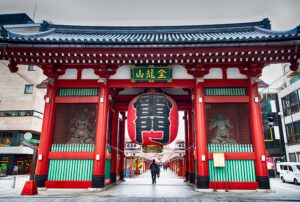
Asakusa is located in the eastern part of Taito Ward, Tokyo, and is Tokyo's foremost shitamachi (old downtown) district, carried on continuously since the Edo period. Continuing to draw people as the temple town before Senso-ji, it has marked a long history as a land where Edo's food culture and performing arts took root.In 628, the brothers Hinokuma no Hamanari and Takenari, local fishermen, are said to have pulled up a statue of Kannon while fishing in the Sumida River, which is the legendary founding origin of Senso-ji. In ancient times it was a land close to the mouth of the Sumida River where marine products could be caught in abundance.
In the Edo period, the shogunate's rice warehouses were placed at Kuramae, and a merchant class called fudasashi, who amassed wealth through the brokerage of rice, came to prominence. Their lavish spending became the driving force that lifted Asakusa's dining and entertainment culture. In the wake of the Great Meireki Fire of 1657, the Shin-Yoshiwara pleasure quarter was forced to relocate, and with kabuki theaters gathering there, the area transformed into a great entertainment district.
Even after the Meiji era it maintained its bustle as an amusement quarter, but as Shinjuku, Shibuya, and Ikebukuro developed rapidly during the period of high economic growth, Asakusa's urban gravitational pull relatively declined. Today it is visited by many people from Japan and abroad as a sightseeing spot that richly conveys the atmosphere of Edo. In the Kappabashi kitchenware district, shops specializing in commercial-use cooking equipment line the streets and are widely used by many food-service operators, including sushi restaurants. It is also the birthplace of the renowned sushi chef Nakajima Seijiro.
Related Features: Asakusa
-
厳選!AsakusaのおすすめSushi Restaurant5選
TokyoTaito-kuに位置する風情豊かな歴史的な町で、Asakusa寺や花火大会などで有名なAsakusa。 昔ながらのTokyoの雰囲気が残っており、Asakusa寺の近くの仲見世通りには、伝統的な手工
Load More
Close