

Shikomi — Preparation / Mise en Place
【Reading】しこみ
【English Name】Preparation
"Shikomi" is a general term for the preliminary preparation and advance work in cooking and brewing. At a sushi restaurant, it refers to the series of tasks of preparing the toppings (neta) and rice (shari) before opening, including the dressing of seafood, vinegar-curing, blending of nikiri soy sauce, and cooking the rolled omelet. It is considered an important process directly linked to the quality of the sushi served.This term is also widely used in sake brewing, where in the brewing context "shikomu" (to prepare) and "tsukuru" (to make) are treated as nearly synonymous. A representative usage is "sandan-jikomi" (three-stage preparation), which refers to a method of adding koji, steamed rice, and water to the yeast starter in three stages: hatsuzoe, nakazoe, and tomezoe. This method is recorded in the Muromachi-period document "Goshu no Nikki," giving it a long history.
Also, "yamahai-jikomi," devised at the National Brewing Experiment Station in 1909 (Meiji 42), is a kimoto-type method that omits the yamaoroshi (mashing) step and is characterized by a rich, full-bodied flavor. It requires about 30 days of cultivation and management in an environment of 5°C or below.
In the sushi setting, "shikomi" is the fundamental work responsible for managing the freshness of ingredients and adjusting flavor in advance.
Related Features: 仕込み
-
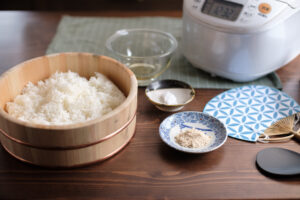
かんたん!SushiのNigiri方2-仕込みを始めよう
Sushiを自分でForming Nigiriには長い期間の修業が必要だと思っていたりしませんか? たしかに、Sushi Restaurantの Craftsmanは魚の捌き方から酢飯の合わせ方まで、厳しい鍛錬を積み重ねて身につけて
Load More
Close