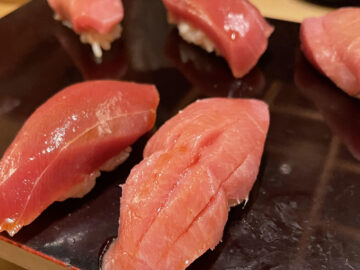
コスパ抜群!Tokyoで人気上昇中の「まんてん鮨」
「まんてん鮨」は、丸の内·日比谷·Nihonbashiの3店舗を展開する人気Sushi店です。
コストパフォーマンスの良さと新鮮なSushi Toppingsで、地元客や観光客に支持されています。
本記事では、そ・・・
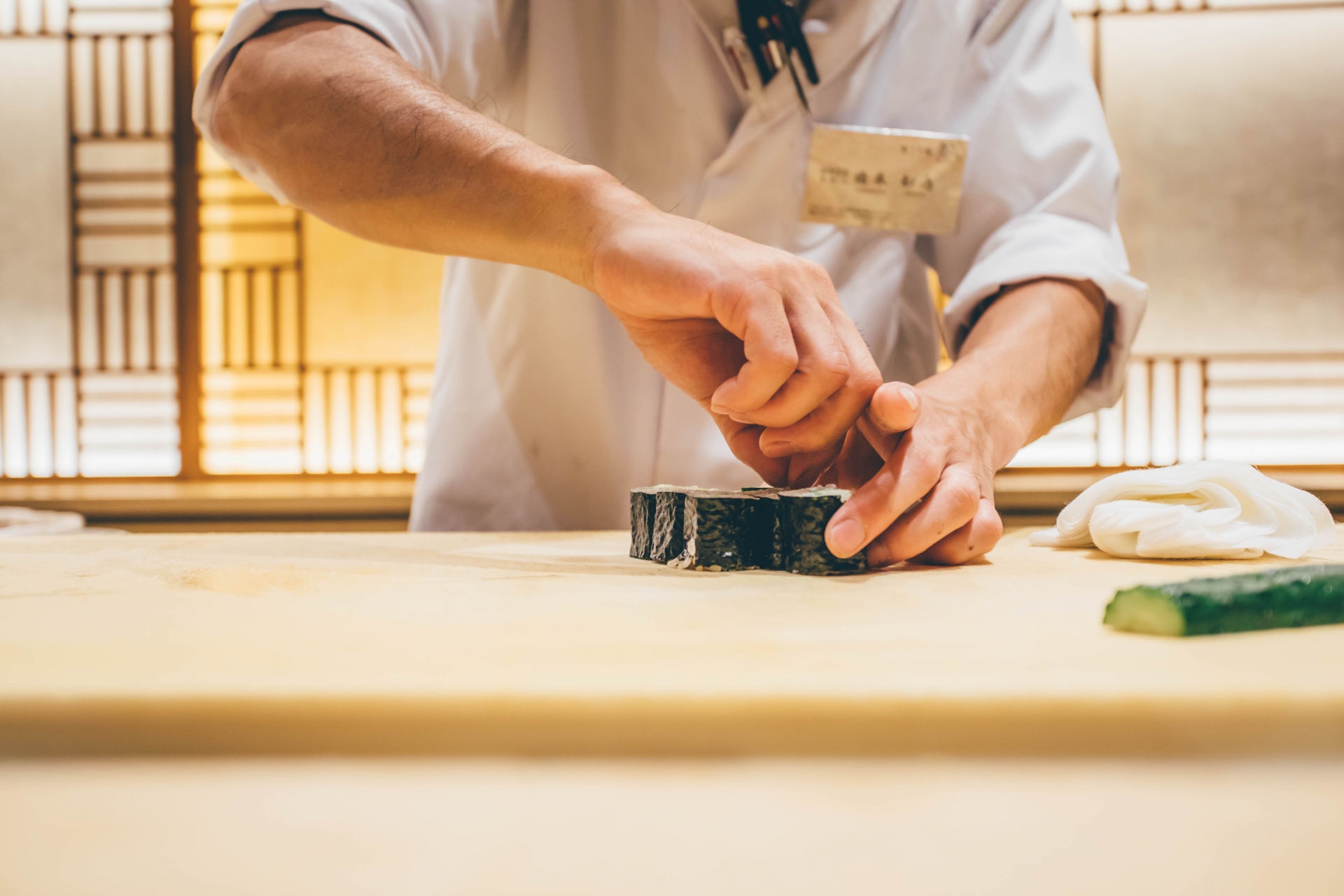
Neither a sushi chef nor an itamae requires any qualifications.
A sushi chef is one who specializes in sushi, while a chef who prepares Japanese cuisine in general—such as sashimi, simmered dishes, grilled dishes, and tempura—is called an itamae.
They prepare Japanese cuisine such as kaiseki at kappo restaurants, ryotei (high-class Japanese restaurants), Japanese restaurants, and traditional inns.
Many Japanese restaurants operate as specialty shops for dishes such as eel cuisine or pufferfish (fugu) cuisine.
Although qualifications are not required, obtaining a cooking license by passing the national chef examination is advantageous when seeking employment.
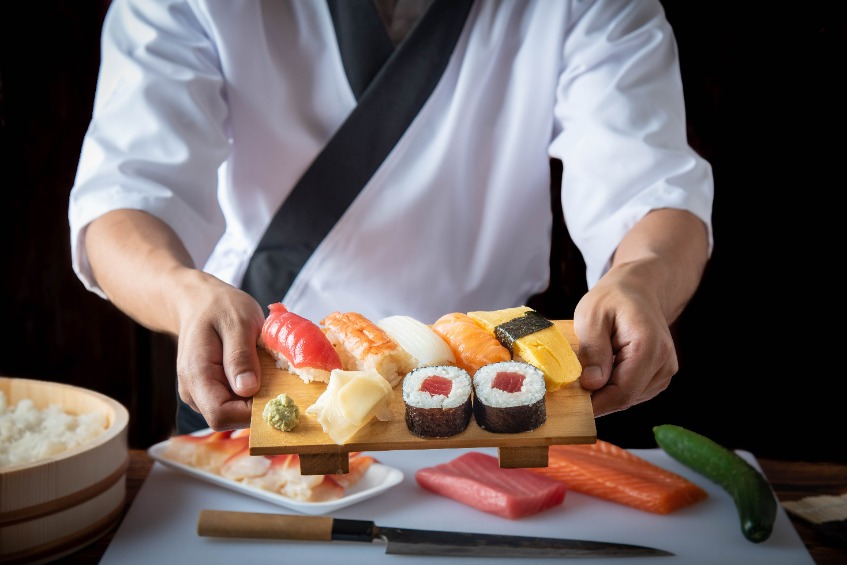
Sushi chefs and itamae not only deepen their study of sushi culture but also take on the role of passing it down to future generations.
The path to becoming a full-fledged sushi chef or itamae is long; it is said to be a world that requires training, as in the saying "three years to cook the rice, eight years to form the nigiri."
Mastering every skill—how to fillet fish, cooking methods, plating, nigiri technique, and customer service—is essential.
Physical stamina is also an important element of aptitude for a sushi chef or itamae.
You need to build up your strength through moderate daily exercise. The work often begins early in the morning, covering a wide range of tasks from prep work to washing up and miscellaneous chores.
To handle this series of tasks, you must build a body suited to it.
Moreover, since you handle raw ingredients, a keen sense and sensibility—using your sense of taste and smell to notice subtle differences in ingredients—is indispensable.
Furthermore, communication skills are an asset.
Beyond simply forming the nigiri, you also need the thoughtfulness to entertain the customer in front of you with enjoyable conversation and to ensure they enjoy their meal.
Such steady efforts become the catalyst for creating regular customers.
To improve your skills and abilities as a sushi chef or itamae, you are required to set aside your pride and have the honesty to absorb advice and lessons from all kinds of people.
A sushi chef's work may begin with the early-morning purchase of fish.
Going to the market and procuring fresh fish with a discerning eye is one of the important duties.
After purchasing, prep work begins, preparing the filleted fish.
Next, at restaurants that have a lunchtime service, after opening they take customers' orders, form the nigiri, and also serve appetizers (otoshi) and course dishes.
After lunchtime, following a break, the afternoon prep work begins.
At restaurants that operate without a set break, such as conveyor-belt sushi, the staff take breaks in turns, and the remaining sushi chefs serve customers and do prep work.
For the evening service, they may serve the toppings and rice to match the customer's drinks.
Providing service that delights customers through quick-witted, individualized responses is also important.
After closing, they clean and tidy up the restaurant, bringing the day's work to an end.
Sushi chefs have a variety of employment options, from members-only high-end restaurants to counter-focused sushi restaurants, neighborhood sushi restaurants, major conveyor-belt sushi chains, and delivery-only shops.
At counter-style sushi restaurants and neighborhood sushi restaurants, they handle a wide range of tasks such as the following.
At small-scale sushi restaurants, physical stamina to endure rigorous training is essential.
However, for those considering independence in the future, it will be part of their training.
At major chain conveyor-belt sushi restaurants and delivery-only shops, the advantage is that the company scale is large, making for stable and comfortable work.
However, at major chains, because ingredients are sourced via sushi robots and wholesalers contracted by the head office, a disadvantage is that it is harder to improve your discerning eye and nigiri technique.
It is important to choose your place of employment by considering how you want to work as a sushi chef and how you want to acquire your skills.
Now, with Japanese food booming overseas as well, sushi is one of Japan's proud food cultures—an exquisite creation unmatched in both appearance and taste.
Becoming a full-fledged chef may be a long and arduous road.
Sushi is a cuisine that is not easily mastered.
In order to spread the appeal of sushi around the world, please train as a sushi chef, hone your skills, and aim to become a sushi chef who can succeed on the world stage.